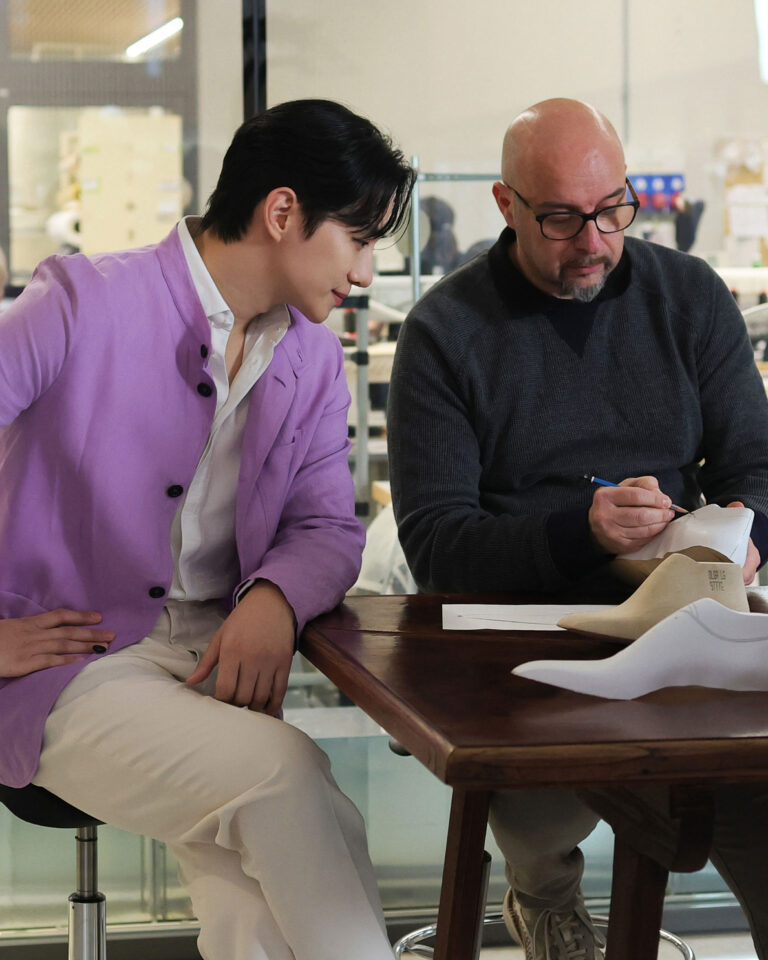
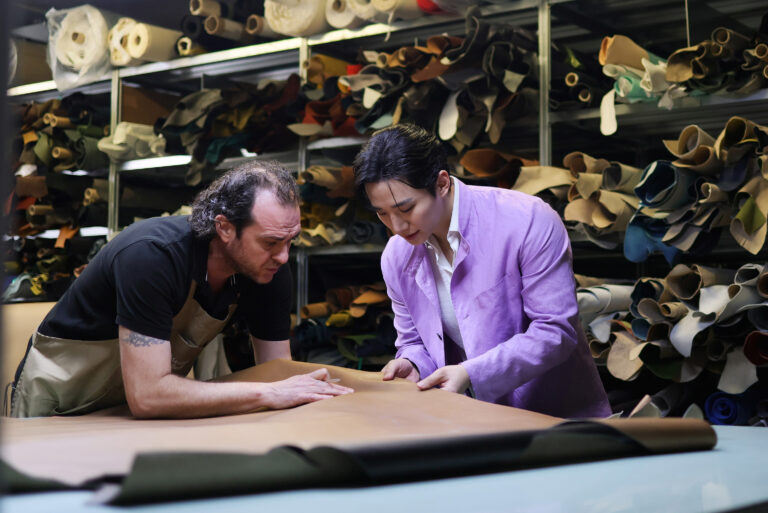
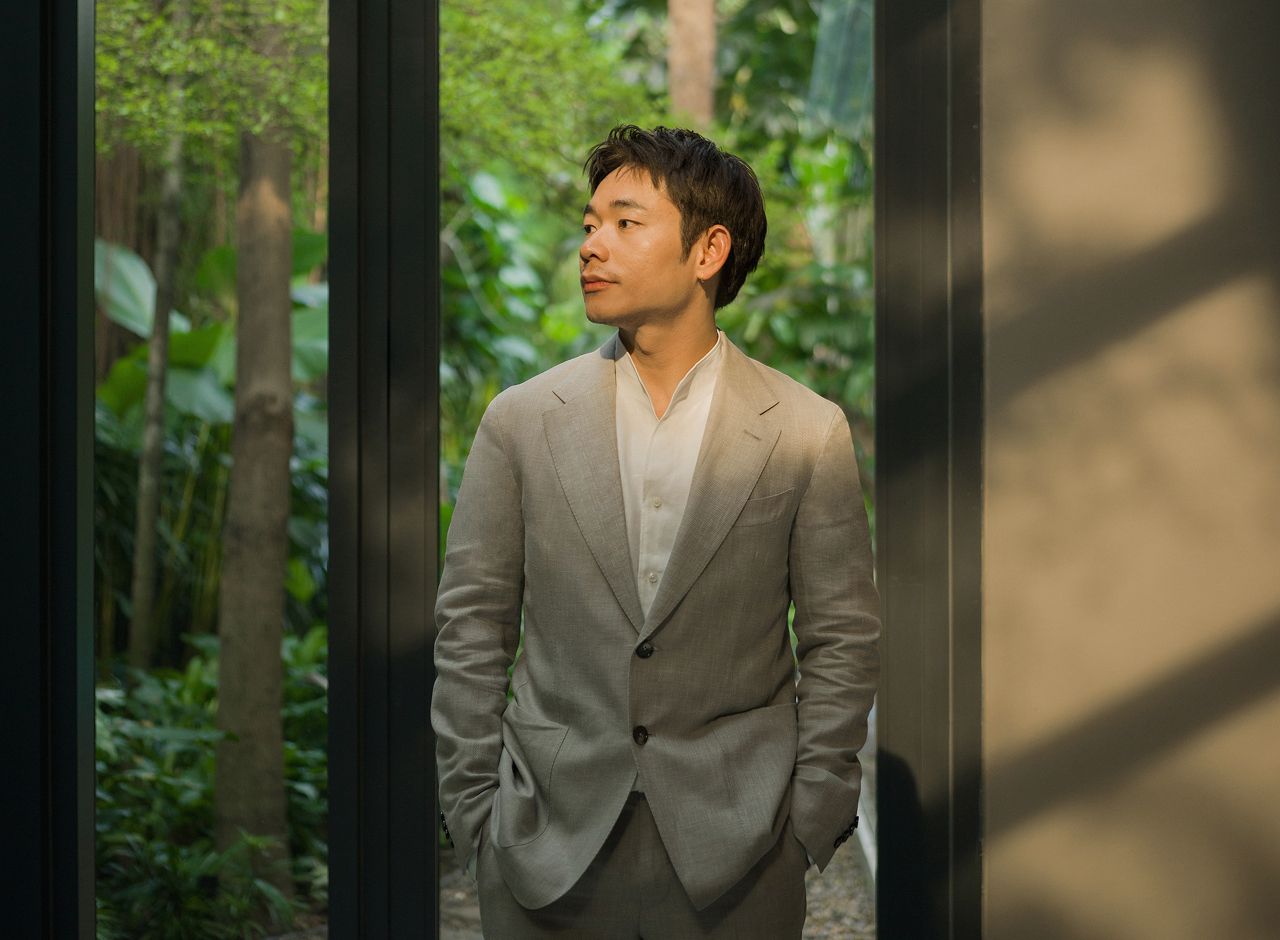
Surrounded by exquisite materials, precise gestures, and the techniques that define the Maison, the Brand Ambassador encounters craft at its source; where the act of making begins to shape the maker himself.
He learns the secrets of patina, which render each shoe uniquely nuanced, and witnesses the masterful construction of the legendary Alessandro Oxford, a seamless, single-piece leather shoe that remains one of Berluti’s most iconic designs. This is Berluti’s authentic illumination and interpretation of finesse as something that is felt, learned, and passed forward, not just a final product.
That idea deepens in the second episode, which shifts to Venice. On the surface, this is the most obvious chapter: a beautiful city, a handsome jacket, a soft tangerine twilight on the lagoon. But Berluti is using Venice to make a far more strategic point.
Born in Paris, yet the Maison’s production heart beats in Italy. Most luxury houses treat this as a logistical footnote or, worse, a source of identity confusion. Berluti does the opposite. It elevates the Italian-French connection into an artistic thesis.
Venice, after all, gave its name to Berluti’s signature Venezia leather, a supple, full-grain calf leather whose unique patina develops and deepens over time, much like the city gracefully carved by time and tide.
The city’s defining characteristics captured on screen, like light reflected off water, stone sculptured by time, colour that shifts with the hour, serve a purpose beyond decorative inspirations. They are arguments for patience and a kind of beauty that cannot be manufactured on a seasonal cycle.
When Lee Jun Ho wears the Forestière jacket in lilac linen, perfectly mirroring a Venetian sunset, the episode demonstrates that Berluti’s aesthetic vocabulary comes from somewhere real, recalling canals and centuries, not industry cycles.
By linking its French heritage with its Italian production roots so explicitly, Berluti resolves a tension that has long dogged European luxury. It says, simply: we are both. And the bridge between them is purely mastery.
The truth is not recent reckoning. Four generations of shoemakers built Berluti from a Parisian atelier into a house of leather, then tailoring, then complete bespoke service from head to toe— available today on Rue Marbeuf and Rue de Sèvres. Craft, after all, takes time.
This is only the first half of the story. In Fall 2026, the series picks up in Paris. Until then, the creative journey continues.