
For some, art is not something separate from life. It lives in the everyday: in memory, in imperfection, and in the small changes of ordinary things that can become extraordinary. In the hands of Lianggono Susanto, art becomes a manifestation of memory that is raw and unpolished. He possesses a habit of noticing beauty and tension in layered imperfections and the traces of things left behind, and within them, he finds the clarity he seeks.
Before Studio Lianggono had a name, Lianggono spent several years in magazines, working as an editor. His work widened on its own after several credible projects, and styling led to product work, which led to interiors, and eventually opened into spatial installations. That early transitional period taught him how to notice texture, proportion, mood, and the decisions that shape the way art is felt.
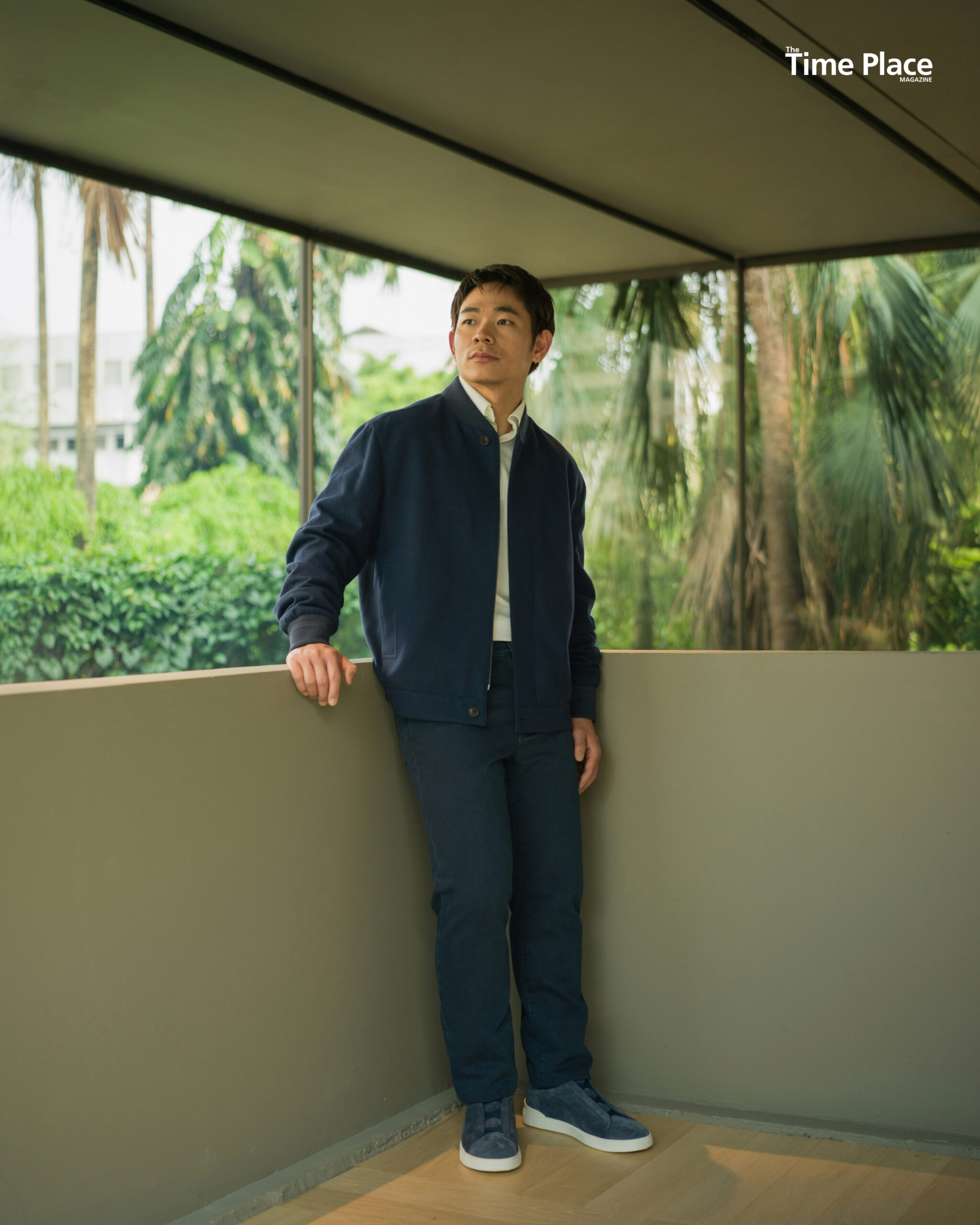
“I would rather be called an artist, a multidisciplinary artist, rather than a designer,” says Lianggono. There was no single straight line for Lianggono, not in the way he sees or in the way he creates. What carried through was a sensibility that kept expanding to find new forms and creative expressions. When Studio Lianggono was born in 2017, it was never just a studio; in the same way, its founder was never just a designer; it emerged as a multidisciplinary practice, moving fluidly between design, objects, photography, and art.
Lianggono seems naturally attuned to objects, as if he not only sees their surface but also senses what they carry. He believes that objects hold stories, energy, even a kind of spirit. “Some things feel like they belong with me, and sometimes they don’t,” he says. “During my morning walks, I would feel something calling me. It can be something very small, like a leaf falling,” he explains. “It feels like it’s saying, ‘Why don’t you see me?’ So I stop, I go back, and somehow it gives me energy.”
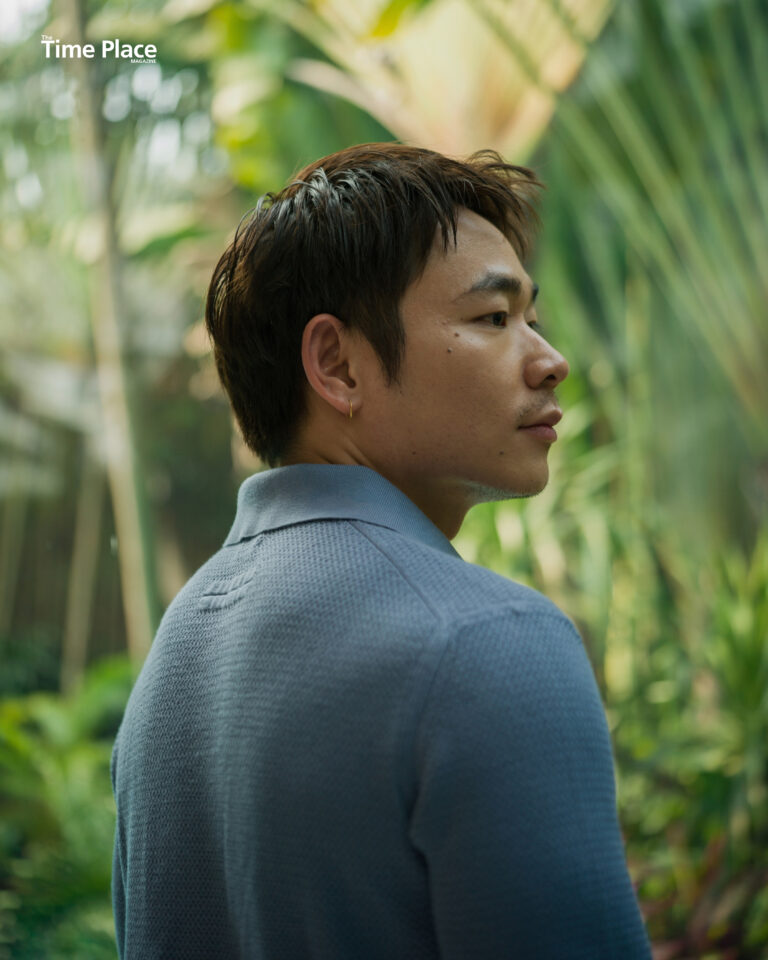
In 2024, his mother passed away and her absence seems to have clarified rather than narrowed his vision. She seems to have shaped Lianggono’s understanding of the world long before he could fully name it. She gave him a way of seeing imperfection that now feels deeply embedded in his work. Things did not need to be perfect to be useful, beautiful, or loved. They could remain uneven, worn, incomplete, and still carry life. That understanding shapes the pieces he chooses, the textures he returns to, and the atmosphere he builds. Old furniture, cracked porcelain, dead plants, rough surfaces, imperfect stitchwork, these do not read as flaws in his world. They read as evidence of time, and of memories of a life that once was.
An open studio exhibition, “IRIS: An Ode to Seeing Beauty” (2024), unfolded shortly after Lianggono moved into a new space. Over two weekends, visitors encountered not one fixed idea of beauty, but five distinct expressions. Each installation held its own emotional register, yet together they formed something cohesive, a quiet constellation of meanings that, in different ways, traced back to his mother.
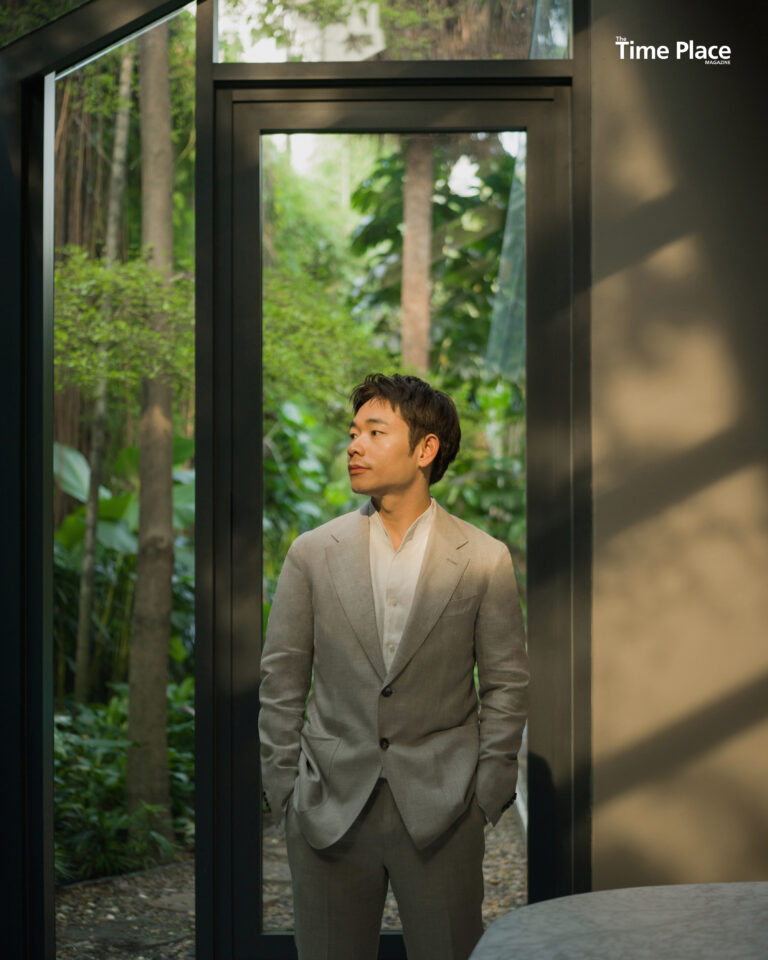
‘Beauty is raw’ begins in the market, drawn from childhood motorcycle rides with her, the noise and movement of everyday life that later shaped an emotional vocabulary of seeing rawness not as an aesthetic, but something lived and formative. ‘Beauty is detail’ turns to the smaller things he inherited from her: the care of arrangement, the hidden order in ordinary life, the home objects kept with attention. A deconstructed wooden table and vintage boxes containing handwritten poems for his mother were exhibited; some details feel at once private and strangely universal.
‘Beauty is imperfect,’ is a reflection on how his mother lived her life, allowing things to remain uneven yet still useful, still meaningful. ‘Beauty is complex,’ describes something more atmospheric, shaped by deep colour, light, and fragments of random videos captured by Lianggono, like thoughts scattered through memory. The final installation, ‘Beauty is intense,’ holds the emotional weight of their relationship, one that is less soft or sentimental, and more deeply charged.
What makes “IRIS: An Ode to Seeing Beauty” linger is that it never feels like a simple tribute. IRIS, the rainbow goddess, feels like a fitting title as it suggests not one colour, but many, closer to a spectrum than a single idea. In his telling, it becomes something more personal. “Iris is the name of the Greek Goddess of the Rainbow,” he says. “And I feel my mother is my own Goddess of the Rainbow. In every phase of my life, even when things were difficult, she was always the one who became my rainbow.”
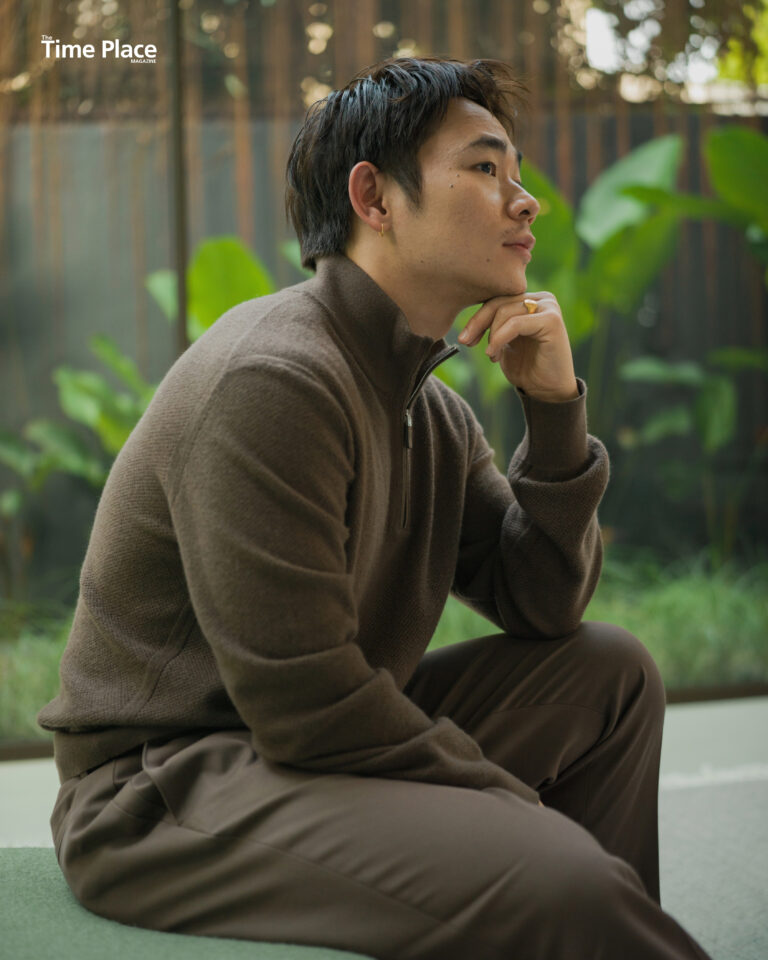
When asked why his work often returns to the same emotional ground, the answer tends to circle back to his mother. “My collaboration with The Balvenie that I did last year in Bali was also about her,” he says. “I wanted to show the cycle of her life.” The installation, “Wang Sinawang” (2025), was built as a circular, almost labyrinth-like structure, formed from layers of dried padi. Visitors moved slowly inward through textured corridors, drawn into a gradual rhythm of space before arriving at a centre where a live performance unfolded.
“My mother used to work from three in the morning until late at night. By the time we met, she was already exhausted, and then she would sleep, only to wake up and begin again. It was a cycle that never stopped,” he explained. It becomes clearer, then, why the same themes of his mother keep coming back, why so much of what he makes always seems to return to home.
For him, home is more of a feeling, sometimes even a person, rather than the domesticated definition. It means the sense that someone else might be able to enter your work and find their own memories inside it. “I’ve always felt that everyone has their own definition when they look at art, because they each carry different life stories,” he says. “When I create, I never want to dictate that this is how it should feel. I don’t want that. I want to let it go, so that when people see my work, they can interpret it through their own lives.”
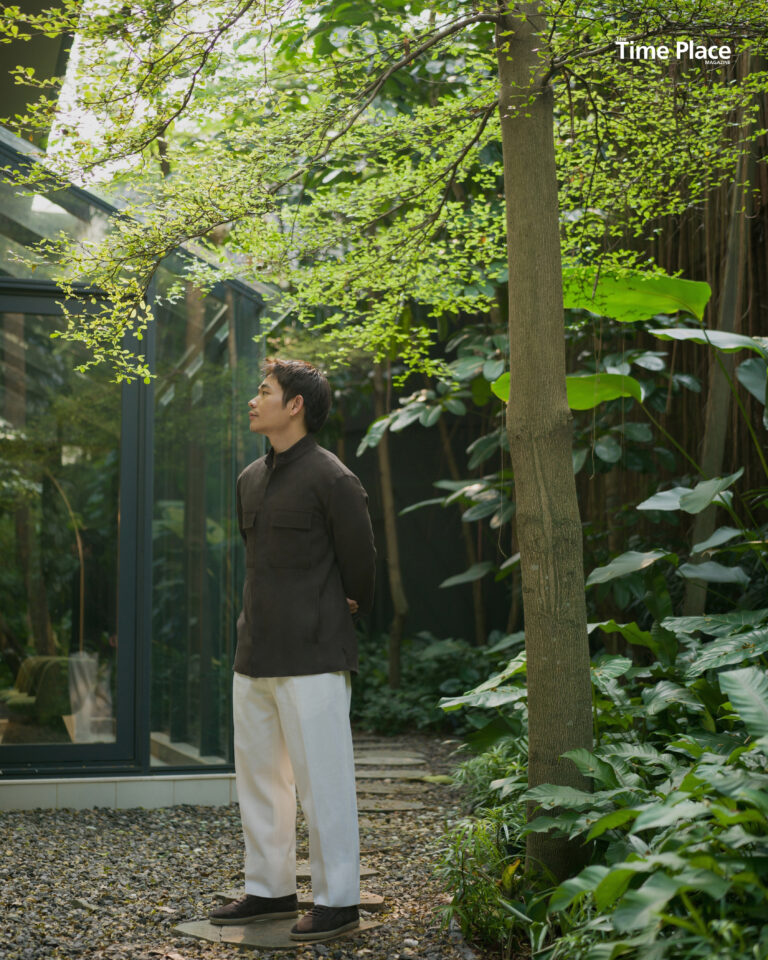
Recently, his thinking has started to move toward trauma. If themes of home and memory have long been his starting point, trauma sits just beneath it, less visible, but closely tied. “What lingers is often something sweet,” he explains. “But inside that sweetness, I feel there is also trauma.” He understands that even a beautiful memory can hold something painful. A recent trip to Japan became part of that process, two weeks spent on his own, observing, reflecting, letting thoughts settle. “I think trauma can become one of the bigger themes in my future work.”
For a long time, Lianggono remained unclear on why he creates his art. It is something he could not quite articulate. But after his mother’s passing, his work and the reason behind it finally felt more fully understood. “I rely on my memory, on my past, on my trauma, to create work that can help heal people,” he says. That understanding has gradually taken on a more defined sense of purpose. “I think that’s my life mission, not just an art mission, but a life mission.”
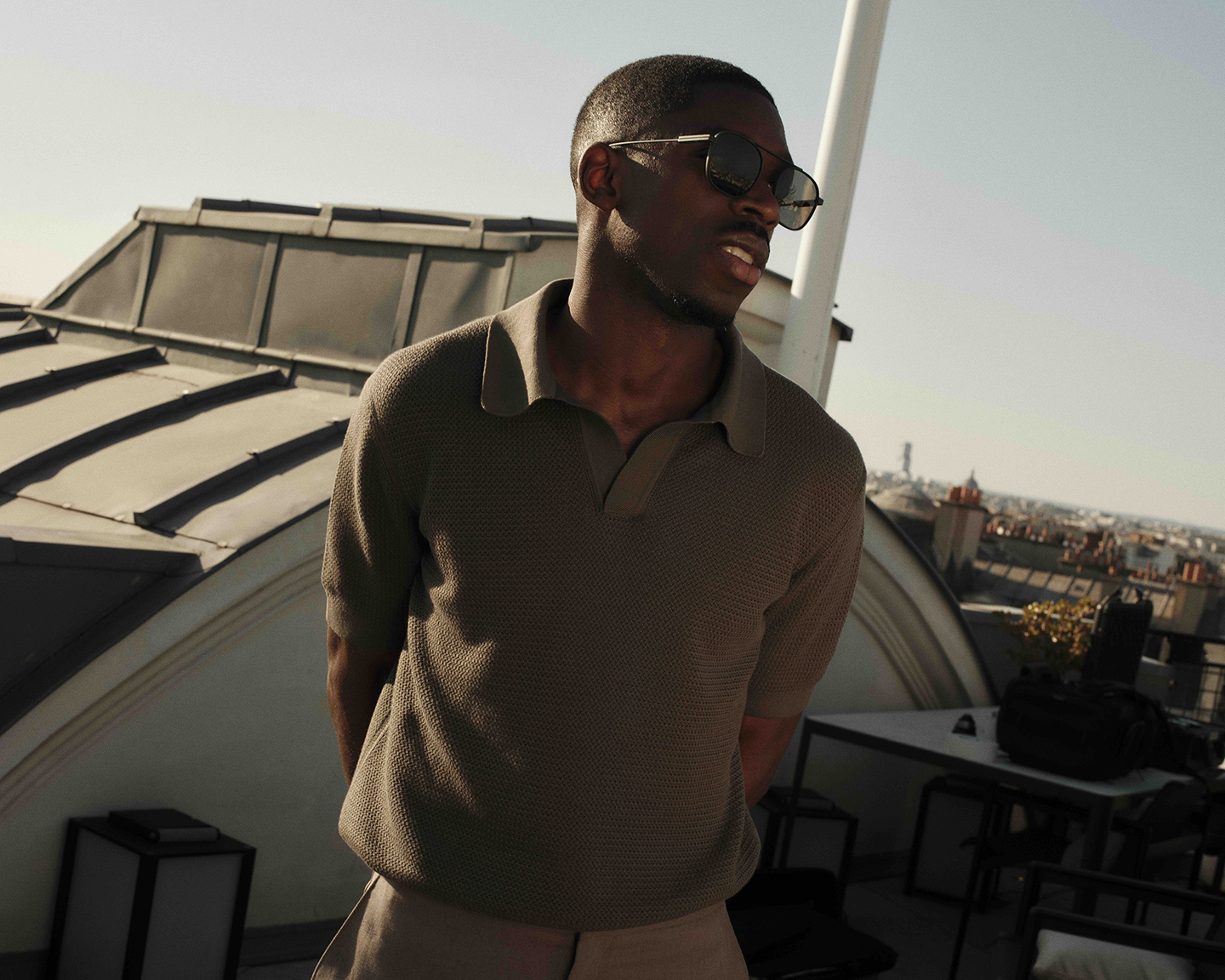
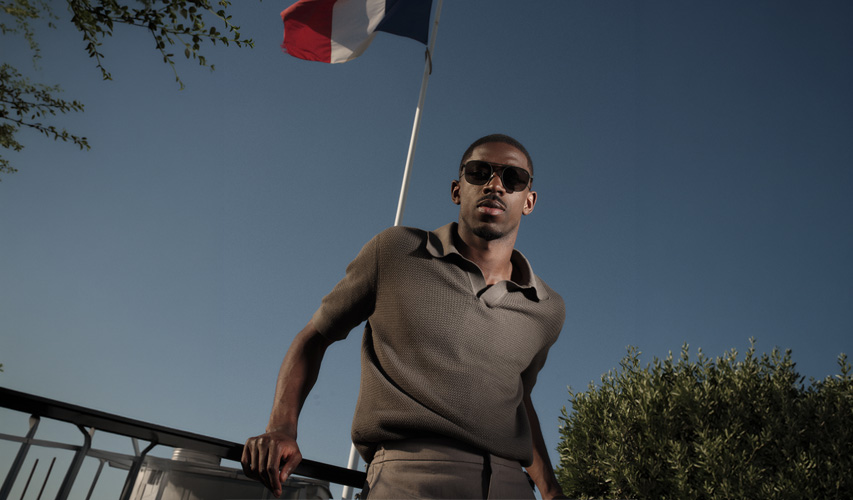
As the conversation moves to personal style, Lianggono firmly says, “I like freedom. I do not like to be boxed in,” he says. “It applies as well to the way I dress.” He is drawn to pieces that feel expressive, whether through colour, cut, or fit, something bold enough to be felt, yet with a quality made to last. In recent years, he has moved away from mass-produced pieces, choosing instead to support well-made clothing that is made with intention and created to last. “I look for something timeless,” he explains, “not something you only wear once or twice.” More than anything, there is a resistance to limitation and boundaries. “I don’t want to limit my style,” he says. Talking about exploring different styles, he adds, “Yes! Why not? Maybe people can see another side of me.”
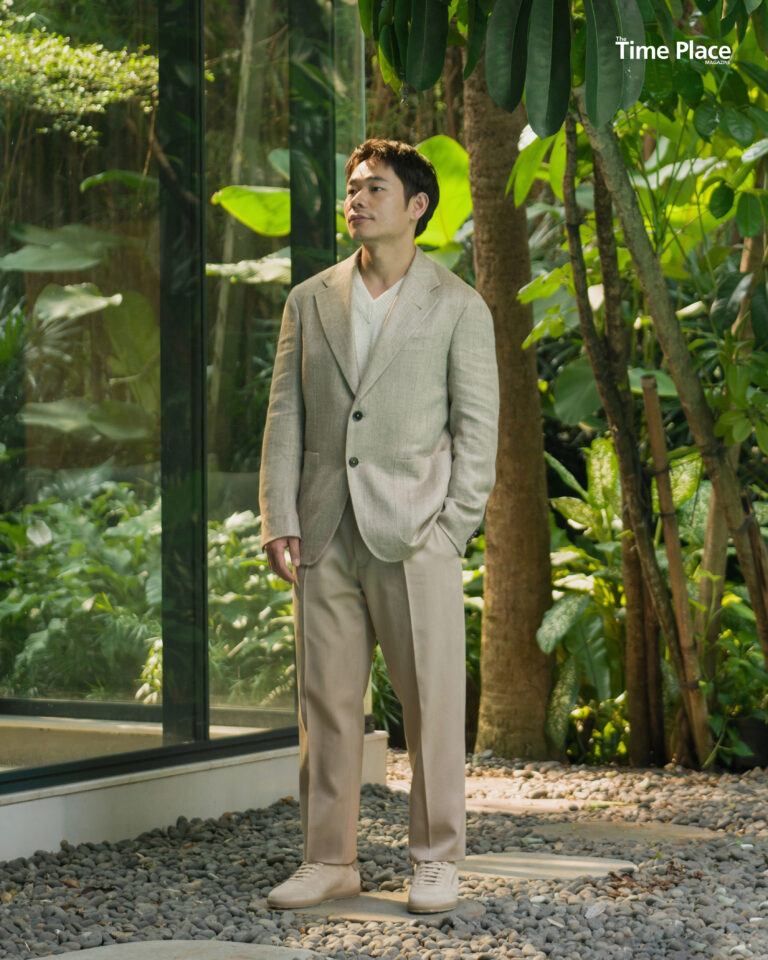
In the end, Lianggono Susanto creates not only art to visually feed on, but a way of holding experience. His practice moves through memory, objects, and space, always circling back to ideas of home and what has shaped him. The tender and the difficult are not separated; they sit side by side, carried quietly, without needing to be resolved, only a willingness to understand them more fully. His work asks to stay with you, not all at once, but in fragments, in memory, and in the feeling of something that cannot always be named, but is understood all the same.
Creative Direction: Erika Tania D.
Photography: Vicky Tanzil
Text & Fashion Styling: Charlene Atalie
Grooming: Arimbi
Location: LAFLO Showroom