A cocktail is remembered not for its first sip, but for what lingers after, the finish that settles long after the glass is set down.
Across cultures, this idea of aftertaste defines the experience. In Japan, the precision of a highball lies in its clarity and restraint, leaving a clean, almost weightless impression. In Latin America, Caipirinha waltzes between sharpness and sweetness in a way that plays a game of hide-and-seek on the palate. Even in Europe, where aperitifs such as the Aperol Spritz are designed to open the evening, it is their gentle bitterness that refuses to say goodbye.
Cocktail culture, in all its diversity, ultimately returns to the same principle: what remains is more important than what arrives. This notion of lingering sensation finds a parallel in the Piaget Cocktail collection, where jewellery is conceived as an ambrosial aftereffect.
Echoing the 19th century’s golden age of mixology, when drink-making became an art of balance and precision, the Maison cultivates jewellery as an exercise in disciplined harmony. This is achieved not for its initial flourish, but for the visceral sensory it leaves behind.
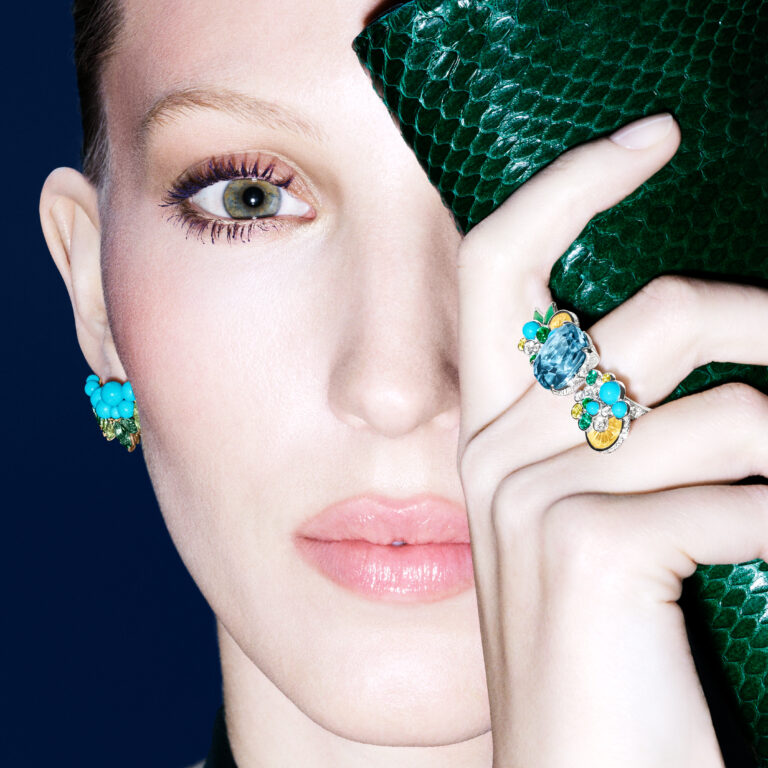
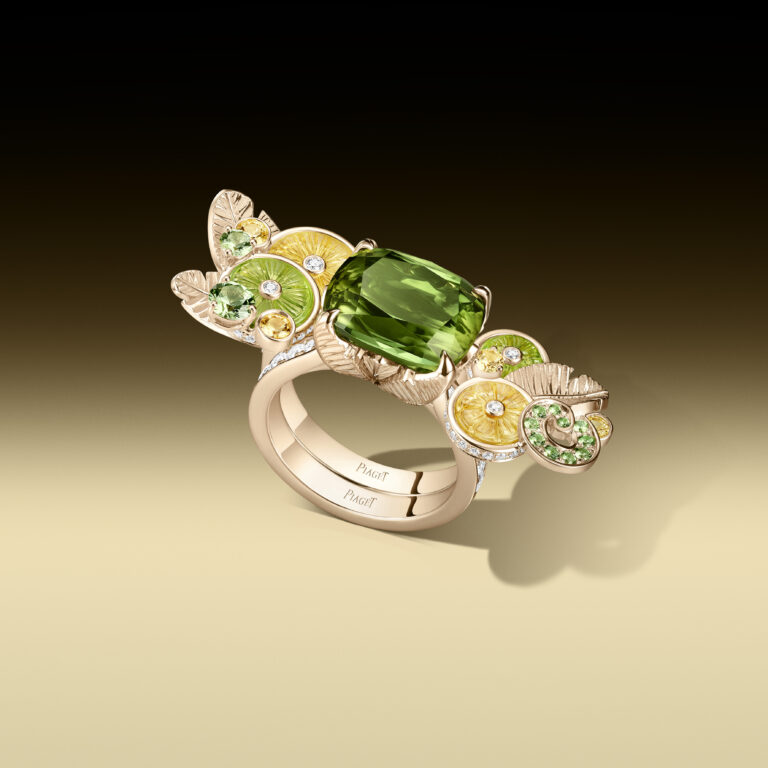
Presented as a suite of nine rings and two ear cuffs, the collection unfolds as a composition of colour, light, and movement. Gemstones are treated as ingredients of high art mixology. Yellow sapphires sharpen like citrus zest, mint-green tourmalines cool with a fresh clarity, while pink quartz softens into a delicate sweetness.
Much like early alchemists blending elixirs for preservation and healing, these contrasts are not meant to overwhelm. They are calibrated to unfold gradually—revealed not in an instant, but through gesture, proximity, and the quiet patience of transformation.
The rings, in particular, capture the idea of aftertaste. Worn alone, they offer a precise note of colour; stacked, they create a layered impression that shifts with every movement of the hand. Light catches on sculpted surfaces, then disappears, then returns. The effect is never static yet persistent, like a flavour that continues to develop long after it is first perceived.
The ear cuffs extend this experience, framing the face with quiet luminosity. No need to demand outright attention; they flirt with being admired in moments, in the turn of a head, in passing light, in conversation.
This idea of resonance is deeply rooted in the Maison’s history. Since its founding in 1874, Piaget has cultivated a distinctive vision of elegance, one that wonderfully embraces both discipline and creative freedom.
Under the influence of Yves Piaget, this vision expanded into a lifestyle defined by joy, boldness, and artistic exchange. From Capri to Saint-Tropez, the Piaget Society brought together a constellation of personalities who shared an instinct for celebration, where jewellery was not simply worn, but lived in.
Today, Piaget continues to shape a vision of jewellery that is both refined and alive with character. The Cocktail collection carries this spirit forward. Its compositions are vibrant, yet controlled; expressive, yet precise. Each piece captures a fleeting sensation of freshness, sweetness, clarity, and holds it in form, transforming it into something enduring. Every element finds its place, and nothing is left unresolved.
In the end, like the finest cocktails, these creations are defined by their presence. Not the first impression, but the lasting one.