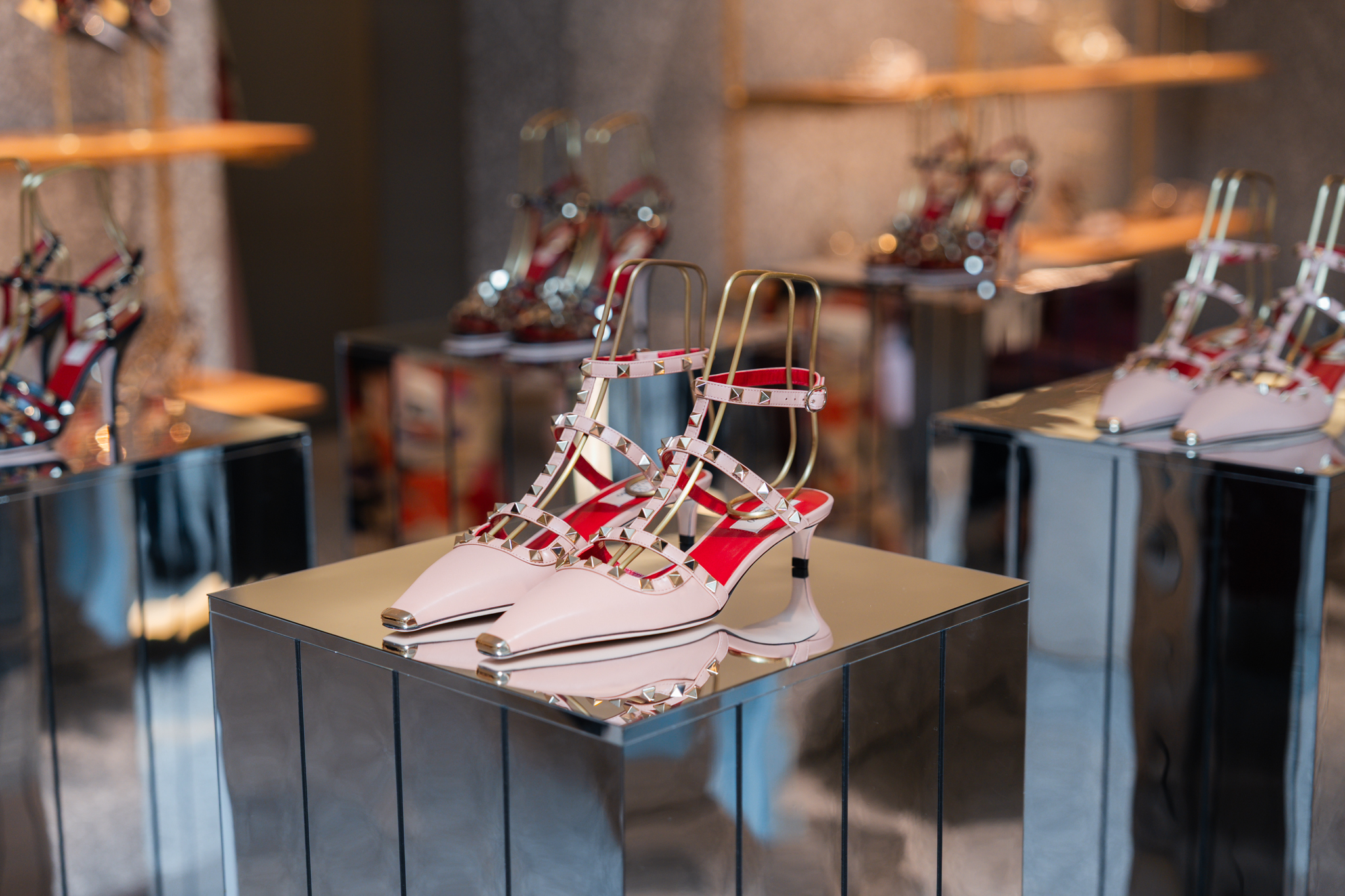
Every collector knows the feeling. The most treasured part of a library, a cellar or a watch box is often the piece still waiting to be opened. For Valentino’s Spring/Summer 2027 collection, Alessandro Michele builds an entire show around that idea and calls it Antibiblioteca.
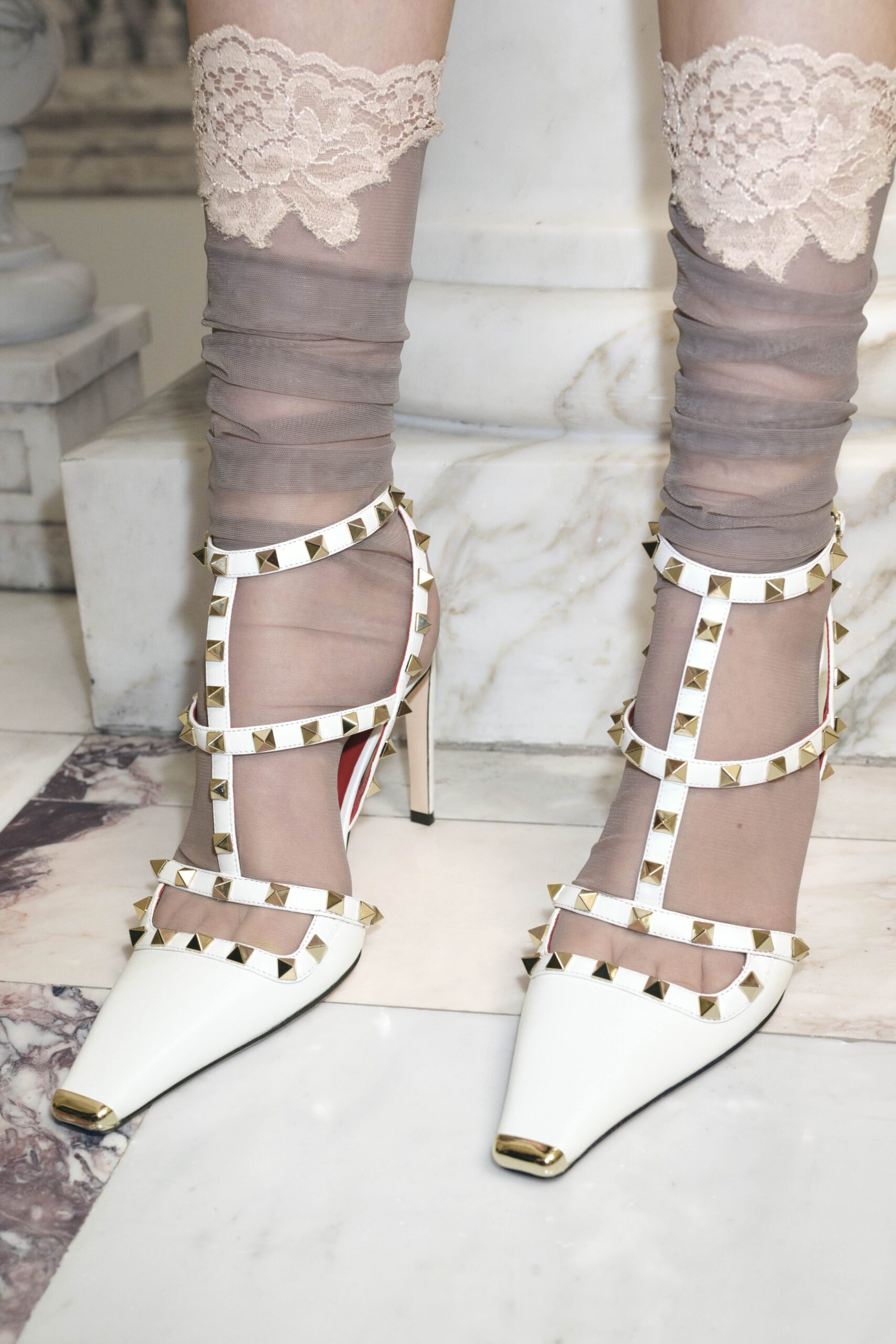
The concept borrows from the antilibrary, the name writer Nassim Nicholas Taleb gave to Umberto Eco’s vast collection of mostly unread books. Its value lies not in what its owner already knows, but in everything still waiting on the shelves. Michele finds the same spirit in tsundoku, the Japanese habit of letting new books pile up unopened. He sees that habit as anticipation rather than neglect.
A Runway Among the Shelves
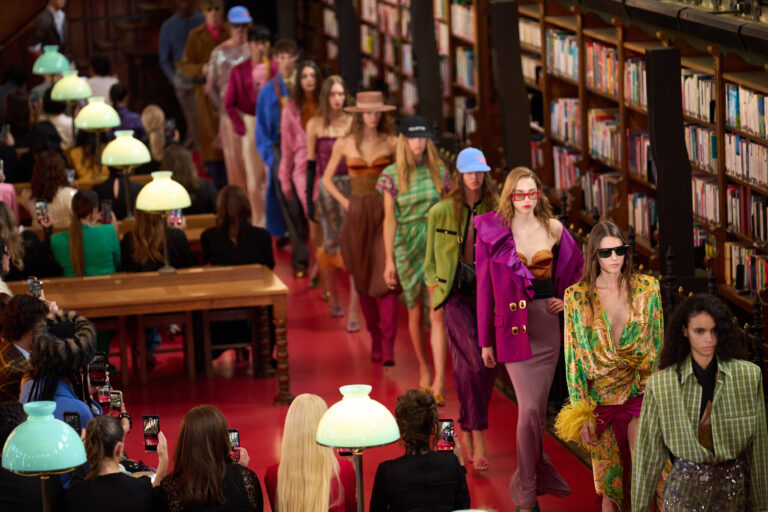
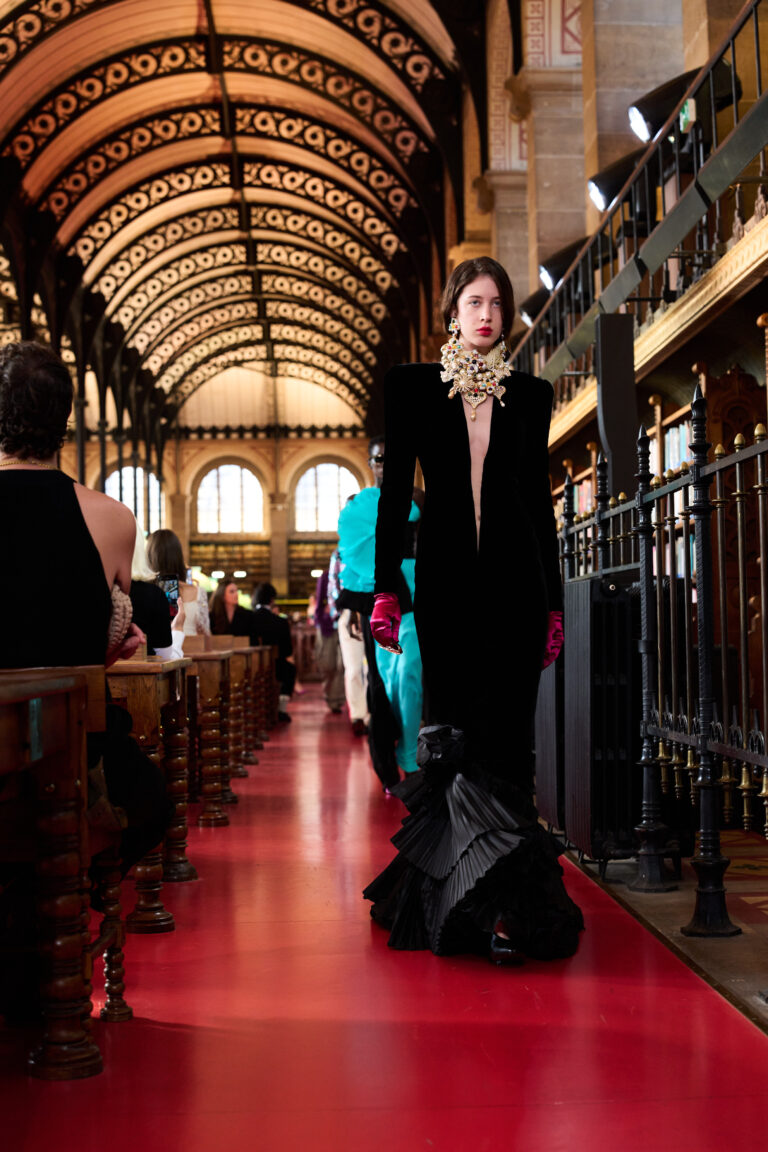
The House staged the show in a grand library reading room, framed by arched windows, wooden benches and wrought-iron railings. The runway itself was a glossy strip of red. The setting was more than scenery, because it let guests browse the collection look by look, like spines along a shelf.
Frontières and Fauvettes City Club. That gives the evening a life well beyond the runway.
Guests were also invited to bring a book of their own, either new or from their personal library. Every donation will go to public libraries in Paris and other cities through Bibliothèques Sans Frontières and Fauvettes City Club. That gives the evening a life well beyond the runway.
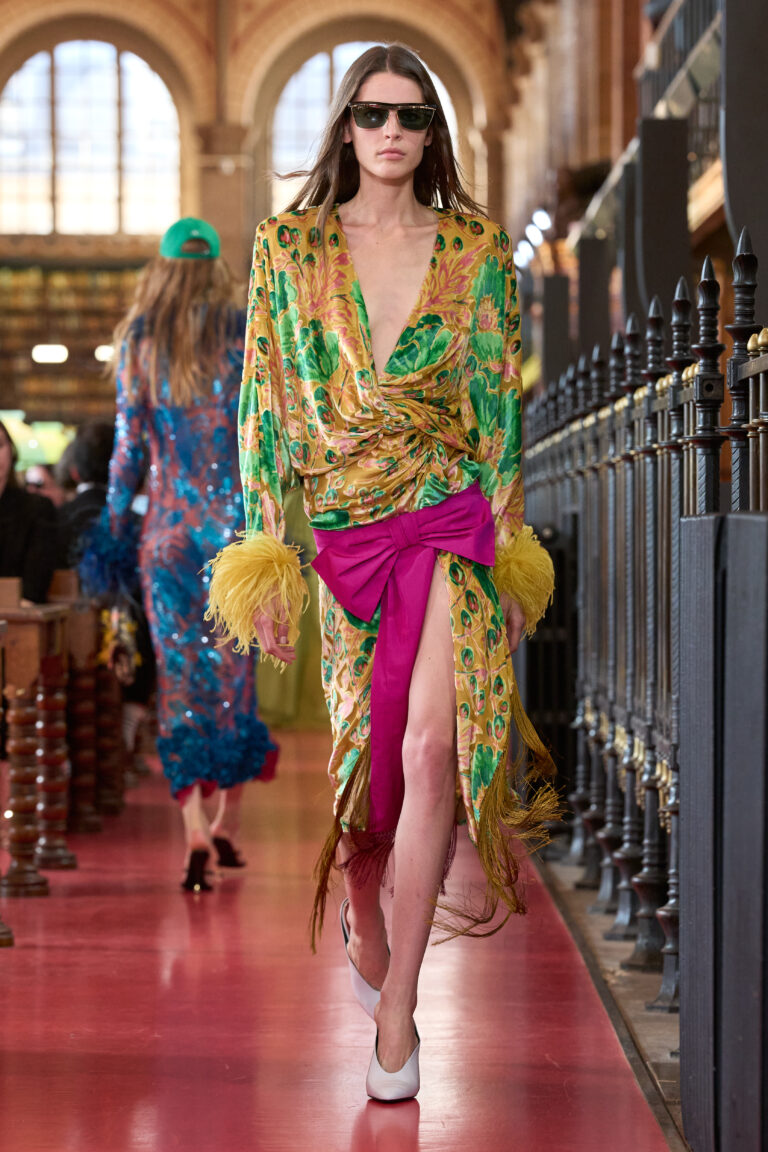
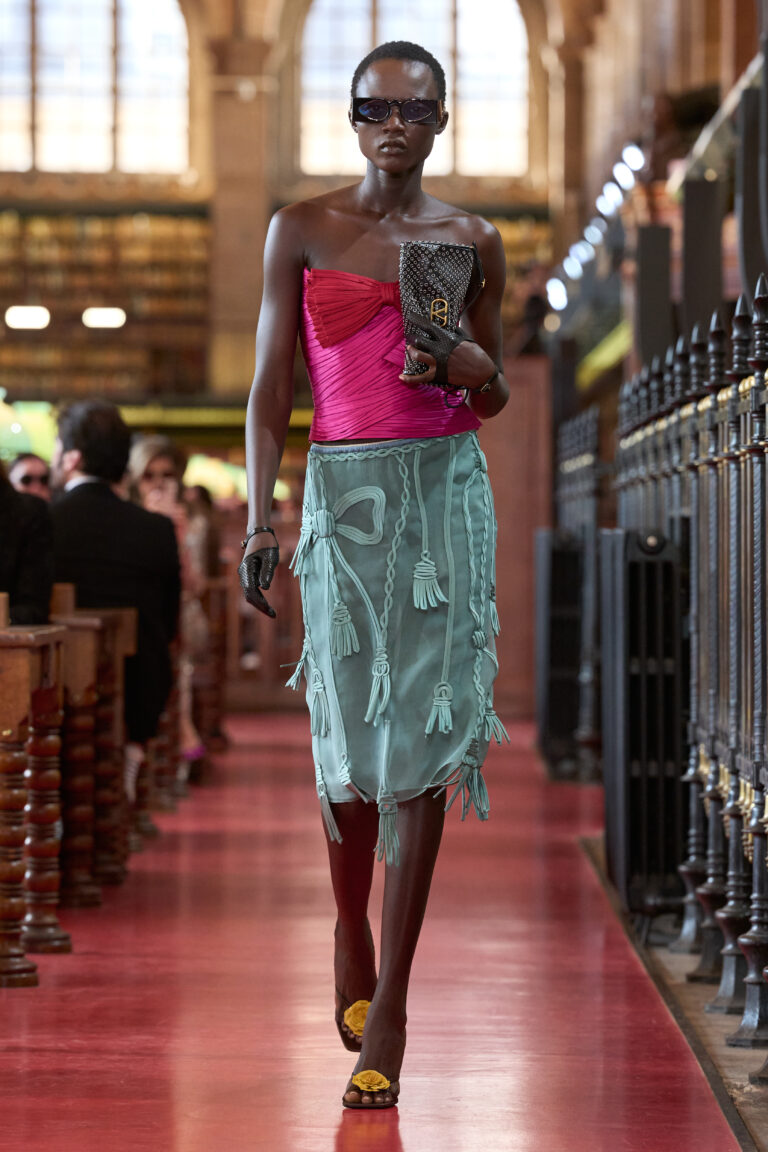
The detail does the talking. A peacock-print wrap dress arrives with feathered cuffs, a fuchsia bow and a swinging silk fringe, while a sheer aqua skirt is traced with knotted cords and tassels. Studded leather bags, worn crossbody or clutched in gloved hands, lend a harder edge to all that softness. It is the kind of craftsmanship that lives as vividly in an image as on a body.
Reading the Collection
The opening looks set the tone with sculpted satin bustiers in black, chartreuse, cobalt and fuchsia. They are worn over pleated, lace or richly embroidered skirts. Hemlines dissolve into feathers or burst into taffeta ruffles, while balloon trousers and brocade boots add a touch of theatre.
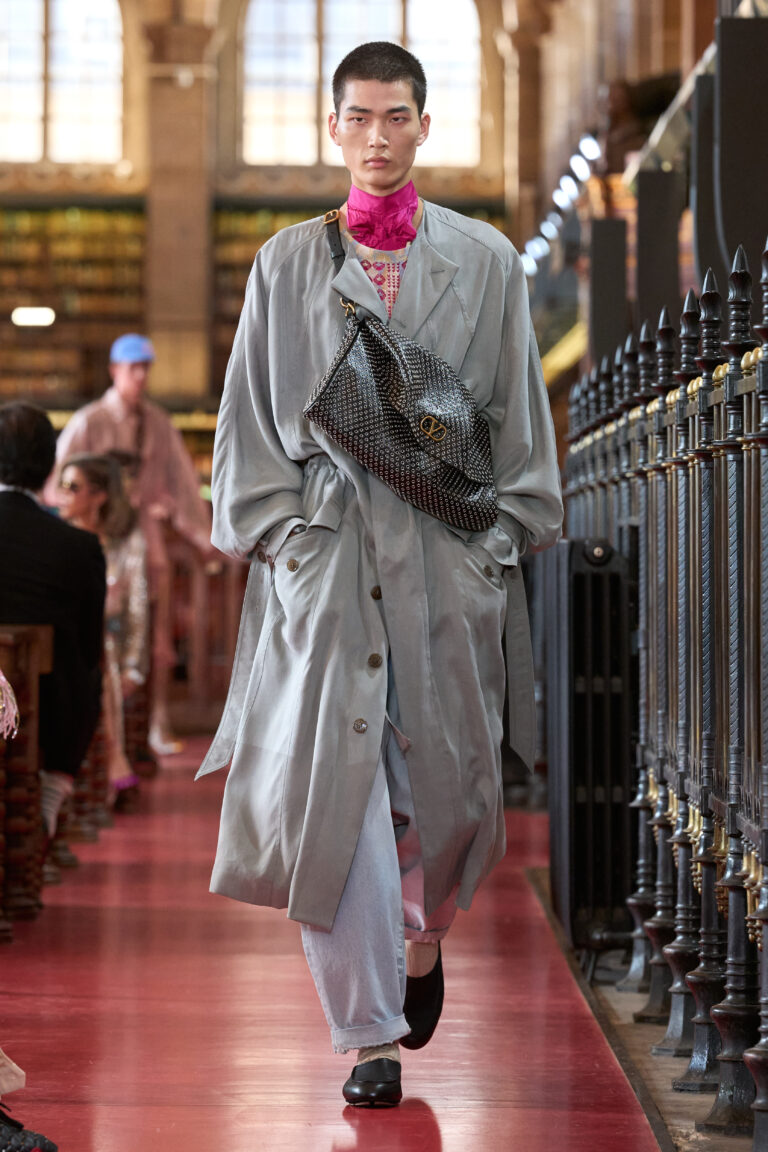
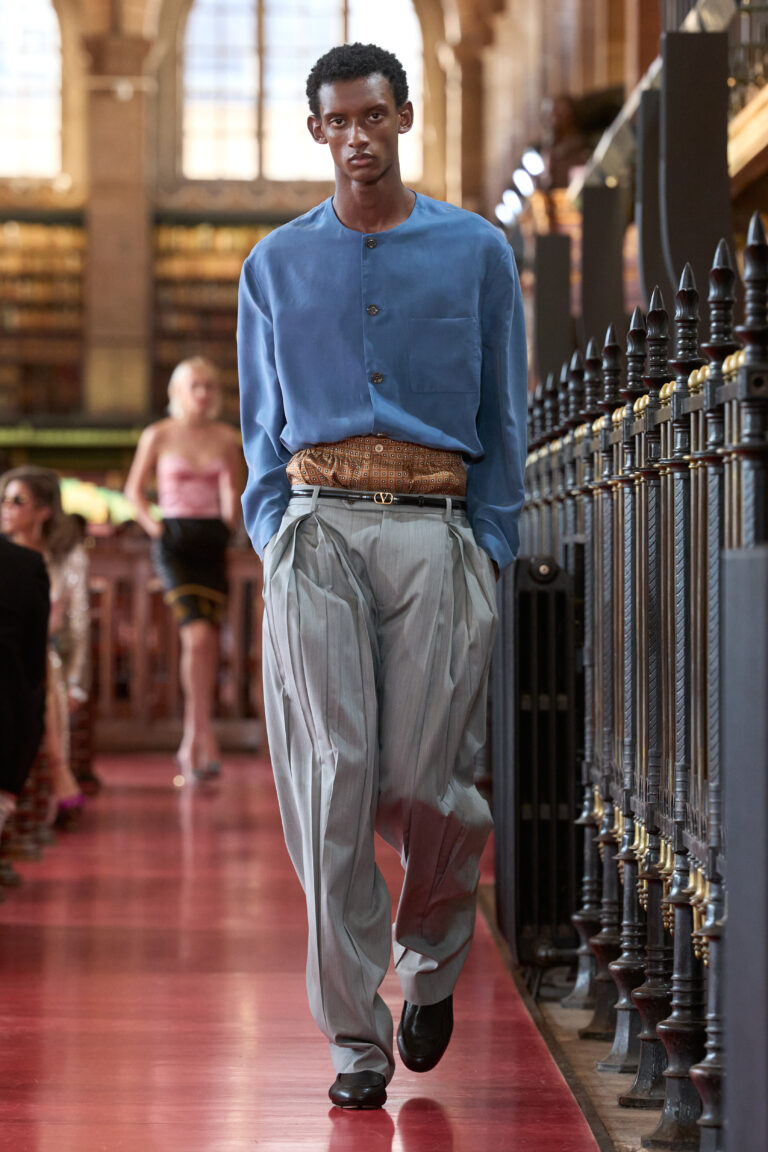
Menswear runs on generous proportions. Deeply pleated grey trousers pool over soft loafers, worn with a collarless silk shirt in faded blue and a glimpse of printed silk at the waistband. An oversized trench slouches over pale denim, while a flash of fuchsia at the neck keeps the tailoring irreverent.
The Collector’s Wardrobe
Michele is candid about where such garments end up. Some will cross the runway only once, and others will survive mainly in photographs. Still others will enter wardrobes and stay almost untouched, “cherished like relics”, as he puts it.
That will feel familiar to anyone who collects. A rare timepiece may seldom leave its box, yet it still shapes how its owner thinks about craft and beauty. Michele suggests fashion can work the same way, with its worth measured less by how often a piece is worn than by what it lets us imagine.
Seen this way, a runway becomes a visual antilibrary. It is a reservoir of silhouettes and ideas that keeps its power precisely because not all of it will be lived out. Even the clothes we never wear, the maison suggests, hint at lives we might yet live. They are not regrets but possibilities, still waiting to be opened.