
What if elegance is not about perfection, but about tension? What if it’s about the precise moment when discipline and excess, clarity and distortion, coexist without compromise? For Fall/Winter 2026-27, Valentino presents Interferenze—a collection born from this very friction.
This season’s narrative extends from earlier this year, when Valentino introduced Fireflies, a campaign rooted in a poetic vision by Pier Paolo Pasolini. It frames falling not as failure, but as a shared condition, captured in suspended moments of imbalance. Here, elegance lies not in control, but in the willingness to be held.
If Fireflies captures the emotional and poetic state of instability, as it is fleeting, luminous, and relational, Interferenze gives it form, translating that same condition into structure, material, and movement.
To stage this progression, creative director Alessandro Michele chose a setting that embodies dramatic duality: Rome’s 17th-century Palazzo Barberini. The palace’s rigorous architecture, which can be described as measured, symmetrical, and composed, finds itself in dialogue with the sweeping ceiling fresco by Pietro da Cortona, where painted skies dissolve the room’s boundaries.
This duality extends into the architectural masterplan of Gian Lorenzo Bernini and Francesco Borromini. The experience is choreographed through their contrasting sensibilities, one grounded in balance and clarity, the other in curvature and disorientation. Movement through the palace is at once guided and unsettled, reinforcing the idea that structure and instability are not opposites to be reconciled, but conditions that hold together.
For Alessandro Michele, Interferenze operates not simply as a concept, but as a creative method. As expressed in the show notes, fashion can be understood as a site where clashing forces inhabit the body, where clothing does more than adorn, instead shaping an ongoing exchange between discipline and desire, between collective expectation and personal expression, between belonging and excess. The garment becomes an active agent, structuring this tension rather than smoothing it out.
This philosophy unfolds throughout the collection. Tailoring establishes a sense of control, yet rarely remains untouched. A sharply defined silhouette softens as fabric shifts and drapes; a composed line is interrupted by a fold, a transparency, or a subtle asymmetry. References to the 1980s, think bold shoulders and assertive stance, are present, but recalibrated.
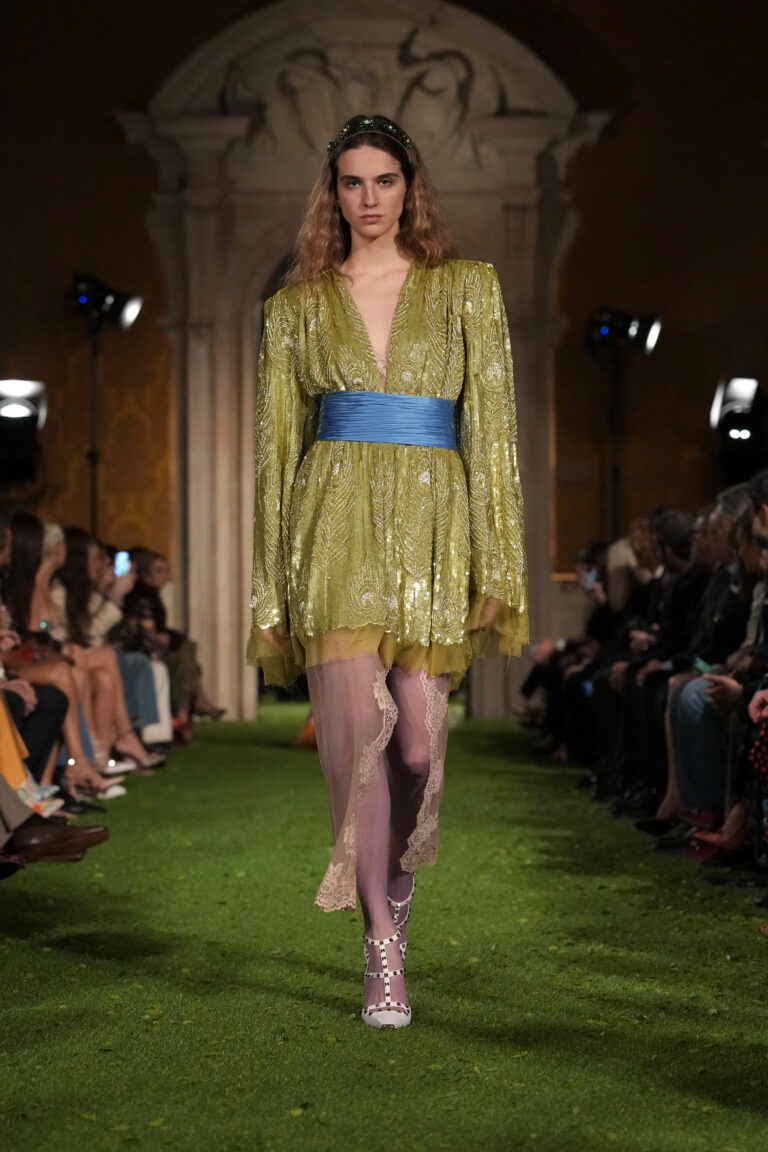
Throughout the 84 looks, including a significant menswear offering, garments exist in a state of negotiation. Pleats open surfaces and introduce movement, while lightweight fabrics blur the rigidity of form. Sheer voile trousers meet sculptural leather, chiffon glides against tailored lines, and details, often in unexpected ways, and interrupt the logic of construction. Nothing remains entirely fixed; each piece seems to adjust, as if responding to the body in real time.
Colour further intensifies this interplay. Valentino red appears with intention, set against softer tones such as powdery lilacs, pale greens, and grounded neutrals. Some combinations resist traditional harmony, yet achieve a subtle equilibrium through contrast. The effect is not seamless, but alive; colour functioning as another point of tension within the composition.
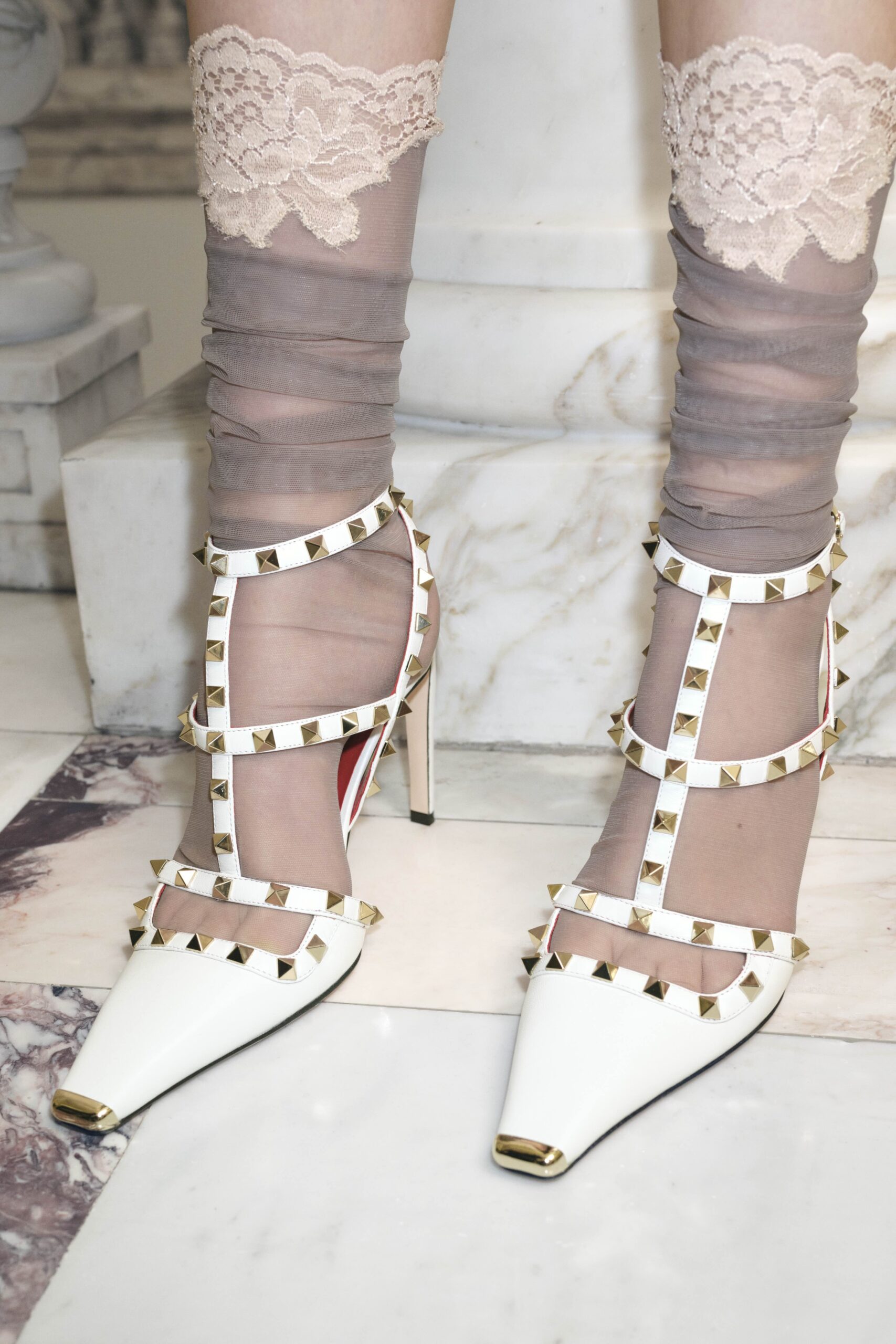
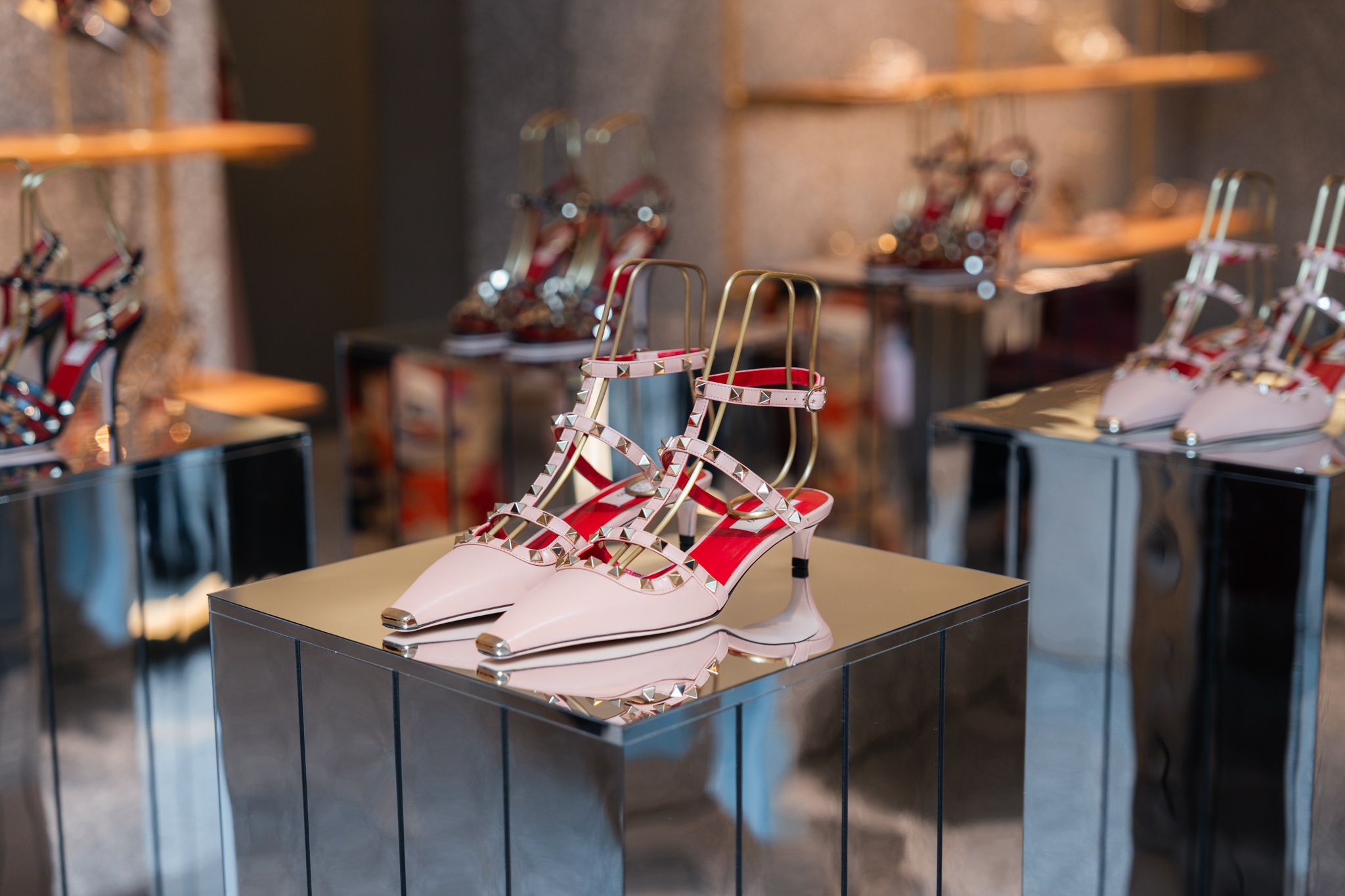
Accessories continue this architectural thinking. Rockstud bags return with a refined presence, their geometric precision echoing the visual language of Rome. Caged pumps, sculptural jewellery, and visor-like eyewear extend the silhouette, transforming the body into a constructed space—something both defined and destabilised.
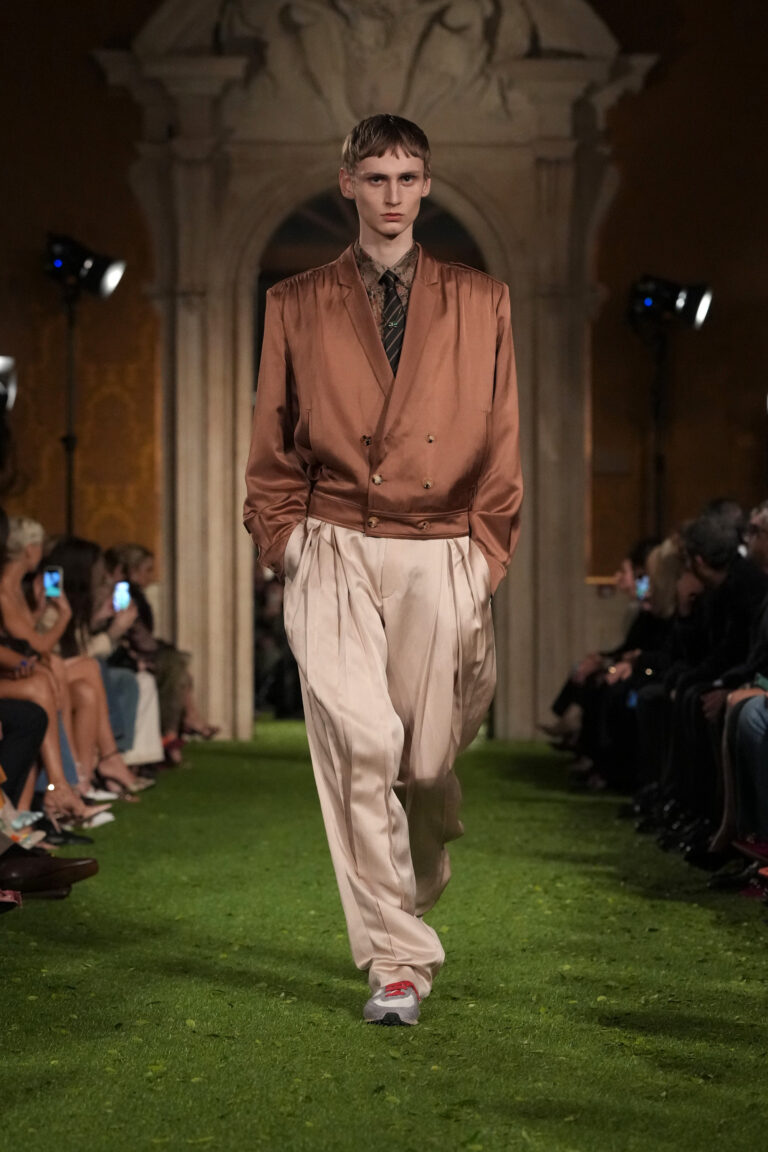
Presented in Rome before an audience of 700 guests, the show carries emotional weight. It marks a return to the house’s origins, while gracefully acknowledging its legendary founder, Valentino Garavani.
In Michele’s hands, the house’s heritage is neither preserved intact nor discarded; it is activated, placed in conversation with new gestures and ideas. From Fireflies to Interferenze, Valentino shows that heritage, when treated as a living conversation rather than a monument, can be a source of continuous evolution rather than repetition.