Chopard Sets the Night Alight with Happy Diamonds Launch

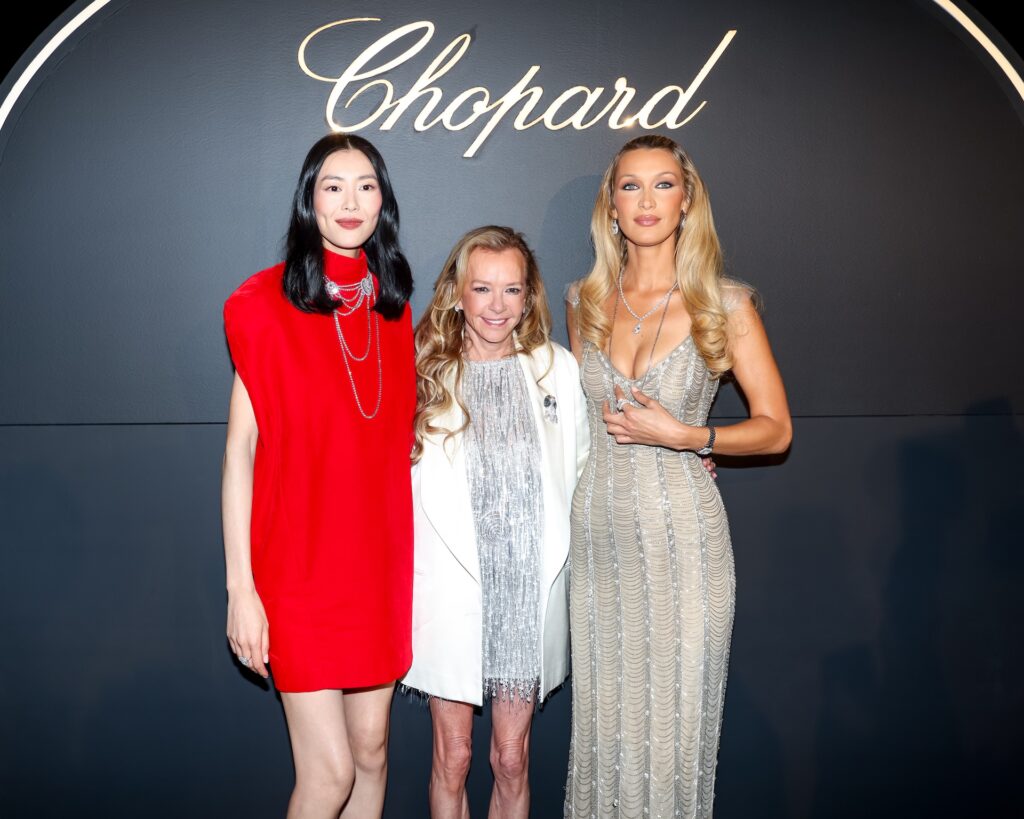
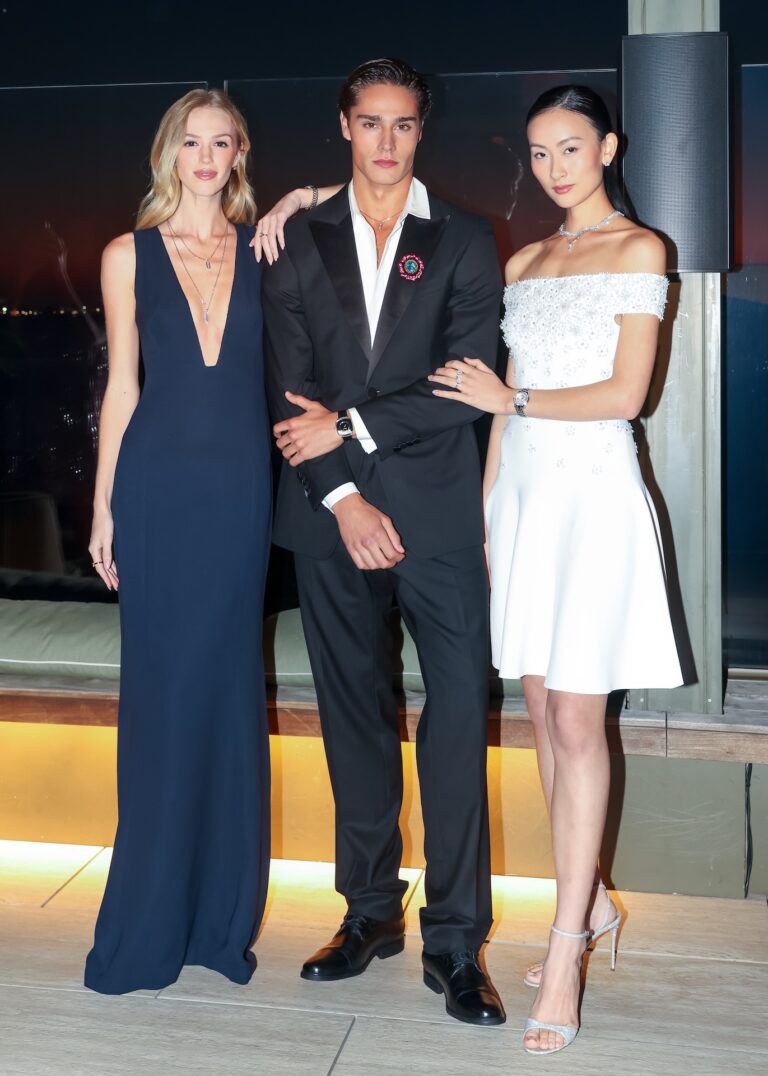
Liu Wen, Caroline Scheufele, and Bella Hadid at Chopard's global launch of Happy Diamonds.


They say all that glitters is not gold, but it was definitely not the case at Chopard’s global launch of its Happy Diamonds collection at New York Fashion Week 2026. Gold did glitter and diamonds did sparkle as esteemed friends of the Maison along with Chopard Co-President Caroline Scheufele were on hand to celebrate the Happy Diamonds campaign.


Amongst these people are Chopard’s Ambassadors Bella Hadid and Liu Wen, as well as Cody Fern, Karl-Anthony Towns, Jacob Rott, Charlie d’Amelio, Kim Shui, Katya Tolstova, Cynthia Rowley, Nil Sani, Jordyn Woods, Jessica Wang, Future, Hailey Sani, Aisha Mian, Olivia Link and Diogo Lapas.


Olivia Link, Diogo Lapas, and Rena Youfu at Chopard's global launch of Happy Diamonds.

The campaign itself, which celebrates fifty years of one of the Maison’s most innovative creations, stars Bella Hadid and Liu Wen under Manu Cossu’s direction. Celebrated choreographer and movement director Stephen Galloway and renowned photographer Greg Williams also contributed in bringing the joyful spirit of Happy Diamonds to life.


As remarked by Caroline Scheufele during the exclusive event, “Happy Diamonds have always represented a unique vision of joy and freedom and this campaign beautifully captures that spirit. Through the energy embodied by Bella Hadid and Liu Wen, it celebrates the way these diamonds accompany every moment of life, reflecting the individuality of the women who wear them.”


The evening also marked the unveiling of the Happy Sport Joaillerie New York Special Edition, which evidently paid tribute to The City That Never Sleeps, the very city that hosts this exclusive event. It is a one-of-a-kind creation distinguished by a bezel set with 10 carats of Ashoka-cut diamonds. On the dial, you can see a playful charm inspired by the city, joining six pink Happy Diamonds. 


Additionally, if you are a Chopard enthusiast, head on down to the Maison’s Fifth Avenue boutique to see the exhibition dedicated to both the Happy Diamonds and Happy Sport collections, which features an exceptional selection of historical jewellery and timepieces, alongside original sketches and archival documents. 

Chopard Celebrates 50 Years of Happy Diamonds

A cinematic campaign, a watchmaking icon reborn and a new family of pendants mark half a century of diamonds set free.


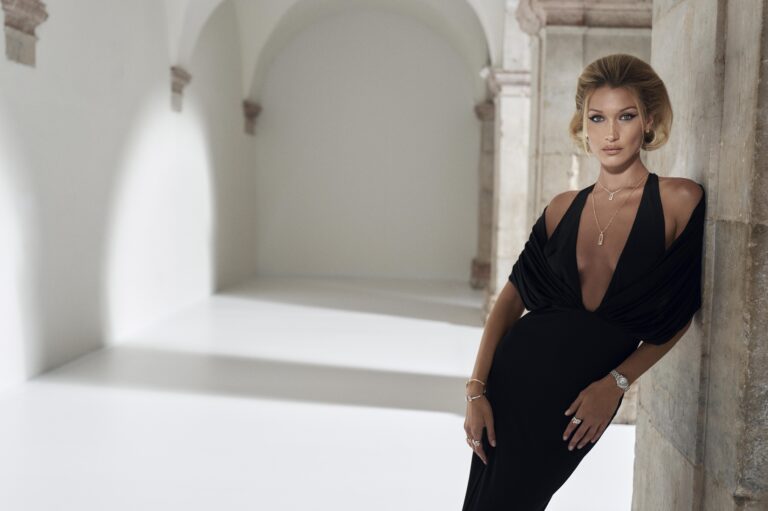
Some ideas are too joyful to stay still. Fifty years after it first freed diamonds from their settings, Chopard marks the anniversary of Happy Diamonds with a cinematic campaign starring two of fashion’s most compelling faces, Bella Hadid and Liu Wen.


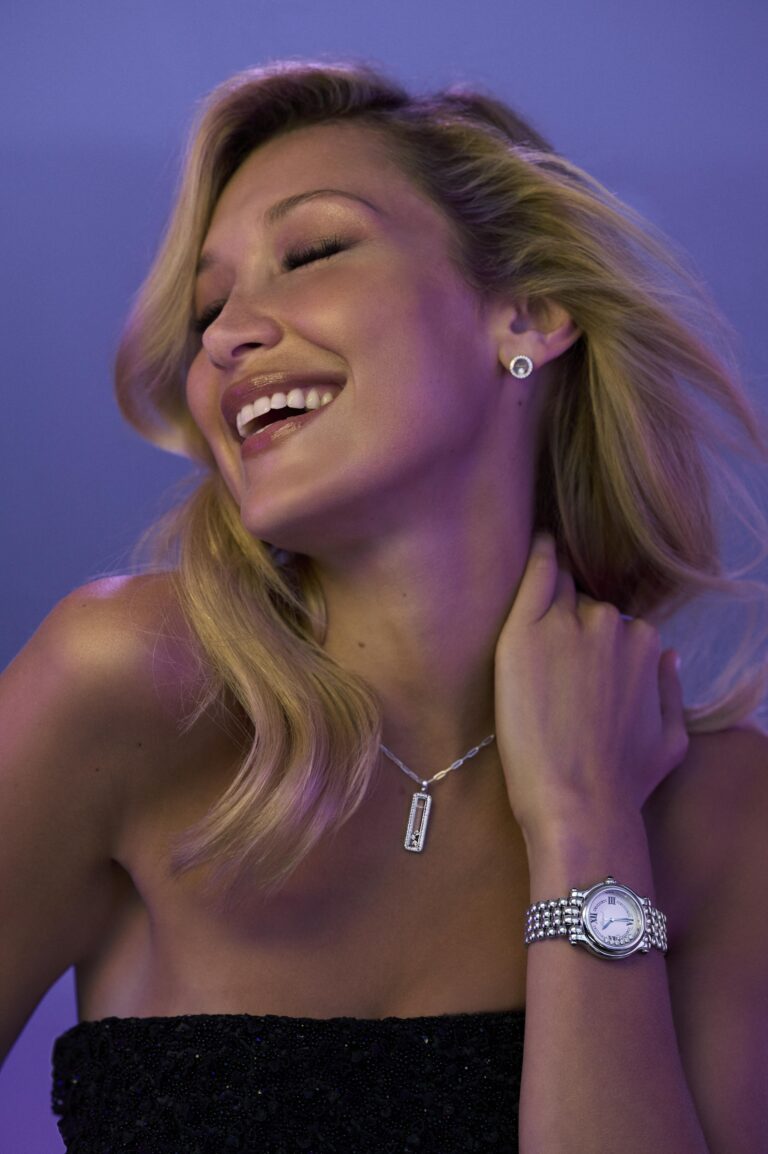
Directed by Manu Cossu and photographed by Greg Williams, the campaign makes movement its central language. Diamonds drift across skin, respond to a turned shoulder or a held breath, and catch the light like fleeting fragments. Choreographer Stephen Galloway, drawing on contemporary dance, shaped every gesture down to the smallest detail.

Bella Hadid layers the new Happy Diamonds pendants

Two Faces, One Freedom


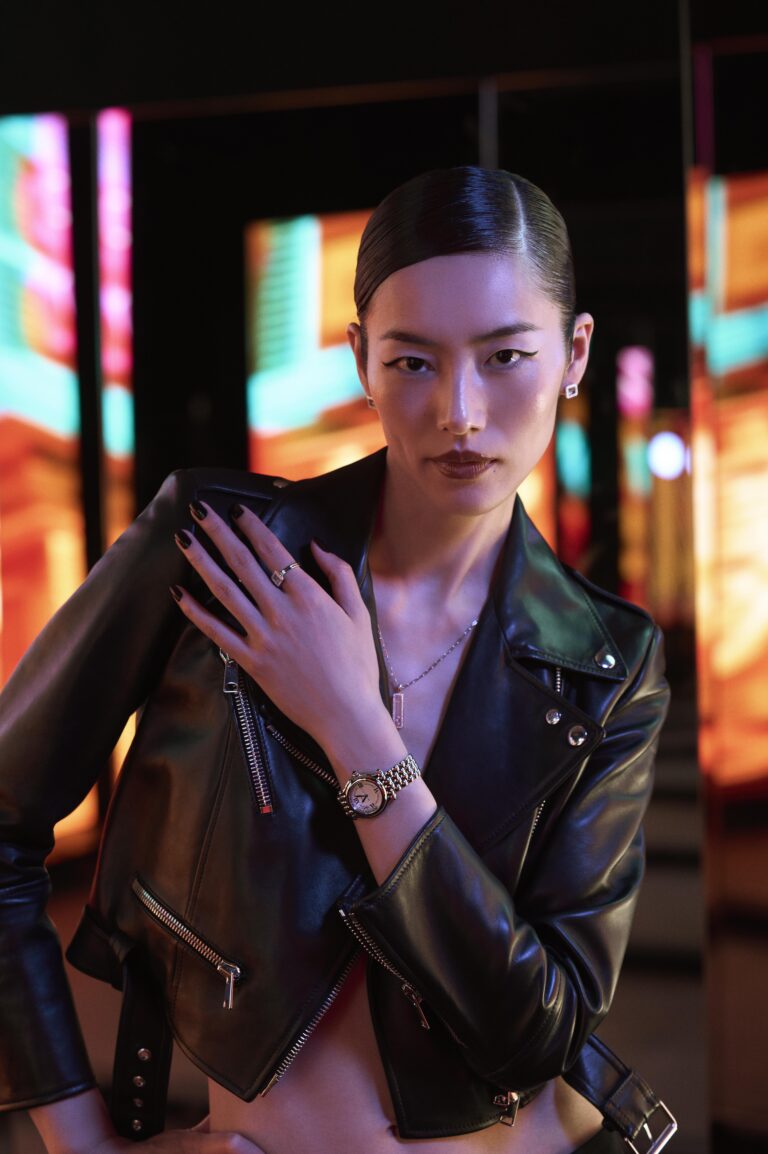
The casting is a study in contrast. Hadid, an ambassador for the House since 2024, brings an electric spontaneity, her gestures instinctive and unscripted. Newly appointed ambassador Liu Wen offers the counterpoint: composed, deliberate and quietly powerful. “For 50 years, the dance of Happy Diamonds has mirrored freedom,” says Caroline Scheufele, Co-President and Artistic Director of the maison.

Bella Hadid in Happy Diamonds and Happy Sport The First
Liu Wen in Happy Sport The First and Happy Diamonds

A Waterfall and a Philosophy


The story begins in 1976, with sunlight scattering across the spray of a Black Forest waterfall. Translated into jewellery, that image became diamonds moving freely between two sapphire crystals. On seeing the first prototype, Karin Scheufele remarked that diamonds are happier when they are free, and the phrase became a guiding principle.

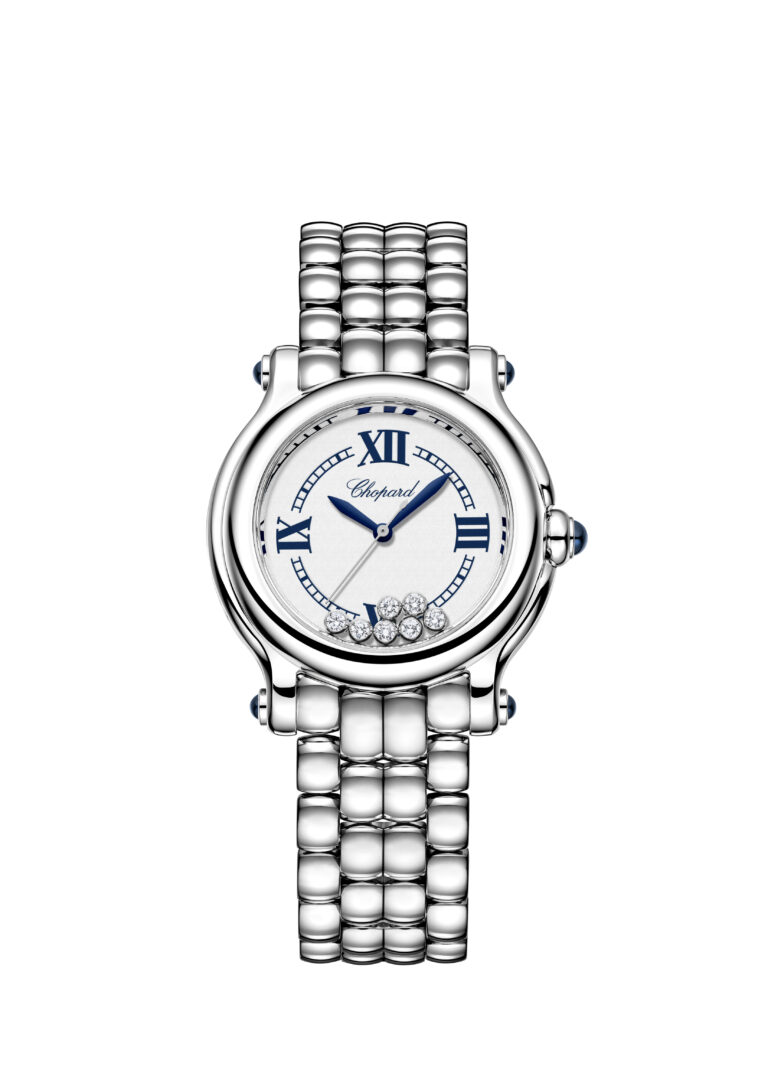
Happy Sport The First in Lucent Steel™

The Icons Return


The campaign reintroduces Happy Sport The First, a re-edition of the 1993 watch that became the first to pair steel with diamonds. Imagined by Caroline Scheufele for women, it returns in 26 mm and 33 mm sizes, in Lucent Steel™ and ethical yellow gold, its proportions refined but its spirit intact.


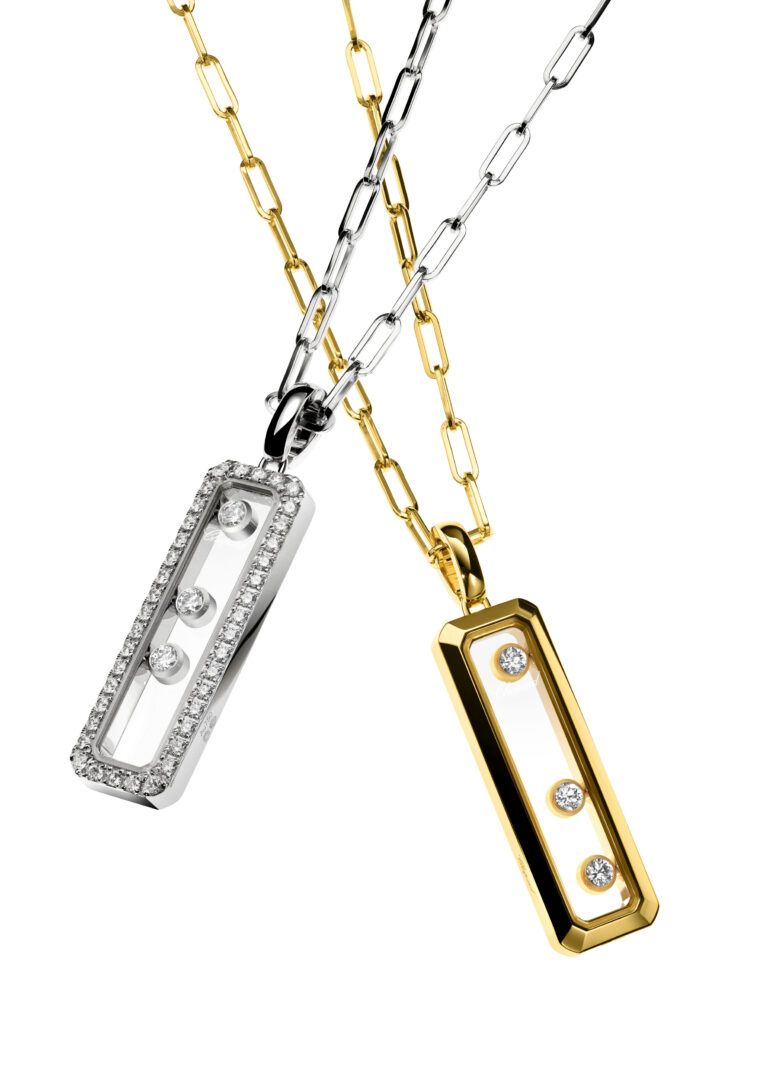
Alongside it arrives a new family of Happy Diamonds pendants, reviving a rectangular silhouette first drawn in 2006. Six designs span two sizes in ethical yellow, rose and white gold, each with more room inside for the diamonds to dance. A new rectangular-link chain, made in-house, invites layering, and the pieces are designed to be worn by anyone.


At the summit sits a high jewellery pendant crafted in the Haute Joaillerie atelier. Seven happy diamonds move within a frame of trapeze and emerald-cut diamonds that illuminates the centre without ever confining it.

Happy Diamonds pendants in ethical white and yellow gold

Brilliance With a Conscience


That freedom extends to the materials. Since 2018, the Geneva house has used 100% ethical gold across its watches and jewellery. Lucent Steel™, made with 80% recycled material, followed in 2023.


Half a century on, the message holds. Beauty lives in movement, and the best of it often arrives unexpectedly.

Rolex and National Geographic Mark 70 Years of Exploration

In 1953, a Rolex reached the top of the world, strapped to the wrist of a climber on Everest. More than seventy years later, the company seems far less interested in conquering the planet than in keeping it alive. That change of heart runs right through the long alliance between Rolex and National Geographic, and 2026 has given a sharp picture of where the mission now sits.


It is a telling shift for a name built on human triumph. The great prize of exploration was once the first footprint or the unclimbed peak, yet the map has almost no blank spaces left. What remains is the harder work of protecting what earlier explorers merely charted. Rolex has leaned into that idea with real conviction, funding conservation on a scale few luxury houses come close to matching.

©Courtesy of the National Geographic Society
Courtesy of ©Rebecca Hale at National Geographic Society

The bond with National Geographic gave that mission a home. The two first fell into step after the Everest climb and spent decades chasing discovery side by side, before slowly turning towards the planet’s survival. The clearest sign of where they have landed sits in two very different places, a forest in southern India and a building in Washington.

A Scientist Rewriting Coexistence

Start in India, with a conservation scientist named Krithi K. Karanth. Rather than lecture villagers about the value of tigers, she built them a lifeline. Her Wild Seve helpline lets a family report a lost goat or a trampled field and claim government compensation, and it has grown from a two-reserve pilot into a service covering dozens of reserves. It treats living alongside wildlife as a practical problem to be solved.


The scale of what she takes on is staggering. India holds most of the world’s remaining tigers and a huge share of its Asian elephants, yet barely a twentieth of the country is set aside for them. With people and big animals pressed together, roughly 100,000 clashes are logged every year. Karanth has been in this world since childhood, tracking big cats beside her biologist father long before she turned it into science.

Courtesy of ©Alisha Vasudev at National Geographic

That work has now earned her the 2026 title of Rolex National Geographic Explorer of the Year, given each year to explorers whose storytelling pushes the world to act. She was already a Rolex Awards laureate, and her classroom programme has since carried the message to tens of thousands of rural children. Her ambition is openly global, a model that could just as easily shield jaguars in South America or lions in Africa.

From Everest to a Museum

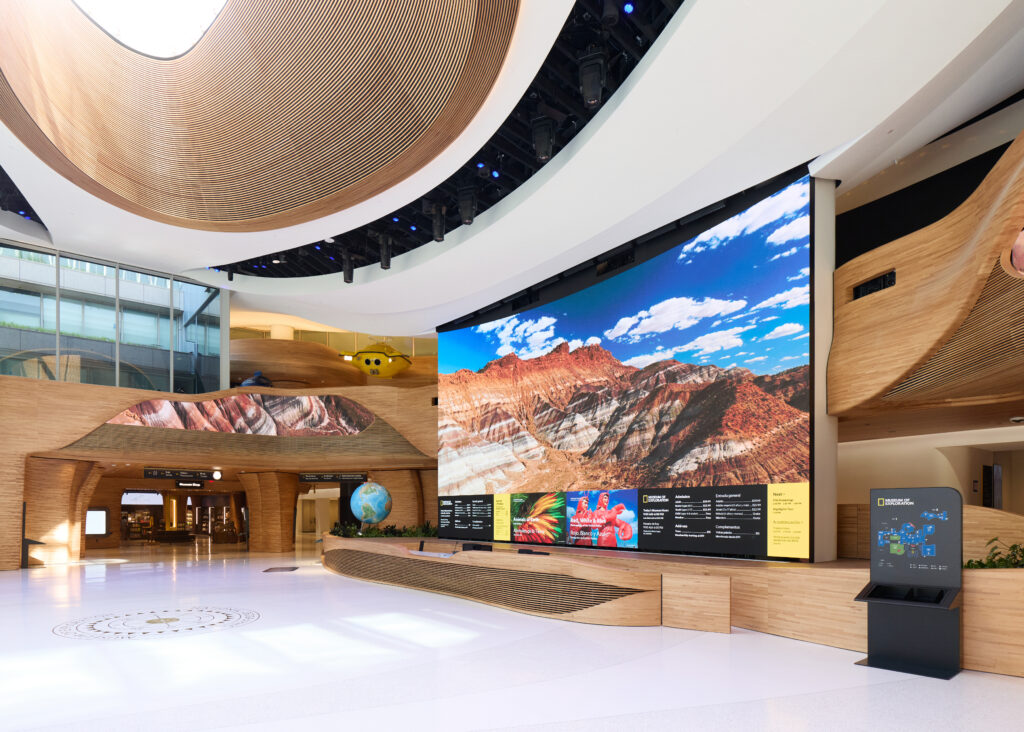
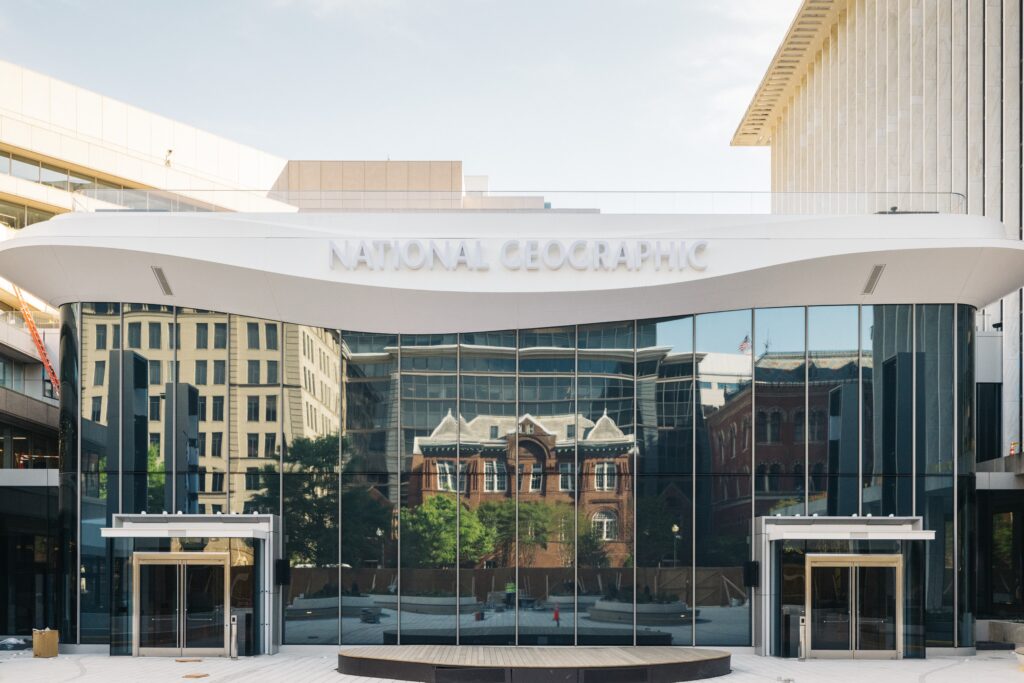
Then travel to Washington, where the story takes a very different shape. National Geographic has turned its headquarters into a sprawling campus called Base Camp, the biggest expansion in its history, and Rolex has helped fund it as a founding donor. At the centre stands a new public museum given over entirely to exploration.


The point is to let ordinary visitors feel the pull of the field. Inside, a section called the Rolex Explorers Landing walks people through the arc of an expedition, from the first flicker of an idea to its effect on the world. One display holds the pressurised suit Sylvia Earle wore in 1979 for the deepest untethered walk on the sea floor, a reminder that some frontiers are watery rather than icy.

©Courtesy of the National Geographic Society
Courtesy of ©Rolex Arnaud Montagard

What keeps it from feeling like a museum of the past is a rail that streams findings almost live from the Perpetual Planet Expeditions, the research missions Rolex and National Geographic run together. For a brand that once kitted out a single climb, paying for a permanent stage for science is a quiet statement about legacy. Flags get planted and forgotten. Keeping the planet worth exploring may prove the harder win.

The Colour of a Border That Kept Moving, Chopard’s L.U.C 1963 and the Story Hiding in Its Dial

Most watch dials tell you the time and nothing else. Every so often, though, one turns out to be quietly telling you a history lesson too, and you only find out if you bother to ask why that particular shade was chosen. Chopard’s new L.U.C 1963 Heritage Chronograph is exactly that kind of watch, the sort of piece that looks simply elegant from across the room, and then gets considerably more interesting the moment you learn where its colour actually came from.

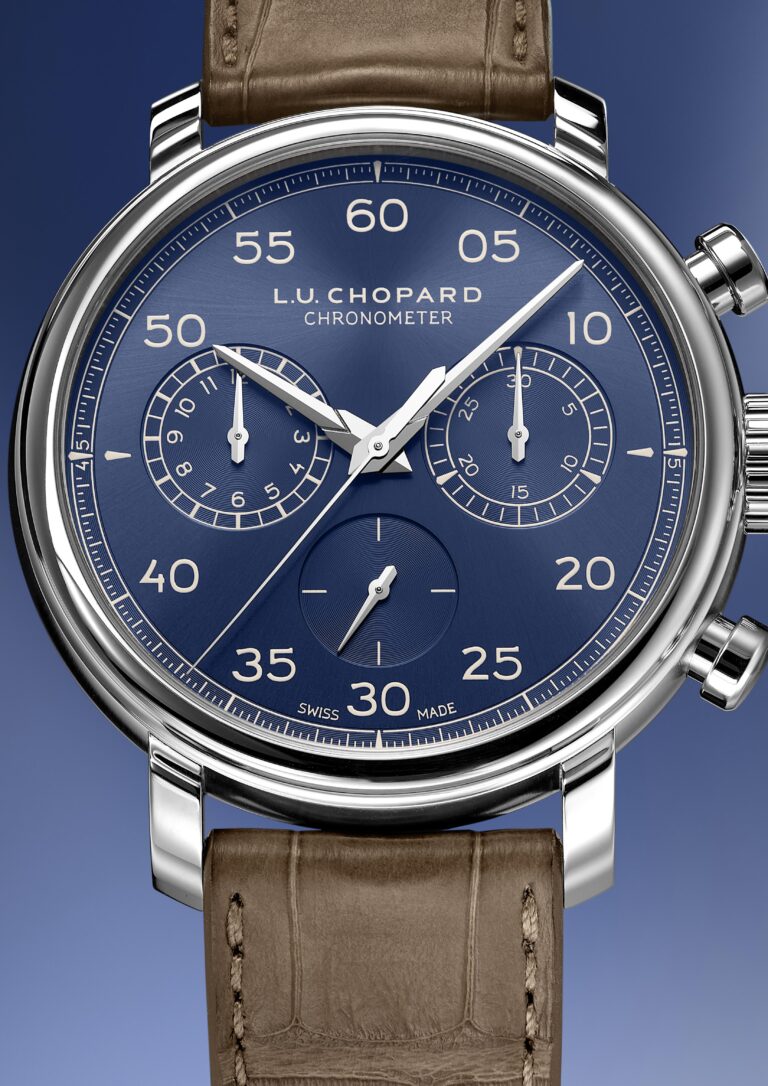
A close-up of the L.U.C 1963 dial. Prussian Blue face with cream numerals and twin sub-dials. A brown alligator strap frames the steel case.

Here’s the slightly odd bit of history worth sitting with. Between 1707 and 1857, the Canton of Neuchâtel, where Chopard would eventually build its Fleurier Manufacture in 1996, belonged to the Kingdom of Prussia, even while it had already become a Swiss canton in 1815.

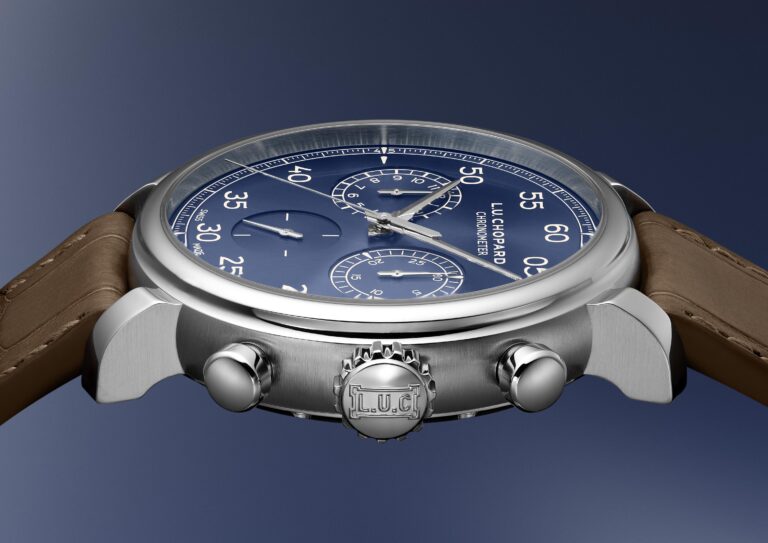
Two flags, one territory, a status that existed nowhere else in Europe. It’s an unusual footnote to build a watch around, and yet that’s precisely what Chopard has done: the new limited edition wears a “Prussian Blue” dial with an off-centred sunburst finish, a colour that spread through the region during those overlapping years and has stayed tied to its identity ever since.

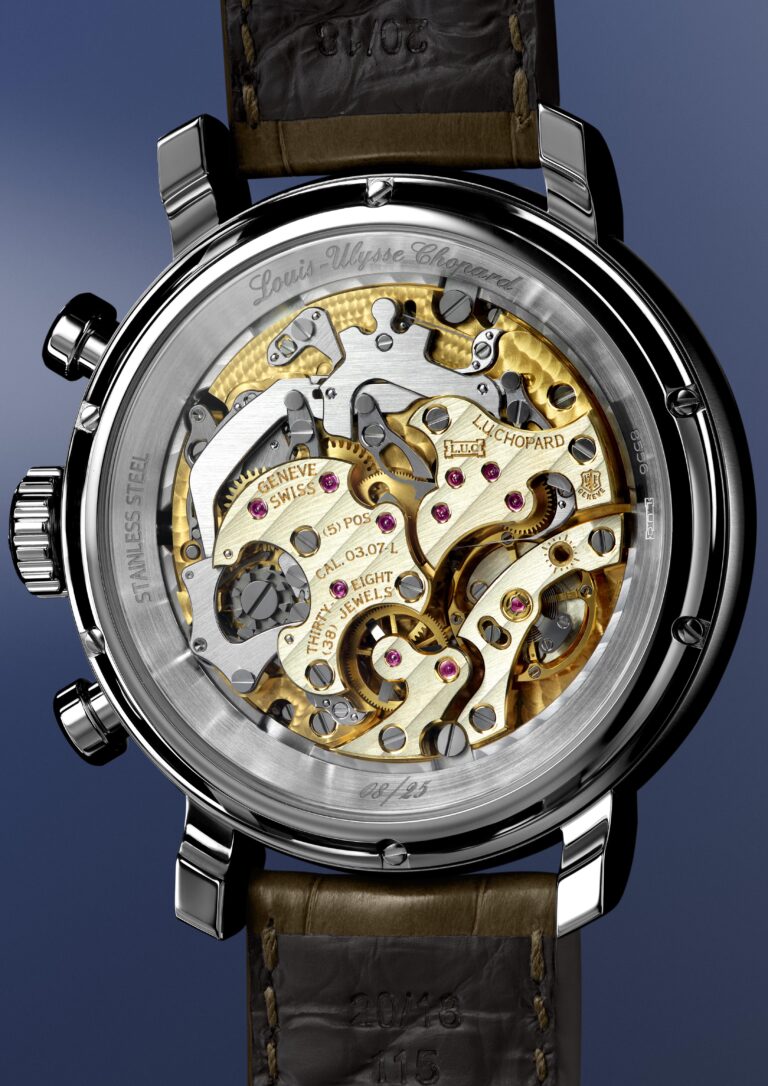
The exhibition case-back reveals the movement inside. Gold-toned bridges sit beside brushed steel components. The engraving marks it 08 of 25.

That’s the payoff of choosing heritage as your starting point rather than just picking a colour because it photographs well. The dial itself is deliberately uncluttered, no date window competing for attention, just large, rounded numerals running from 05 to 60 for the chronograph seconds, and the word “Chronometer” sitting under the L.U.CHOPARD logo at 12 o’clock, a quiet nod to the fact that this movement has actually earned that label through independent COSC testing.

Underneath that history-laden dial sits the L.U.C 03.07-L, a fully integrated column-wheel flyback chronograph built entirely in-house, with a 60-hour power reserve and a sapphire case-back so you can watch the mechanics do their work.

A low, angled view of the watch case. Chronograph pushers flank the crown, engraved with the L.U.C monogram. The blue dial curves softly into view.

The finishing carries its own quiet flex, German silver bridges set against a gold-toned mainplate, Côtes de Genève decoration, and a level of hand-craftsmanship recognised by the Poinçon de Genève, one of watchmaking’s oldest and most demanding certifications.

As Karl-Friedrich Scheufele, Co-President of Chopard, puts it, the calibre reflects an approach to Haute Horlogerie built on “developing innovative technical solutions in the service of precision, while never losing sight of the beauty of the movement.”

Limited to just 25 numbered pieces, worn on a brown alligator strap, this isn’t a watch many people will own. But it is one worth knowing about regardless, because it’s a reminder that the best luxury objects rarely separate craftsmanship from context; the finishing matters, but so does knowing exactly why the dial is the colour it is.

From Gucci to Chopard, a Remarkable Love Story of Georgina Rodríguez and Ronaldo

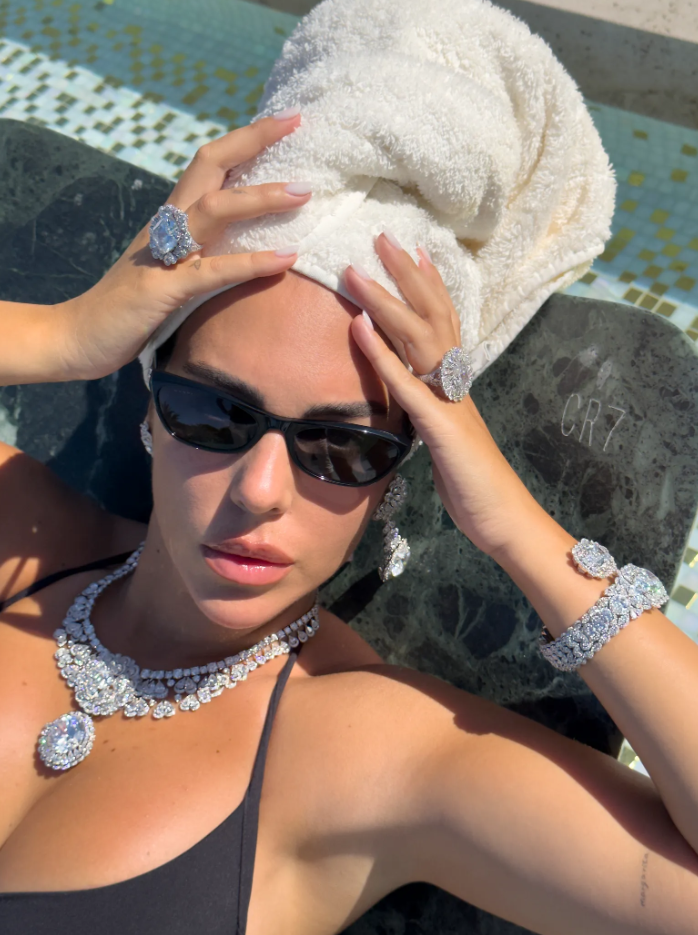
For Georgina Rodríguez and Cristiano Ronaldo, ten years of love culminated in an intimate wedding surrounded by their children and illuminated by some of the world’s most exceptional diamonds. On 11 August 2026, the couple celebrated their marriage in Cascais, Portugal, marking a new chapter in a relationship that began with an unexpected encounter in Madrid.

A Decade in the Making

Rodríguez and Ronaldo first met in 2016 when she was working at a Gucci boutique in Madrid. What began as a chance encounter developed into a relationship that would unfold over the following decade, taking them from their first meeting to a family of seven.

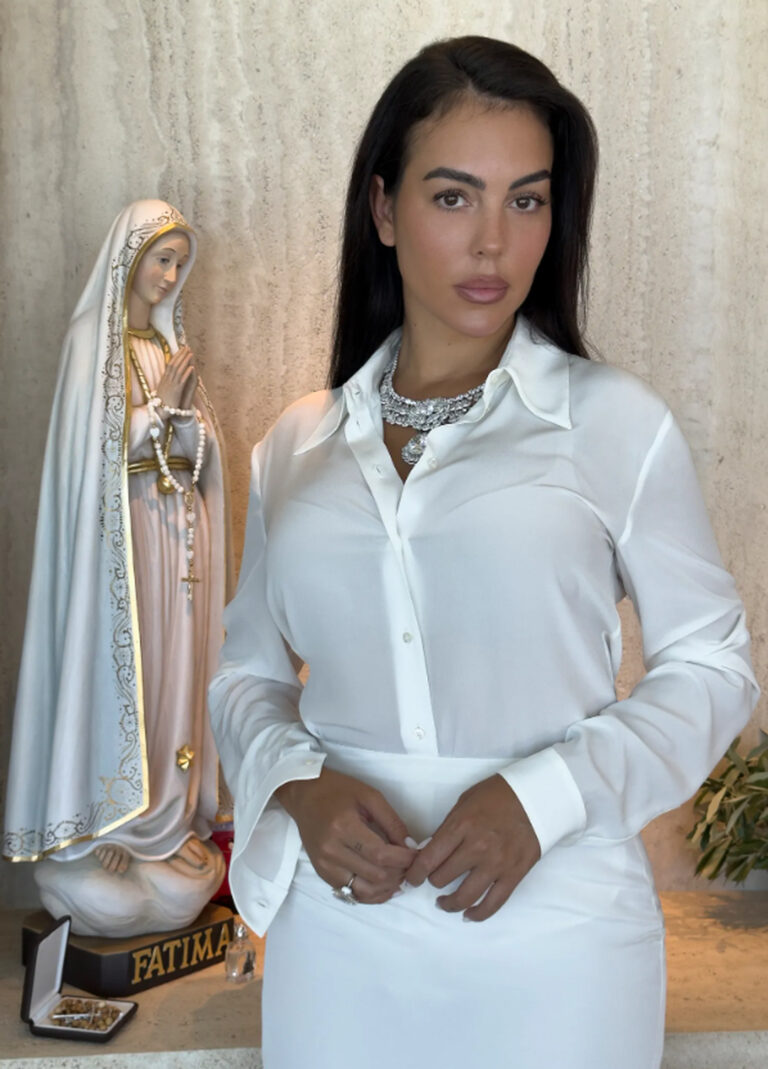
For their wedding, the couple chose intimacy over spectacle, celebrating the occasion with their five children. Rodríguez’s bridal look remained elegant and understated, allowing her extraordinary jewellery to take centre stage.

The Garden of Kalahari

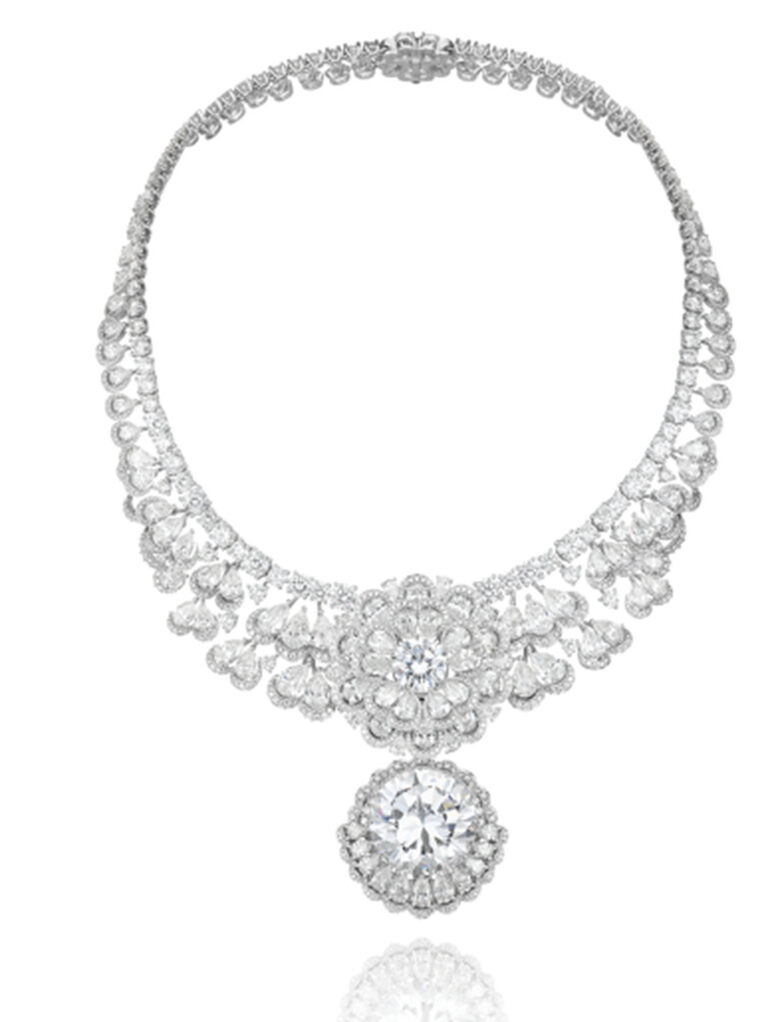
The bride selected a spectacular suite from Chopard’s Haute Joaillerie universe, including jewels from The Garden of Kalahari. At the heart of the collection is an extraordinary 342-carat rough diamond discovered at Botswana’s Karowe mine, which Chopard transformed into 23 exceptional stones.

For Rodríguez, the jewels included a necklace centred on a remarkable 50-carat D Flawless brilliant-cut diamond, accompanied by a 6.41-carat D Flawless brilliant-cut diamond, alongside pear-shaped, brilliant-cut and marquise-cut diamonds.

The Garden of Kalahari’s floral inspiration lends the collection its name and character, with the different diamond cuts evoking the forms of a blossoming garden.

A Bridal Symphony of Diamonds

The spectacular necklace was accompanied by matching earrings featuring a 25-carat pear-shaped D Flawless diamond and a 26-carat heart-shaped D Flawless diamond. Additional pear-shaped and brilliant-cut diamonds added further radiance.

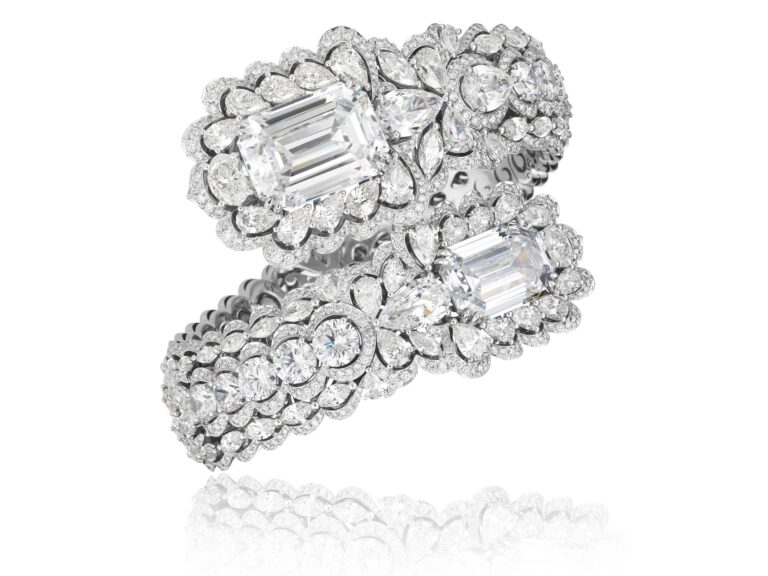
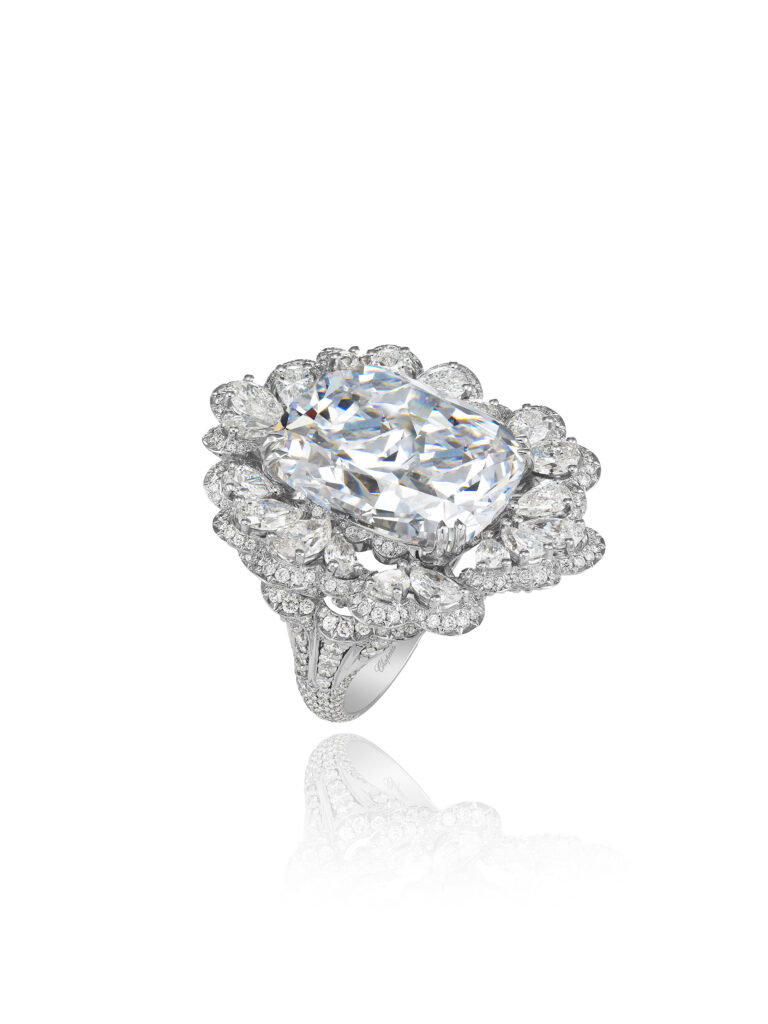
Rodríguez completed the suite with a ring featuring a 20-carat D Flawless cushion-cut diamond and a bracelet set with two D Flawless emerald-cut diamonds weighing 21 and 14.7 carats. A further Chopard Haute Joaillerie ring, featuring 5.7 carats of pear-shaped and marquise-cut diamonds, completed the jewellery ensemble.

From Gucci to Chopard

There is a fitting sense of symmetry in the story. Gucci was where Rodríguez and Ronaldo’s paths first crossed, while Chopard provided the extraordinary jewels for their wedding day.

After ten years together, their celebration brought the story full circle: from a chance encounter in a Madrid boutique to a private ceremony in Portugal, with their family at its centre and a spectacular constellation of Chopard diamonds marking the occasion.

For Rodríguez, the jewels were more than bridal adornments. They became part of a milestone that united a decade of memories with the beginning of another chapter.

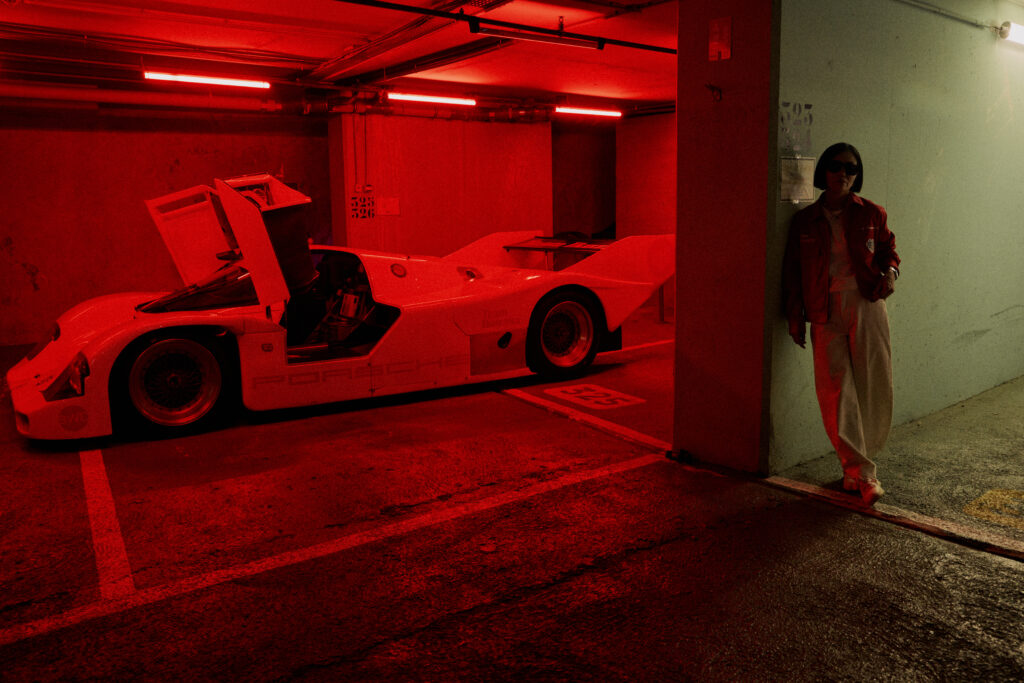
The TAG Heuer x Team Ikuzawa Carrera Captures Japan’s Racing Soul

There is a particular romance to Japanese motorsport. Picture the late 1960s, when a wave of Japanese drivers and engineers set out to prove themselves against the European establishment, turning circuits like Fuji and Suzuka into arenas of national ambition. That spirit has never really faded.


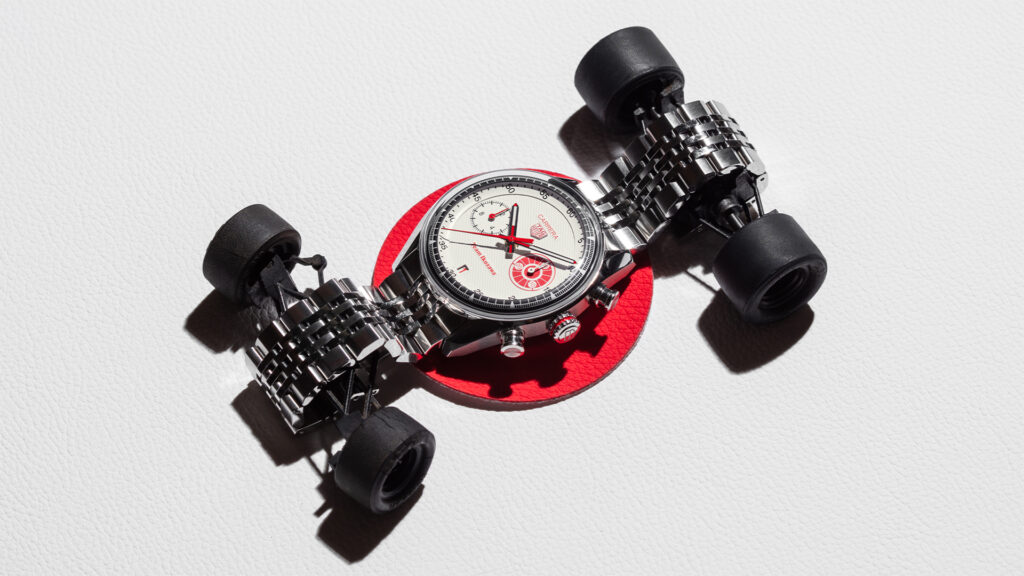
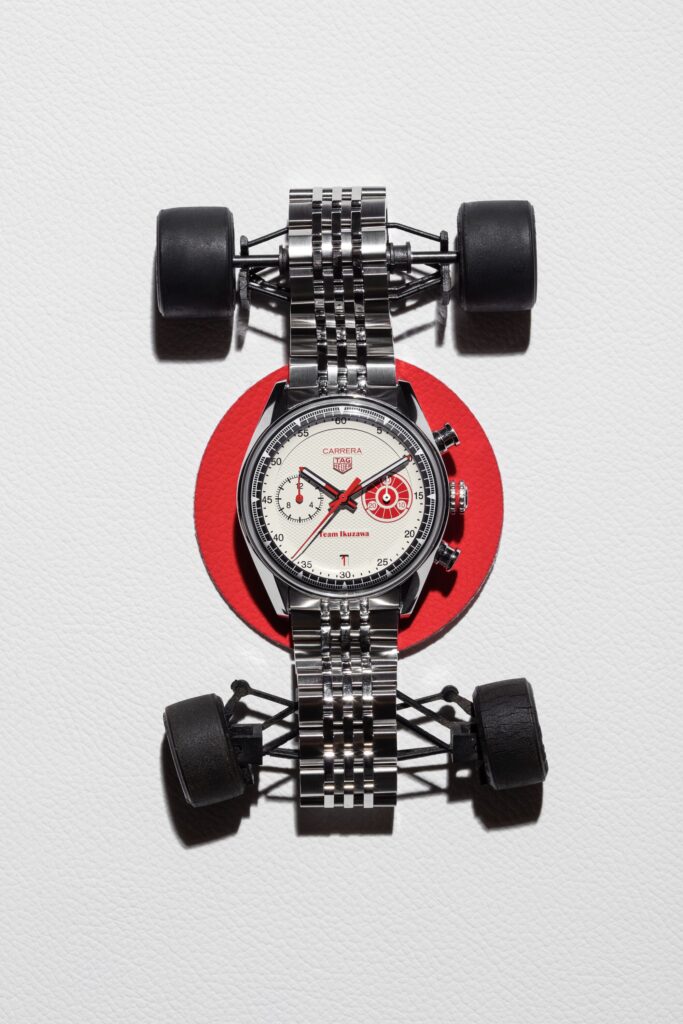
Today its bold liveries and analogue soul are being rediscovered by a global audience raised on Gran Turismo and vintage-car culture. Now it has a new ambassador on the wrist too, the TAG Heuer Carrera Chronograph x Team Ikuzawa. It marks the second time these names have joined forces, after a first collaboration back in 2023.


Few brands are better placed to answer that call than TAG Heuer. Its bond with racing is no recent marketing angle. The Carrera itself was named by Jack Heuer after the perilous Carrera Panamericana road race back in 1963.


For decades, Heuer stopwatches and dashboard timers lived inside rally cars and on pit walls around the world. The brand also put its name on Formula 1 machinery long before trackside sponsorship was fashionable, and it returned as the sport’s official timekeeper in 2025.

So there is a neat logic when Swiss timing meets Japanese speed. Across fashion and design, old racing names are being reborn as cultural platforms, prized as much for their graphics and attitude as for their trophy cabinets.


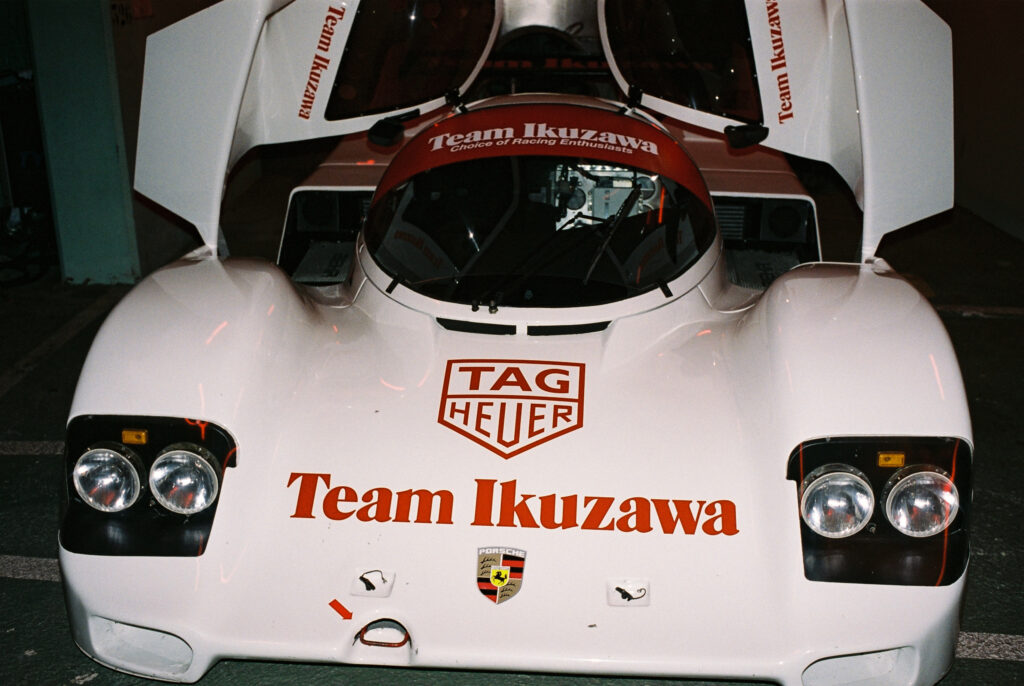
Team Ikuzawa is one of the finest examples of the trend, and for this project it has joined forces with TAG Heuer once again, with customisation specialist George Bamford completing the trio.


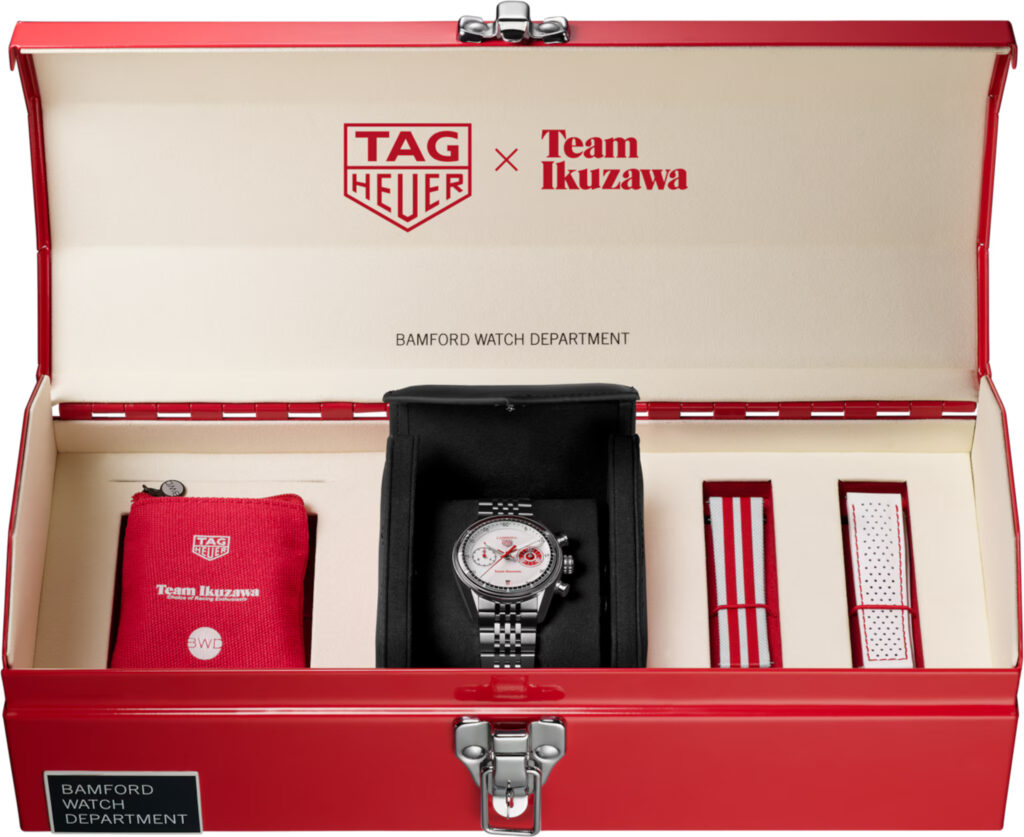
The result is a chronograph limited to just 150 individually numbered pieces, and it already feels like the definitive expression of the partnership.


The result is a chronograph limited to just 150 individually numbered pieces, and it already feels like the definitive expression of the partnership. So what makes this one so special? Here are three reasons it is impossible to ignore.

1. A Genuine Racing Pedigree

Team Ikuzawa is no marketing invention. It grew out of one of the most remarkable careers in Japanese motorsport. Its founder, Tetsu Ikuzawa, made his name with a landmark drive at the 1964 Japan Grand Prix in a Skyline GT, the moment that lit the fuse on the so-called Skyline Legend.


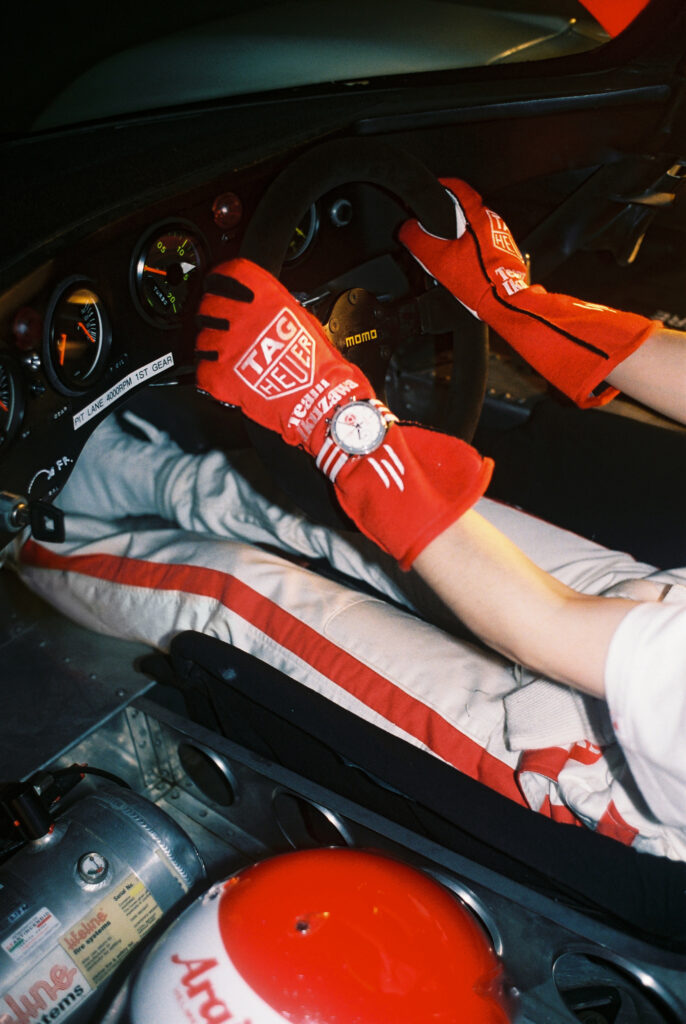
From there, he raced for Frank Williams and won in both Formula 3 and Formula 2. In 1967, he became the first Japanese driver to line up at the 24 Hours of Le Mans. He later joined Porsche as a factory driver and even tested a Lotus Formula 1 car under the legendary Colin Chapman.


His second act was just as bold. As a team owner, Ikuzawa took his name racing across both two and four wheels. The highlights ranged from a famous Le Mans pole for Mark Blundell with Nissan to a tilt at the Isle of Man TT, and he even fielded his own Formula 1 project.


Today his daughter Mai carries that legacy forward as Team Principal and Creative Director. Trained at Central Saint Martins, she has reinvented the family name as a modern cultural brand, taking its motorsport heritage into the worlds of fashion and luxury.


The team still stays credible on track too, showing up at events from the elegant Goodwood Revival to the grassroots Baja Mexican 1000.

The third name in the room is George Bamford. As founder of the Bamford Watch Department, he has spent years reworking icons for a generation raised on personalisation, and since 2018 he has held the rare title of TAG Heuer’s official customisation partner.


This is the trio’s second act. Their 2023 debut was a mostly white, minimalist Carrera lifted by a single playful red dot and finished with a Velcro strap. The new edition is bolder and more resolved.


It trades that lone dot for a full stopwatch-inspired redesign with deeper red detailing throughout, and it moves to a smaller glassbox case. Where the debut merely hinted at the Ikuzawa spirit, this one fully commits to it.

2. A Dial Built Like a Stopwatch

Spearheaded by Team Principal Mai Ikuzawa alongside George Bamford, the design digs straight into the Team Ikuzawa archive. Its anchor is the Heuer Roadmaster, a historic motorsport stopwatch whose graphic aesthetic and high legibility have been carefully reinterpreted for the wrist.


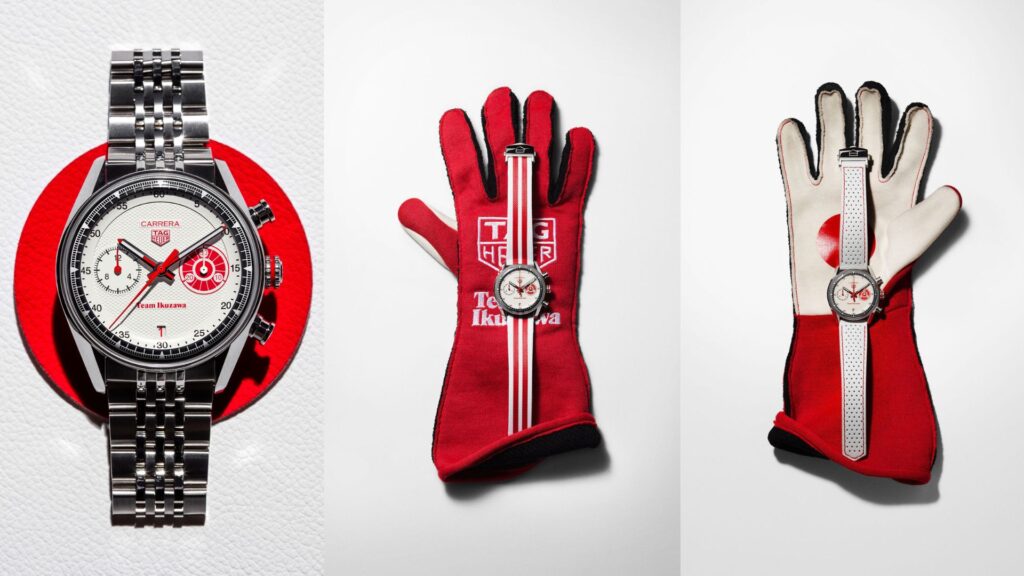
The dial is finished in Team Ikuzawa white with a fine Clou de Paris texture, its indexes printed rather than applied to keep that stopwatch character.


Red runs right through the piece. It lacquers the hands and the central chronograph seconds, and even colours each numeral on the date disc. The cleverest touch sits at six o’clock, where the Team Ikuzawa signature takes pride of place.


That space exists because the movement drops the running seconds altogether, a nod to the 1960s and 1970s Heuer chronographs that once saved dial room for racing teams and sponsors.

3. The Hardware and the Extras

The hardware lives up to the concept. The watch reinterprets the 39 mm Carrera Glassbox in fine-brushed and polished steel, its bezel-free domed sapphire giving a clean, uninterrupted view of the dial.


Inside beats TAG Heuer’s in-house TH20-10 automatic chronograph, a column-wheel movement with a power reserve of around 80 hours and water resistance to 100 m. Two counters handle the timing. A red minute register at 3 o’clock and an hour register at 9 o’clock.


The finishing touches are where the fun lives. It arrives on a seven-row steel bracelet, with two extra straps tucked in the box.


One is a perforated white leather that nods to classic racing gloves, the other a red-and-white textile drawn straight from Team Ikuzawa’s livery. The custom screw-down sapphire caseback is engraved with both Team Ikuzawa and Bamford Watch Department, alongside each piece’s individual issue number.


The whole set then comes in packaging modelled on a pit-garage toolbox, complete with Ikuzawa charms for your keys. 

For all its storytelling, this is far more than a pretty racing watch. The TAG Heuer x Team Ikuzawa Carrera is a genuine meeting of Swiss watchmaking and Japanese racing history, filtered through thoroughly modern design taste.


With only 150 made, most of us will only ever admire it from afar, which somehow feels fitting for a watch built on a legend.
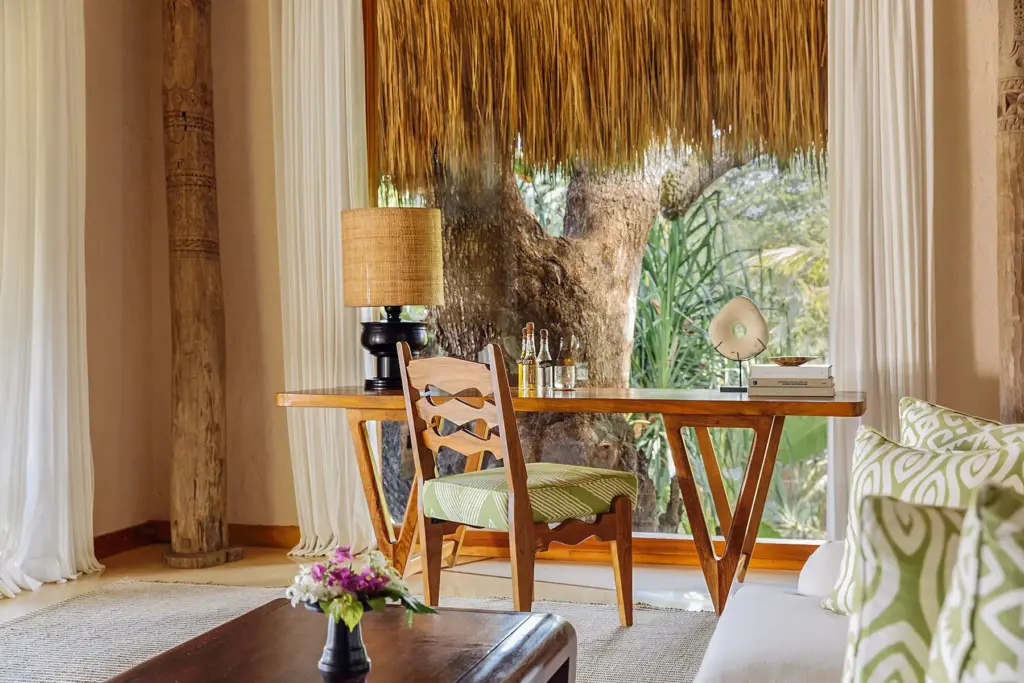
NIHI Sumba Proves Paradise Can Have a Conscience

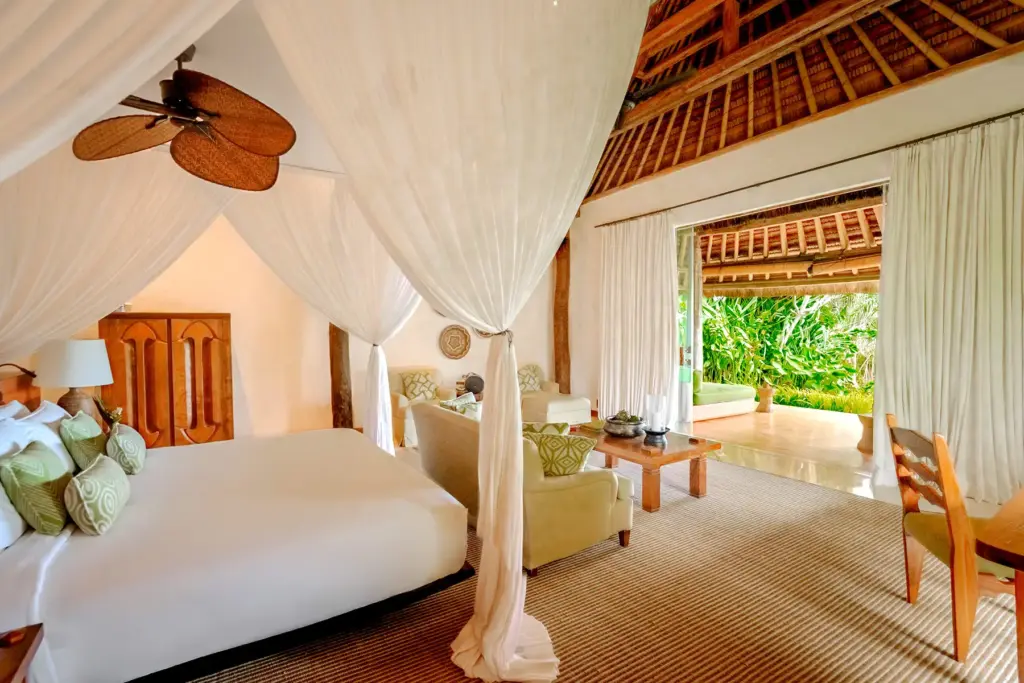
Some hotels sell themselves on convenience. NIHI Sumba sells the opposite. Reaching it means a flight from Bali to the little-known island of Sumba, then a drive past rice paddies and hilltop villages, and that distance from the modern world is precisely the point. It is also a clue to what the resort truly values, because protecting a place this wild and remote takes real commitment. The kind that has just earned NIHI Sumba B Corporation® status.


It is indeed a rare distinction. Only a handful of companies across Indonesia hold the certification, and fewer still in hospitality, which makes NIHI’s badge stand out. At first glance, that kind of label can sound like corporate box-ticking, right up until you look at what the resort has actually been doing on its island for years. Far from launching a new mission, the certification merely confirmed a commitment that had been running quietly since long before sustainability became a travel buzzword.

A little more context helps. NIHI began life in 1988 as a surfers’ hideaway called Nihiwatu, then was reimagined by entrepreneur Chris Burch and hotelier James McBride in 2012. The made-over resort went on to be named the best hotel in the world by Travel and Leisure for two years in a row, a feat no one else has matched. Behind all that barefoot glamour, though, has always sat a promise to the island and the people who made it famous. That promise is exactly what the NIHI Sumba B Corp certification® recognises, and it shows up in three very concrete ways.

1. A Health Revolution

The most striking numbers come from healthcare. Through the Sumba Foundation, the charity built into the resort from day one, NIHI helps fund five clinics that have now treated close to half a million patients. Its malaria work is the real headline, with cases across the project area cut by an astonishing 94%. Thousands of bed nets and more than a thousand sight-restoring eye operations have followed, and the foundation counts over 500 lives directly saved. On an island where basic care was once scarce, those figures change lives.


What makes any of it possible is the model behind it. The Sumba Foundation has been running for more than two decades, funded in large part by the resort and the people who stay there. Every booking quietly channels money into clinics, medicine, and mobile health visits, so a holiday on Sumba doubles as a contribution to the island’s wellbeing. Very few luxury escapes anywhere can claim the same.

The impact also reaches well beyond the malaria figures. The foundation has handed out more than 14,000 pairs of glasses and carried out over a hundred cleft palate operations, small procedures that quietly restore sight and rebuild confidence. Healthier families can work and learn, which strengthens the whole community. That kind of slow, compounding change is exactly what B Corp certification® is designed to reward.

2. Water and Schools for All

Clean water changes everything on a dry island like Sumba, and the foundation has built 105 wells and nearly 400 water stations to deliver it. That effort has given roughly 48,000 people reliable access to clean water, a quiet revolution in everyday life.

It is hard to overstate what that water means day to day. Across much of Sumba, families once walked for hours to collect it, a chore that fell mainly to women and girls and often kept them out of the classroom. With wells closer to home, that lost time is handed back, and children who once carried buckets can carry books instead. Cleaner water also means fewer waterborne illnesses arriving at the clinics.


Education receives the same care. NIHI helps support 39 primary schools and serves school meals to more than 23,000 children twice a week, so that learning is never derailed by an empty stomach. Beyond those meals, the foundation supplies thousands of pupils with books and basic materials they could not otherwise afford. Keeping children fed and equipped is the simplest way to keep them in school, and staying in school is what eventually breaks the cycle of poverty here.

3. Kind to the Land and Its People

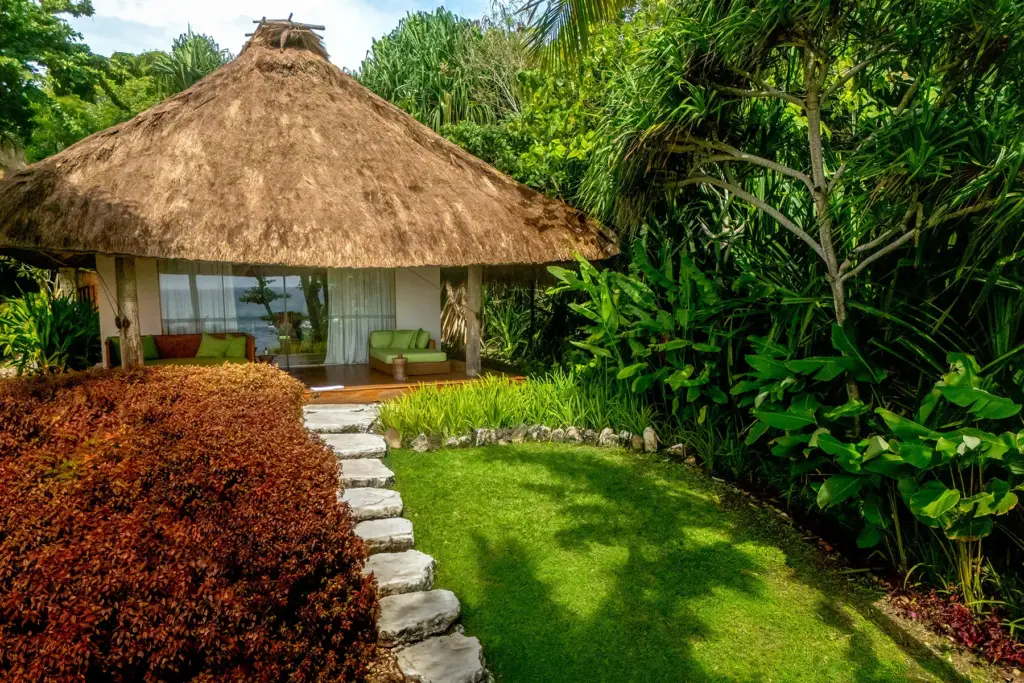
The final piece is the place itself. NIHI keeps its footprint deliberately light, with only a small cluster of villas along the coast and a clear focus on protecting the surrounding forest and reef. Much of what lands on the plate is grown or caught nearby, and the wild landscape is treated as an asset to guard rather than exploit. Just as importantly, the overwhelming majority of the team are local Sumbanese, which makes NIHI one of the island’s biggest employers and keeps the rewards of tourism where they belong.


That restraint itself is a deliberate choice, not a limitation. Rather than crowding the coast with rooms, NIHI has always kept things low and low-impact, letting the landscape lead. The team guards the nesting beaches and the reef just offshore, and works to replant native trees across the land. In an industry that too often bulldozes first and apologises later, that discipline genuinely stands out.
The human side runs just as deep. The overwhelming majority of the team are local Sumbanese, which makes NIHI one of the island’s biggest employers and keeps the rewards of tourism where they belong. The resort trains islanders for real careers in hospitality, turning uncertain seasonal work into steady, skilled jobs. It also celebrates Sumba’s culture rather than packaging it, welcoming guests into the island’s ikat weaving and the age-old rhythms of village life.


Put it all together, and the certification makes perfect sense. NIHI Sumba can still deliver everything the discerning traveller dreams of, from a private wave surfed by just ten people a day to a clifftop spa reached on foot. The difference is that every indulgent stay quietly feeds the island beneath it. In a luxury world slowly learning that doing good and living well can be the same thing, NIHI has been writing that blueprint for decades. The B Corporation® seal simply makes it official.

Jennifer Lopez Wears Chopard Jewellery to Celebrate Her Birthday in Paris

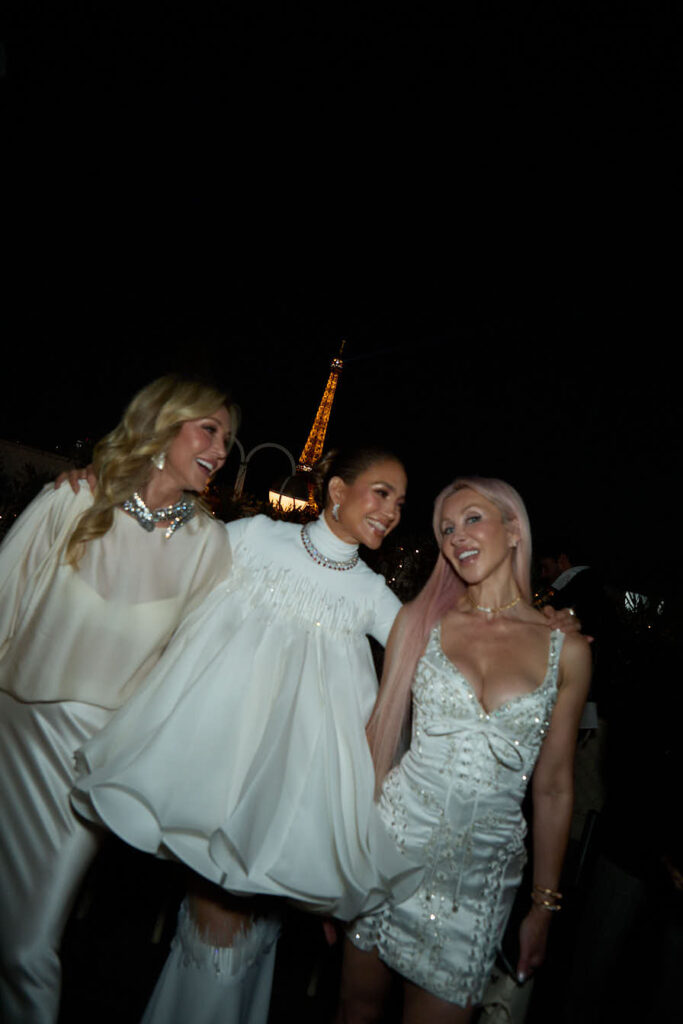
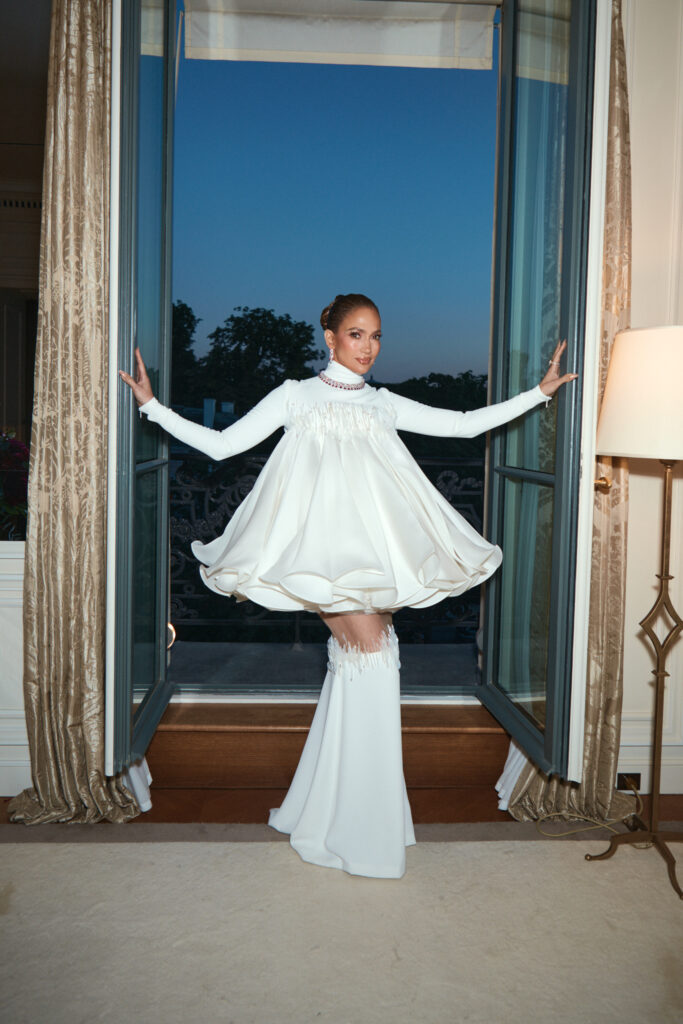
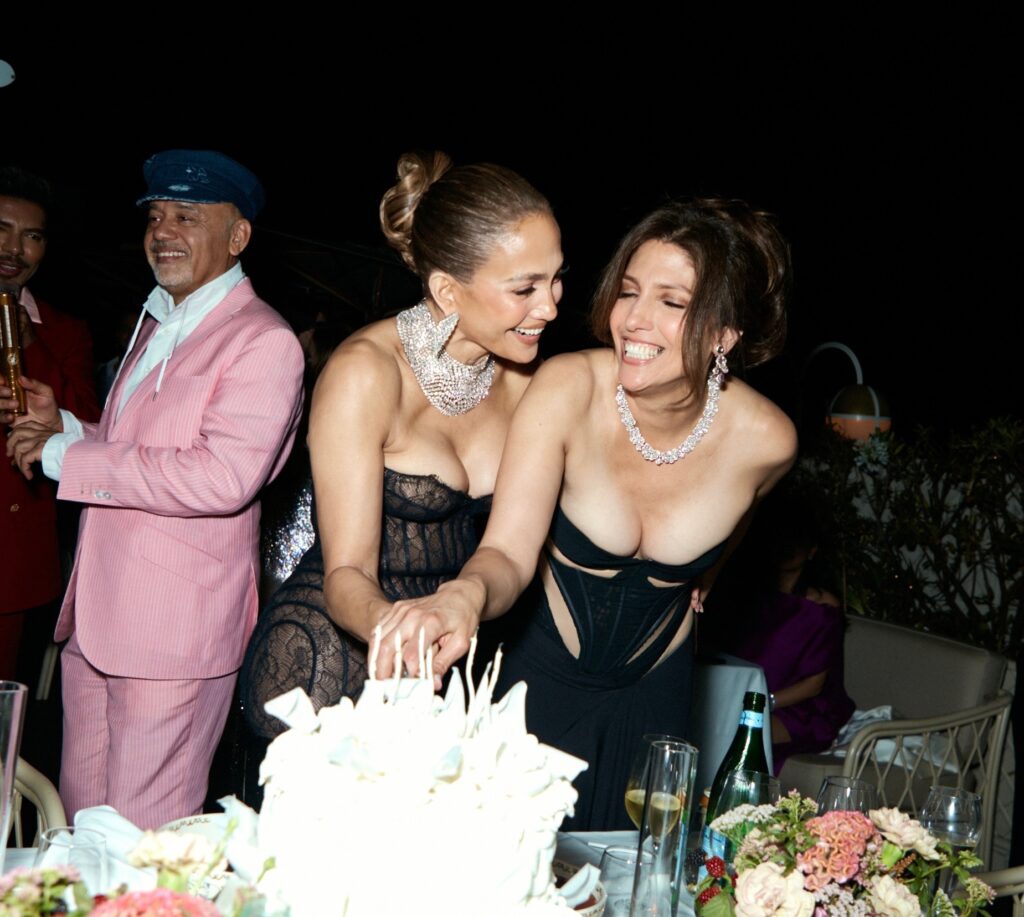
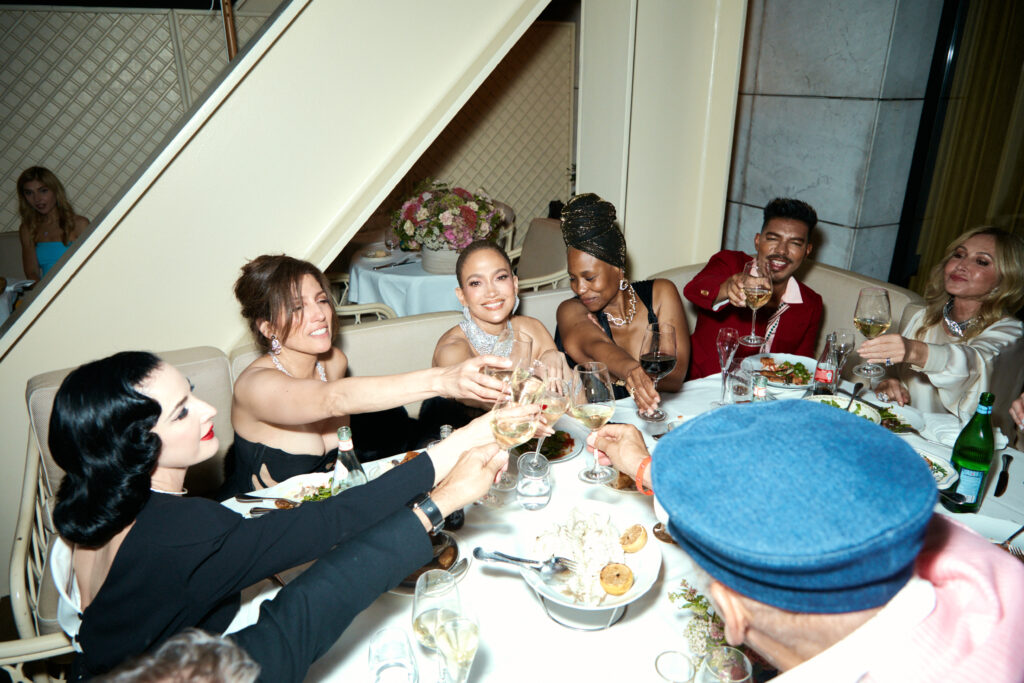
A birthday is never just a birthday when you happen to be a global icon. For most of us, it means a cake and a quiet dinner at home. For a star of Jennifer Lopez’s magnitude, it becomes a whole production. A fashion moment that fans follow outfit by outfit as though it were a film premiere. This year, the celebrations came dripping in sparkle, and once again Jennifer Lopez wore Chopard to make the moment unforgettable.


The timing was no accident. Lopez officially turns 57 on the 24th of July, yet she brought the party forward to Paris on the 9th, where the calendar happened to line up with Haute Couture Week. The city was already crowded with designers and front-row royalty for the shows, so it made the perfect stage for someone who has never once shied away from a grand entrance.

Something is fitting about doing it in Paris, too. The city has long been shorthand for romance and glamour, the place stars go to be photographed looking effortless on a balcony at golden hour. Add couture week to the mix, and you get a rare concentration of beautiful clothes and even more beautiful jewels, all gathered in one place at one time.


These days, a celebrity birthday is practically a marketing event in its own right. Brands line up to dress the star, every look earns its own carousel of photos, and the jewels often generate more headlines than the party itself. A single well-styled appearance can travel further than any paid campaign, which is exactly why a house like Chopard is only too happy to open its vault.


Lopez and Chopard are hardly strangers. She has slipped into the maison’s diamonds on red carpets for years, and the two clearly share a taste for glamour turned all the way up. Across three head-turning looks she wore more than 500 carats of Chopard high jewellery, a figure that sounds invented until you actually add it up. So here is what was on her, look by look.

The Ruby Set

One look leaned into colour. Lopez wore a white Stephane Rolland gown and let a jewellery set from Chopard’s Haute Joaillerie collection do the talking. The set combined 42.20 carats of pear-shaped rubies with a serious weight of diamonds. That meant 65.66 carats of pear-shaped stones and another 46.88 carats in an asscher cut, all set in 18-karat white gold. She finished it with a ring from Chopard’s Green Carpet collection, a 2.82-carat marquise-cut diamond in the same metal. That Green Carpet line is worth a nod of its own, since it is Chopard’s ethical range, built with responsibly sourced gold and stones.
The Diamond Parure

Another look went all in on white diamonds, and the carat count reads like a typo. Lopez wore a Haute Joaillerie necklace built around 155.84 carats of diamonds. Two more weights joined them, 21.62 carats of round stones and 13.09 carats in an asscher cut, for a total north of 190 carats around her neck alone. Matching earrings added another 19.22 carats, while a coordinating ring brought close to six more, every piece set in 18-karat white gold. She then wrapped a Haute Joaillerie bracelet of 73.69 carats of pear-shaped diamonds around her wrist. This single look carried close to 290 carats.

The Pearl Finish

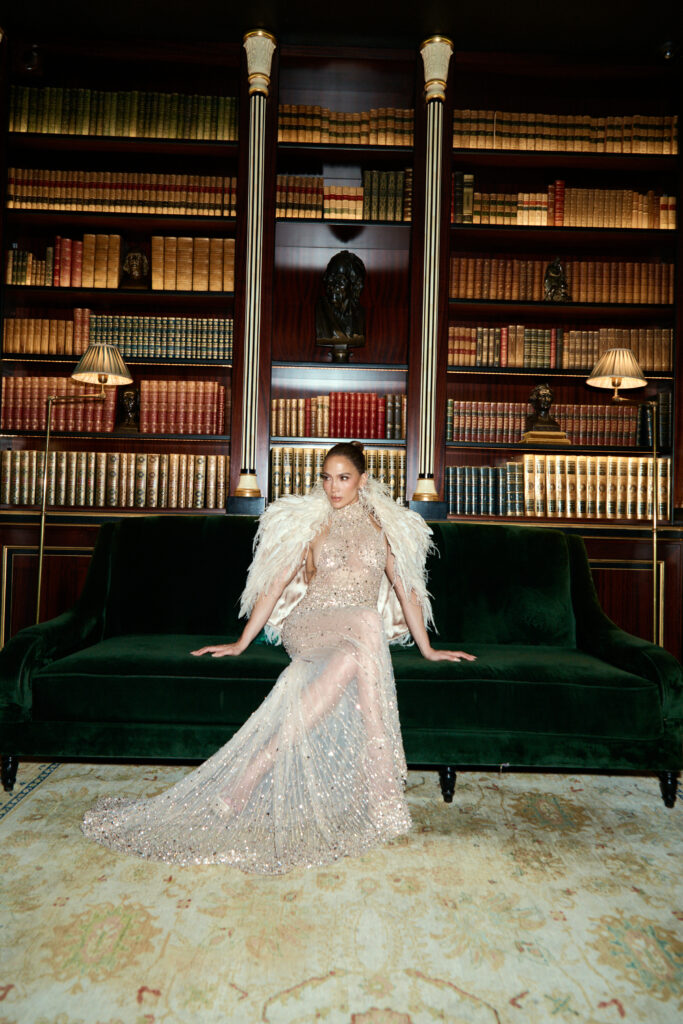
The softest look traded fireworks for a gentler glow. Paired with a crystal-covered Zuhair Murad gown and a dramatic feathered cape, Lopez chose earrings from the Haute Joaillerie collection built around 68.03 carats of round white pearls. Just over six carats of round and brilliant-cut diamonds framed them, all set in 18-karat white gold. After so much blinding white and blood-red sparkle, the warm sheen of the pearls made for a more romantic note to close on.


None of this happens by accident. A birthday on this scale is a carefully staged spectacle, and the jewels are the exclamation point at the end of it. Lopez has always grasped that better than almost anyone, and with Chopard supplying the fireworks, her Paris birthday became exactly the kind of moment the internet cannot stop replaying. Call it the Jennifer Lopez Chopard effect.

Roger Dubuis Excalibur The Kabuto Legacy Brings the Samurai to the Round Table

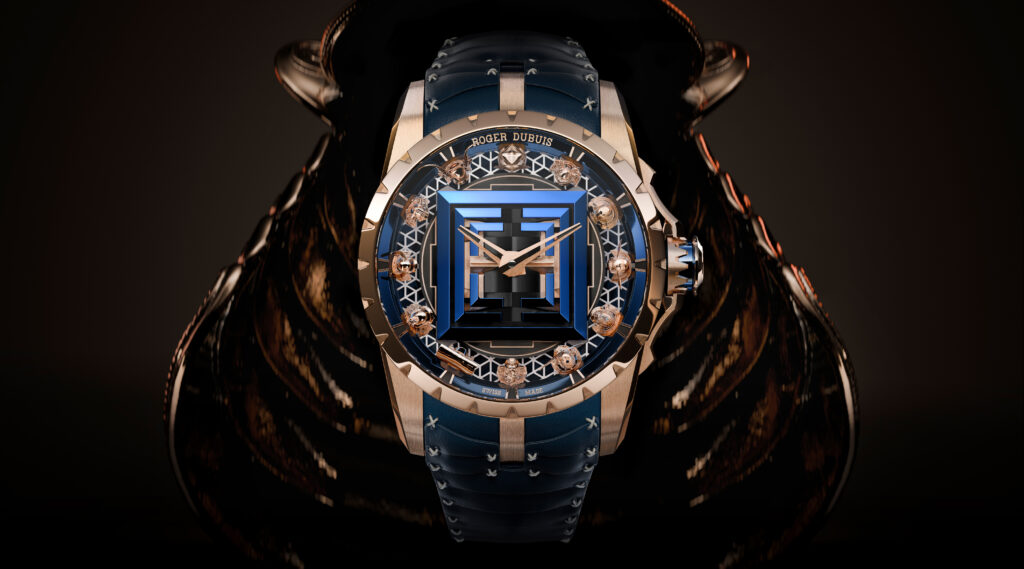
Roger Dubuis has built its whole personality around a sword. Excalibur, one of the brand’s iconic collections, takes its name from the blade of King Arthur. And the maison has always worn that legend with a certain swagger by pairing bold and skeletal mechanical prowess with a taste for myth. It is further emphasised by the newest release, the Roger Dubuis Excalibur The Kabuto Legacy, the most daring twist yet on an idea the collection has spent more than a decade perfecting.


That idea took shape in 2013, when the Excalibur collection welcomed its first Knights of the Round Table. Rather than a conventional dial, Roger Dubuis stood 12 hand-engraved knights in a circle around a central table, turning the Arthurian tale into a tiny sculpted scene you could wear. It was Métiers d’Art at its most theatrical, and it soon became one of the collection’s calling cards.

The concept kept evolving from there. A second edition arrived in 2015 and a third in 2021, each refining the knights and their table, while the related Excalibur Table Ronde folded in glowing grand feu enamel. Only last year did the collection even include Merlin the enchanter among the figures. Through every version, one thing held firm. It is the ring of 12 characters circling the dial.


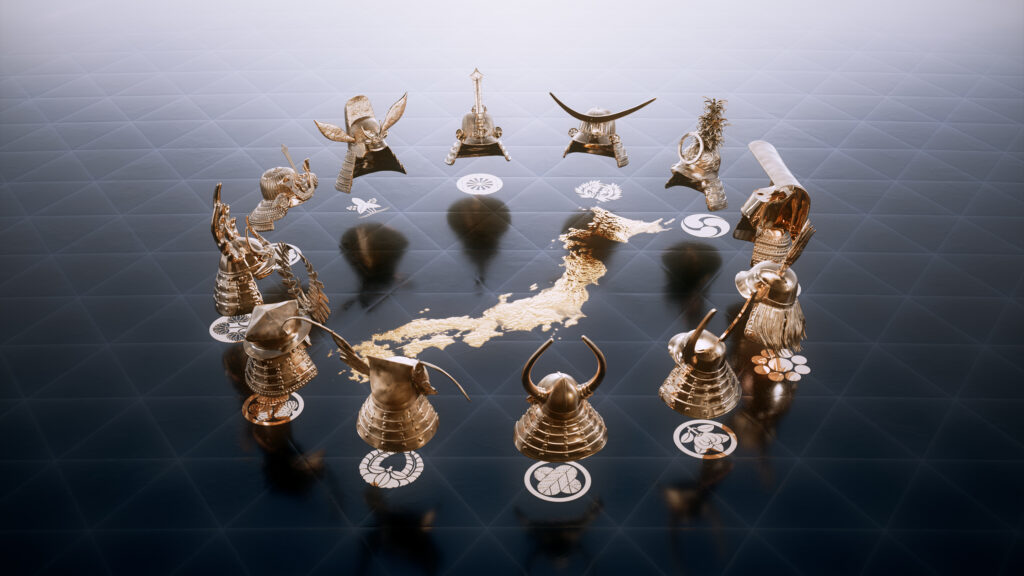
For 2026, the Excalibur collection has gone bolder still. It has picked up that round table and carried it thousands of miles east, trading the myths of Camelot for the very real history of feudal Japan. In place of knights, 12 samurai now hold the circle. Here is what makes this latest chapter one of the most fascinating watches of the year.

The Samurai Story

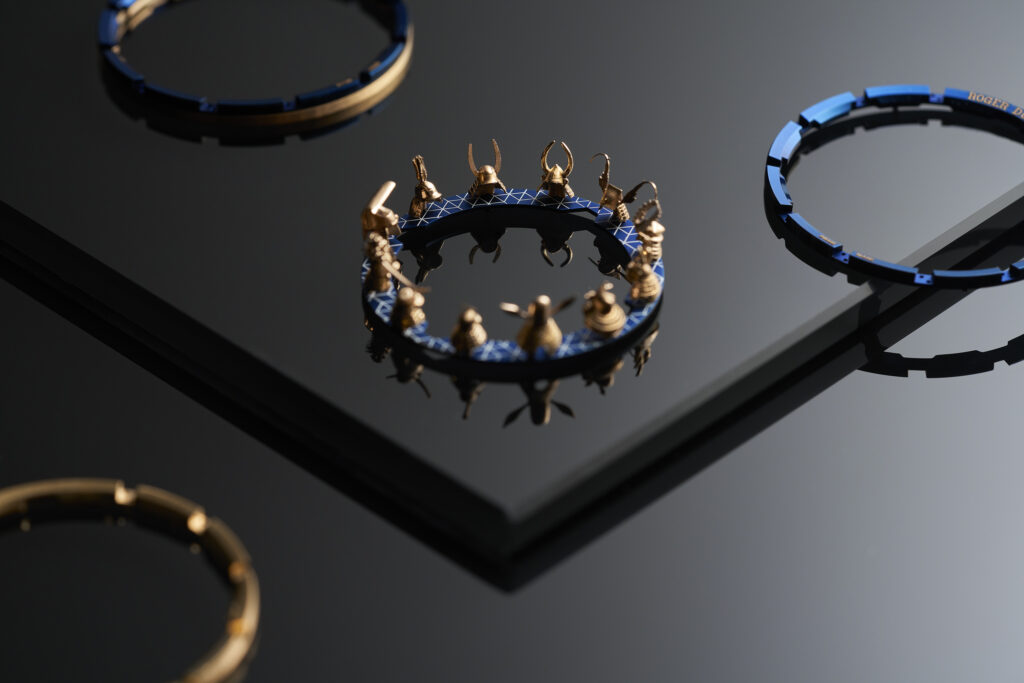
The story reaches back to 17th-century Japan, a land torn apart by warring lords until a few leaders finally united it and ushered in more than two centuries of peace. Roger Dubuis distils that rare moment of harmony into 12 helmets—or kabuto—each standing for a real commander who shaped the era.


At 12 o’clock sits the shogun himself, Tokugawa Ieyasu, his helmet crowned with a fern for longevity and success. Around him gather his legendary guardians, remembered in Japan as the Four Heavenly Kings. Honda Tadakatsu wears his famous sweep of deer antlers, while Sakai Tadatsugu, Sakakibara Yasumasa and Ii Naomasa each carry crests that speak of loyalty and the will to cut through deception. Seven more warriors complete the circle.


In their day, a kabuto was never mere armour. It announced a warrior’s rank and ambition at a single glance, which makes it a natural stand-in for the knights this collection usually seats around the table.

The Handcrafted Details

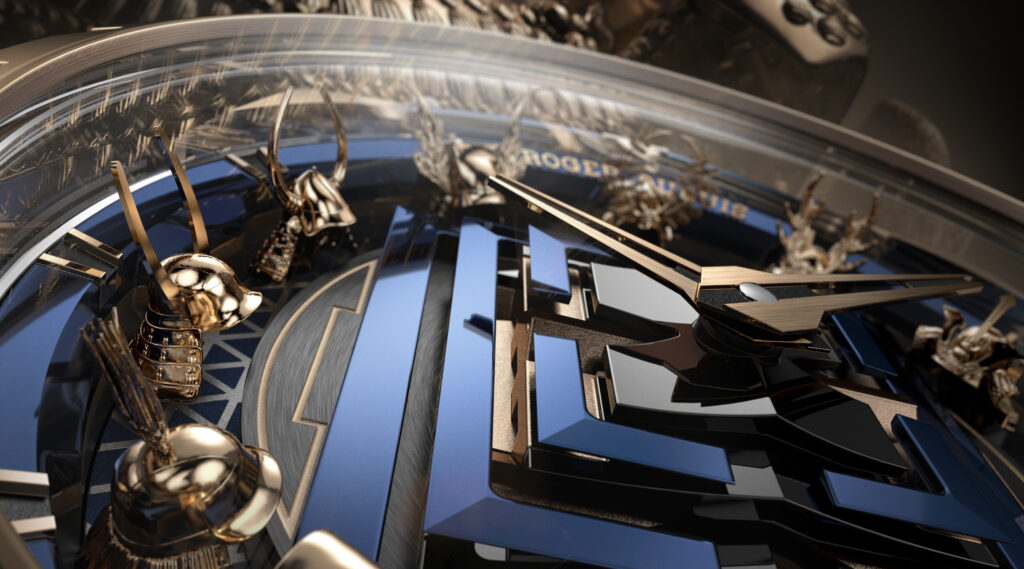
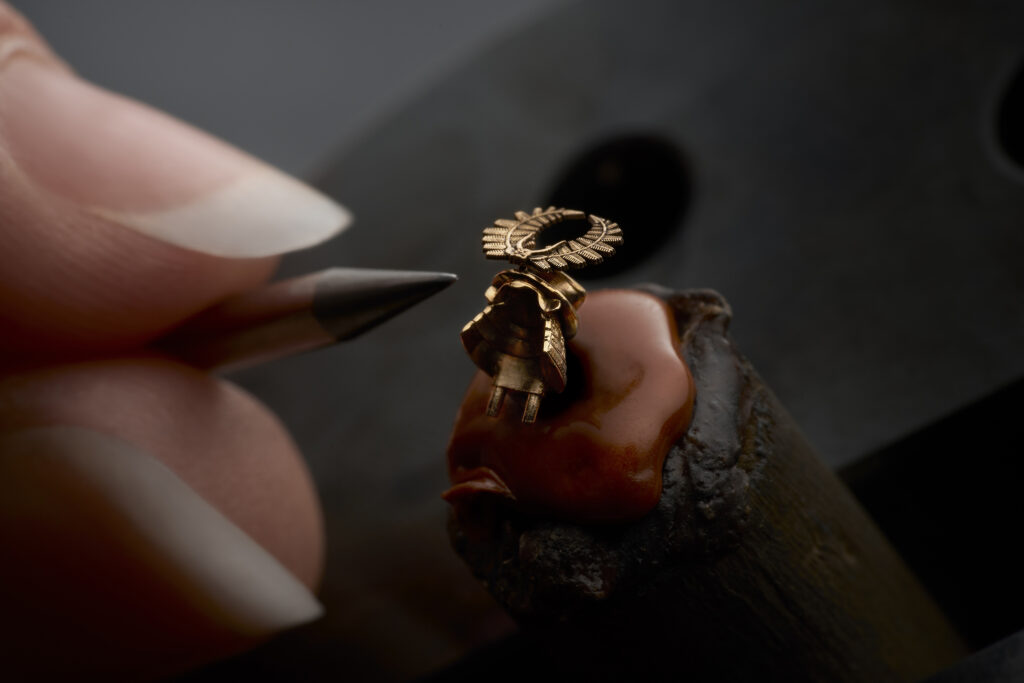
Look past the history, and the handwork becomes almost hard to believe. Each of the 12 kabuto is micro-sculpted in 18-karat pink gold, then finished by hand under a loupe. A single helmet can take two to three days to complete, and the fiddliest part is always the small crest at the front, the kamon that once identified each warrior on the battlefield. Those tiny emblems are what separate one commander from the next, so they earn the most obsessive attention of all.


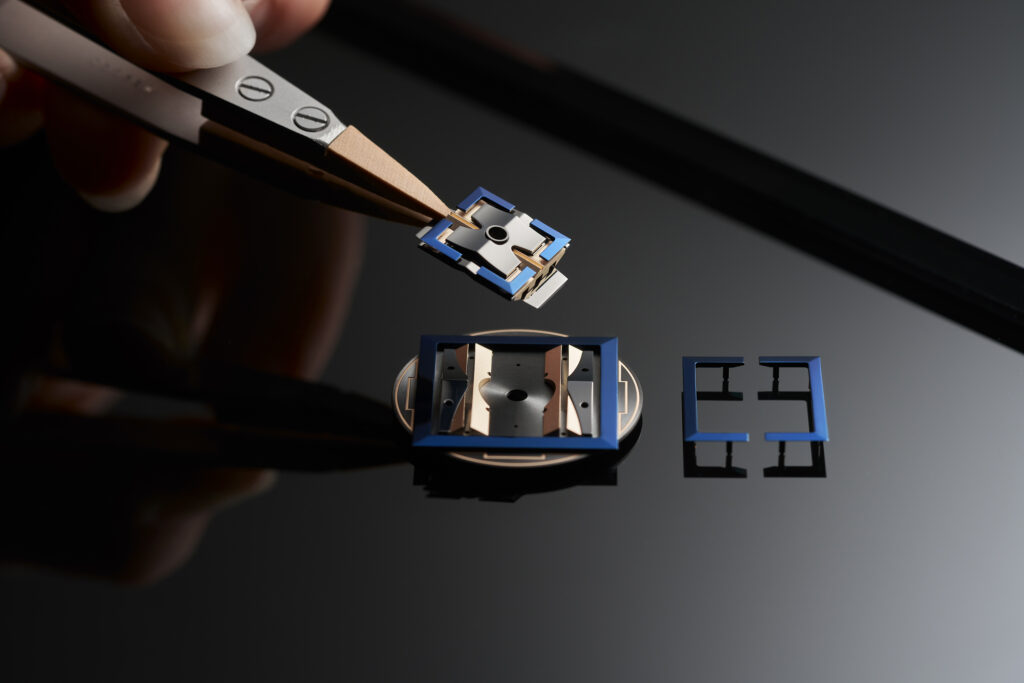
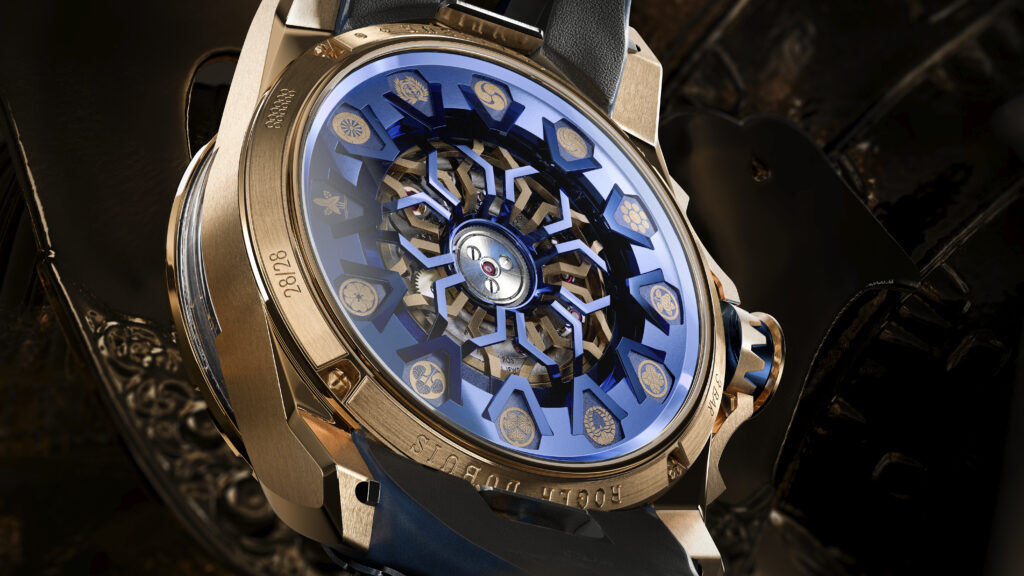
At the centre of the dial rises an abstract vision of Edo Castle, and it is a feat of construction in its own right. Seventeen individual pink-gold elements are stacked into a layered fortress. Seven of its roof pieces glow with a blue CVD coating, while six more are darkened with black PVD for contrast. Three structural elements are left in bare pink gold, and the base is finished with laser-engraved decoration that adds another layer of depth.

That blue is anything but a random choice. It echoes indigo, the dye the Japanese long used for samurai garments and later for their art, a shade so bound up with the country that it earned the name Japan Blue. To make the fortress catch the light, the artisans work four separate finishing techniques across its facets. Some surfaces are mirror-polished to a bright shine. Others take a fine circular grain or a soft shot-blasted texture, so the castle never once looks flat.


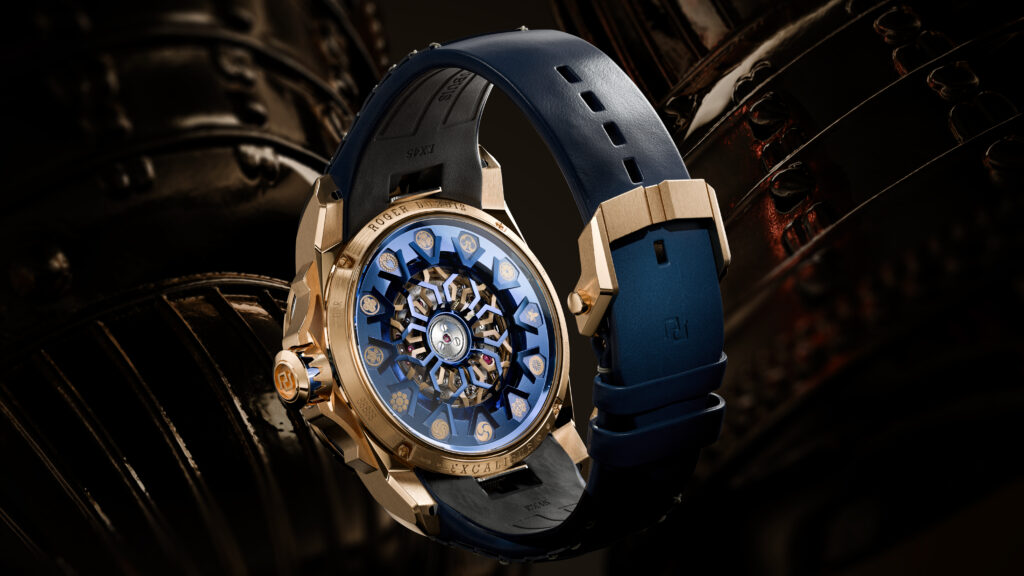
The case that frames all this is carved from the same pink gold and measures a generous 45 mm across. It wears the fluted bezel that marks out every Excalibur, with a sapphire ring set beneath it to frame the scene. At 16.87 mm thick, it is a substantial watch, though that height is precisely what makes room for the sculpture inside. Even the crown is dressed for the occasion, ringed with blue enamel and set with a small glass window.


For all the drama, the watch tells the time in the simplest way it can. There are only hours and minutes here, read off two satin-brushed pink-gold hands, so nothing competes with the artwork beneath them. The strap keeps the theme going as well, its blue calfskin cut and stitched into overlapping tiles that mimic the laced plates of samurai armour, complete with a worn, battle-ready patina. It clips off in seconds on a quick-release system; a second strap waits in the box, and a pink-gold triple-folding buckle holds everything in place.

The Movement Within

Flip the watch over, and the substance matches the spectacle. Beating away inside is the RD821, an automatic movement built entirely in-house. What really sets it apart is the finishing, with 14 separate techniques applied to the surfaces of every single component. Matte and polished areas are played off against one another so the light dances across the mechanism the way fine Geneva watchmaking demands.


The numbers hold up to the artistry. The calibre is ticking at 28,800 vibrations an hour. A full wind of the watch stores 48 hours of running time. Cleverly, the movement stays slim at just 3.5 mm thick, which is exactly why the castle and its helmets had somewhere to sit above it.

Then comes the stamp that matters most. The RD821 carries the Poinçon de Genève, the Geneva Seal, one of the oldest and strictest quality marks in all of watchmaking. It requires a movement to be crafted and finished to exacting standards within the canton of Geneva. Roger Dubuis is famous for holding this certification across its entire collection, something almost no other maison can claim, so the seal reads like a signature.


Best of all, none of the work is hidden away. The caseback is left open, and a pane of sapphire reveals the elaborately worked rotor turning as you move. The tribute to Japan continues even here, with a blue-coated pink-gold ring circling the movement, laser-engraved with the twelve samurai crests so the story wraps right around the watch.


Only 28 collectors will get to own one, and that feels about right. This is a watch that folds a whole chapter of Japanese history onto the wrist, then backs the drama with the kind of watchmaking Geneva saves for its very best.

Chopard: The Wearable Wonders at Cannes 2026

For more than 165 years, Chopard has defined the pinnacle of Swiss luxury, seamlessly marrying exceptional craftsmanship with boundless creativity. Founded in 1860 by Louis-Ulysse Chopard, the Maison first established its reputation through precision timepieces before evolving into one of the world’s most revered names in haute joaillerie. 


Under the visionary leadership of Co-President and Artistic Director Caroline Scheufele, Chopard has become synonymous with the glamour of the Cannes Film Festival, where it has served as its Official Partner for nearly two decades. Its annual Red Carpet Collection has since become one of the festival’s most anticipated unveilings, celebrating the enduring dialogue between cinema, artistry and extraordinary jewellery.

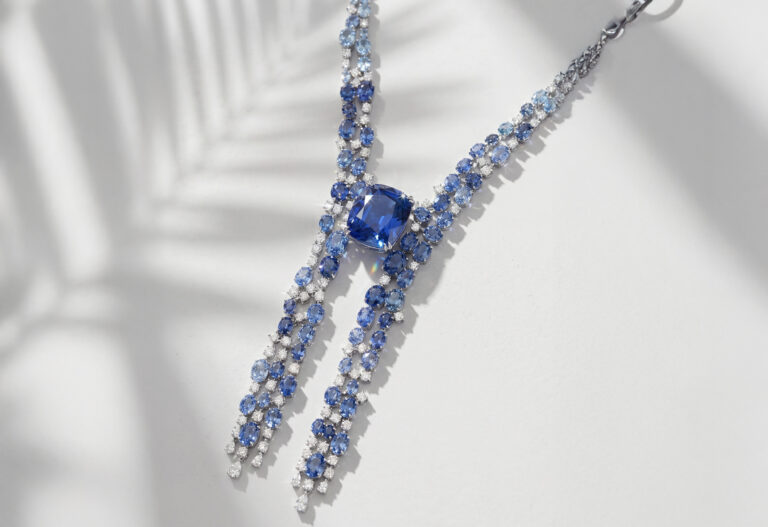
Chopard's Miracles Red Carpet Collection takes inspiration from the beauty of every day moments. Shown here is a necklace highlighting an 88-carat Royal Blue sapphire at its centre


For the 2026 edition, Caroline Scheufele turns her gaze towards the quiet poetry of everyday life with “Miracles”, a collection inspired by those fleeting moments that often escape unnoticed. Rather than seeking inspiration from mythical fantasies or monumental spectacles, she celebrates the beauty of an unexpected sky, the graceful bloom of a flower, the spontaneity of wildlife and the hidden brilliance of gemstones forged beneath the Earth’s surface. These seemingly modest encounters become precious reminders that wonder exists everywhere, provided one chooses to look closely enough. It is an intimate, deeply personal narrative that delightfully transforms nature’s smallest marvels into magnificent expressions of haute joaillerie.


Inside Chopard’s Geneva Haute Joaillerie ateliers, every idea begins as a sketch before passing through the hands of master jewellers, gem-setters and lapidaries whose expertise has been refined over generations. Crafted exclusively in ethical gold, each creation demands countless hours of meticulous work to unlock the character and brilliance of every gemstone. The resulting collection radiates remarkable lightness despite its technical complexity, distinguished by airy silhouettes, luminous palettes inspired by shifting skies, sculptural floral forms and enchanting miniature creatures that appear almost alive. Spanning necklaces, earrings, bracelets, rings, brooches and secret watches, “Miracles” showcases Chopard’s remarkable ability to transform precious materials into emotionally resonant works of wearable art.


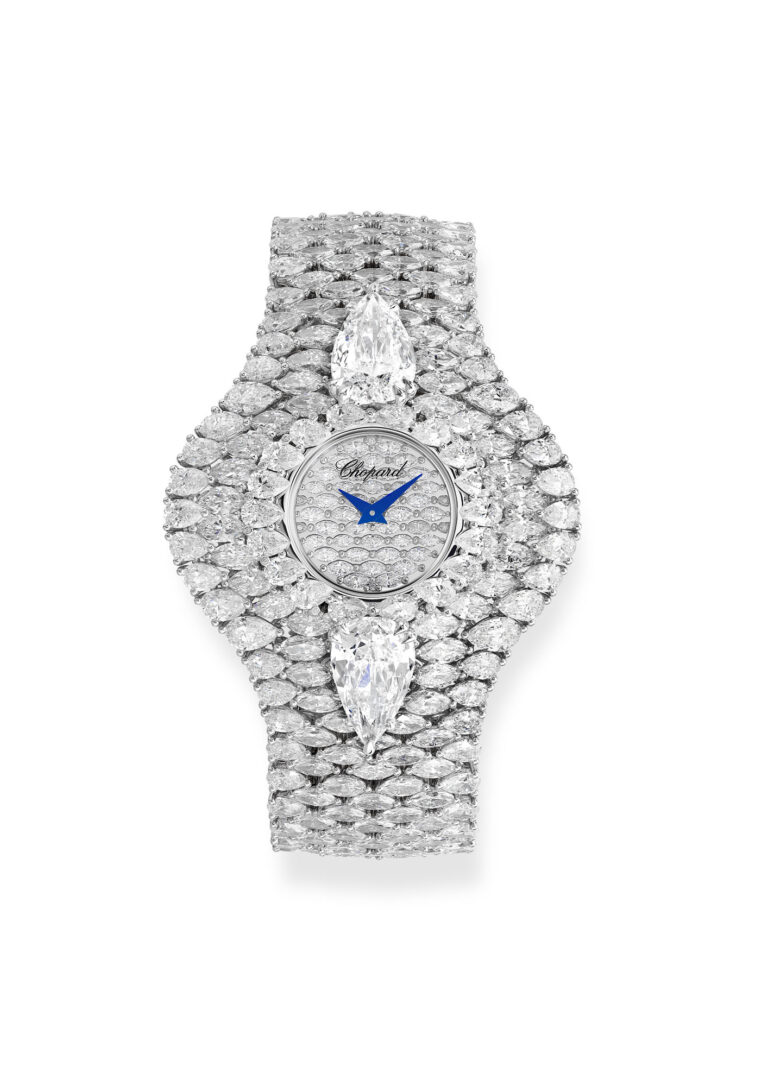
Ladies’ watch in 18-carat ethical white gold, entirely set with over 46 carats of brilliant, marquise and pear-shaped diamonds
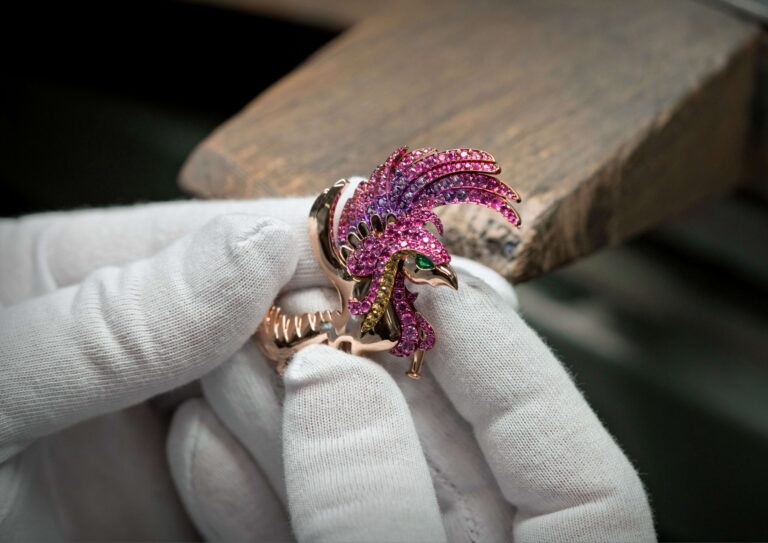
Jewellers gently sculpt ethical gold while gemsetters place gems in the making of the Phoenix brooch


Among the collection’s noteworthy highlights, the necklace centred on an extraordinary 88-carat cushion-cut Royal Blue sapphire immediately commands attention. Set in 18-carat ethical white gold, the exceptional gemstone is framed by cascading strands of sapphires and aquamarines, punctuated by brilliant and pear-shaped diamonds that shimmer like stars across an evening sky. Inspired by the poetic encounter between earth and the heavens, the necklace embodies both grandeur and fluidity, creating an almost ethereal presence despite its extraordinary scale. It is the kind of masterpiece destined not merely for the red carpet, but for the history books of high jewellery, where exceptional gemstones and visionary design converge in perfect harmony.


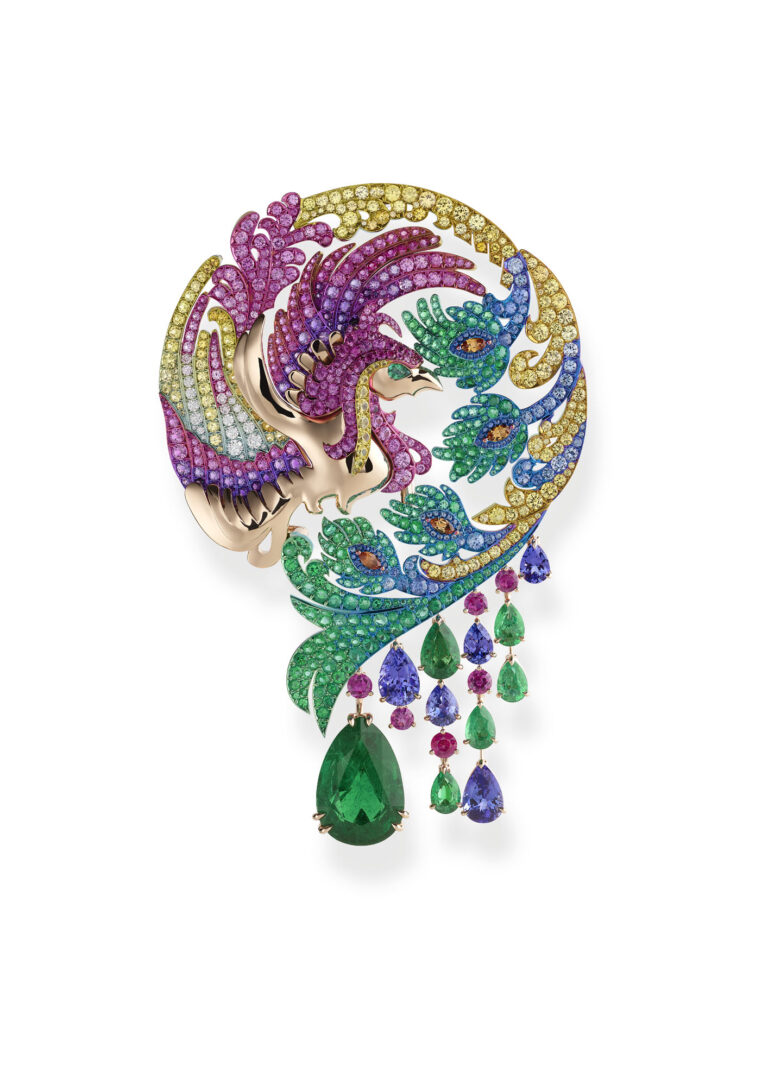
Equally captivating is the Phoenix Brooch, a triumphant celebration of renewal interpreted through remarkable technical artistry. Sculpted from ethical rose gold and titanium, the mythical bird unfurls radiant plumage adorned with emeralds, multicoloured sapphires, tanzanites, amethysts and diamonds, each gemstone meticulously positioned to create a vivid sense of movement. Suspended as though caught in mid-flight, the phoenix captures both resilience and transformation, demonstrating Chopard’s extraordinary ability to infuse symbolic storytelling into sculptural jewellery. It is a creation that feels simultaneously contemporary and timeless, proving that haute joaillerie can evoke profound emotion as effortlessly as it commands admiration.


Phoenix brooch in 18-carat ethical rose gold and titanium, set with emeralds, tanzanites, sapphires, amethysts and diamonds

While the Cannes Film Festival remains the world’s grandest stage for cinematic excellence, Chopard’s “Miracles” reminds us that true luxury lies not only in rarity or brilliance, but also in the ability to inspire emotion. Through exceptional gemstones, impeccable craftsmanship and poetic storytelling, the renowned Maison once again transforms fleeting moments of beauty into timeless treasures, reaffirming why the presentation of its annual Red Carpet Collection at the Cannes Film Festival remains one of the most eagerly awaited events in the world of haute joaillerie.