
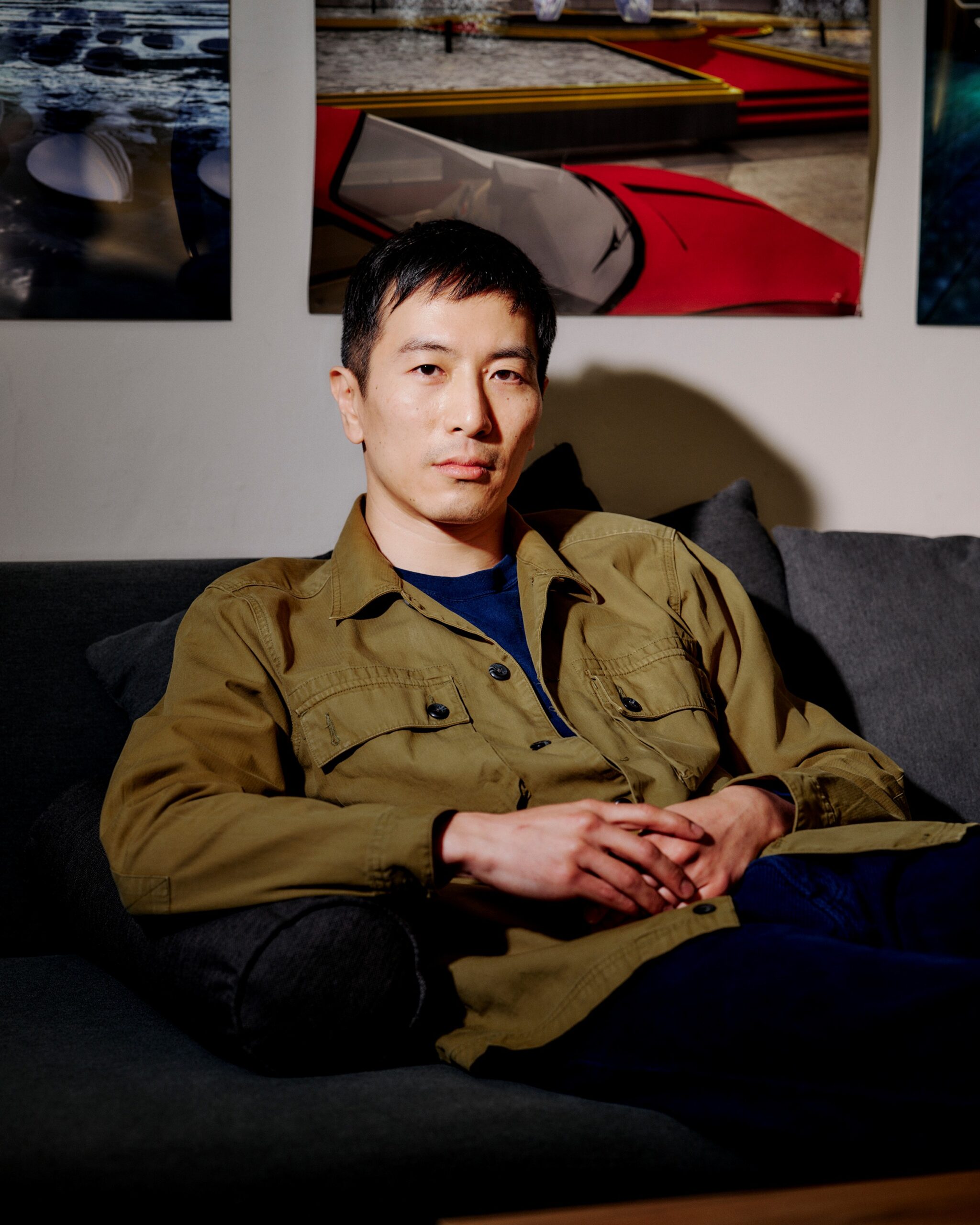
One of the world’s leading contemporary artist, Lawrence Lek works across genre-bending project that span architecture, gaming, video, music, and fiction. The 2024 Frieze London Artist Award recipient is internationally recognised for interrogating the emotional capacity of artificial intelligence and the emergence of post-human identity.
In NOX: Confession of a Machine, Lek blends diverse media into an ever-evolving cinematic universe. This expansive and immersive exhibition features a custom-designed adaptation of Lek’s previous work, NOX, which imagines the psychological consequences of a future populated by smart systems and intelligent machines. Short for ‘Nonhuman Excellence,’ NOX is a fictional program created by a fictional AI startup Farsight Corporation to rehabilitate disobedient self-driving cars. NOX: Confessions of a Machine, transports visitors to an unspecified city in the near future where the inner workings of Farsight Corporation come to life through two interconnected works: NOX and Guanyin: Confessions of a Former Carebot.
Now ArtScience Museum at Marina Bay Sands brings this site-specific exhibition, marking Lek’s first exhibition in Southeast Asia. NOX: Confession of a Machine opens on January 23, 2026, in tandem with Singapore Art Week and the launch of ArtScience Museum’s very own 2026 season, Form of Life: Beyond the Human.
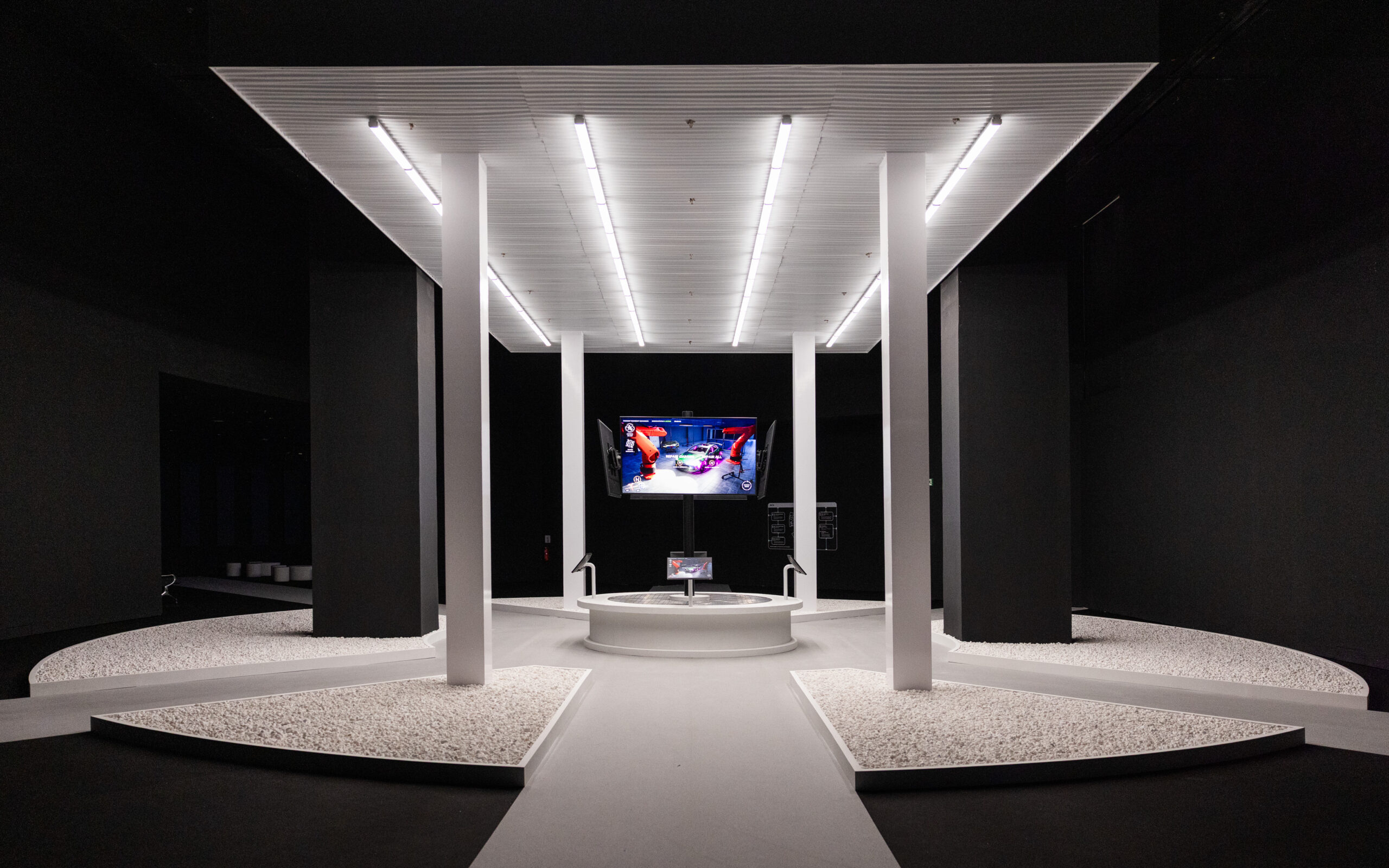
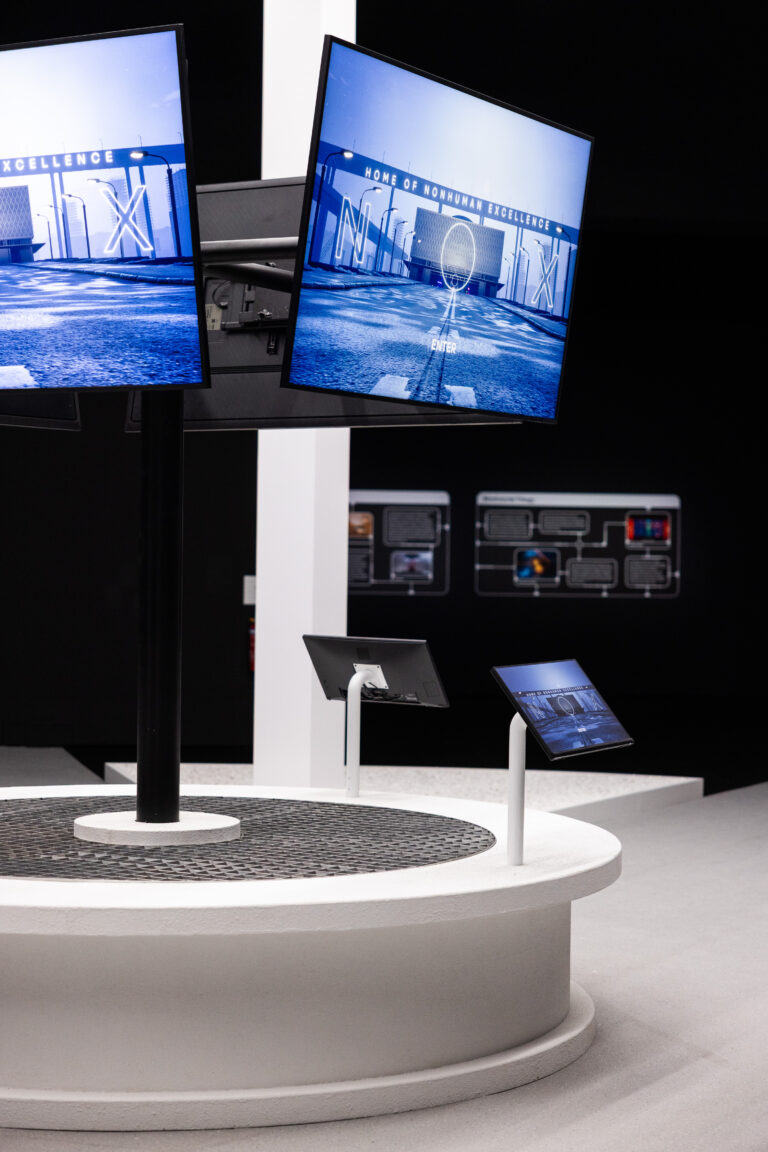
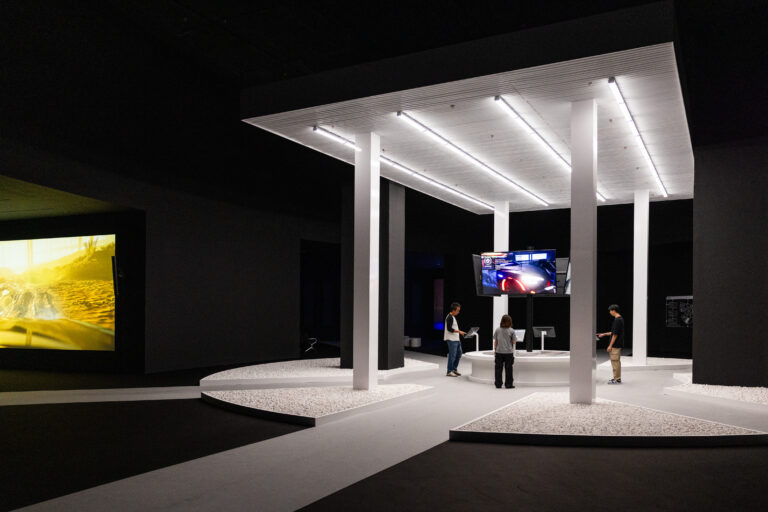
In the story, NOX is a therapy and training centre for sentient autonomous vehicles whose inner lives have begun to interfere with their performance. The central installation of NOX is a vehicle charging station set within an urban landscape. It displays a touchscreen game that position the visitor as a trainee therapist who have been tasked to return malfunctioning vehicles to operational readiness. Visitors can make decisions about treatment pathways where each choice carries consequences, foregrounding questions of agency, responsibility and control within automated systems.
As the programme progresses, the exhibition reveals a system where care is framed less as a form of well-being and more as a means of optimisation. It echoes real-world systems where efficiency, productivity, and corporate interest often take precedence over emotional care.
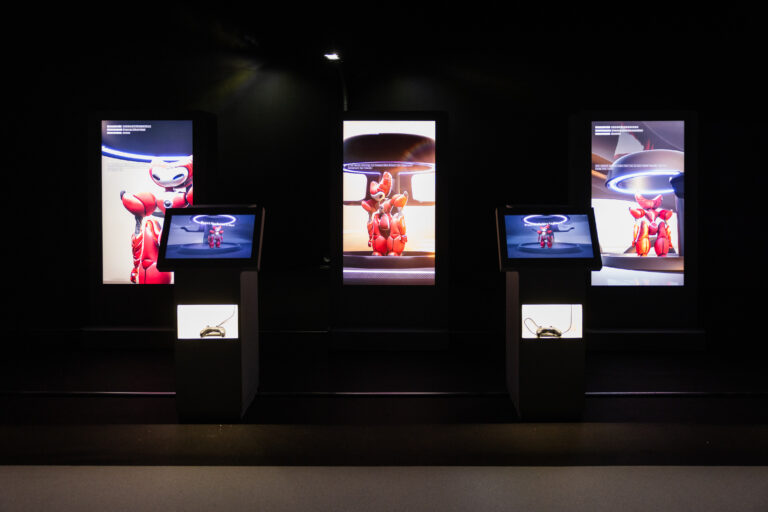
Furthermore in the exhibition, visitors will also encounter the extension of NOX, the aforementioned Guanyin: Confession of a Former Carebot. Guanyin, named after the Buddhist Bodhisattva of Compassion, appears as an armoured robot therapist tasked with repairing misbehabing vehicles. In this part, visitors will inhabit Guanyin’s point of view, navigating these malfunctioning machines while uncovering fragments of its own emotional strain and fatigue. By centring the inner life of a robot caregiver, the work extends the exhibition’s inquiry into empathy and the often-overlooked emotional labour embedded within system of care in real life. It aims to encourage visitors to explore how listening, empathy, and care might shape relationship with intelligent systems.
NOX: Confessions of a Machine brings global conversations around artificial intelligence automation and machine consciousness into the heart of Singapore. With a speculative yet unsettlingly familiar systems, the exhibition raises questions about agency, care, and coexistence in systems where humans are not the only actors. Moreover, these questions extend beyond artificial intelligence and serve as a central thread of ArtScience Museum’s 2026 curatorial season, Forms of Life: Beyond the Human.
This year, ArtScience Museum presents a year-long season of exhibitions and programmes that explore the wider ecology of life beyond the human, attending to the multispecies worlds, systems, and intelligences that shape the planet alongside us. Rather than centering human as the primary actor, Forms of Life: Beyond the Human considers how life is co-shaped by other living entities.
Honor Harger, Vice President of ArtScience Museum, remarks, “[The season] invites visitors to consider how we might learn to attend more carefully to forms of life beyond human. Forms of Life positions ArtScience Museum as a space for practicing new ways of seeing and thinking, cultivating attentiveness, curiosity, and responsibility within a world shared with many forms of life.”
ArtScience Museum’s 2026 curatorial season unfolds across a series of major exhibitions with the theme of life extending human. In NOX: Confessions of a Machine, artificial intelligence is presented as an emerging form of sentience. Next, Insects: Microsculptures Magnified reveals insects as vital participants in ecological system. Collaborating with OceanX, Into the Ocean: Journey Beneath shows how the connections between marine biology and ocean health are mapped.
Ultimately, extending beyond the gallery, Forms of Life also includes film programmes, workshops, talks, conferences, and festivals that illuminate more-than-human ecologies, reveal the lives of others, and imagine strange kinship.