
From 14 February to 16 April 2026, ISA Art Gallery in Jakarta presents “Biophilia: Exquisite Corpse,” a biannual exhibition dedicated to environmental resistance. Borrowing its title from the surrealist drawing game where artists create a single body in fragments, this edition treats the exhibition itself as a living organism—built piece by piece, voice by voice. The meaning grows collectively, like tree rings or ripples spreading across water.
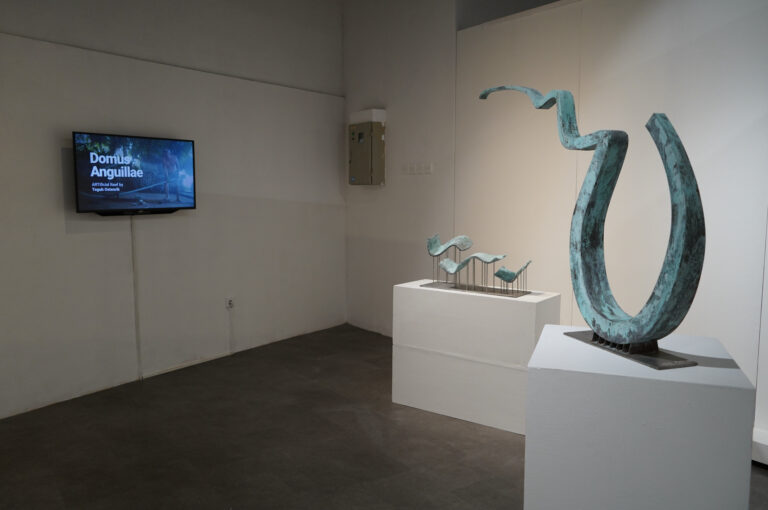
Biophilia opens with the idea of “Ibu Bumi” (Mother Earth) as a living presence who sustains, remembers, and responds. Teguh Ostenrik’s “Domus Anguillae” (House of Eels) embodies this spirit. Presented through video documentation, the underwater sculpture doubles as an artificial reef off the coast of Bali. Built from steel tunnels, the structure invites coral and marine life to inhabit it over time. Sculpture here becomes shelter, proving that art can function as ecological care.
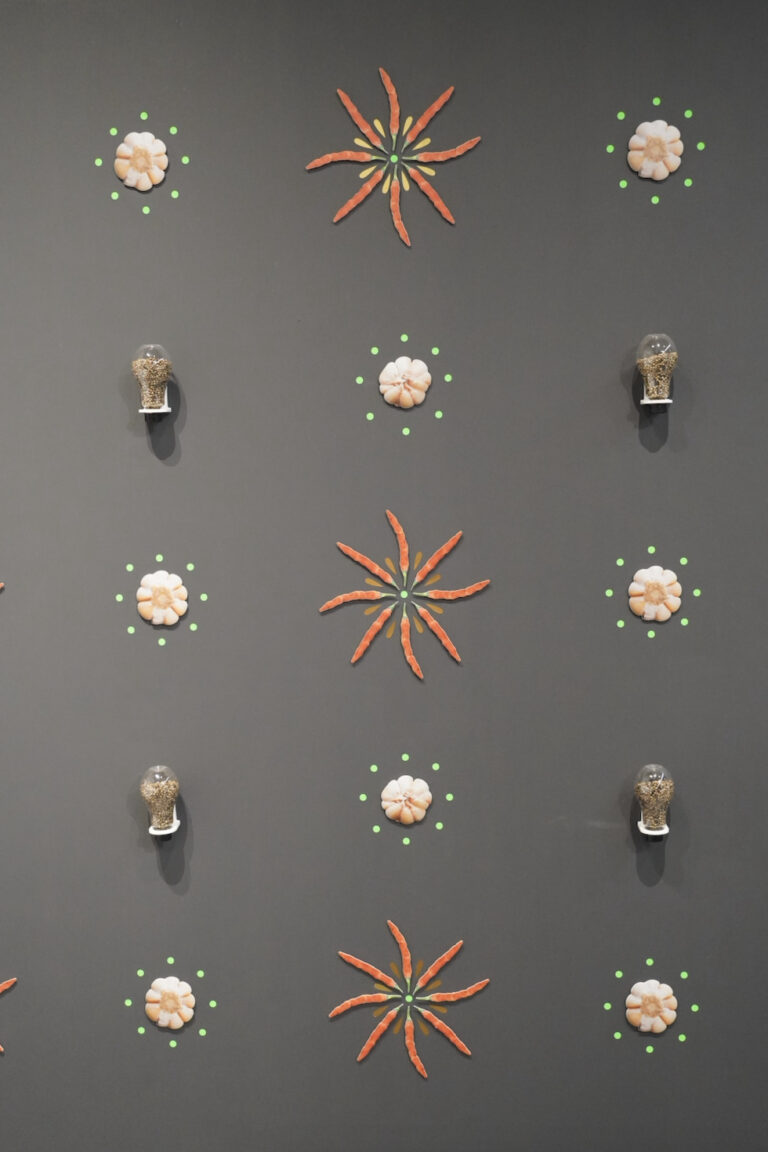
Anang Saptoto’s “Jimat Anti Tuyul” brings the conversation into the domestic sphere. Developed from the long-term project “Panen Apa Hari Ini” (Pari), the work traces the history of Saptoto’s grandmother’s food stall and her cooking practices between 1956 and 2013. Here, he revisits the tradition of keeping a small talisman inside a cash drawer to protect the family’s livelihood. The work reframes this everyday ritual as a form of ecological thinking—where food, belief, and survival are deeply connected.
The tone shifts as the exhibition enters the theme of extraction. Studio Birthplace’s film “Earth Defender” highlights Dayak communities who protect their land from corporate violence. The short film positions the earth not as property but as a living relative. When land is destroyed, culture and life are endangered too. This shows that protecting the environment is inseparable from protecting people.
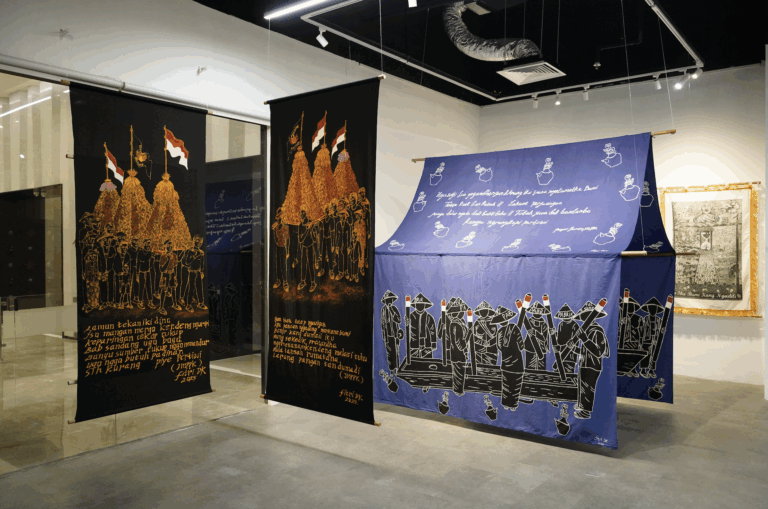
Fitri DK expands this resistance through a series of powerful works inspired by the Kendeng farmers’ protests against cement mining. She showcased three artworks: “Mantra Ibu Bumi,” which reminds viewers that environmental damage has consequences; “Selamatan Bumi,” which is inspired by Kupatan Kendeng, a Javanese ritual of apology to the Earth; and lastly, “Tenda Perjuangan,” a life-sized batik tent, recalling the protest camps set up by villagers.
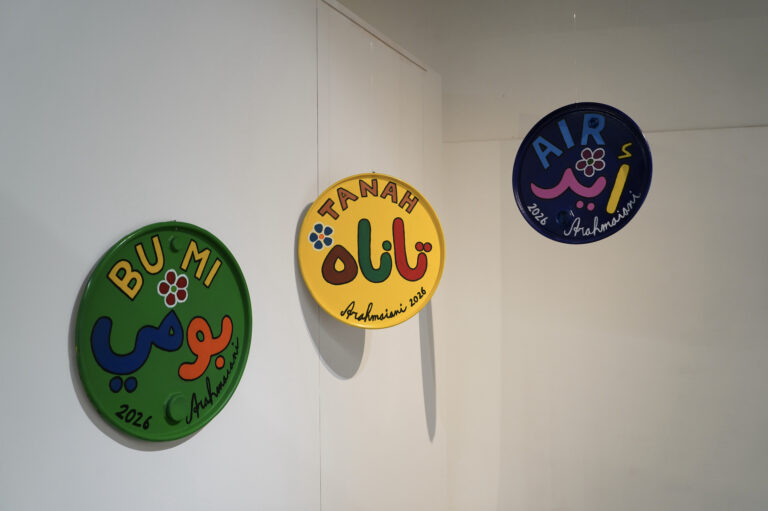
Arahmaiani’s works, “Air, Bumi, and Tanah,” are painted on recycled drum lids. Bright, direct, and multilingual, the words float across industrial surfaces once tied to global production. By reusing these materials, she connects language, faith, and ecology, arguing that cultural coexistence and environmental care are inseparable.
The final section, “After Earth,” reflects on what remains after damage has been done. Reza Kutjh’s “Periphery of the Wind” series documents the changing coastline of southern Java, affected by airport development and land conversion. Through fabric prints and photographs such as “Sand, Steel, and Those Who Remain” and “The Oblique Rays of the Afternoon Sun,” he captures landscapes marked by absence.
Elsewhere, Mater Design Lab reimagines waste as possibility. Through “Stream Lights,” the collective transforms tofu wastewater from home industries in Serandakan, Bantul into biodegradable soya paper lamps.
Cynthia Delaney Suwito’s “Potted Tower” installations stack empty flower pots into vertical structures that resemble urban apartment blocks. Instead of living plants, photographic cut-outs simulate growth. The piece quietly reflects on urban life, where nature is contained and replicated rather than rooted in soil.
Finally, Dabi Arnasa’s painting “Mirror and the Fire Lily” closes the exhibition with introspection. A figure faces a mirror that reflects only their back. Around them, a fractured landscape stretches outward. From this scarred terrain, a fire lily blooms—a flower that grows after flames. Renewal is possible, but it carries the memory of loss.
These works form a fragmented yet deeply human whole, inviting visitors to see themselves within fragile ecosystems. The exhibition poses a simple yet urgent question: if we are part of the earth, how do we care for it—and for one another—differently?