
In the last two decades, the topic of space has begun to enter everyday conversation. Be it about constellations, or cultural art forms such as Interstellar and Project Hail Mary, which educate people about the Milky Way. At the same time, commercial programmes aimed at making space exploration more inclusive have also gained traction.
Riding this wave, brands have begun to evolve their tool watch lineups to meet new demands. Beyond designs that appeal to space enthusiasts, many horology maisons are now equipping their timepieces with stellar complications (pun intended). With that in mind, join us as we unveil the space-themed releases of the IWC Schaffhausen Universe at Watches and Wonders Geneva 2026.
1. Pilot’s Venturer Vertical Drive
At the heart of this year’s novelties lies the Pilot’s Venturer Vertical Drive. Rather than developing an existing aviation-standard model from their collection, the manufacturer chose to take it further and craft it from scratch. Though the 44,3 mm watch is loaded with many outstanding features, the absence of a crown remains the most striking. Yes, IWC has deliberately shifted all adjustments to the rotating bezel, operated by turning it counterclockwise.
When the bezel is engaged, its motion is transmitted to the winding stem through a specially developed clutch system known as the “Vertical Drive.” Hence, the name. More importantly, the watch was developed for life on Haven-1, the world’s first commercial space station, in partnership with Vast. It has also achieved official spaceflight certification following testing with the company’s engineers.
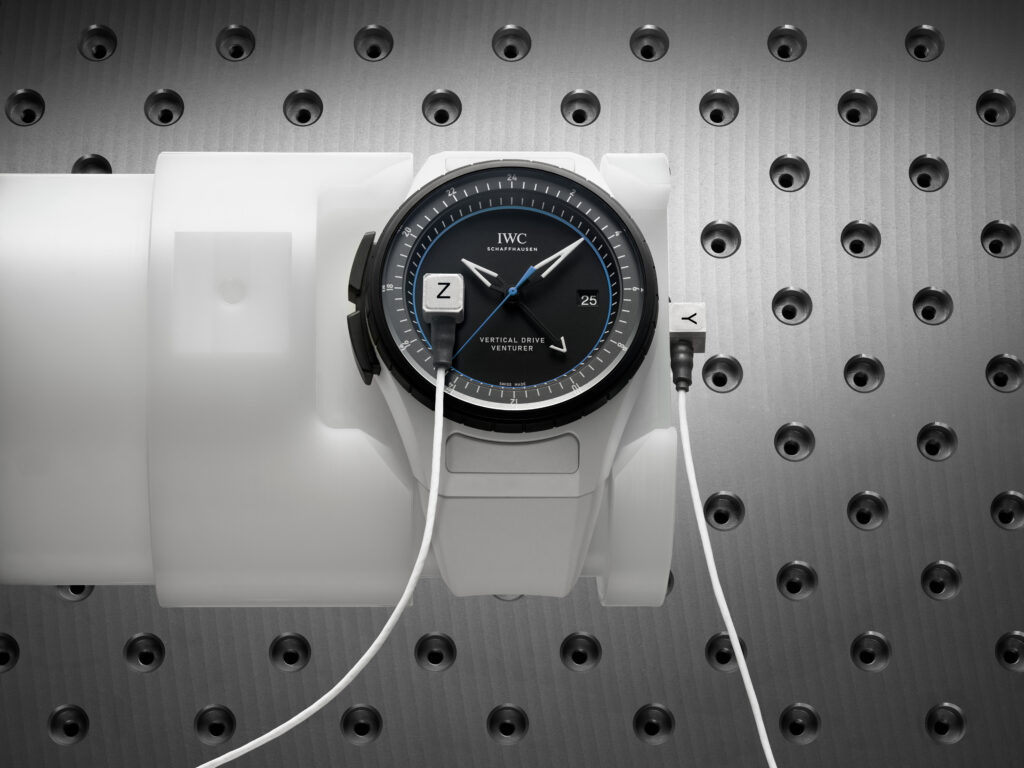

Meanwhile, a case-mounted switch allows the wearer to alternate between functions, from time-setting and dual-time adjustments between home and mission time to winding the movement. Even when worn with gloves, the watch can be operated without difficulty. This tactile approach reflects its astronaut-focused design.
Applying the robust yet lightweight principles of tool watch design, this model is constructed from white zirconium oxide ceramic and Ceratanium®. The play on materials is engineered to withstand multiple gravitational environments and harsh conditions, including G-forces, temperatures, and shocks.
Its black dial and 24-hour mission indicator reinforce its role as a professional instrument. Reduced to the essentials, the matte surface minimises reflections, while luminous hands ensure visibility in low light. A white FKM rubber strap, resistant to UV exposure and temperature changes, rounds off a design that prioritises clarity and function.
2. Pilot’s Watch Le Petit Prince’s 20th Anniversary Editions
Among IWC Schaffhausen’s long-standing collaborations is its partnership with the estate of Antoine de Saint-Exupéry. His most celebrated work, The Little Prince, became a global children’s classic and has featured in IWC’s Pilot’s Watch lineup for two decades. Marking the partnership’s 20th anniversary this year, IWC unveils a commemorative collection of Pilot’s Watches Le Petit Prince.
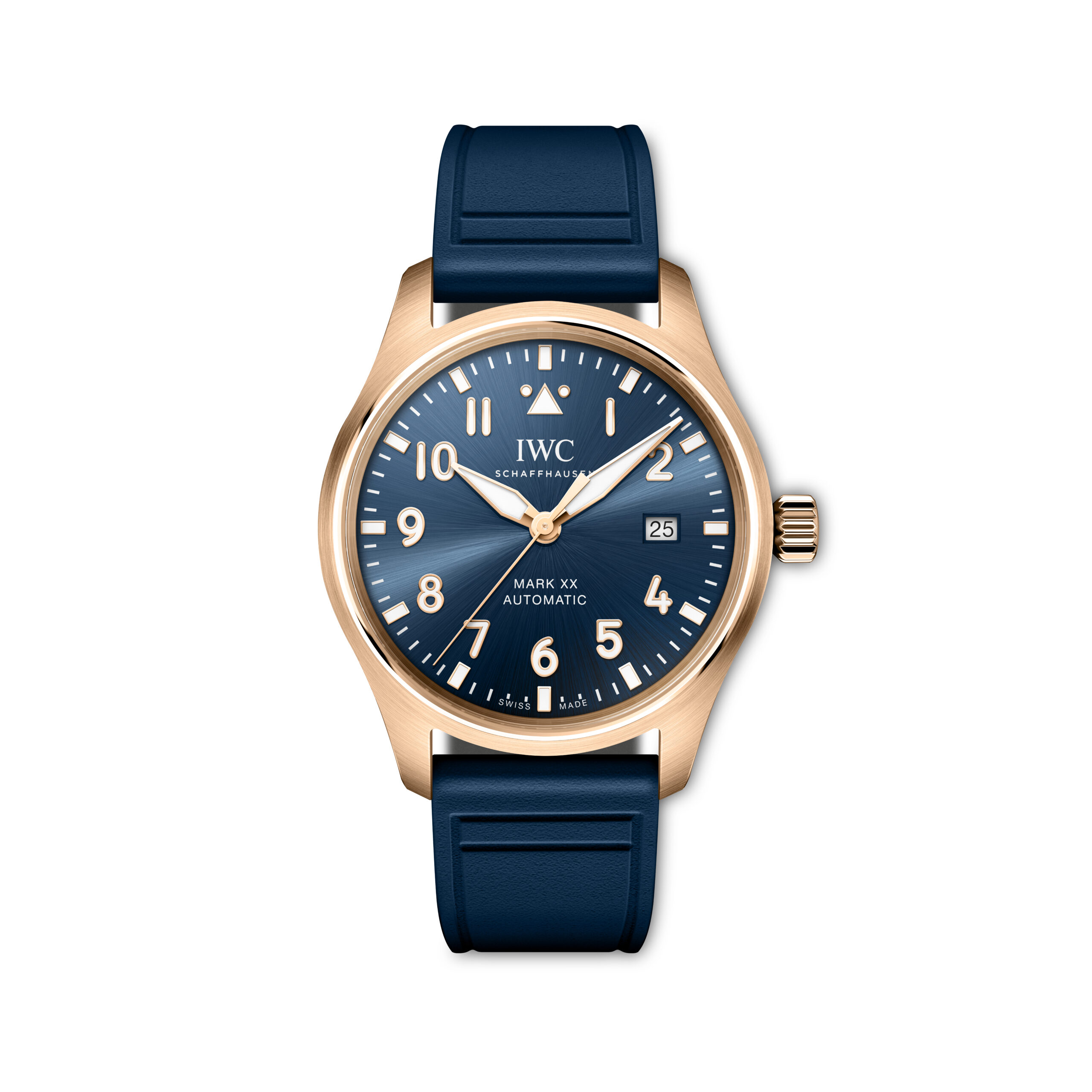
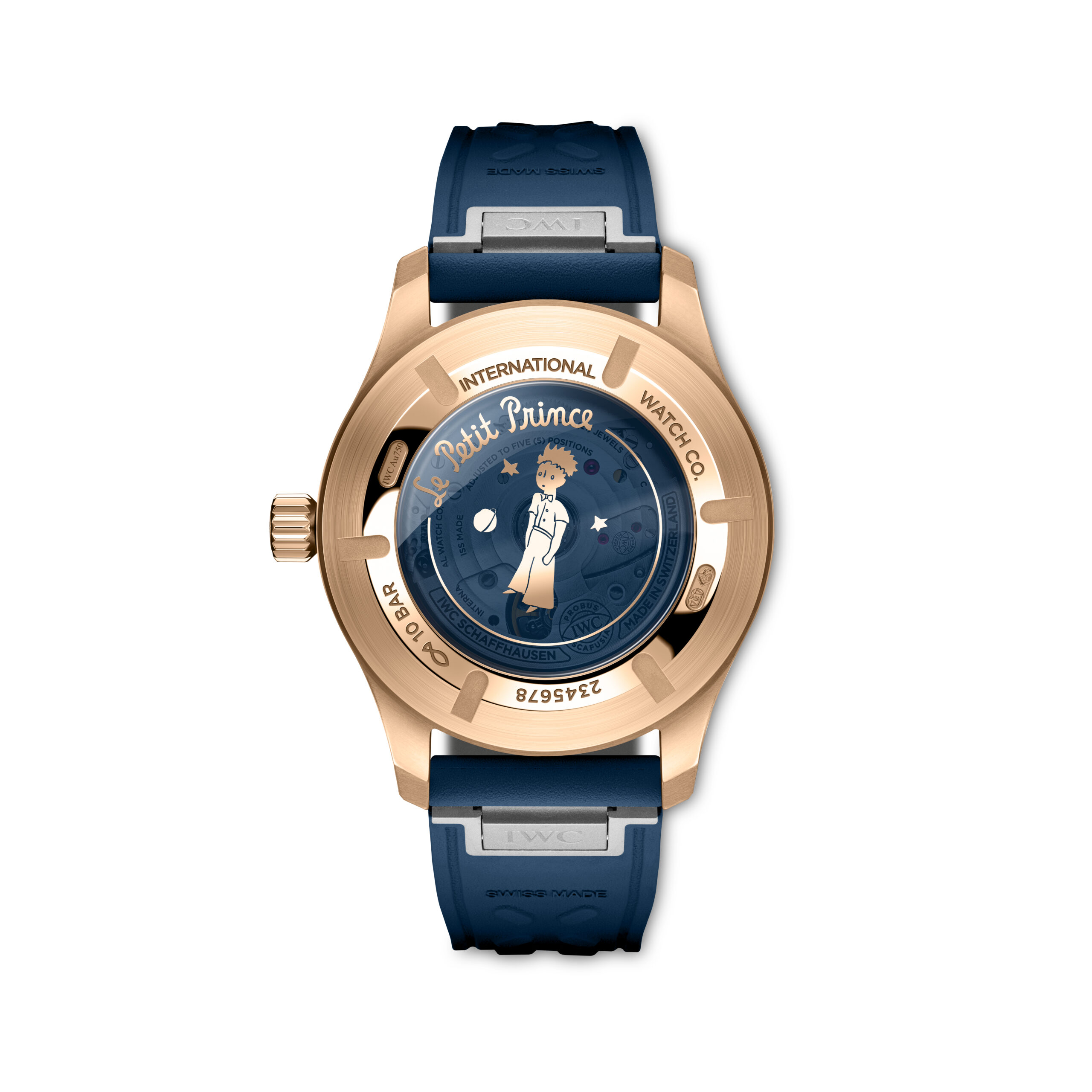
Following the same guiding principles as past releases, the lineup features deep blue sunray dials, gold-plated hands, and casebacks depicting The Little Prince. This visual language aligns with the broader space-focused narrative of the 2026 novelties. After all, the story follows a boy travelling across planets, meeting various characters along the way.
Leading the lineup are two versions of the Pilot’s Watch Mark XX, setting the tone with a balance of understatement. One leans into a more elevated expression in 18-carat 5N gold, while the other keeps things minimalist in stainless steel. Both are housed in 40 mm cases and powered by the in-house Calibre 32112 with a 120-hour power reserve, whose robustness is very much in line with the collection’s dailybeater appeal.
For a more technical edge, the Pilot’s Watch Chronograph takes on a sportier dimension, led by a standout white ceramic iteration. The Pilot’s Watch Chronograph 41 Le Petit Prince features a 41 mm case crafted from white zirconium oxide ceramic, lighter and more robust than steel. Powering it is the IWC 69385 calibre, a column-wheel chronograph movement designed for precise timekeeping.
The velvety case contrasts with the deep blue dial, where three subdials track elapsed time and gold-plated hands with Super-LumiNova® ensure clarity. Alongside this, stainless steel versions in 41 mm and 43 mm sizes complete the lineup, offering the same functionality in a more classic execution, with a titanium caseback engraved with The Little Prince.

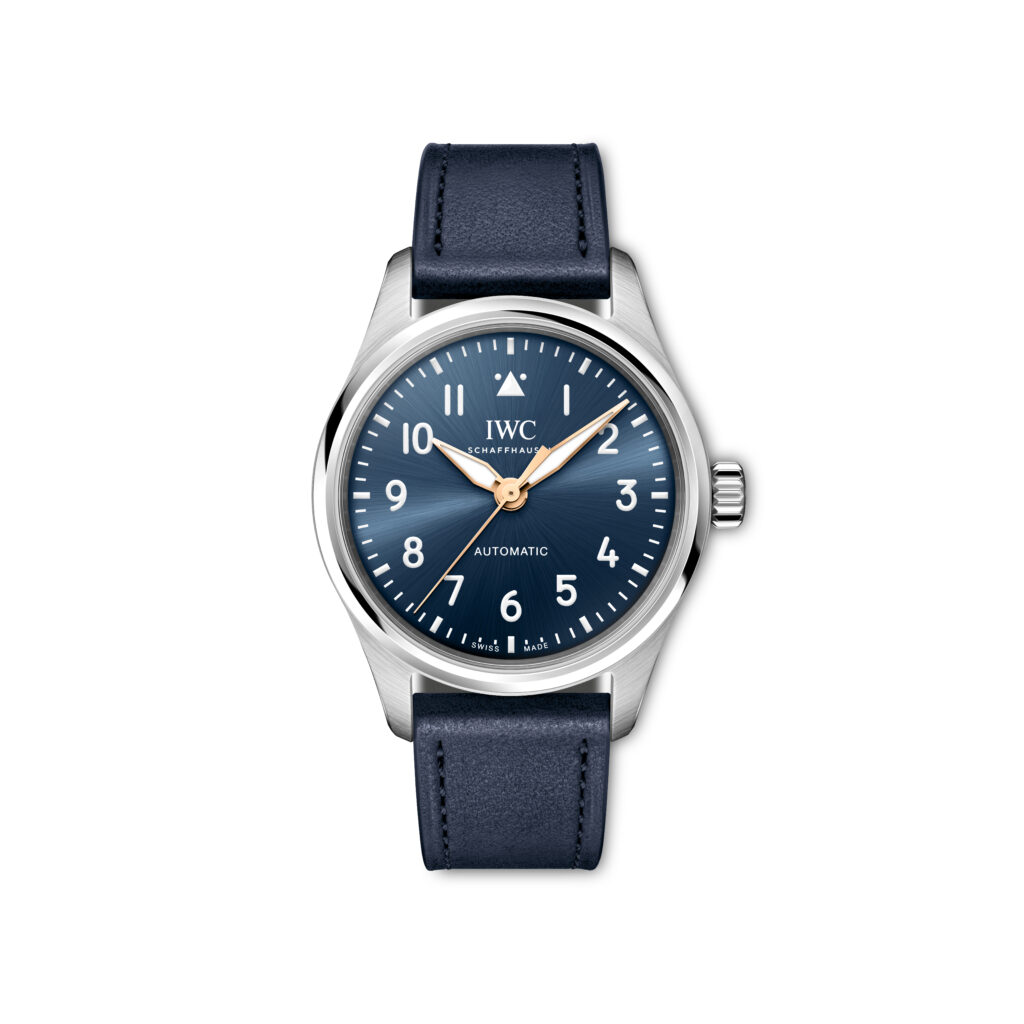
Rounding off the lineup is the time-only Pilot’s Watch Automatic, a more compact and understated option in a 36 mm stainless steel case. Powered by the IWC-manufactured 32102 calibre with a 120-hour power reserve, it encapsulates the collection’s design codes into a simpler form, while still retaining the same design codes.
3. Portofino Automatic Day & Night 34 Le Petit Prince
Although the Le Petit Prince lineup is largely rooted in the Pilot’s Watch collection, one piece stands apart: the Portofino Automatic Day & Night in a 34 mm stainless steel case. While the others share a consistent dial design, this model leans more heavily into the theme with a day-night display at 6 o’clock.
Here, a rotating disc marks the passage of time, revealing either the sun or the moon as the hours unfold. The indication is subtle yet carries a touch of charm, with the Little Prince shown standing on the moon against a starry sky. As with the other models in the edition, this motif is also echoed on the engraved caseback.
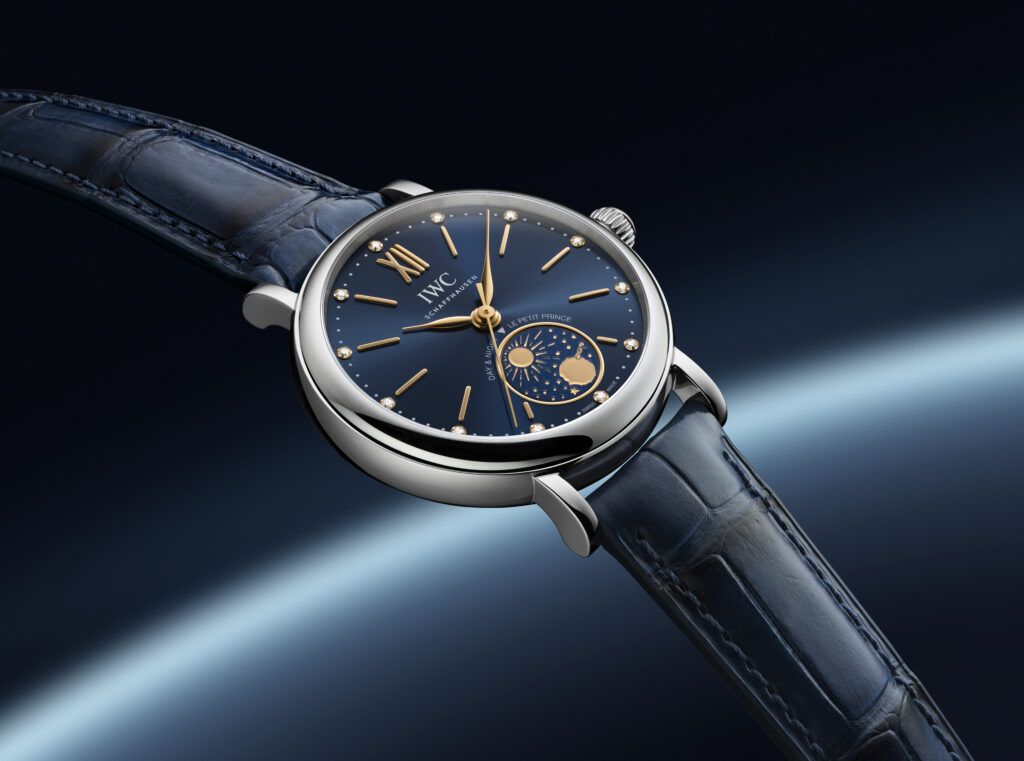
It also adopts a more refined, dress-oriented approach, paired with a calfskin leather strap in a matching blue tone, crafted by Italian artisan Santoni, instead of the sportier rubber strap seen across the rest of the lineup.
4. Perpetual Calendar ProSet® Lineup
Among its many complications, the perpetual calendar has long defined IWC Schaffhausen’s commitment to exceptional watchmaking. This legacy is closely tied to Kurt Klaus, who joined the maison in 1957 and went on to create the Da Vinci Perpetual Calendar Chronograph, pioneering its crown-controlled mechanism. Building on this foundation, IWC introduces the Perpetual Calendar ProSet® as the latest evolution of the complication.
At its core is a fully synchronised, gear-based system that allows the calendar to be adjusted both forward and backwards using a single crown position. This eliminates the need for corrector pushers or complex setting sequences. Despite its familiar dial layout, the mechanism has been fully reworked with layered components that keep each display in sync. It automatically accounts for different month lengths and leap years, making a typically complex system far easier to use.

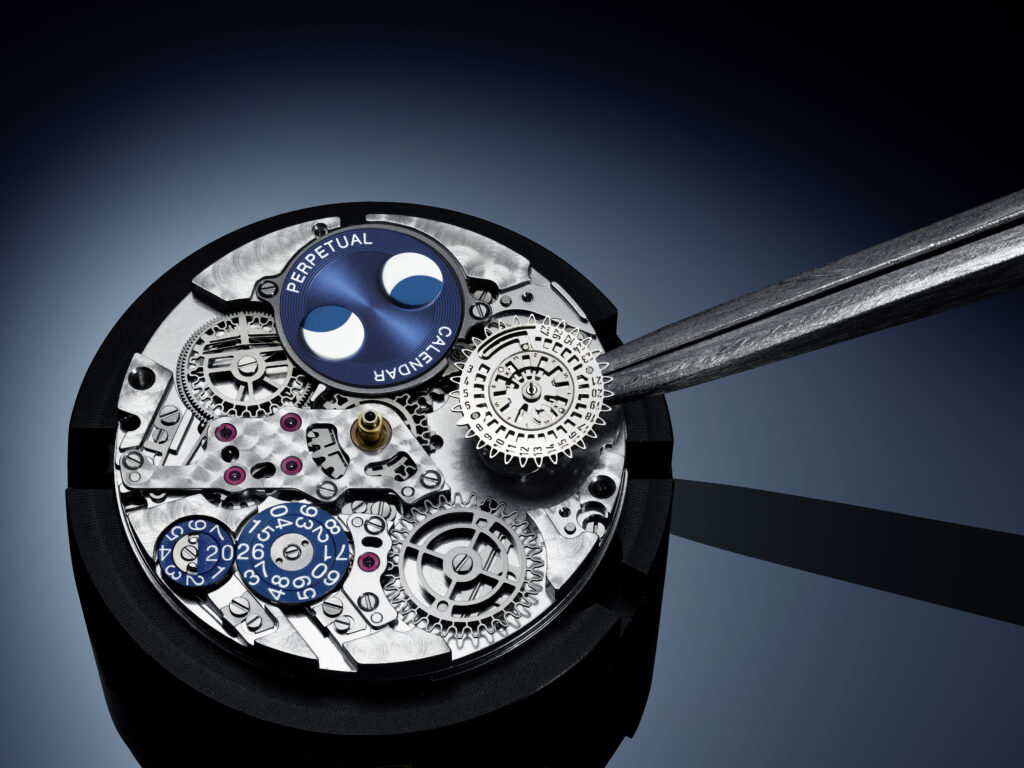
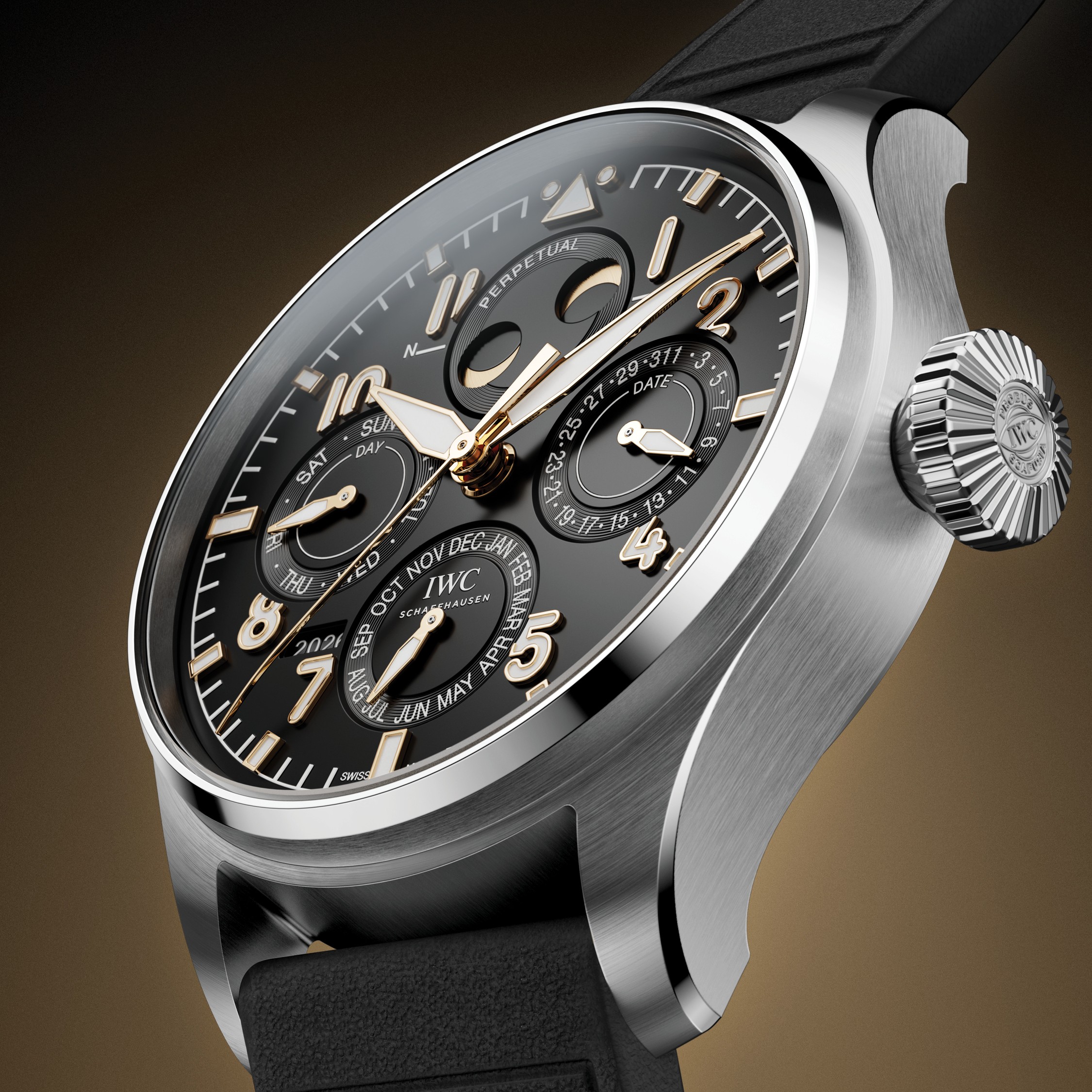
Further enhancing its technical depth is IWC’s Double Moon™ display, which visualises the lunar phases for Northern and Southern hemispheres with exceptional accuracy. The indications progress as part of a coordinated sequence, while the four-digit year, positioned between 7 and 8 o’clock, reinforces the brand’s perpetual calendar signature.
This lineup includes three versions: two dedicated to the Le Petit Prince editions and the third offering a different aesthetic. The first version features a 43 mm white ceramic case with a deep blue gradient dial, while the second version comes in a 42 mm stainless steel case with a matching bracelet, rubber strap; and engraved case backs referencing The Little Prince The third model stands out with a 42 mm 18-carat 5N gold case, paired with a dark olive green dial and a matching leather strap, giving it a warmer, more classic look.
5. Big Pilot’s Watch Perpetual Calendar Ceralume
Another highlight from IWC Schaffhausen rethinks material expression through the Big Pilot’s Watch Perpetual Calendar Ceralume®, limited to 250 pieces. Balancing both its technical complication and material innovation, the watch places a strong emphasis on its luminous construction, combining a 46.5 mm white ceramic case with a dial and strap that share the same Super-LumiNova® treatment. This unified approach allows the entire watch to glow in blue for extended periods, while maintaining a muted, almost monochrome look during the day.
Underlying this is Ceralume®, a material developed as part of IWC’s broader exploration of ceramics. Over the decades, the brand has expanded its capabilities, gradually introducing more advanced compounds and techniques. In this case, the focus shifts toward integrating luminosity directly into the material. The development process involved IWC’s Experimental (XPL) team working alongside RC Tritec to merge ceramic and luminous technologies.

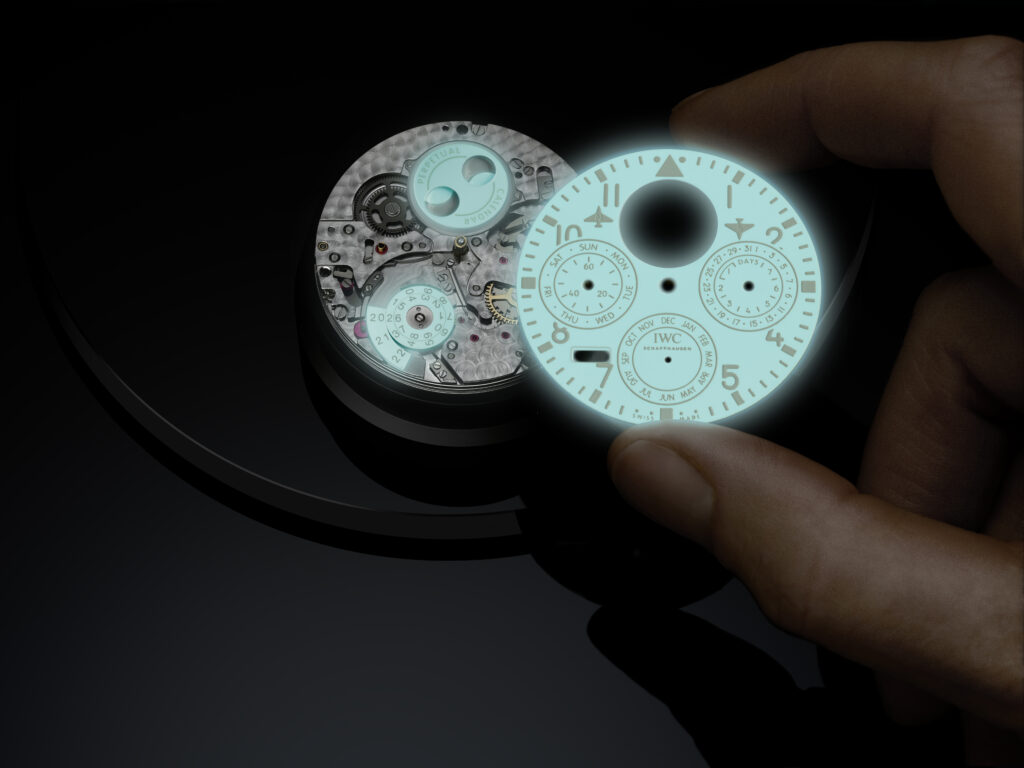
Beneath this highly visual exterior sits one of IWC’s most established mechanical systems, the perpetual calendar developed by Kurt Klaus in the 1980s. The indications are distributed across four subdials, covering date, day, month, and moon phase. Meanwhile, a four-digit year display is positioned discreetly between 7 and 8 o’clock. Driving the entire system is the in-house-manufactured Calibre 52616, equipped with a Pellaton winding system reinforced with ceramic components and delivering a power reserve of 7 days.
Taken together, the watch balances technical depth with a strong visual identity. Its luminous concept extends beyond the dial to the rotor medallion, which also emits a subtle glow in low light. Viewed from the front or through the sapphire case back, it maintains a consistent narrative between material and mechanics. Ultimately, it reads as a cohesive whole, where innovation is fully integrated into the watch’s function and form.