
The Monaco has a habit of making history when nobody asks it to. In 1969 it arrived as the world’s first square water-resistant chronograph, wearing the self-winding Calibre 11 and a crown defiantly placed on the left. A year later, Steve McQueen strapped one on for Le Mans and accidentally created the most famous product placement in watchmaking. Now comes the TAG Heuer Monaco Speed 12, unveiled at the 2026 Grand Prix de Monaco, and once again, the square case carries an idea far stranger than its silhouette suggests.
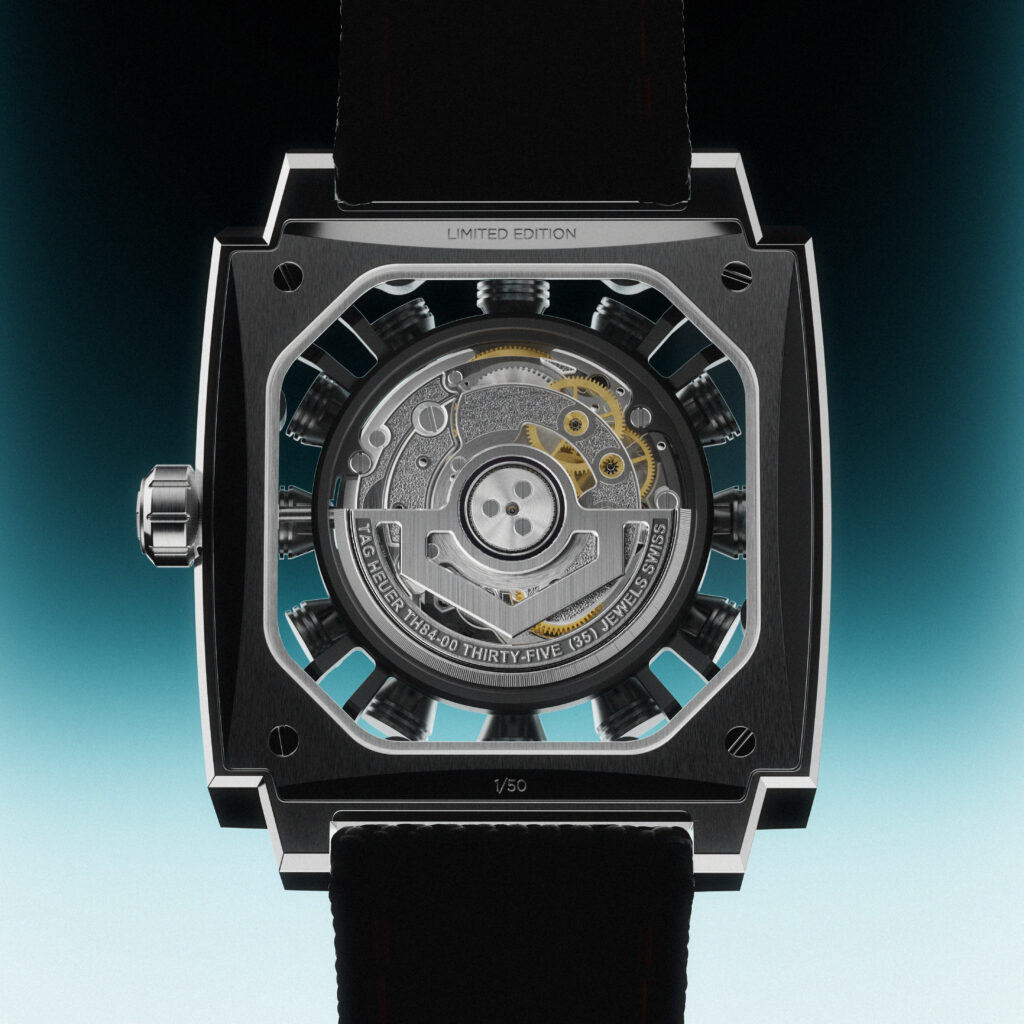
The movement is the real headline. The Speed 12 runs the Calibre TH84-00, built on the Spin Time mechanism that Michel Navas and Enrico Barbasini patented at La Fabrique du Temps, the movement manufacturer Louis Vuitton acquired in 2011. Spin Time first appeared on the Tambour back in 2009, telling the hours through rotating cubes, and it has remained a Louis Vuitton signature ever since, most recently in the floating Spin Time Air.
It is the first time the patented mechanism has been lent to a sister brand, and the favour says plenty about how the LVMH watch division now operates. Here are three things that make it one of the wildest watches of the year.
1. A V12 for the wrist
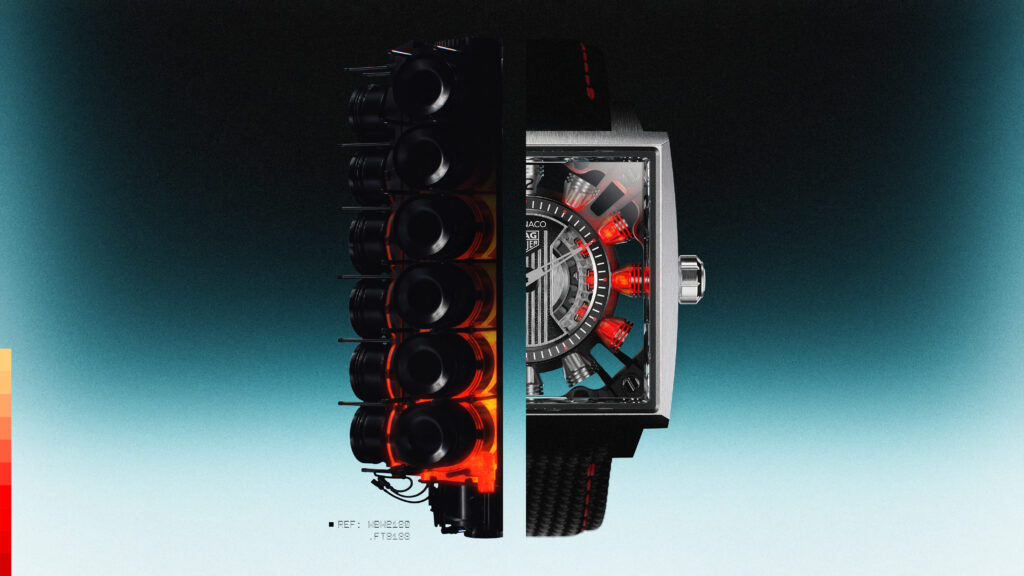
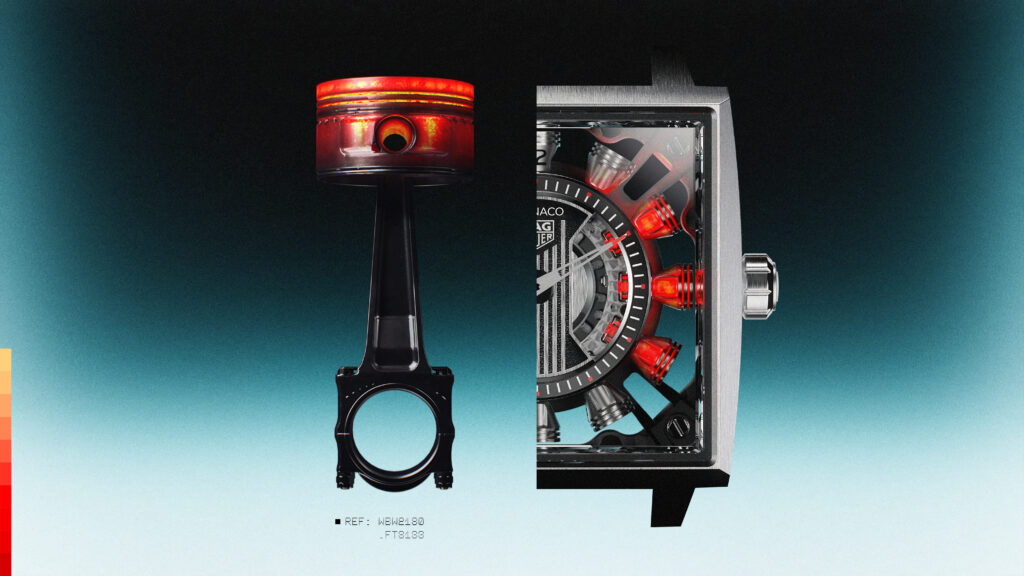
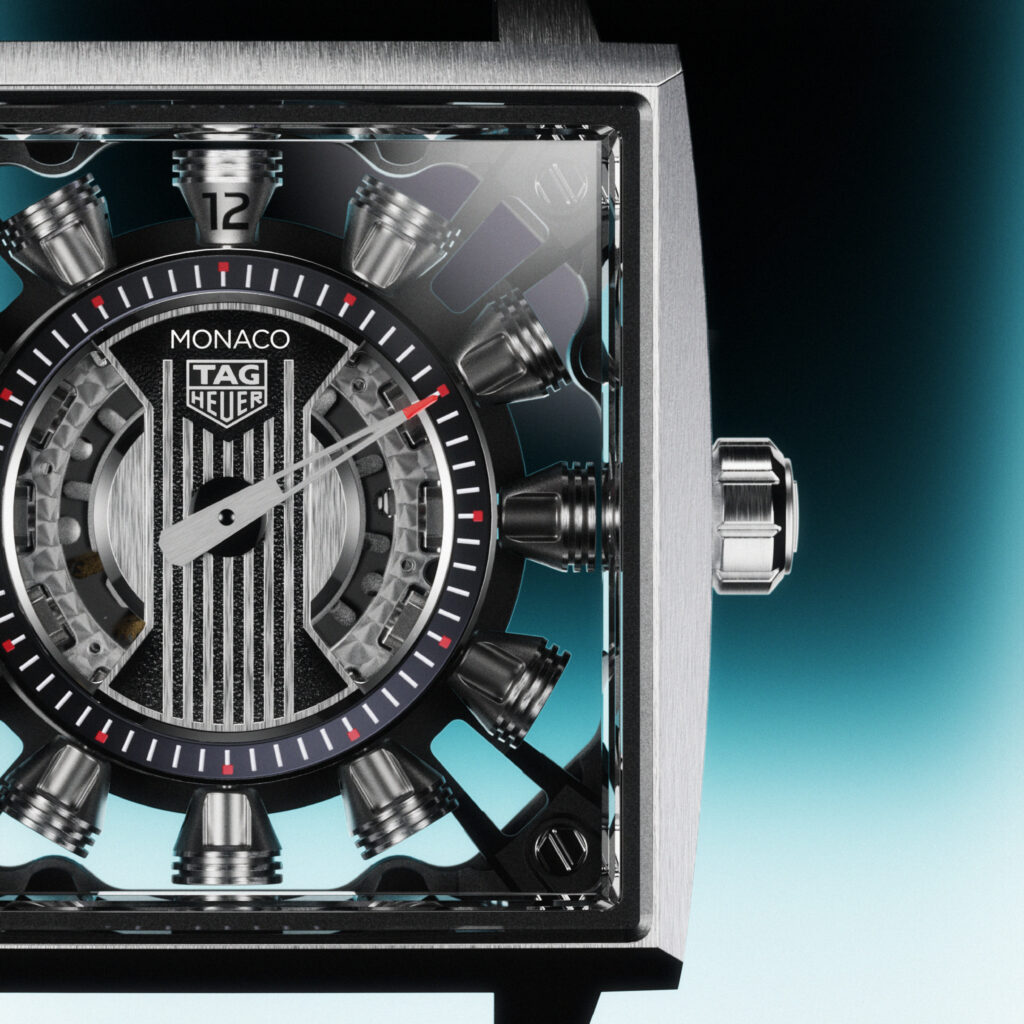
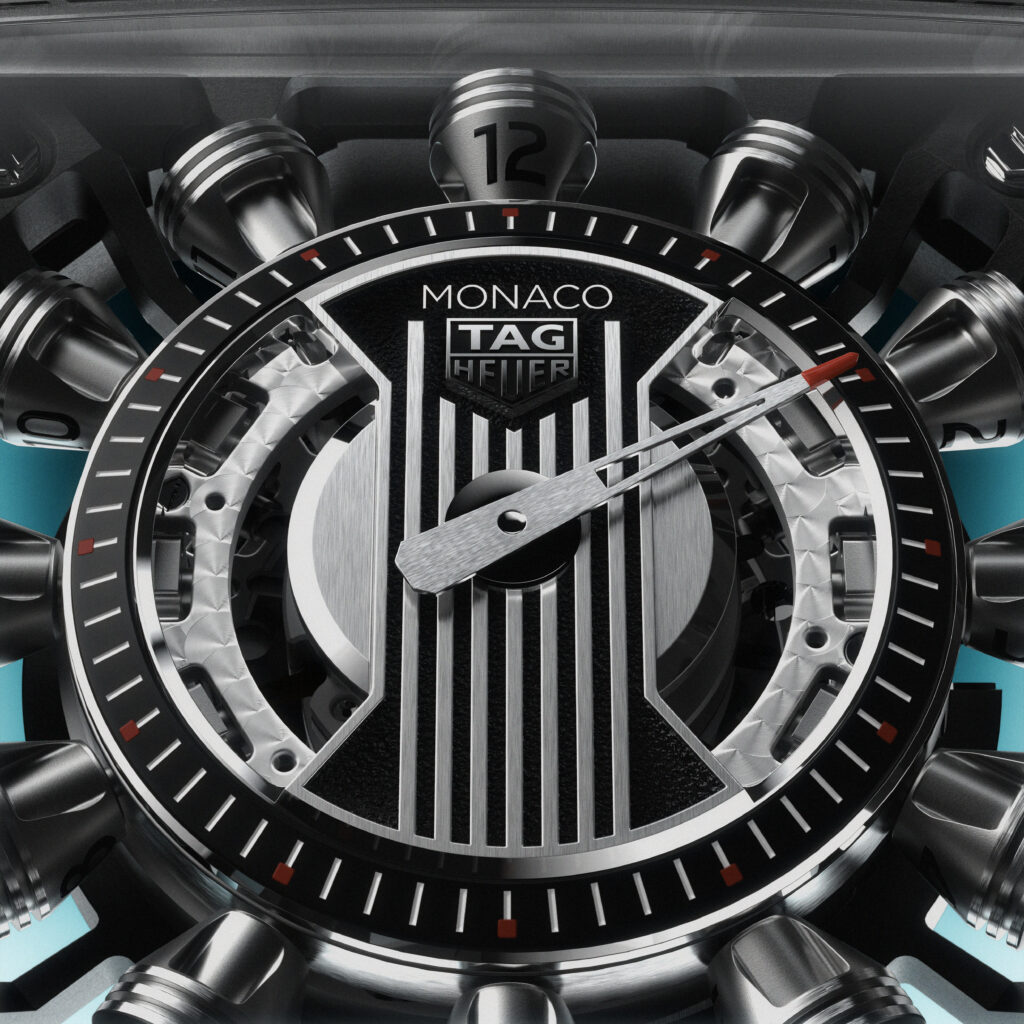
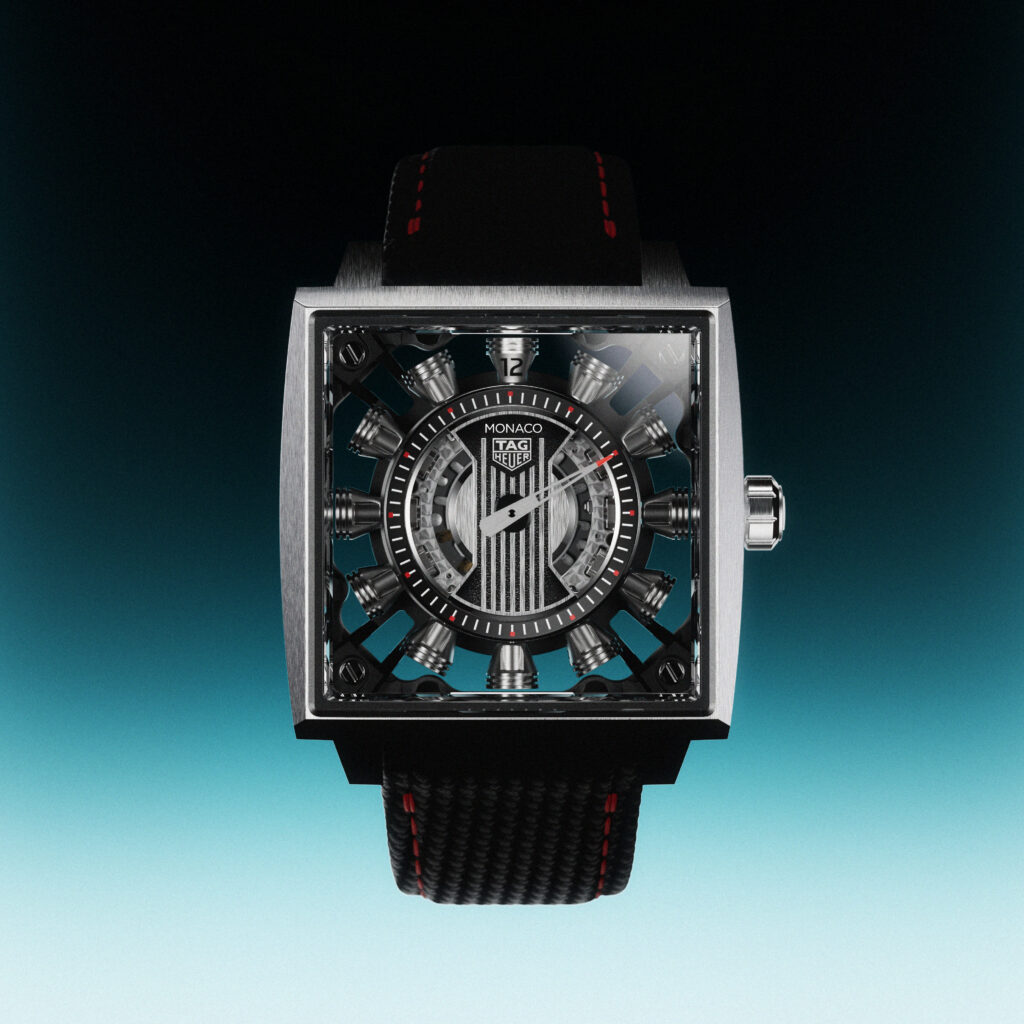
Look at the dial and the racing metaphor lands straight away. Twelve small pistons sit around its edge, each one rhodium-plated, sandblasted and marked with a black lacquered numeral. They are not there for decoration. As the central minute hand sweeps round, one piston drops back into place while the next rotates 90 degrees, turning to reveal the hour on a face you could not see a moment earlier. What you get, in effect, is a jumping hour dressed up as an engine’s firing order, and watching it cycle is genuinely hard to look away from.
The part underneath is just as considered. The timepiece is powered by the automatic Calibre TH84-00, which runs at 28,800 vibrations per hour and roughly 45 hours of power reserve. Consequently, its layout was deliberately kept slim to leave room for the rotating modules on top. The case that frames all this measures 40mm in brushed and polished Grade 5 titanium. On top of it, the watch is also equipped with water resistance to 30 metres and is light enough to forget you are wearing it. A domed sapphire crystal and a square sapphire bezel wrap around it too, so the pistons stay in view from almost any angle.
2. Borrowed from Brilliance
Here is the part that makes watch people sit up. That clever piston display is not really a TAG Heuer invention. It grew out of Spin Time, a mechanism patented by Michel Navas and Enrico Barbasini at La Fabrique du Temps, the high-complication workshop that Louis Vuitton bought in 2011. Spin Time first appeared on the Louis Vuitton Tambour back in 2009, telling the hours through rotating cubes. It has been a Vuitton calling card ever since, right up to the floating Spin Time Air. So why lend it to TAG Heuer now?
Because this is the first time the patented mechanism has been passed to a sister brand, and that alone tells you how the LVMH watch division has started to think. Ever since Frédéric Arnault took charge of the group’s watchmaking in 2024, TAG Heuer has been climbing toward haute horlogerie. Think of the Monaco Split-Seconds Chronograph, or its more recent work on carbon composite hairsprings. Borrowing a ready-made complication from down the corridor lets the brand stage a level of mechanical drama it does not yet build itself. It manages that without ever letting go of the racing character that has always been its signature.
3. Peak Monaco
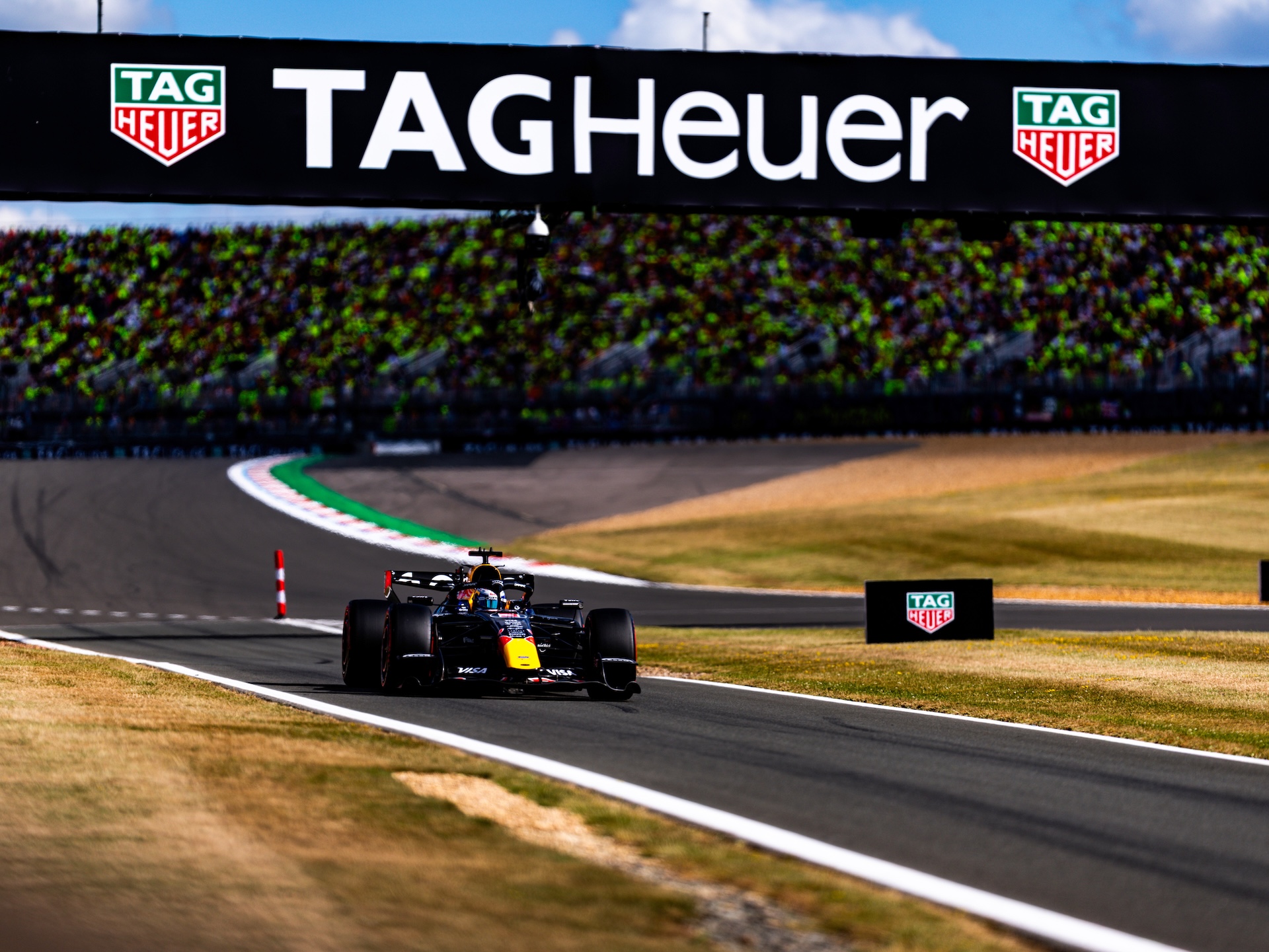
None of this is out of character. Wild engineering has been a Monaco habit for years, and the Speed 12 simply carries it forward. This is the collection that gave us the belt-driven V4 in 2004 and, more recently, the Monaco Split-Seconds Chronograph, so a ring of spinning pistons feels right at home. Even the crown tucked off to one side is a callback, a nod to the left-handed original from 1969. The timing helps too, as TAG Heuer took back the role of Official Timekeeper of Formula 1 in 2025. The Monaco race itself now carries the Louis Vuitton name in its own title. Put all of that together, and the Speed 12 reads less like a one-off and more like a statement. Only 50 numbered pieces will be made, with the first arriving in December, so anyone hoping for a place on the grid should move quickly.
The Monaco spent its first life proving a square chronograph could matter, but the Speed 12 makes a different case. And that heritage is worth most when someone is brave enough to tinker with it, and the old icon drives away all the faster for it.