
If Piaget’s daring elegance could be distilled into a mind, it might well belong to Rémi Jomard. Trained as an engineer, shaped by design, and endlessly curious, Jomard joined the Maison in 2005, bringing with him a rare ability to translate between the precision of micro-engineering and the poetry of aesthetics.
Now as Piaget’s Director of Products and Innovation, he doesn’t just preserve the brand’s legacy, he reimagines it. From shaping time into new forms to challenging the boundaries of craftsmanship, Jomard leads with a vision that’s as intuitive as it is technical, rooted in heritage yet always reaching for what’s next.
From designing tableware for Michelin-starred chefs to spinning electronic sets as a DJ, Rémi Jomard channels a richly layered creativity into his role at Piaget. We sat down to talk about mixing heritage with bold ideas, why shapes matter, and what’s next for Piaget, on and off the wrist. His vision is clear, to continually uphold the founder, Georges Edouard Piaget’s motto: always do better than necessary.

What is the overarching theme or vision for Piaget’s showcase at Watches and Wonders 2025?
I would say that this year, it’s a story about the play of shapes. When you look at the new Sixtie collection we launched, along with the Swinging Sautoirs and the Andy Warhol collection, it’s all about playing with form. From a design perspective, it’s rooted in what we did back in 1969 for the 21st Century Collection, when the Piaget family sent designers and celebrities to Paris Fashion Week to immerse themselves and reflect on the future of wearing time. So, you can see that spirit carried through in today’s creations—whether in the Piaget Sixtie, Andy Warhol, Polo 79, Swinging Sautoirs, or our Haute Joaillerie pieces.
Can you share insights into the process behind the intricate bracelet design of the Sixtie?
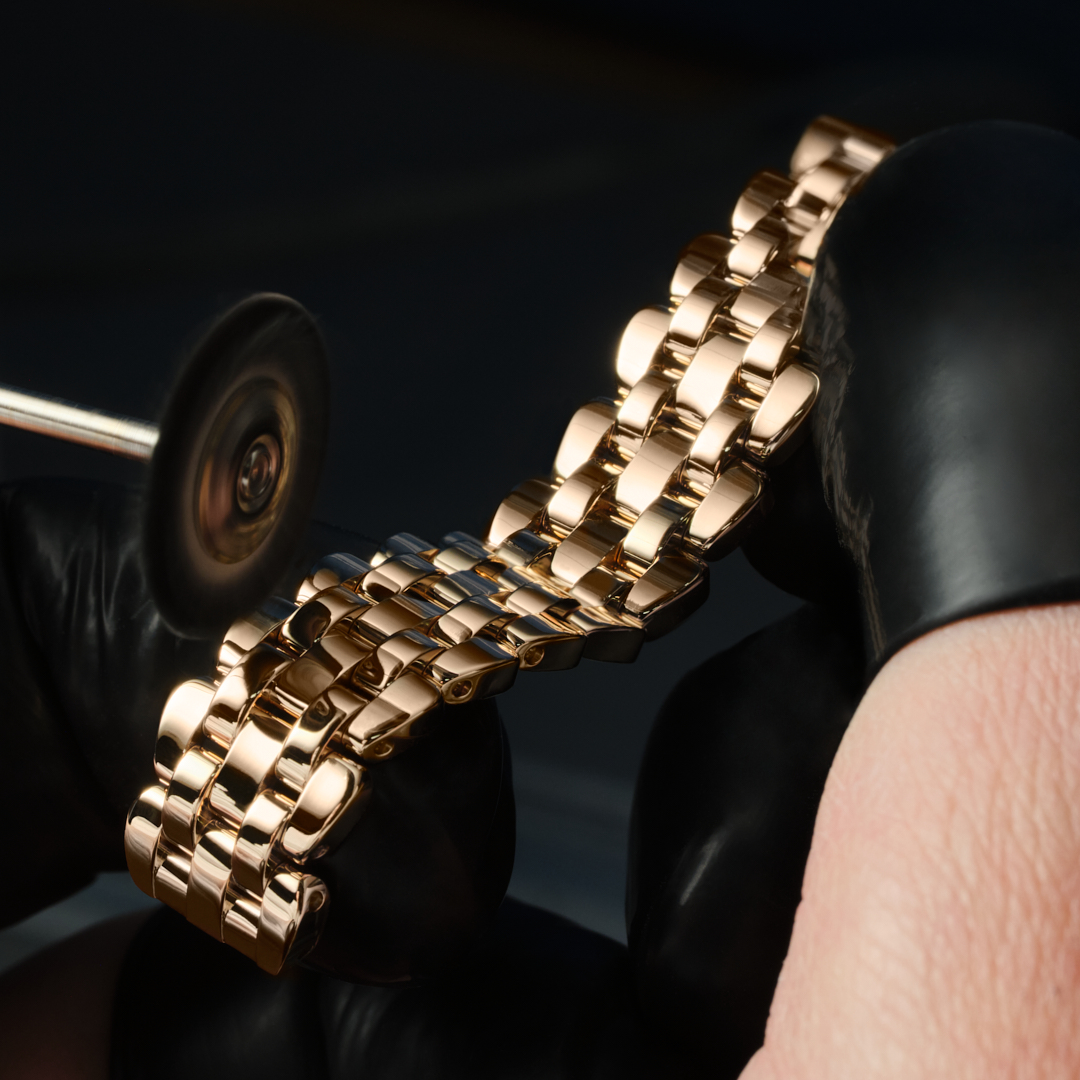
It was a fascinating process, as we began with a wide range of possibilities. The goal was to create a design that honours our heritage while remaining effortlessly wearable today. The result is a versatile timepiece, featuring a gadroon bezel on the gold version, and a diamond-set bezel on the steel-and-gold model. We carefully considered everything: the proportions of the case, the visual rhythm of the bracelet links, and how it all sits on the wrist to ensure it feels as natural for everyday wear as it does as a refined piece. At the heart of it all was a clear creative direction: heritage design codes with a twist. That’s really the foundation. Which is why you’ll find asymmetrical links, an asymmetrical case, and a dial, which when all combined, reflect this approach in the collection.
How do you bring Piaget’s heritage into a modern context with the Sixtie?
Through technique. At Piaget, we often say that technique exists to serve aesthetics, and this is a perfect example. The aesthetic draws from decades past, but the technique behind it is entirely contemporary. Take the way the bracelet links are assembled. If you look closely, there are no visible holes on the sides. It’s seamless, incredibly supple, and sits beautifully on the wrist. We’re always pushing technical boundaries to support an aesthetic that feels relevant for the next 20 or 25 years. It’s really about form and function working in harmony.
What was the most technically challenging piece Piaget developed for this year’s showcase? Is this the Sautoir Sixtie necklace or do you have any other piece in mind?
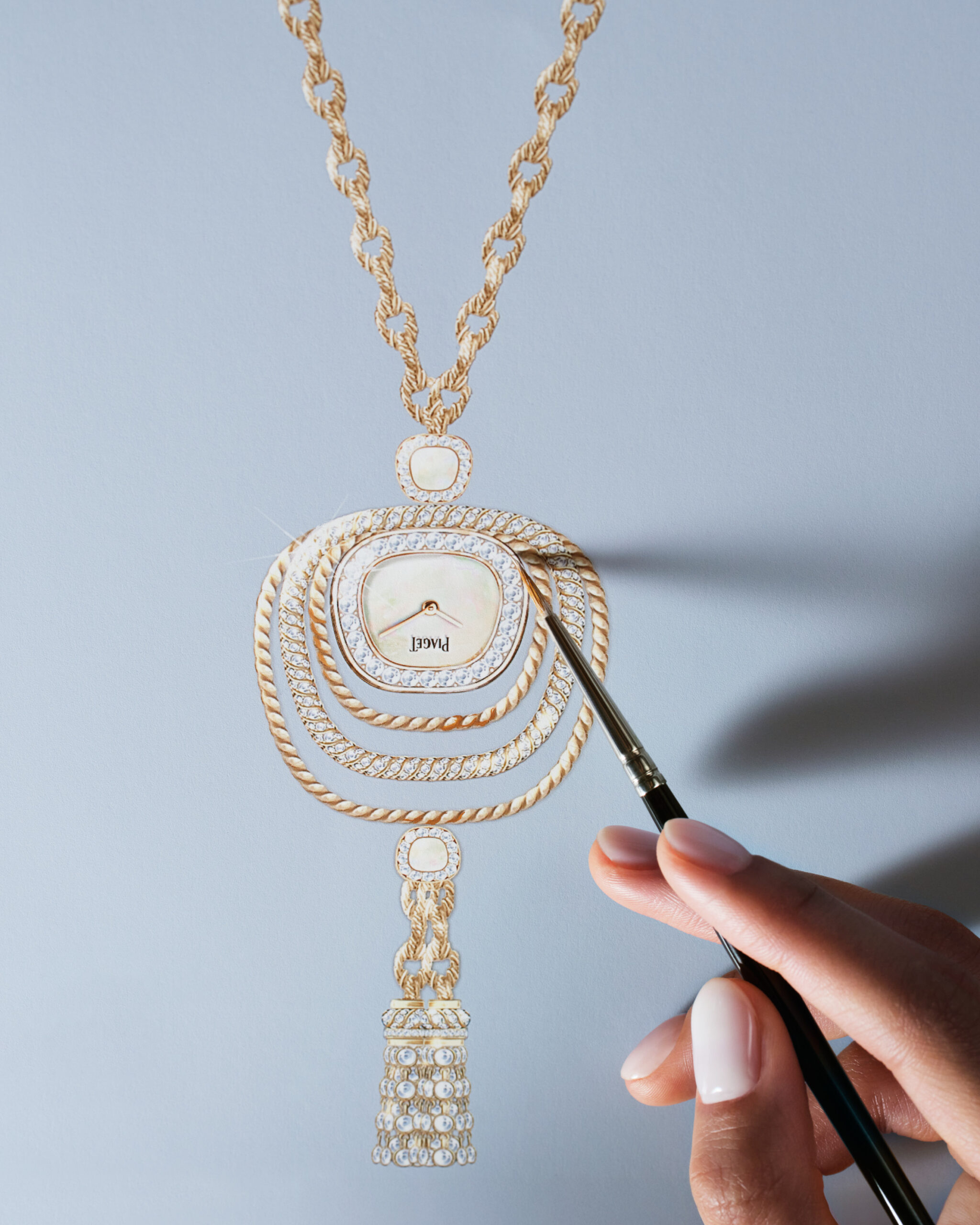
I would say, obviously, the Swinging Sautoir Sixtie. We had to completely rethink how we manufacture and how our artisans work with gold. The chain remains the same as last year, but all the gold threads surrounding the watch are twisted in a very specific way. So we had to relearn how it was done decades ago, only now, using modern tools and techniques. That was a major challenge. Another was working with opals, sourcing three opals that were tiny yet vibrant, with the same shine, colour, and visual effect. Finding stones that matched perfectly was incredibly tricky.
What does the future hold for Piaget’s watchmaking, and how do you see the Maison continuing to evolve?
Absolutely, you can expect it, even if I can’t reveal much just yet. What sets Piaget apart is that everything we create is deeply rooted in our expertise and savoir-faire. It’s a continuous journey, like climbing a staircase. Each step building on the last, year after year, and with every step forward, the possibilities become even more exciting.
If you could describe Piaget’s Watches and Wonders 2025 novelties in a single emotion rather than words, what would it be, and why?
I would say shape. I know it’s technically a word, but the way we work with shapes at Piaget creates a strong emotional response. Whether it’s a curve, a square, or a trapezoid, these forms speak to you through the eyes. We love to play with proportions, as well. From horizontal versus vertical to soft versus structured. It’s this visual language of design that brings out emotion, making each piece feel both timeless and new.