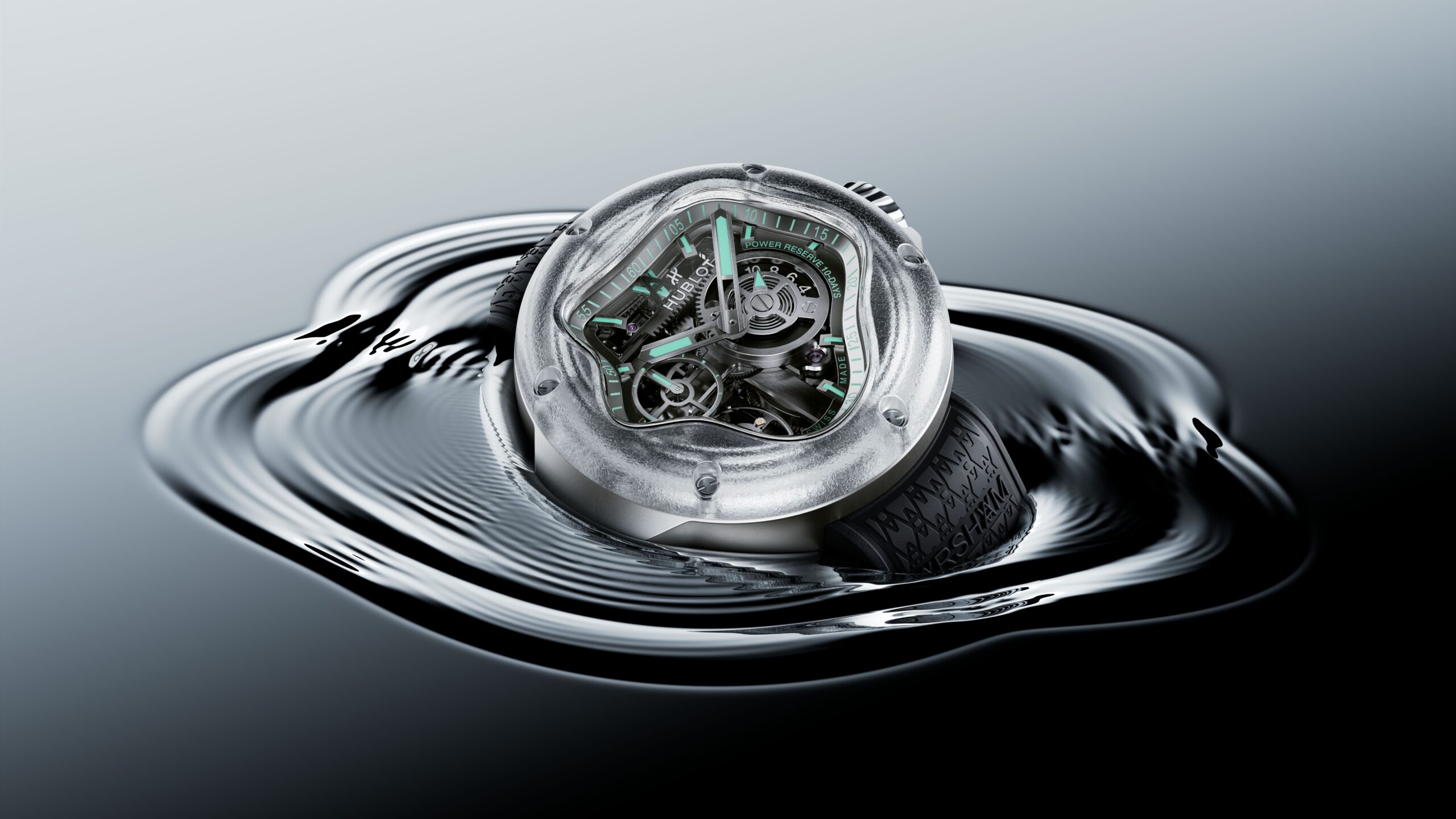
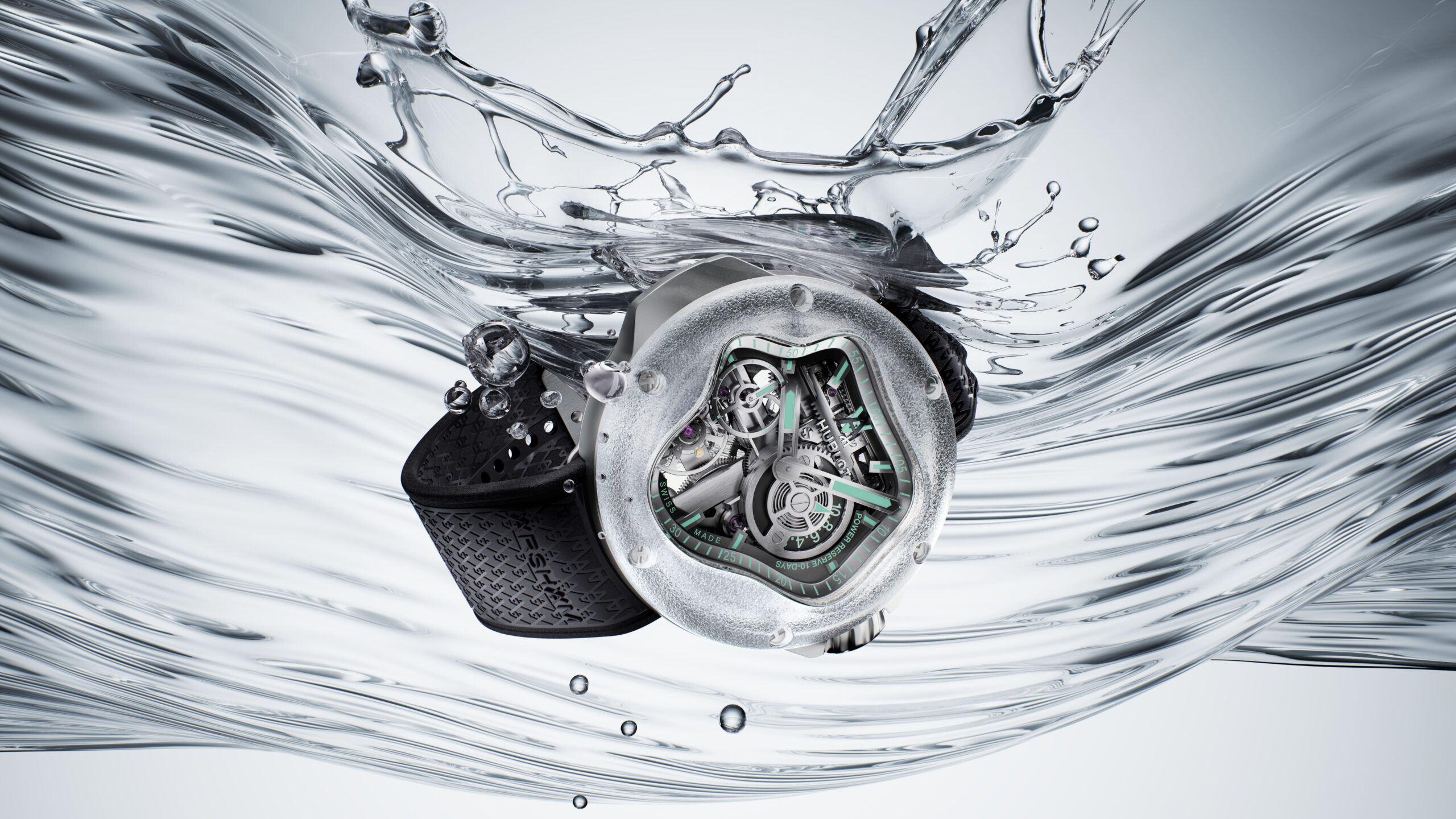
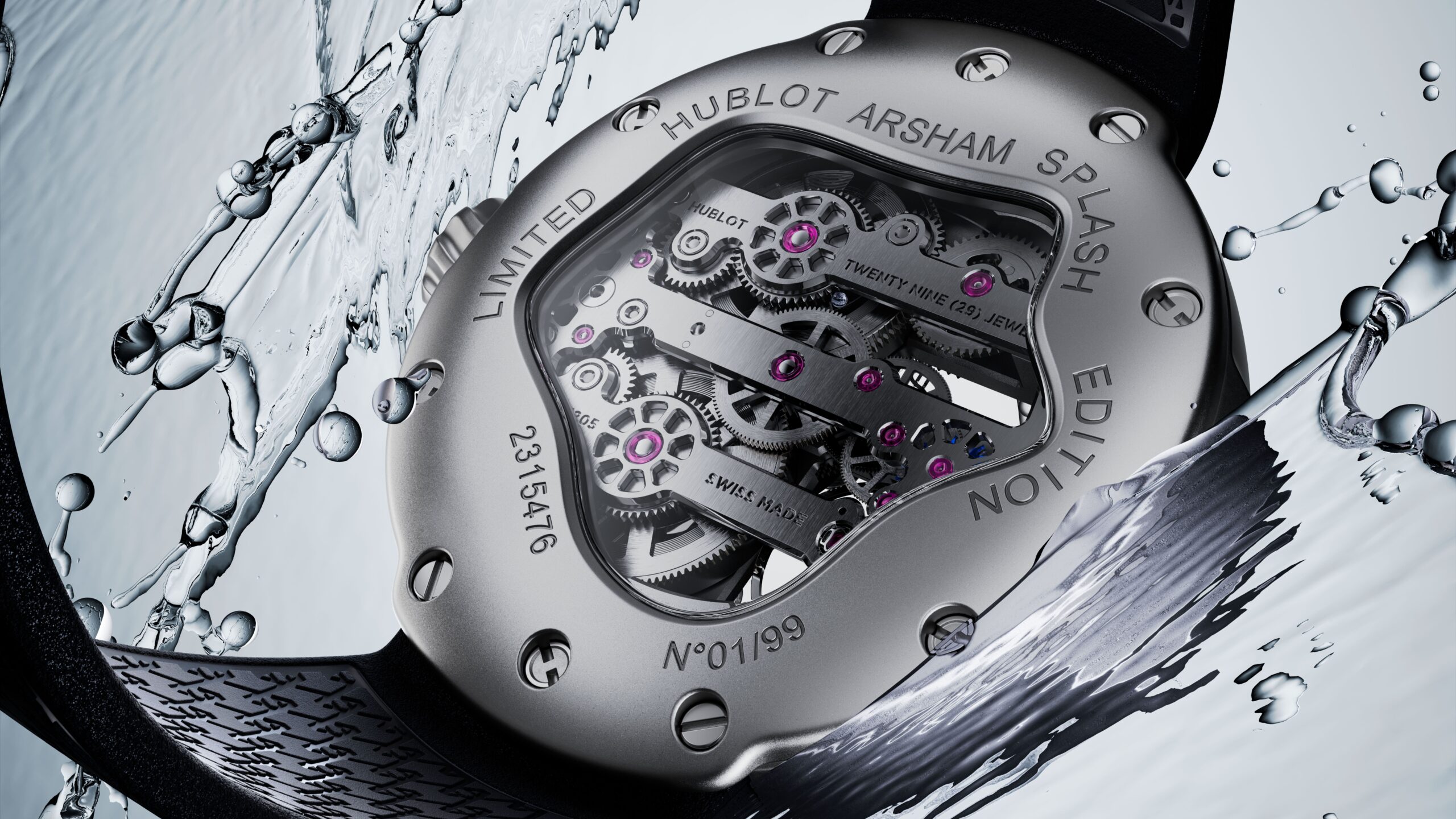
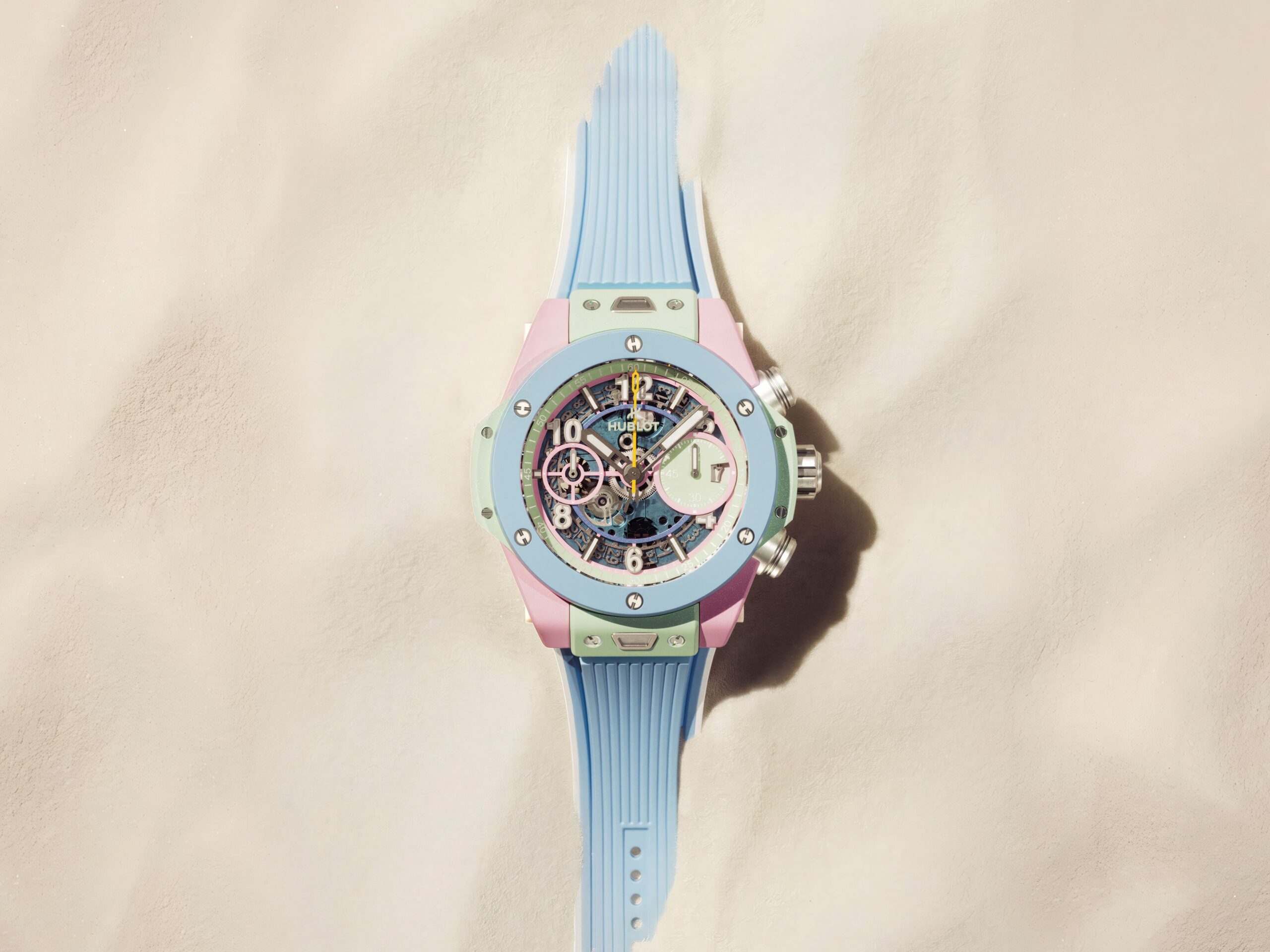
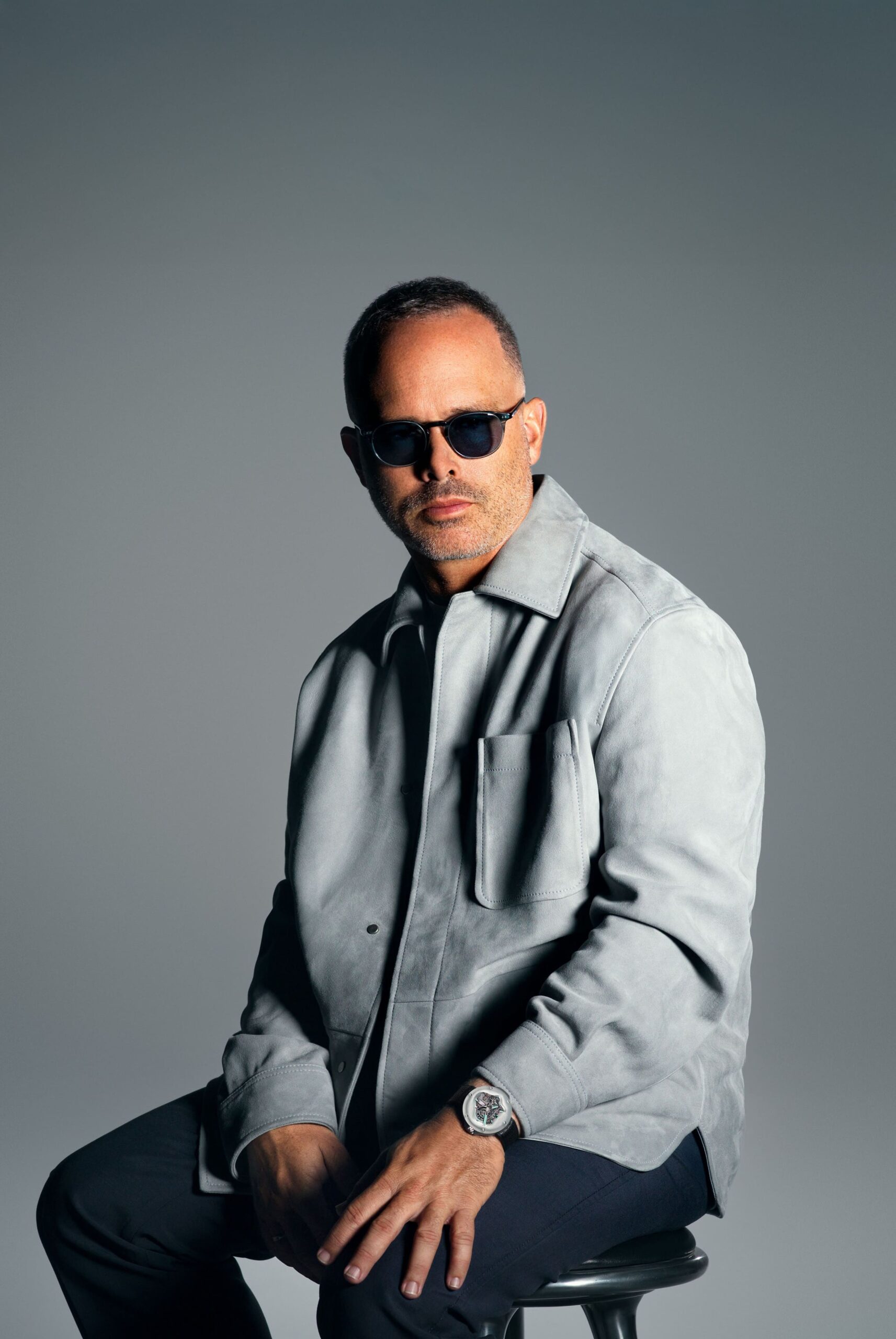
Through his sculptural works, Daniel Arsham explores erosion, transformation, and the passage of time as both subject and medium. His latest collaboration with Hublot, the MP-17 Meca-10 Arsham Splash Titanium Sapphire, continues this dialogue between art and horology. Inspired by the fluid movement of water, the timepiece reimagines the architecture of the mechanical watch through Arsham’s lens of contemporary archaeology. The result is an object that feels both futuristic and ancient, technical yet poetic. In October 2025, The Time Place Magazine had the opportunity to speak with the artist about the exciting collaboration during the launch event in Singapore.
Tell us about the concept behind the Hublot MP-17 Meca-10 Arsham Splash Titanium Sapphire watch?
It continues the theme of water from my first project, using irregular, fluid forms. Hublot had never created a curved sapphire before; their Big Bang Sapphire, for example, was entirely square, so this project challenged the conceptual and technical boundaries of the company.
How do you interpret disruption in your creative process?
My first proposal for Hublot was a pocket watch, an almost absurd object to create today. But it allowed us to use sapphire on a scale that hadn’t been done before. There were no weight constraints, so the result was heavy, more like jewellery. It opened new possibilities. Few companies would take that kind of risk. With the new project, I wanted to continue exploring asymmetry and fluidity, which go against the symmetry typical in watchmaking.
How do you adapt large-scale sculptural work into something that’s wearable and constantly in motion?
When I first visited the factory in Switzerland, I spent time learning about their expertise, especially with sapphire. They pioneered its use for watch cases, which hadn’t been done before. My goal was to see how far we could push that. The pocket watch became the largest commercially released sapphire timepiece. It also referenced the evolution of timekeeping, from desk clocks to pocket watches to wristwatches. This project feels like the next step in that lineage.
How do you see the connection between sculpture and watchmaking?
Design always has parameters. I’ve worked with fashion and automotive brands before, and I define the difference this way: art has a function we may not yet understand, while design has a clear one: you see a chair, and you know what it’s for. My goal is to translate the material experimentation from my sculptures into other disciplines, using sand, volcanic ash, or other unconventional materials in new contexts.
What do past, present, and future mean to you?
In much of my work, I use materials that exist on a geological timescale, crystals and volcanic ash, for instance. I wasn’t necessarily translating those materials into this project, but I was thinking about how to use materials in unexpected ways. Before collaborating with Hublot, I wanted to understand their capabilities and how to push them beyond what had been done before.
How has working with Hublot expanded or challenged your ideas of time?
In my work, I often play with confusing people’s sense of time, making new things look ancient. Watchmaking is the opposite; it defines time with precision. So, this collaboration became more of an experiment in materials than in philosophy.
How does this new timepiece fit into your wider body of work?
It continues the ideas from my first Hublot collaboration. It doesn’t feel like an outlier; it aligns with my broader interest in pushing materials to behave in unexpected ways.