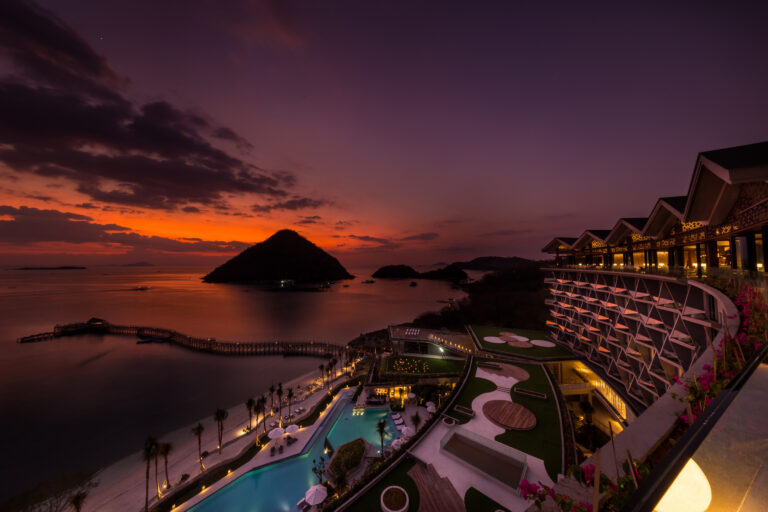
The transformation begins gently. As the sky over the bay turns amber, guests are welcomed through a ceremonial procession inspired by Manggarai tradition, an opening rite known as Tiba Meka, where hospitality itself becomes performance. There is a formality to it, an unhurried sense of being received rather than simply seated.
What follows escalates in both rhythm and spectacle. Caci, a centuries-old display of ritual combat, sees performers meet in a stylised duel of whip and shield, their movements sharpened by the pulse of gongs and drums. It is a striking counterpoint to the calm that preceded it, precision replacing procession.
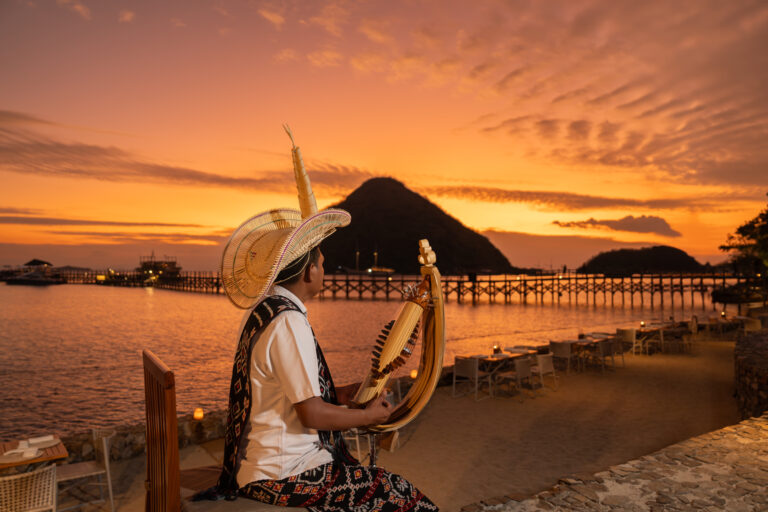
The energy shifts again with Rangku Alu, a bamboo dance built on timing and nerve, where poles clap together in quickening rhythm and guests are often drawn in to test their own footwork against the beat. Threading through the entire evening is the sasando, a stringed instrument native to nearby Rote Island, its melody lending the night a continuity that neither the meal nor the performances alone could achieve.
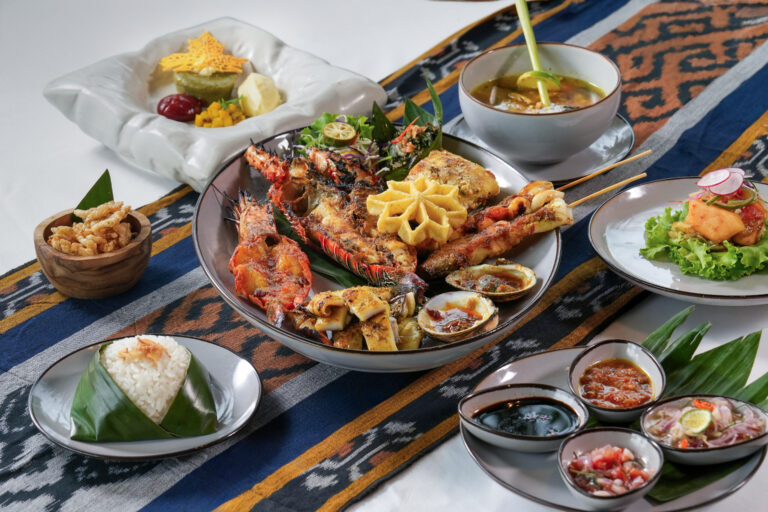
Food, here, is not an afterthought to the spectacle. It is Flores itself, plated. Each set menu opens with a lemongrass-infused seafood broth. Then comes the centrepiece: fish, squid, clams and prawns charred over coal, with lobster and seafood platters for those wanting more.
Dessert splits the difference between memory and reinvention, from classic pisang goreng to a moringa financier finished with raspberry mousse and lemon curd. Pricing line removed, and the paragraph is broken into shorter, mobile-friendly chunks in keeping with the 2–4 sentence structure used elsewhere in the piece.
What distinguishes Living the Heritage from a conventional cultural show-and-dinner pairing is its sense of proportion; nothing here feels bolted on for spectacle’s sake. The performances are sourced through partnerships with local artisans and performers, meaning the evening functions as much as a livelihood platform as a guest experience, in keeping with the resort’s wider commitment to responsible tourism.
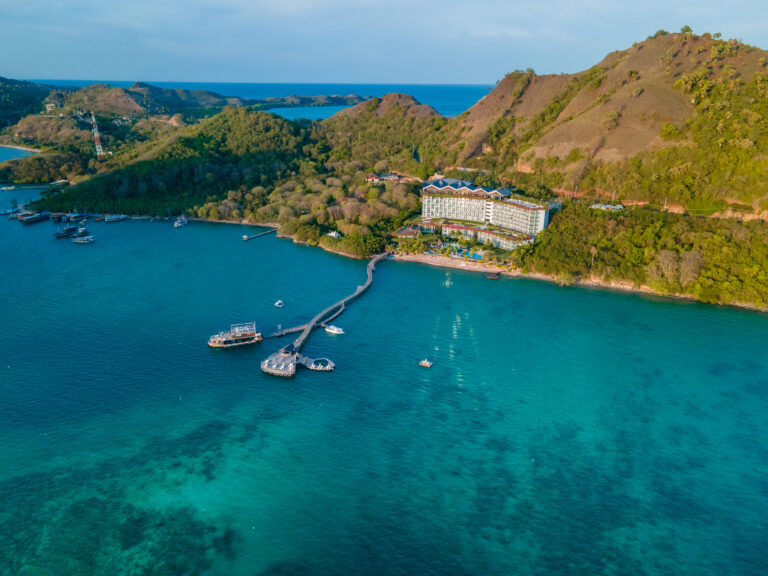
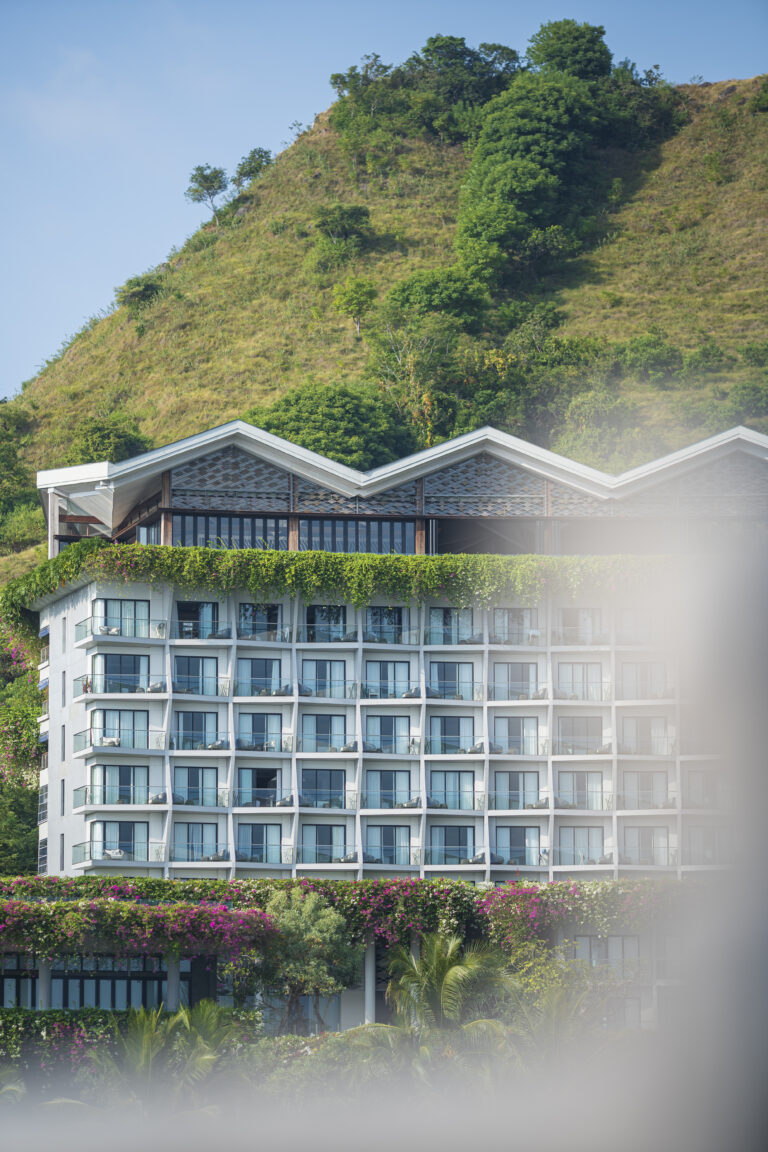
For a destination so often reduced to its wildlife, it is a quiet correction: proof that the waters framing Komodo’s dragons also carry centuries of ritual, music and craft still very much alive. AYANA Komodo Waecicu Beach, perched on its own peninsula north of Labuan Bajo, has long positioned itself as the refined base for exploring the national park by day. With Living the Heritage, it offers something to stay in for by night, a reminder that this corner of East Nusa Tenggara has always had more to say than its most famous residents.