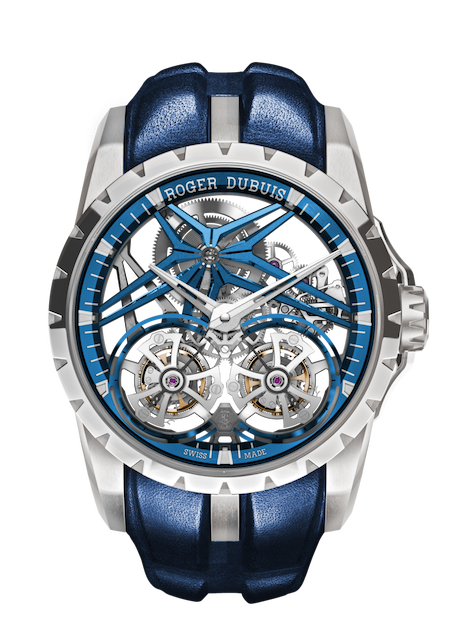
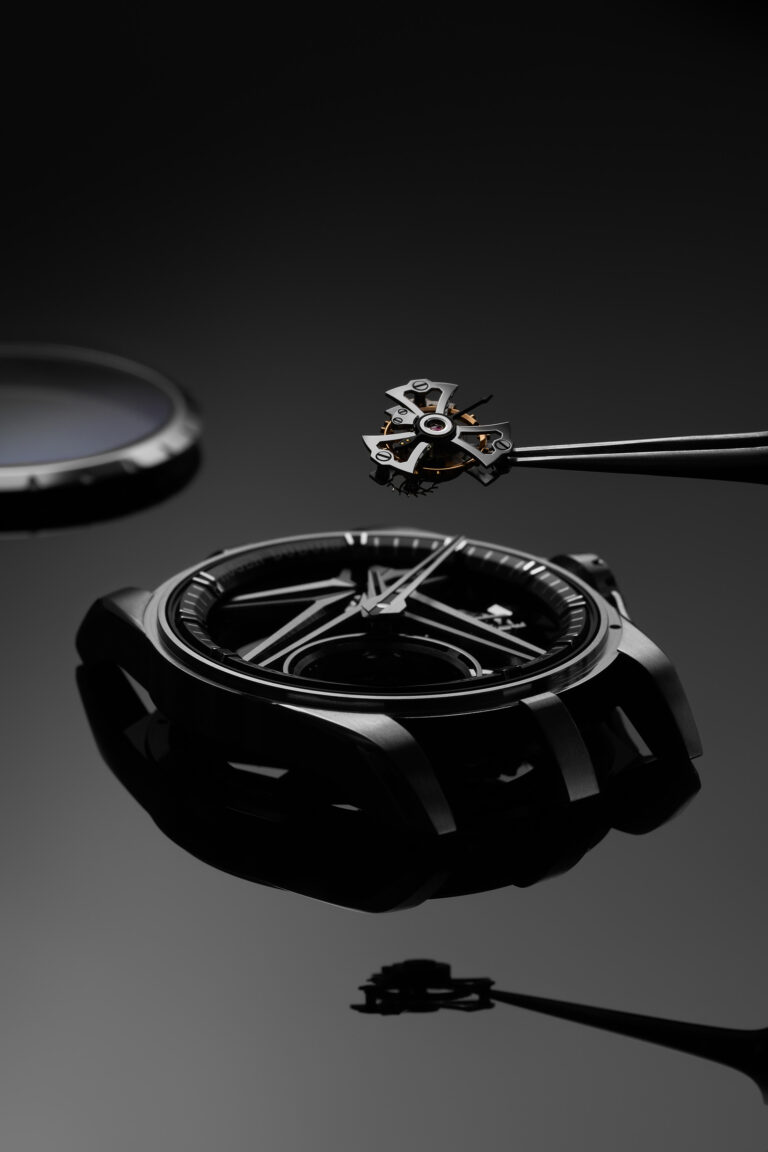
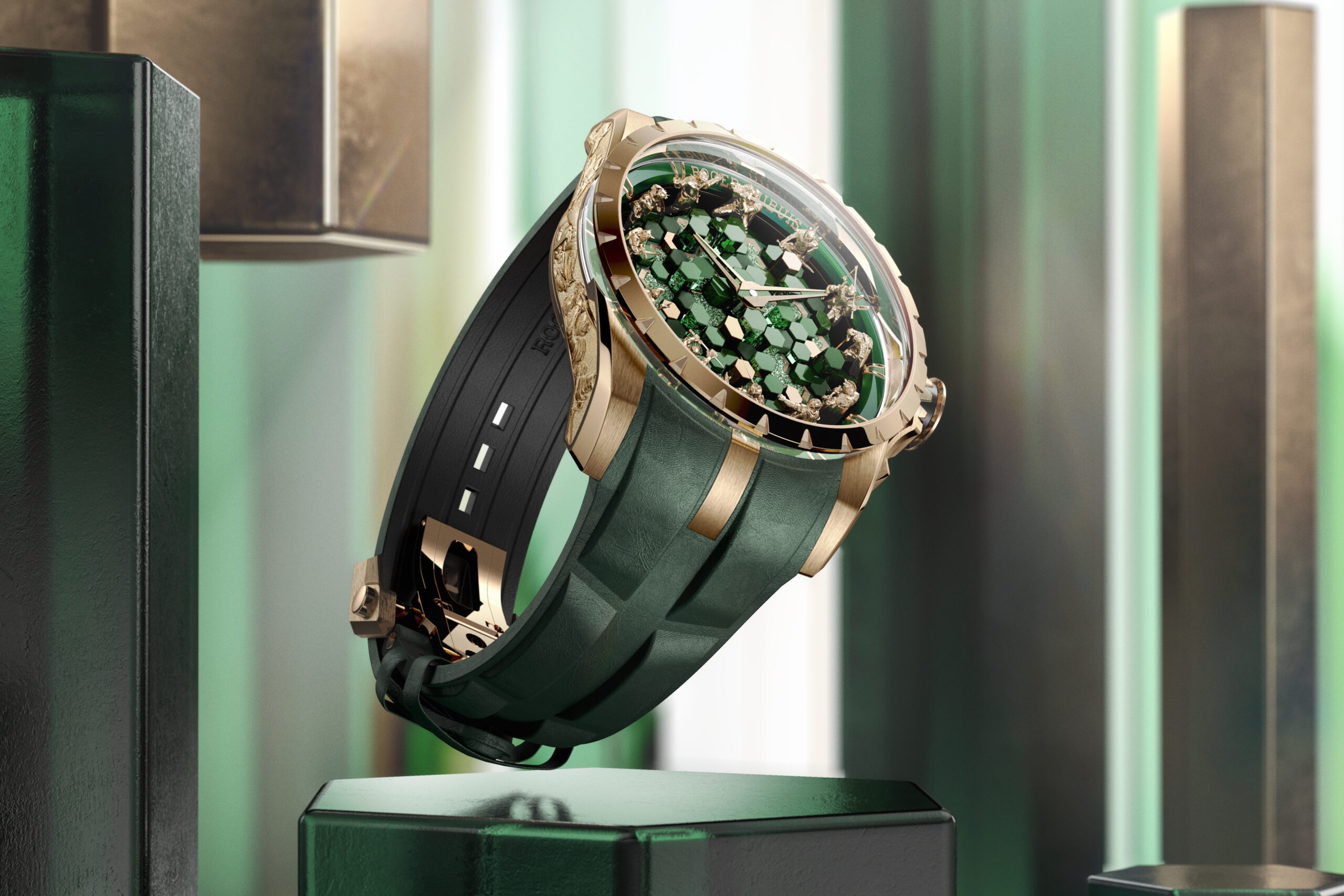
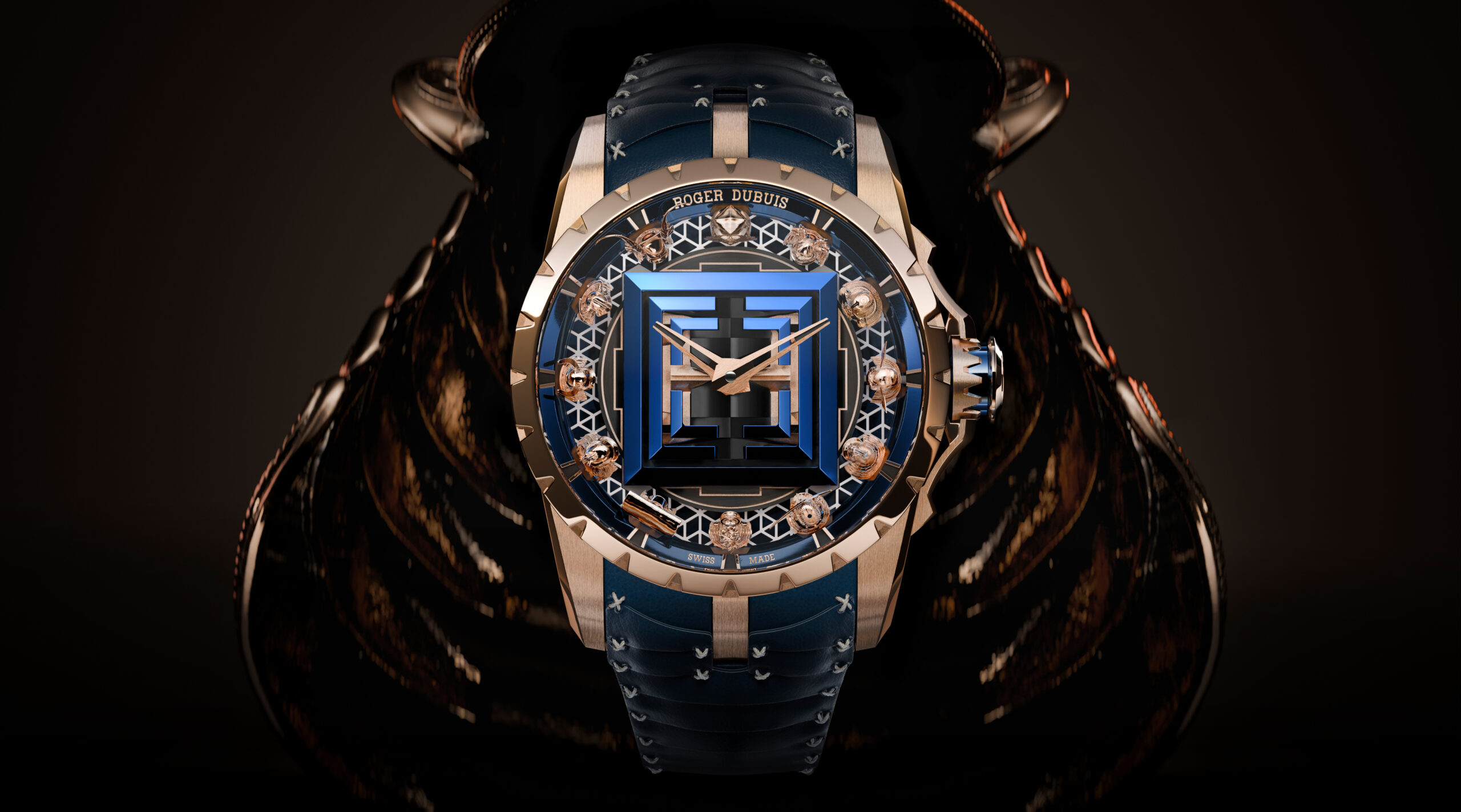
Our journey began on a small exhibition floor filled with state-of-the-art machines. Many of which, without Bader’s patient and thorough explanations, we would never have known the purpose of. Before delving deeper into the world of hyper horology, we paused before several of Roger Dubuis’ most iconic base plates, displayed in glass cabinets. They are the foundational elements behind the brand’s signature creations, including the Excalibur Double Flying Tourbillon. “This is the perfect illustration of who we are,” Bader explained.
Unlike traditional tourbillons, which are typically anchored by visible bridges, Roger Dubuis’ flying tourbillons, their signature, appear to float, free of obstruction, suspended in space. In 2005, the brand became the first to assemble a double flying tourbillon. Less as a means to improve accuracy, and more as a testament to the brand’s technical prowess.
It takes more time, more skill, and an uncompromising approach to synchronise two rotating mechanisms within the same movement. Since 2004, the brand has embraced a fully skeletonised design philosophy, eschewing solid dials and plain materials in favour of transparency and aesthetic complexity. The result is a visual language that is instantly recognisable: bold and distinctly haute horlogerie. “This,” Bader said with quiet pride, “is what we stand for.”
As we continued the tour, Bader pointed to the discreet yet significant Poinçon de Genève stamp on one of the movements. At Roger Dubuis, this seal represents both a mark of prestige and a commitment to exceptional craftsmanship, one that extends the production timeline by nearly 40%. Among the key requirements to qualify for the seal is that every watch must be fully assembled, cased, and finished within the Canton of Geneva. Few brands can meet these demands, but Roger Dubuis consistently exceeds expectations, with over 90% of its timepieces proudly bearing the certification.
Each Roger Dubuis timepiece undergoes an intensive series of around 88 in-house tests conducted over the course of a full week to ensure it meets the rigorous standards set by the Poinçon de Genève. While many Maisons must send their watches to the Geneva Seal office for inspection and stamping, Roger Dubuis—thanks to its long-standing commitment and proven compliance—is authorised to perform the stamping in-house.
This privilege is built on mutual trust and years of consistent excellence. However, that trust is still regularly verified through audits, with up to 12 inspections a year, but thanks to the years of proven compliance, they typically only receive two. One announced in advance, and one completely unannounced, a surprise inspection. During these audits, inspectors examine every detail, verifying that all components, from the tiniest screw to the most visible bridges, are hand-decorated to the exacting principles the seal demands.
“This isn’t the work of machines,” Bader reminded us. “Every line, every surface you see, it’s done by hand.” This approach reflects the savoir-faire that the brand’s founder, Roger Dubuis, brought with him from his years at Patek Philippe, blending traditional high watchmaking with a bold, contemporary spirit. It truly exemplifies a philosophy that’s deeply rooted in the brand’s DNA; one that is still honoured until the present day.
We were taken into the technical heart of the Manufacture, where watchmaking takes shape. From gear wheels to balance springs, nearly every component inside a Roger Dubuis timepiece is crafted in-house. This is truly a testament to the brand’s pursuit of near-total vertical integration, a distinct rarity even in haute horlogerie.
Our first stop was what the team fondly calls the Alibaba Place: a raw material storage room filled with shelves stacked with main plates in various calibres and materials. While you won’t find gold or platinum here, the space speaks volumes about the brand’s ongoing exploration of unconventional materials and its commitment to innovation at every level.
We were shown a range of unconventional materials Roger Dubuis has worked with over the years. One of the most notable is carbon, used to create the Excalibur Spider Carbon, the world’s first timepiece with a movement plate, bridges, and tourbillon upper cage entirely made of the material. It was also the first time a composite material earned certification from the Poinçon de Genève.
And then there’s cobalt. The brand’s so-called “love story” with this dense, high-performance metal began over a decade ago. Cobalt is notoriously difficult to work with, almost as heavy as gold and far harder to cut or machine. Yet its unique brilliance and strength make it one of the most exotic materials in the collection. Roger Dubuis has applied it sparingly but meaningfully, using it in some of their most technically ambitious calibres, from flying tourbillons to balance wheels.
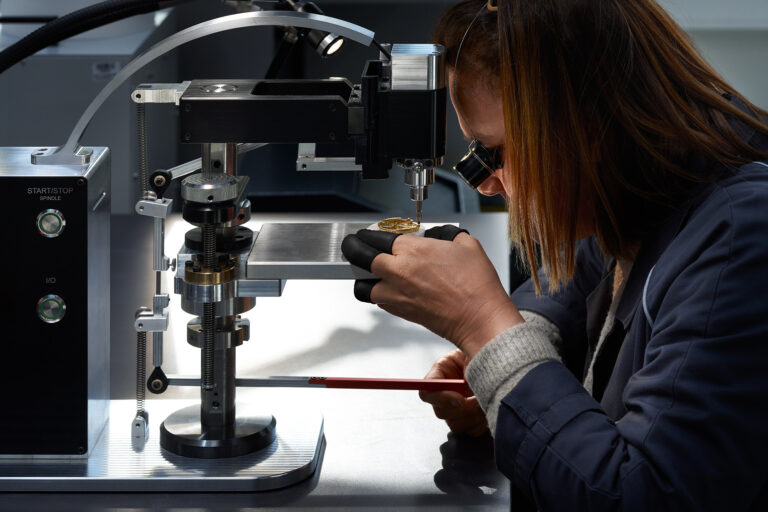
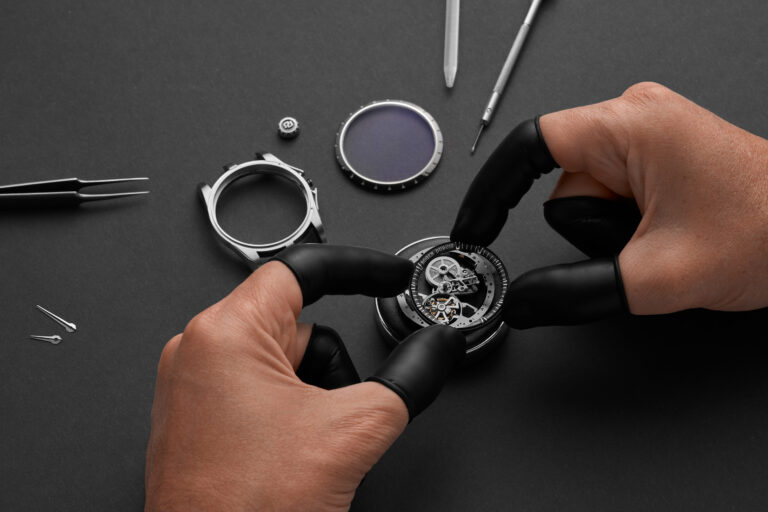
Next, we witnessed the beginnings of complication assembly. Tiny components like escape wheels, each with 240 teeth, are hand-polished one by one, a testament to the Maison’s obsessive craftsmanship. Before moving further into assembly, every part undergoes polishing and dimensional checks, ensuring absolute precision from the very first step.
If the machining floor is where precision begins, the finishing ateliers are where personality emerges. Here, raw components are elevated into something worthy of being seen through a sapphire case back. “We continue to innovate,” Bader said, pointing to two in-house engineers focused solely on decorative techniques.
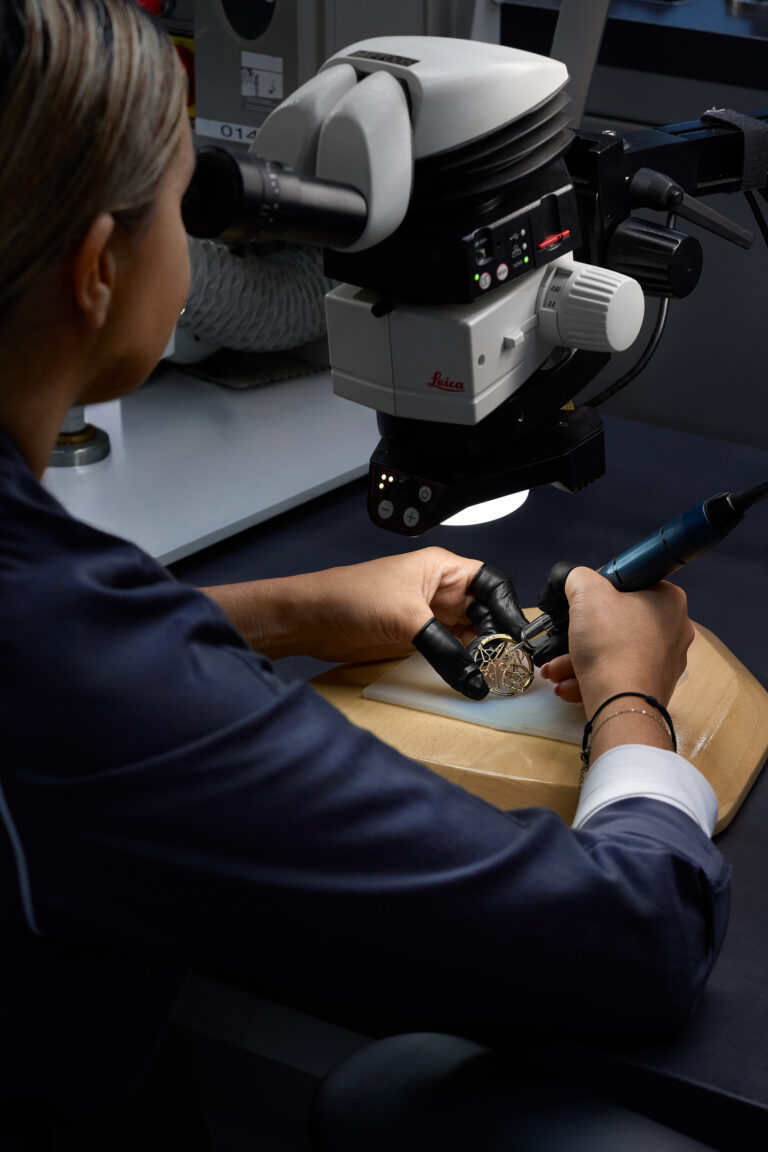
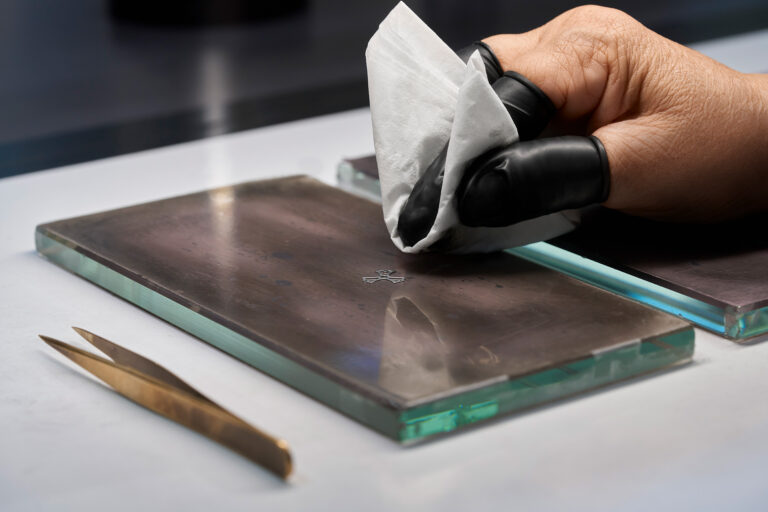
Though machines assist, it’s the artisans who bring each part to life. At one bench, Brigitte worked with a custom-built wooden wheel, relying on both skill and instinct. She could judge the wheel’s speed by sound alone. Each component, down to the smallest gear, was polished individually by hand.