

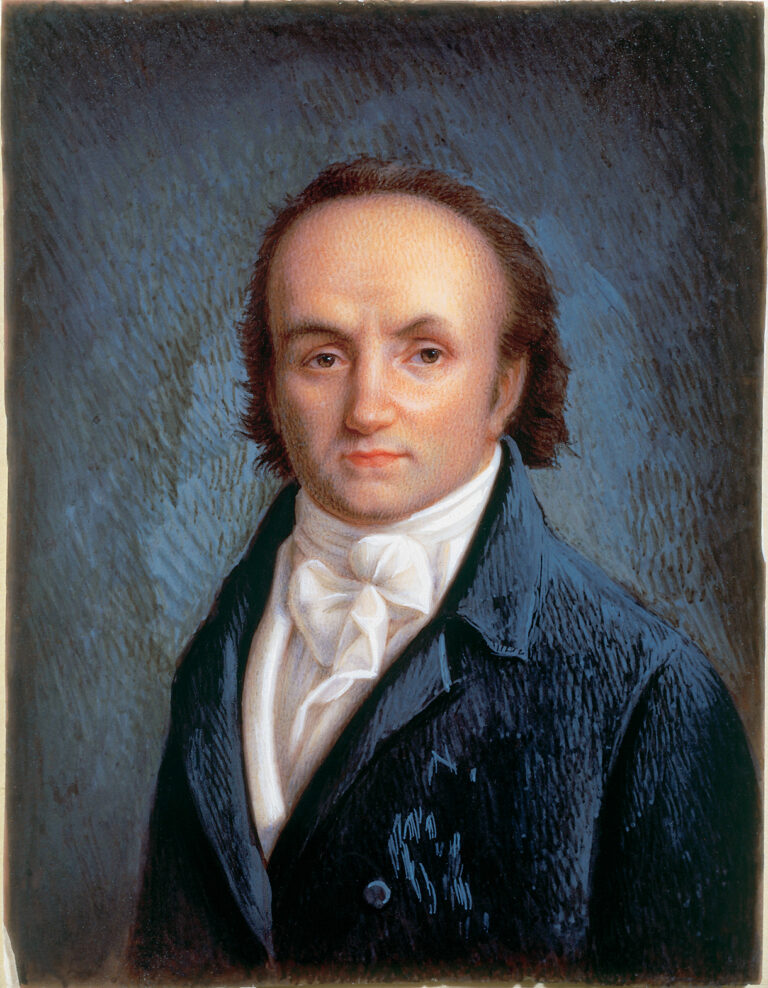
The world of watchmaking would be hard to imagine without the significant contributions of Abraham-Louis Breguet. From the invention of the automatic watch, the pare-chute shock absorber, the tourbillon, to the iconic blued-steel hands, the founder and namesake of Breguet was certainly ahead of his time. So astute was this Swiss native from Neuchâtel that he effectively revolutionised the watchmaking industry and secured his place in the annals of history.
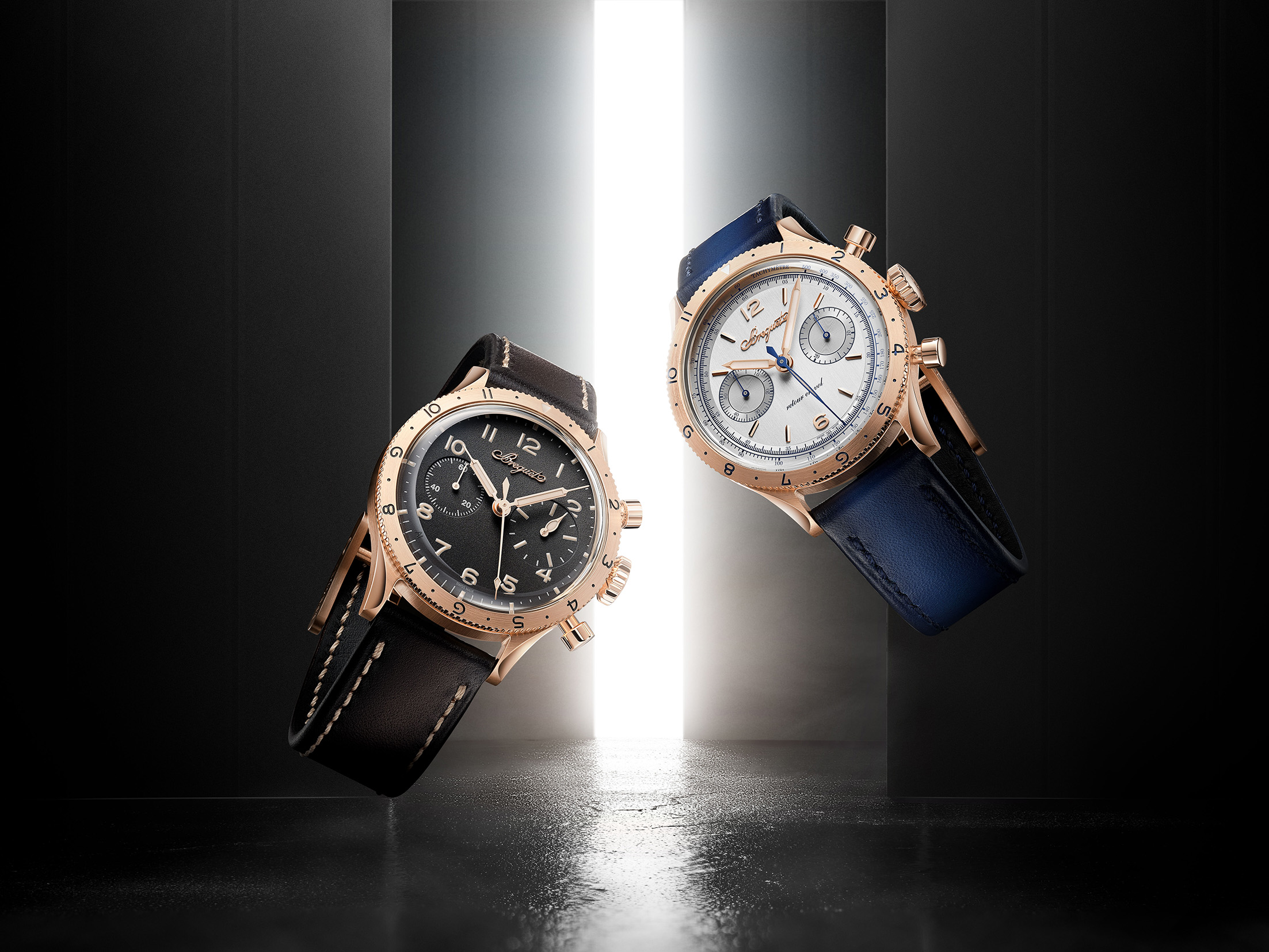
This year, the House that Breguet built celebrates a milestone anniversary: 250 years. To honour this auspicious occasion, the Maison takes a look at some of the brand’s most endearing timepieces and reinterprets them for the present day.
A Rich History
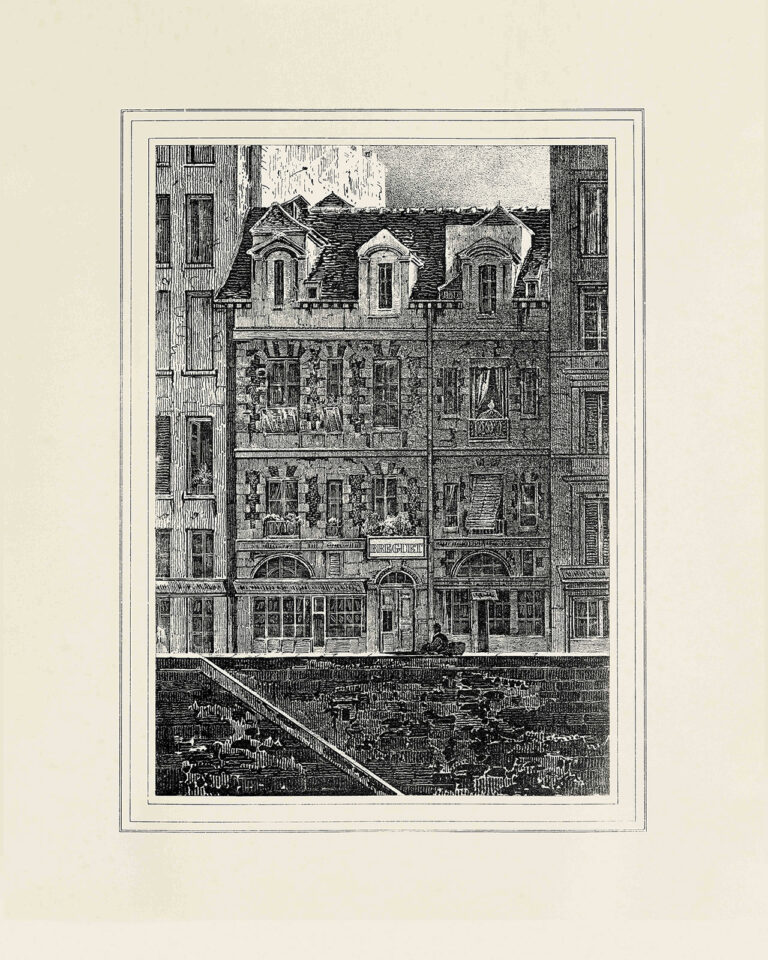
Perhaps it was a calling, perhaps it was destiny, when Abraham-Louis Breguet left his home town of Neuchâtel in Switzerland to complete his apprenticeship as a watchmaker in Versailles and Paris. In 1775, the young man opened his own workshop in Quai de l’Horloge, Île de la Cité, and was introduced to the French court, whose members will later on become some of his clientele. This period was a very fulfilling and accomplished one for Breguet. In 1780, he successfully developed the automatic “perpetual” watch. Dubbed the Perpétuelle, it was born out of the skilled watchmaker’s oscillating platinum-weight watch, a formula that would produce a reliable result. The first Perpétuelle was sold to the Duc d’Orléans in 1780, and from that time onwards, his self-winding timepieces would bring him great renown, not only in Versailles, but throughout Europe.
In 1783, Breguet invented the gong-spring used in repeater watches, making them considerably slimmer. In the same year, a guard of Queen Marie-Antoinette of France commissioned a timepiece for the sovereign. Incorporating every known refinement, complication, and function known at that time, the N°160, later known as the Marie-Antoinette watch, was duly completed to meet every specification.
Not only particular about the inner workings of his creations, the savvy craftsman was also intent on streamlining the external forms of his pieces. To this end, he simplified the design of his watch hands and invented a new type of hand, made of gold or blued steel, and shaped like a hollow apple or a crescent moon. These became known as “Breguet hands.” He similarly refined the Arabic numerals on his watches, which were eventually called “Breguet numerals.”
Abraham-Louis introduced the use of guilloché on his watch dials in 1786, and four years later, invented the “pare-chute” shock absorber. A system that protects the balance wheel pivots in the event of a shock, the “pare-chute” made all watches infinitely less fragile; it is also the predecessor of all anti-shock devices. In 1793, at the onset of the French Revolution, Abraham-Louis departed for Switzerland and stayed there for two years. Regardless of the distance that separated him from his workshop, the gifted businessman was able to keep his enterprise running until he was able to return in 1795.
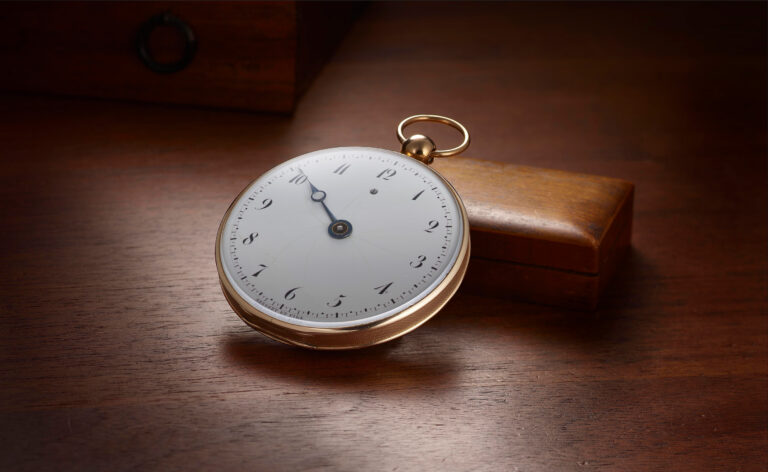
The prolific watchmaker hit the ground running in 1796 when he created the first Subscription, or Souscription watch. The first single hand watch ever produced, the Subscription was aptly named because the piece was sold on a subscription basis, wherein the buyer had to pay a quarter of the price in advance. Launched in 1797 through an advertising pamphlet, the model, encased in a choice of either silver or gold, had a single hand and an enamel dial. It was powered by a simple movement, the very same calibre Breguet was to use initially for his first Touch watches. With 700 pieces made, the Subscription was a huge success for the brand and a true testament to the unparalleled business acumen of Abraham-Louis.
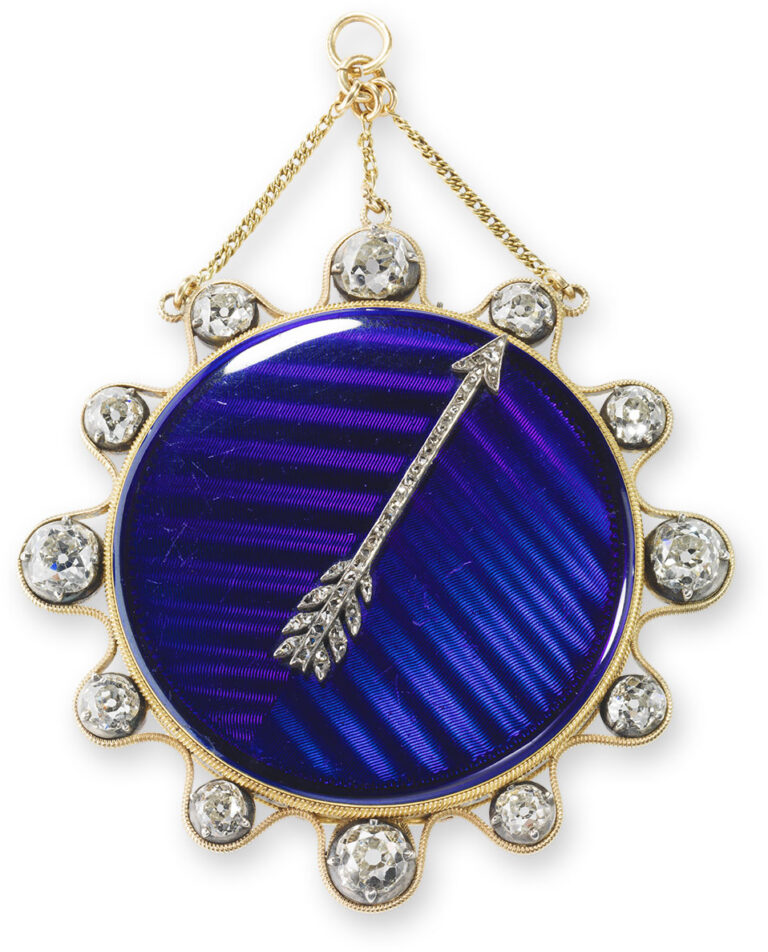
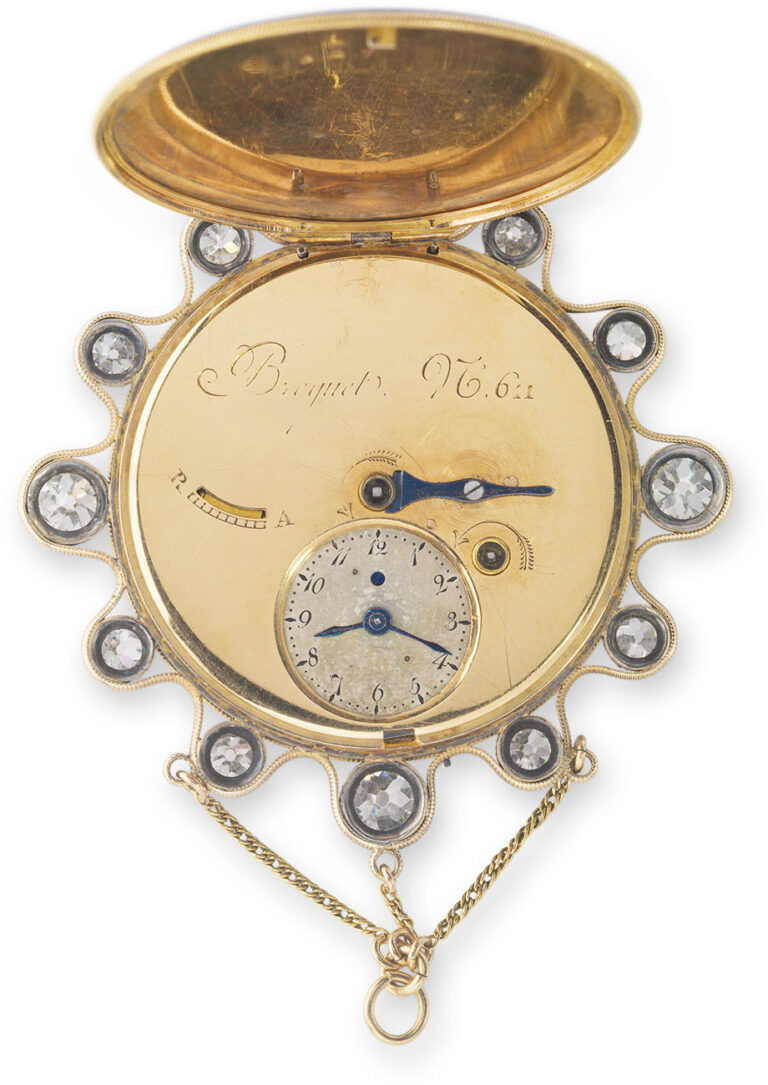
Two years later, Breguet had the honour of providing Napoleon with three timepieces before his Egypt campaign: a repeater watch, a travel clock, and a perpetual watch. The following year, 1799, Breguet sold the first “tact watch,” which can be read by touch alone. With an arrow located outside the case that reproduces the position of the hour hand, the wearer can then find their bearings guided by markers located above the hours. Also known as the Touch watch, or sometimes even referred to as the “watch for the blind,” the “tact watch” could be embellished with enamel, pearls, or diamonds.
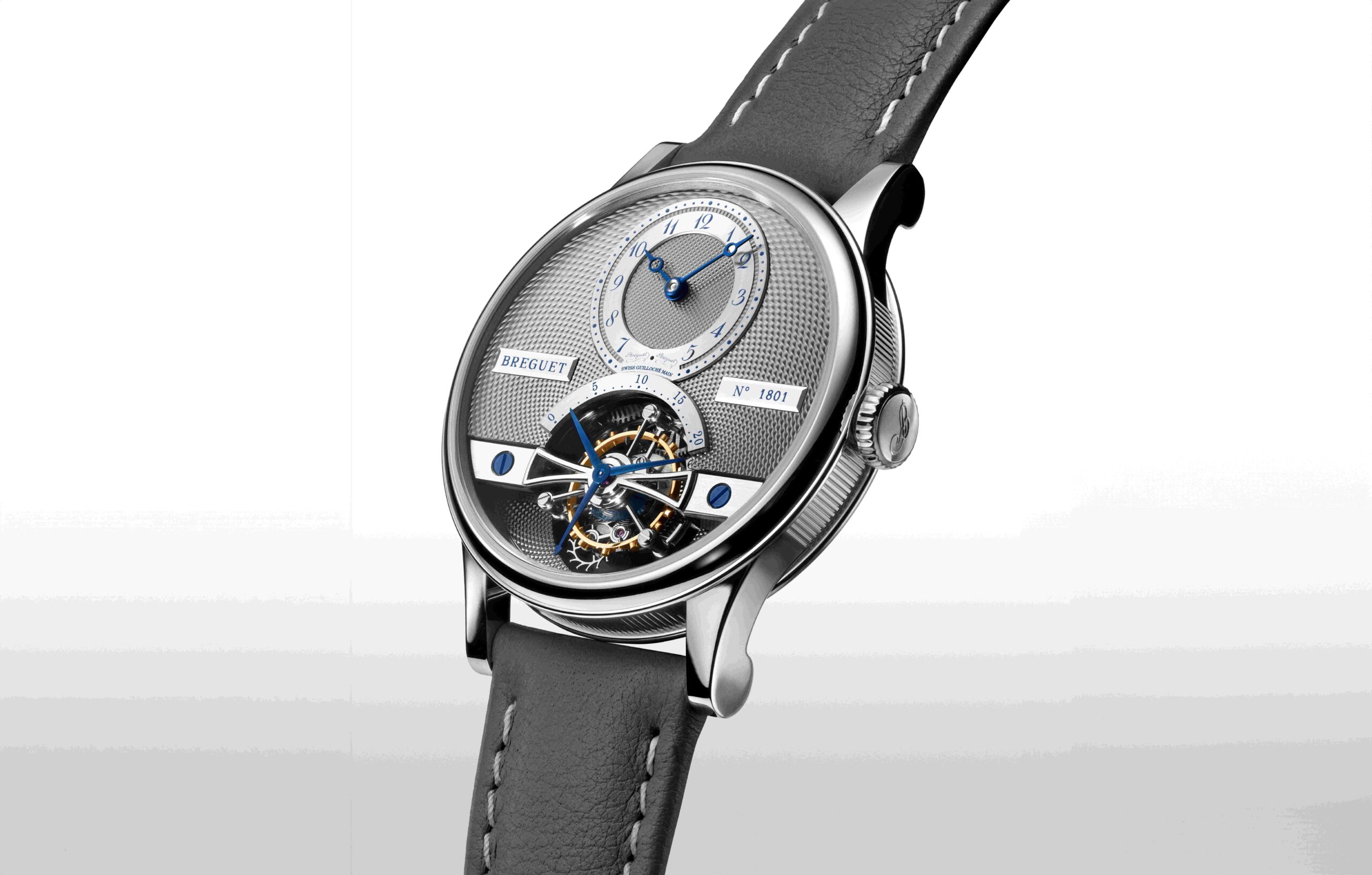
Subsequent to his exile in Switzerland, Abraham-Louis continued to create watches and developed his clientele, in foreign countries and Paris alike. In 1801, he patented a new type of regulator called “the tourbillon.” Designed to compensate for the operating errors and fluctuations caused by the effects of Earth’s gravity, the tourbillon continues to be one of the most fascinating complications used in watchmaking today.
In 1808, the hardworking horologist was introduced to Caroline Murat, the Queen of Naples, who was to become his most important customer. In 1810, the Queen, and younger sister of Napoleon, commissioned a watch to be worn on the wrist. Breguet was up to the challenge and delivered the very first wristwatch in 1812: an ultra-thin repeating model, oblong in shape, equipped with a thermometer and mounted on a wristlet of hair entwined with gold thread.
This was followed by the advent of off-centre dials, a stylistic innovation spearheaded by Abraham-Louis and his son, Antoine-Louis Breguet. A few years later, in 1815, the founder of Breguet received the highest honour when he was given the official title of Watchmaker to the French Royal Navy by Louis XVIII. From that point on, the success of the royal expeditions was in part dependent on the reliability of the Breguet naval clocks—both a great distinction and a heavy responsibility.
Just three years before his death, Abraham-Louis continued to blaze his own path in watchmaking. In 1820, he invented the “observation chronometer with split seconds,” the ancestor of all split-second chronographs, and rightfully became the man behind the modern chronograph. After his passing in 1823, Abraham-Louis’ son, Antoine-Louis Breguet took over the company, and in 1830, introduced the first keyless winding watches with a knurled button for winding and resetting. Immersed in watchmaking from an early age, he led the family business until 1833, after which his own son, Louis-Clément, took over. The latter paved the way for a new era of the business, with his understanding that watchmaking was now aimed at a wider audience. This marked the start of mass production.
In the succeeding years, Breguet changed hands a number of times. It also moved locations twice, and since 1976, has been headquartered in the Vallée de Joux, with all of its production carried out in Switzerland. In 1999, the company was acquired by Swatch Group, and in 2005, Breguet launched the Tradition collection, a synthesis between the Souscription watch and the Tact watch. Featuring a unique architectural structure, the Tradition draws attention to its exposed bridges, gears, and mechanisms, making it a marvel of precision micro-engineering.
Marking a Milestone
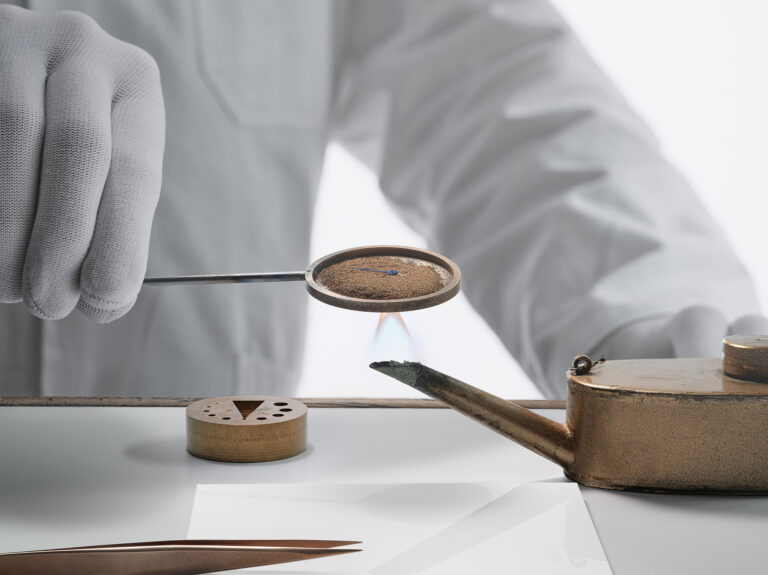
Loyal to the innovative vision and enterprising spirit of its founder, Breguet celebrates its 250th anniversary this year with a remarkable new achievement: creating its very own gold alloy. A combination of tradition and modernity, 18K Breguet gold has a subtle pink hue reminiscent of the gold used in the 18th century. Conceived and developed in the Maison’s workshops, it is composed of 75% gold, enriched with silver, copper, and palladium. Beyond its brilliance, it is distinguished by its resistance to discolouration and its stability over time, guaranteeing a pure, elegant finish.
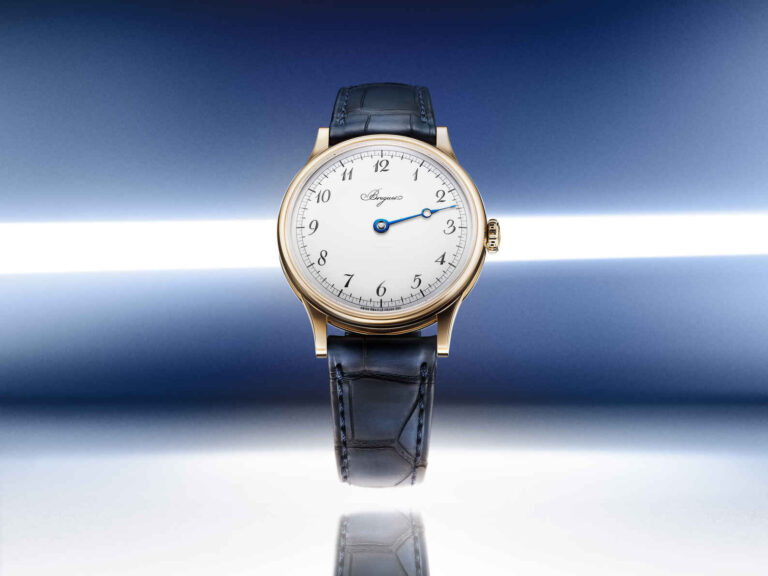
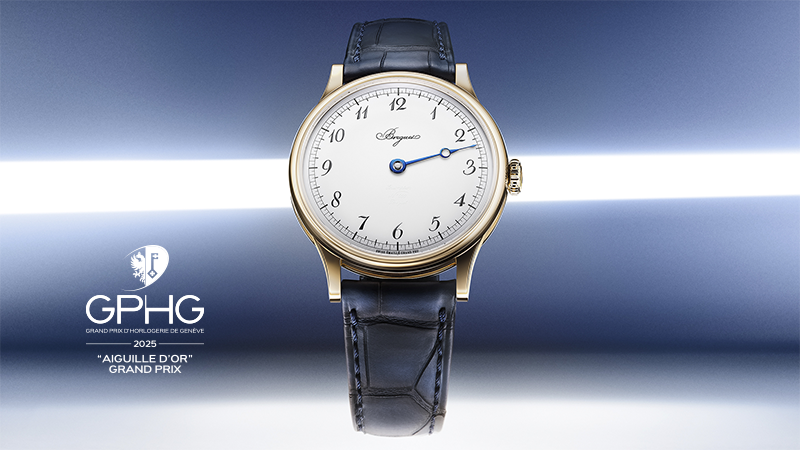
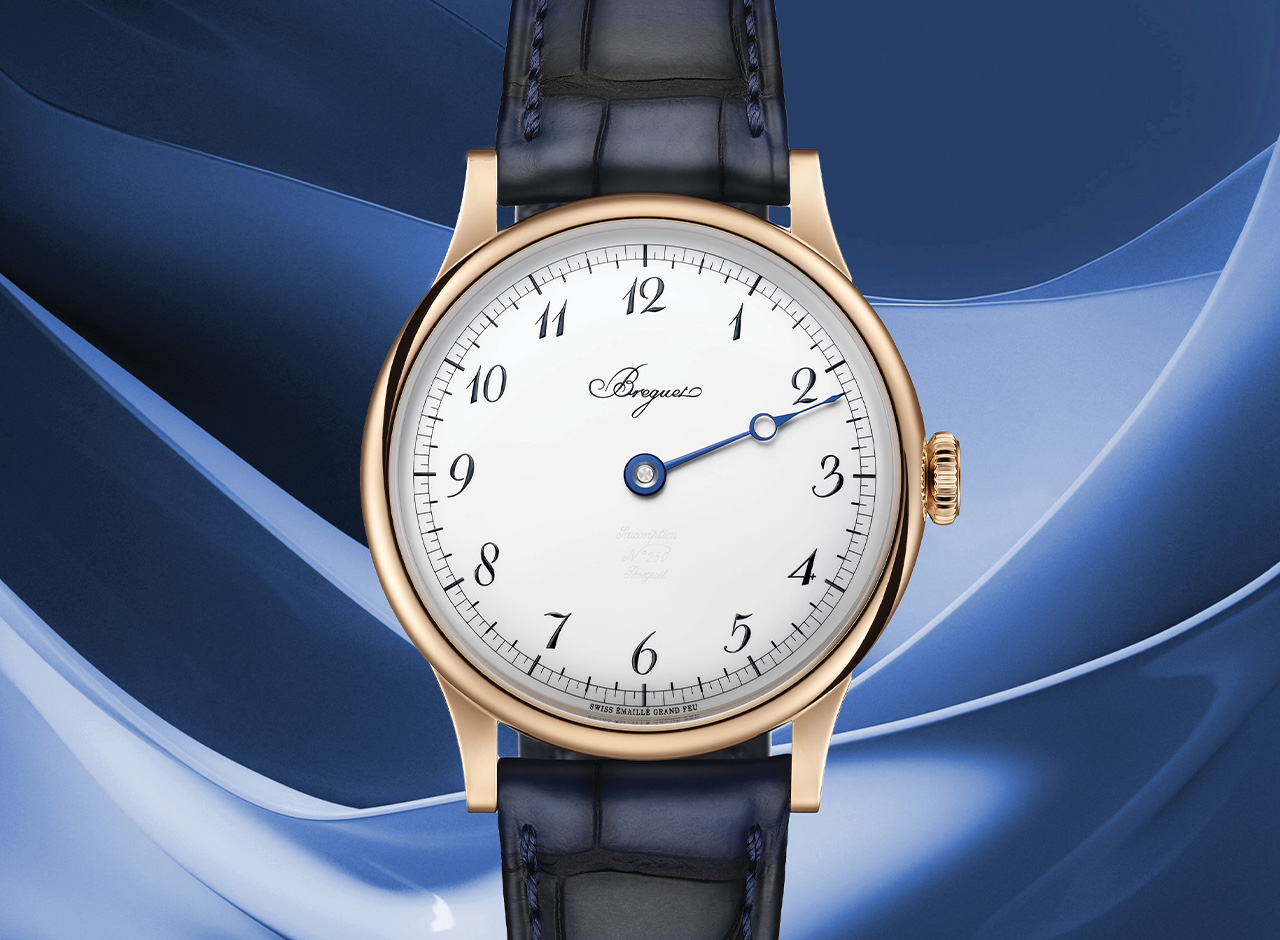
This new material is now used in two timepieces that are worthy interpretations of some of Breguet’s iconic creations. First up is the Classique Souscription 2025. Inspired by Abraham-Louis Breguet’s Souscription watches from 1796, now in wristwatch form, the 2025 model features a dazzling white, grand feu enamel dial that faithfully recalls the spirit of the original. At its centre is a unique, steel, open-tipped Breguet hand which has been flame-blued and curved entirely by hand. Its tapered tip hovers over the famous, slightly inclined Breguet Arabic numerals, as well as the circular “chemin de fer” (railroad track). Depending on the light, the inscriptions “Souscription”, the unique serial number, and the secret signature appear discreetly between the centre of the dial and 6 o’clock.
The case, which now measures 40 mm, has been reinterpreted with ergonomics in mind. The typical Breguet fluting has been replaced by a delicately satin-brushed case middle, while the lugs have been curved to better fit the wrist. On the back of the case, a slightly domed sapphire crystal reveals the new VS00 calibre, decorated with an entirely new type of guilloché pattern, called Quai de l’Horloge. Equipped with a four-day power reserve, the movement features a blued balance spring, with a Breguet overcoil made from Nivachron™, a non-magnetic alloy essentially composed of titanium, which makes it more resistant to temperature variations, magnetic fields and shocks. Apart from that, the plate and bridges are finely shot-blasted, while blued steel screws and rubies further enhance the movement. Making it even more precious is an imposing ratchet wheel, found at the centre, which showcases an engraved inscription from Abraham-Louis Breguet himself, explaining the distinct design of the Souscription movement.
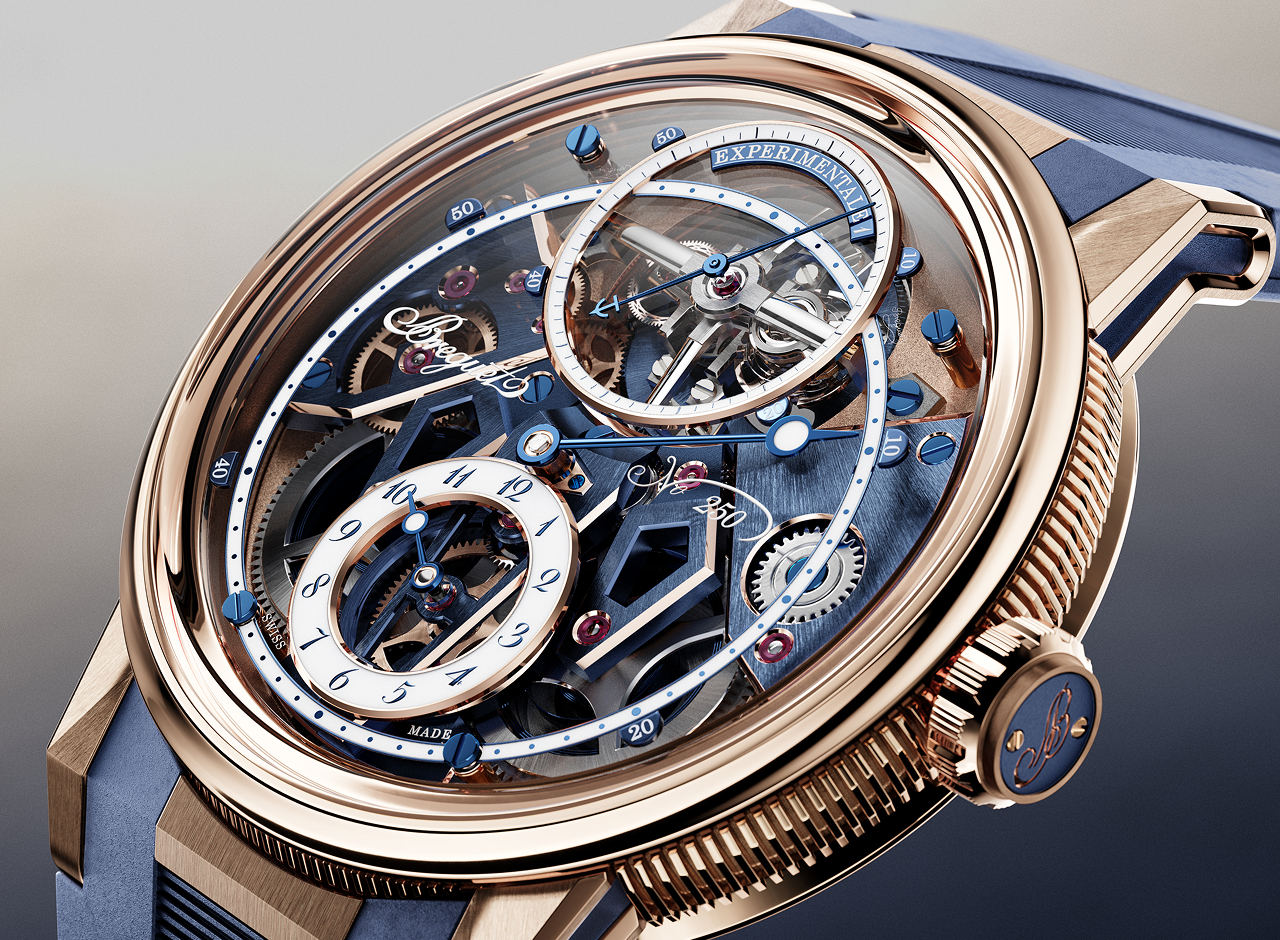
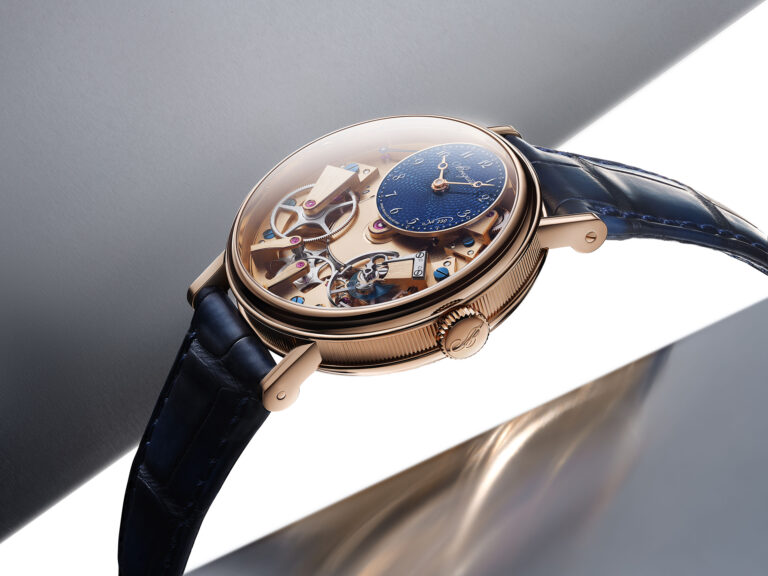
The second novelty in the anniversary offerings is the Tradition Seconde Rétrograde 7035, also exquisitely rendered in Breguet gold. Taking inspiration from the Tradition collection unveiled in 2005, with its singular architecture and visible components, the new version boasts a specially-developed plating treatment that ensures that the main plate and bridges are of the same hue as the case. Meanwhile, the silver-coloured gears, blued screws and ruby-red jewels provide visual contrast and further accentuate the radiance of Breguet gold. Particular for this special model is a silky, hand-applied satin finish on the upper surfaces of the bridges.
The culmination of Breguet’s 250 years of technical and aesthetic innovation, the timepiece emphasises the unique structure of Calibre 505SR, and highlights a guilloché (Quai de l’Horloge) dial in translucent blue, grand feu enamel displaying the Breguet hours and minutes, alongside a retrograde seconds display discretely positioned between 10 and 11 o’clock. Other signature elements include a minute track with stylised fleurs-de-lis, Breguet hour and minute hands with hollowed knobs in 18K Breguet gold, as well as a retrograde baton-type seconds hand in blued steel.
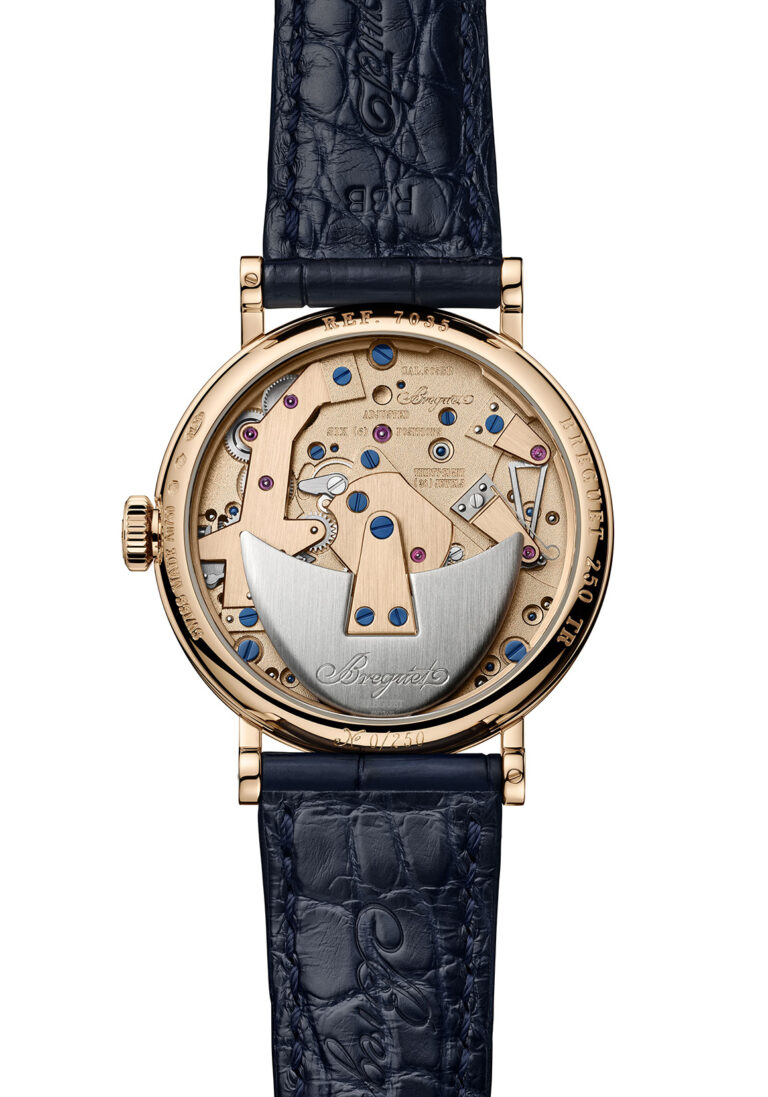
A similar fascinating landscape can be viewed at the back of the timepiece, with a crescent moon-shaped oscillating weight that spins above the bridges’ satin-finished surfaces. Made of vertical brushed platinum, the oscillating weight recalls those made during Abraham-Louis Breguet’s time. Available in a limited edition of 250 pieces, the watch is fitted with a navy blue alligator strap with a buckle, also crafted of 18K Breguet gold.
Especially designed for the Maison’s semiquincentennial, the Tradition Seconde Rétrograde 7035 remains faithful to the Tradition collection’s geometric codes, combining Breguet’s technical and aesthetic expertise with meticulous in-house hand-finishing.