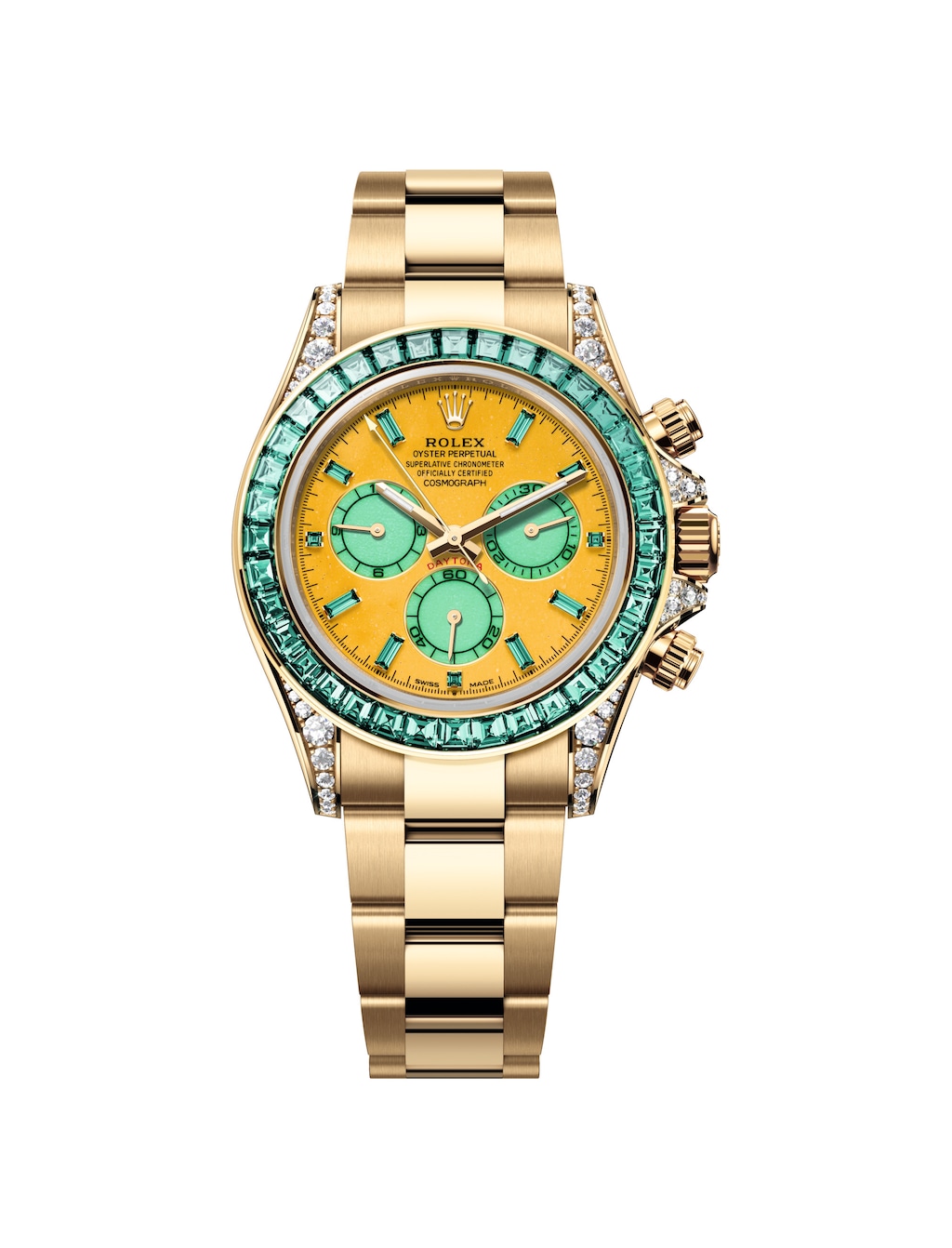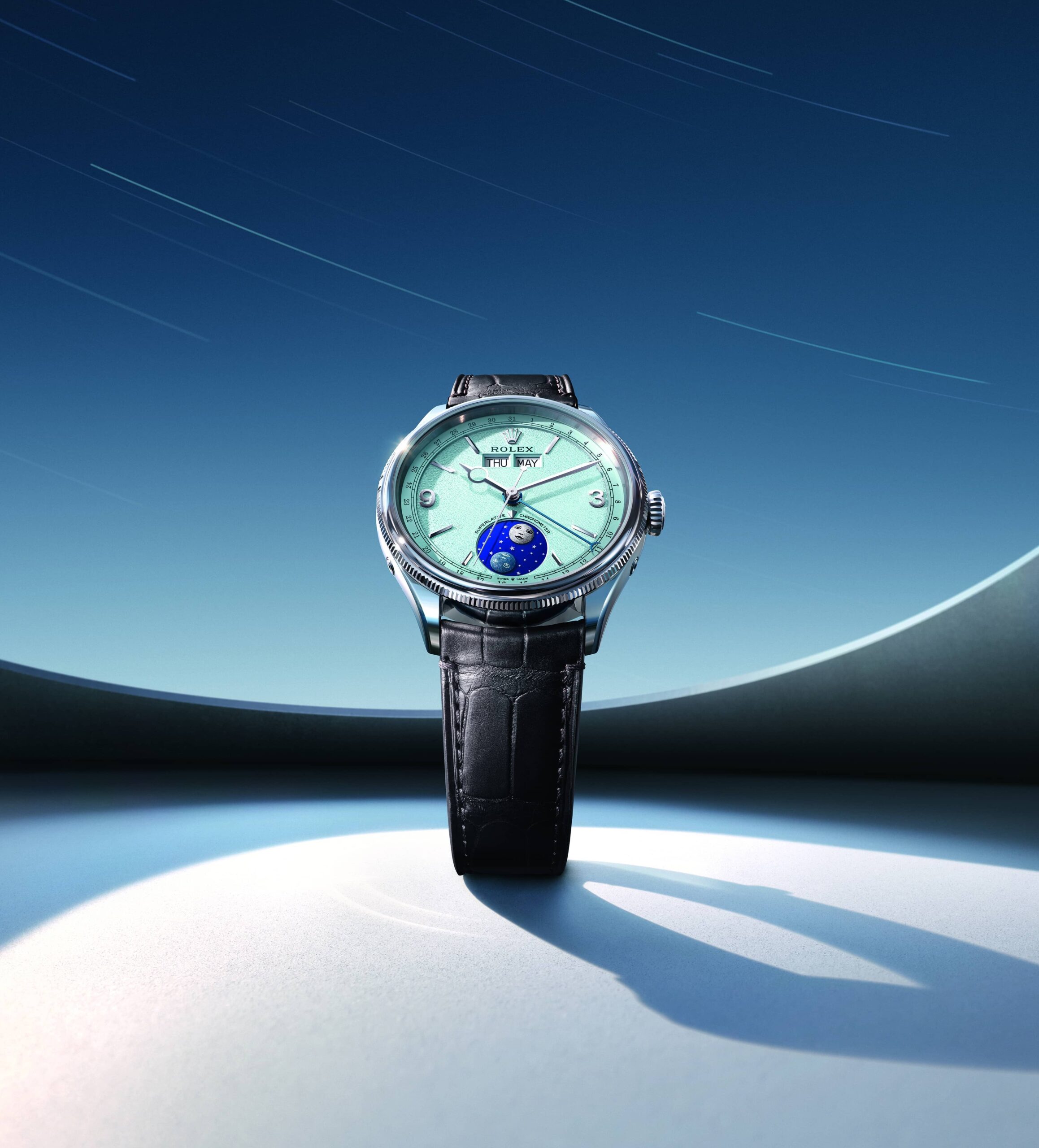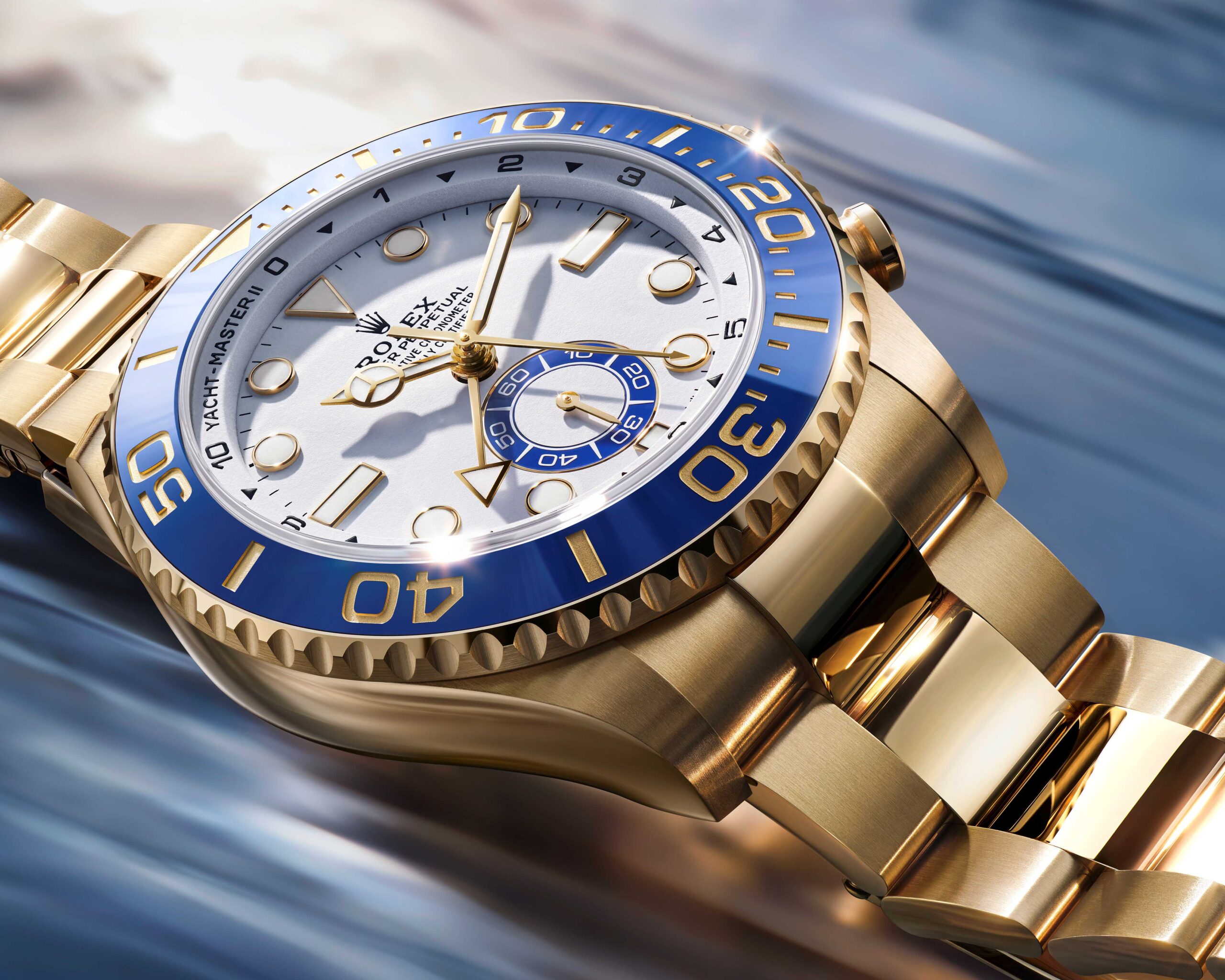

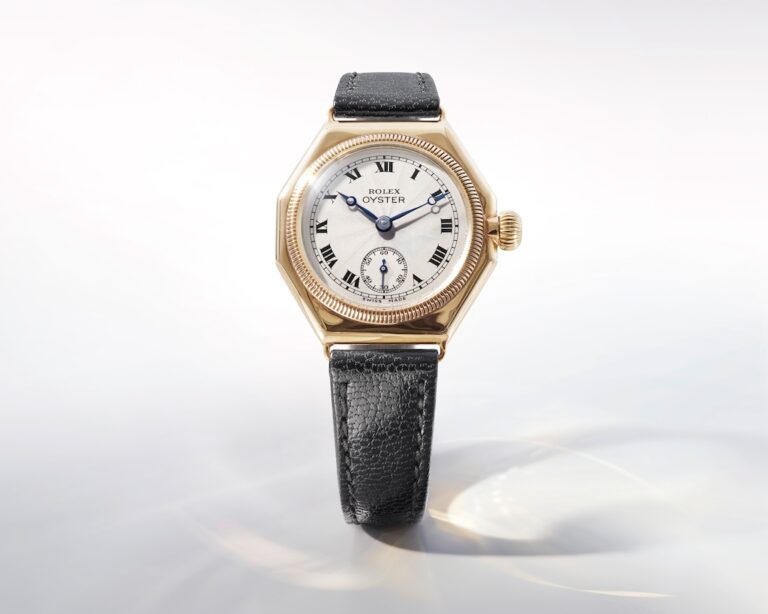
Hans Wilsdorf, the founder of Rolex, was a passionate watchmaker who invented a number of horology’s finest innovations. In 1926, he aimed to address concerns regarding precision as well as protection against dust and moisture in a wristwatch. The result was the Rolex Oyster, the world’s first completely hermetic and waterproof wristwatch.
A reliable, robust, and practical object, the Oyster was destined to completely transform the way we use timepieces and change the face of watchmaking. During a time when pocket watches reigned supreme, Rolex broke the mould and presented a compact timepiece that could match the precision of a large marine chronometer. Featuring an ingenious patented system composed of a bezel, case back and winding crown that screw down against the middle case, the Oyster not only increased the waterproofness of the timepiece, but also provided its movement optimal protection from water, dust, pressure and shocks. Apart from precision and waterproofness, Wilsdorf was also determined to take on the challenge of self-winding. He invented the Perpetual rotor, a self-winding system with a free rotor, patented in 1931. This mechanism provided the Oyster with an inexhaustible source of energy, unlike anything found in watchmaking at that time.
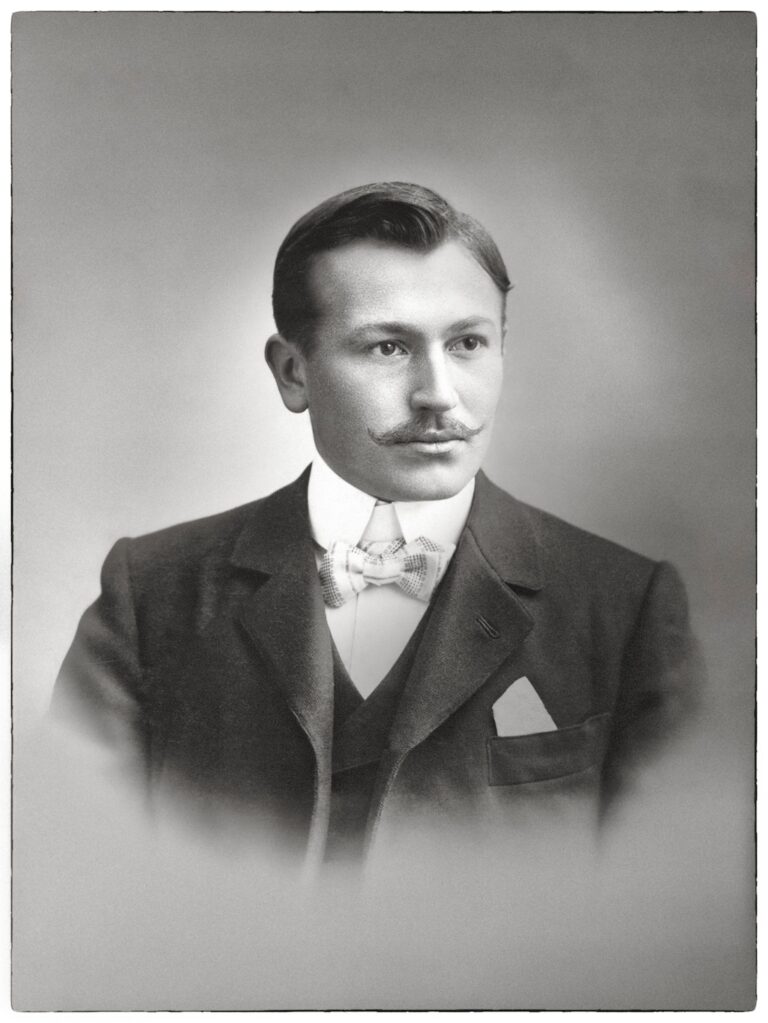
To prove his invention, Wilsdorf was keen on demonstrating the exceptional performance and reliability of the Oyster in real-world conditions. Because he considered the world like a ‘living laboratory,’ the legend of the Oyster was forged on the wrists of pioneers and trailblazers who have shaped the modern world.
In October 1927, the young British swimmer Mercedes Gleitze wore an Oyster while swimming the English Channel. Submerged for over 10 hours in trying conditions, the Oyster continued to work perfectly, without the slightest hint of corrosion or condensation. This landmark moment solidified Hans Wilsdorf’s conviction that excellence is demonstrated in the field, over time and under pressure. Following this successful ‘experiment’ in open waters, Rolex entrusted Oyster watches to various explorers, scientists, athletes, pilots, seafarers, mountaineers and divers. From the highest peaks to the depths of the oceans, these men and women put Rolex watches to the test in the ‘living laboratory’ of our world. Their feedback enabled the brand’s engineers to continually develop and improve the timepieces so that, over time, Oyster watches became benchmarks for all those who relentlessly push the limits of their discipline and broaden the horizons of knowledge.
First as the name of a case, and later on as a collection, the Oyster has paved the way for emblematic watches to be born. The word ‘Perpetual’ has been associated with the Oyster case since 1931, and underlines Rolex’s determination to perpetuate its values for the long term. This philosophy guides the brand in numerous fields and draws on history to gain a better understanding of future challenges.
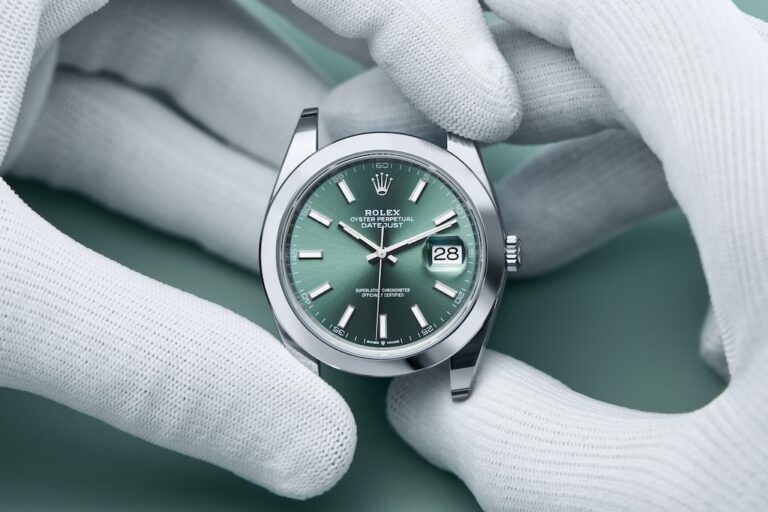
To date, the models in the Oyster Perpetual collection are not only fitted with an Oyster case, they are also equipped with many of the brand’s other groundbreaking developments, which include the Parachrom Hairspring, Paraflex Shock Absorber, Cerachrom Bezel Insert, Syloxi Hairspring, and Chronergy Escapement, just to name a few. Down to the smallest detail, Rolex reaffirms the pledge made in 1926 with the Oyster: to provide a reliable, precise and waterproof timepiece capable of accompanying its wearer in all their activities.
Driven by this credo, the story of the Oyster is inextricably linked to the many achievements of inspiring individuals; men and women who have made their mark on the world. Always with an eye into the future, Rolex supports athletes whose skill, dedication, technical flair and ability to inspire younger generations have helped to shape the history of their sport. The esteemed brand continues to demonstrate this unwavering commitment by partnering with some of the most prestigious institutions in the fields of equestrianism, golf, motor sport, tennis and sailing.
In its pursuit of excellence, Rolex recognises the very same quest in artists and established the Perpetual Arts Initiative, with the first major collaboration being with renowned soprano Dame Kiri Te Kanawa in 1976. This commitment of preserving and passing on values and knowledge has since evolved into a global initiative supporting different fields including architecture, cinema, dance, literature, music, and theatre.
Furthermore, Rolex strives to similarly preserve the environment, and in a broader sense, its ‘living laboratory,’ through the Perpetual Planet Initiative spearheaded in 2019. By supporting scientists, conservationists, and individuals who share their expertise to tackle environmental challenges, the brand aims to increase our understanding of the world in order to find meaningful and tangible ways to protect it.
At Watches and Wonders 2026, Rolex celebrated 100 years of the Oyster, an invention that continues to inspire and symbolise the unique expertise of the brand. After a century of achievements that have profoundly shaped the world of watchmaking, Rolex unveils a new, more demanding certification with strengthened criteria in 2026. Reflecting the brand’s constant drive for improvement, Rolex expands its Superlative Chronometer certification this year. Previously covering precision, waterproofness, self-winding and autonomy, the certification will now include three additional criteria: resistance to magnetism, reliability and sustainability.
Rolex also continues its quest for extreme precision and draws on quantum physics to further redefine the measurement of time. The development of pioneering optical atomic clocks, gives the manufacture access to an unprecedented level of timekeeping accuracy. These cutting-edge, innovative tools are the new guardians of time at Rolex and will be incorporated into the international system that establishes Coordinated Universal Time (UTC).