
In a world where capitalism plays a central role in modern life, it is easy to overlook other equally important global issues. Yet this tension often presents itself most clearly in sectors where consumption is most visible. Luxury watchmaking, for one, has begun to reflect this paradox by using its platform to champion more responsible practices. As a result, innovation today extends beyond mechanical expertise to encompass initiatives that reflect a brand’s values. Rolex stands among the pioneers in shaping this approach.
This philosophy finds one of its clearest expressions in the Rolex Awards. Established in 1976 to mark the 50th anniversary of the Rolex Oyster (a breakthrough that reshaped modern watchmaking), the Awards supports individuals whose ideas translate into real-world impact in environmental conservation, scientific advancement, and cultural preservation.
Against this landscape, each new cycle of the Rolex Awards brings its focus closer to the ground. One of the ways it does this is by spotlighting individuals whose work is rooted in local realities, whilst carrying global relevance. Indonesia has emerged as a compelling example of this trajectory. In 1990, the late Indonesian environmentalist, Suryo W. Prawiroatmodjo, was honoured for advancing conservation awareness through education.
More recently, Denica Riadini-Flesch was recognised as a Rolex Awards Laureate in 2023 for spearheading one of the world’s closed-loop production models through her clothing brand, SukkhaCitta.
Building on this momentum, the 2026 edition of the newly renamed Rolex Awards turns to another Indonesian changemaker: Farwiza Farhan. Her work centres on safeguarding the Leuser Ecosystem through the non-profit organisation she co-founded in 2012, Aceh Forest, Nature, and Environment Foundation (HAkA).
Located on the island of Sumatra, the Leuser Ecosystem spans more than 2.6 million hectares, covering lowland rainforests, coastal and mountain forests, peat swamps, alpine grasslands, and cultivated areas. According to UNESCO, such ecological richness has made Leuser one of the last places on Earth where endangered species, including elephants, tigers, orangutans, and rhinoceros, still thrive alongside one another within the same habitat. Yet this rare coexistence remains under constant threat from deforestation and land exploitation.
Rather than approaching conservation as a purely ecological concern, Farhan has focused on reshaping the systems that govern it. Through HAkA, she has mobilised indigenous communities, led legal advocacy efforts, and worked to ensure that environmental protection for the Leuser Ecosystem is embedded within policy frameworks.
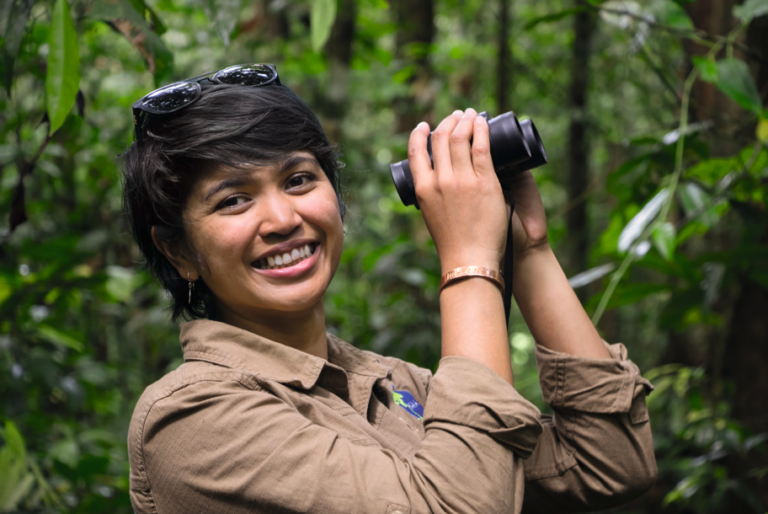
Just like Riadini-Flesch, Farhan is equally committed to making her philanthropy work more inclusive by involving those most affected by the threat of destruction: women and local communities. By strengthening access to policy discussions and encouraging deeper participation, she reinforces the idea that long-term environmental protection must be rooted in shared responsibility.
Her remarkable work has garnered widespread international acclaim that she truly deserves. Among them are the Whitley Award in 2016, the National Geographic Wayfinder Award in 2022, a place on TIME100 Next in 2022, the Ramon Magsaysay Award in 2024, and the Whitley Gold Award in 2026. These accolades successfully position Farhan at the forefront of a new generation of conservation leaders redefining how environmental protection is led and sustained.
Fellow Laureates who are just as impactful round out this year’s cohort, all of whom are women driving initiatives centred on sustainability, innovation, and community-led progress. Joining Farhan in pushing boundaries of urgent global challenges are chemical biologist Rosa Vásquez Espinoza, environmental scientist Binbin Li, conservationist Rachel Ikemeh, and medical geneticist Pardis Sabeti.
Espinoza’s research in the Peruvian Amazon has revealed the importance of preserving stingless bees, a key pollinator for native plants. In China, Li collaborates with local communities to rethink agricultural practices to protect wild pandas. Ikemeh’s work in the Niger Delta centres on protecting endangered primates and highly-threatened forest habitats lands through community-driven efforts. Meanwhile, Sabeti continues to advance cutting-edge tools to better detect and respond to infectious diseases in West Africa.
Together, their work and extensive efforts reflect how the Rolex Awards continues to set a benchmark for integrating purpose-driven initiatives into a brand’s broader ethos. With five Laureates selected and chosen by an independent panel of international experts, the programme demonstrates how sustained support can drive meaningful impact. In doing so, Rolex extends its influence far beyond watchmaking into shaping a more considerate and resilient future.