
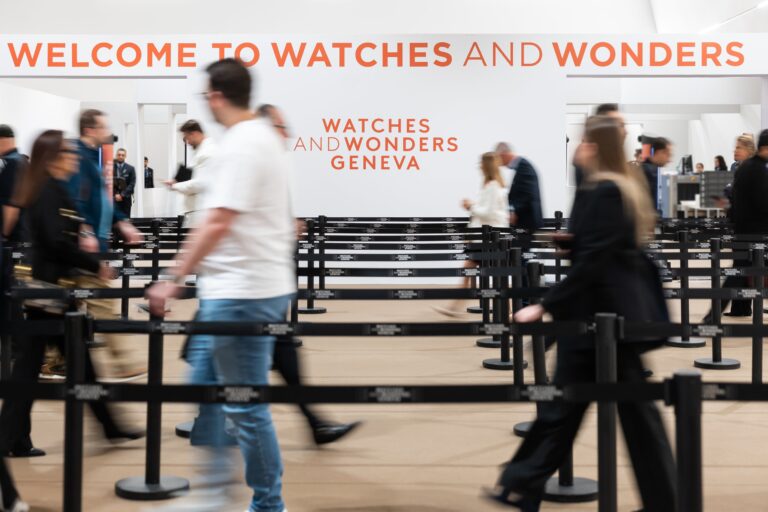
For many, arriving at Watches and Wonders 2026 felt a little more layered this year. Longer journeys, shifting schedules, and a world that seems increasingly unpredictable only made Geneva’s annual gathering feel more intentional. Yet perhaps that is the enduring power of this fair: no matter the circumstances, it remains a place where the global watch community converges with a shared purpose to discover, to connect, and to witness the next chapter of fine watchmaking unfold.
That sense of anticipation began long before the doors of Palexpo opened. Booking appointments often felt less like scheduling meetings and more like securing tickets to a major global concert, with some of the most sought-after brand presentations fully booked weeks ahead and waiting lists quickly becoming the norm. Such demand reflected the scale Watches and Wonders now commands: this year, nearly 60,000 unique visitors, including journalists, retailers, collectors, and industry insiders from around the world, arrived in Geneva to explore novelties from 65 exhibiting brands, making it the fair’s largest edition to date.
With that level of momentum came extraordinary global visibility. The 2026 edition generated nearly one billion digital impressions, with #WatchesAndWonders2026 reaching 900 million, a 29% increase from last year. High-profile appearances further magnified its allure: Roger Federer at Rolex, Patrick Dempsey at TAG Heuer, George Russell and Eileen Gu for IWC Schaffhausen, Usain Bolt with Hublot, Usher and Joshua Hong at Jaeger-LeCoultre, and Apo Nattawin representing Piaget. The fair, once a specialised industry event, now possesses a distinctly cultural relevance.
Beyond the headlines, hashtags, and high-profile appearances, the fair’s deeper narrative unfolded through design. Throughout Palexpo, booths became more than showcases. They were immersive brand worlds, each carefully constructed to reflect a maison’s heritage, creative direction, and cultural positioning.
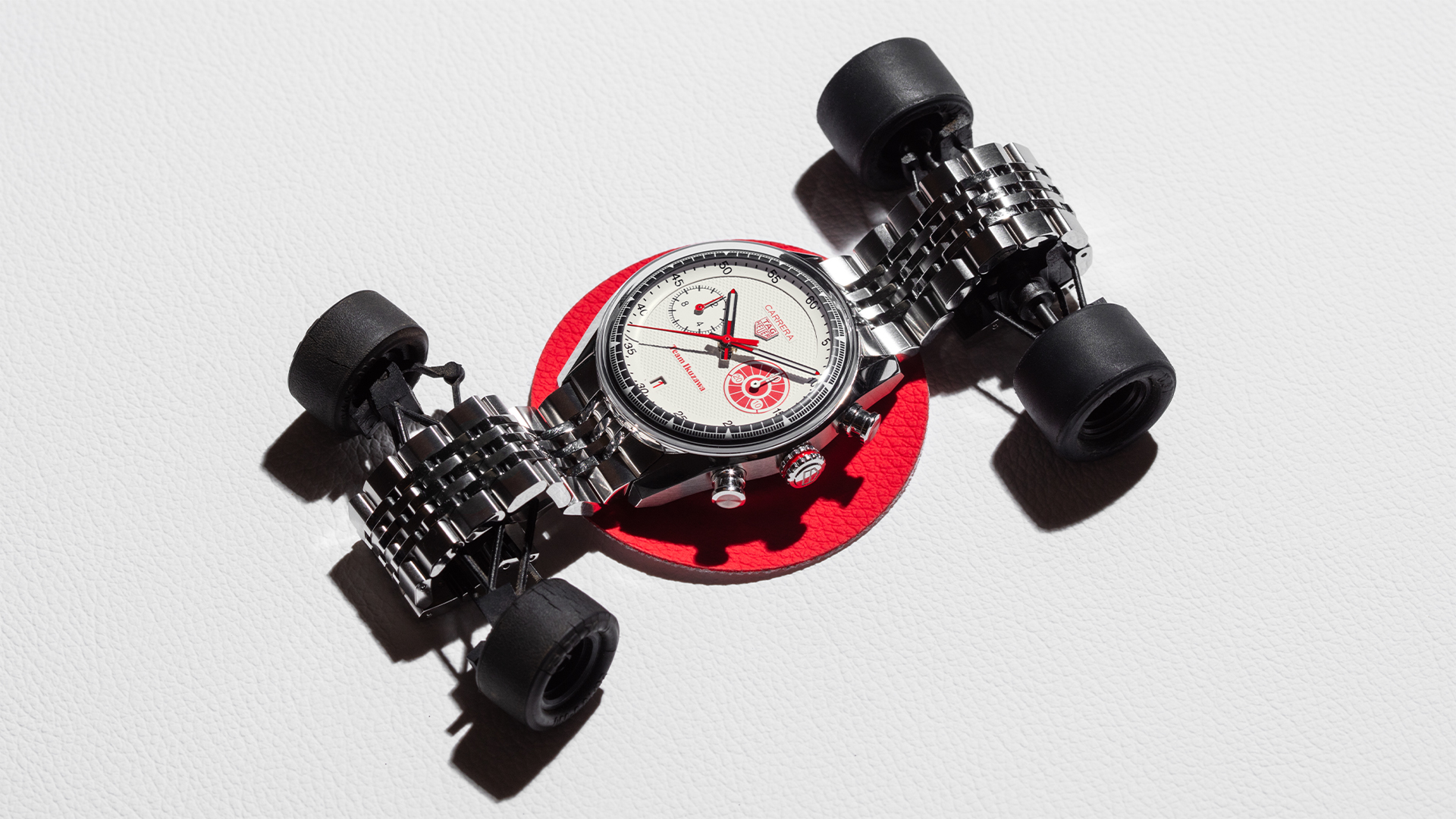
Marking its debut participation at the fair, Audemars Piguet brought its 150th anniversary traveling exhibition, “House of Wonders,” to Geneva, offering an immersive journey through the maison’s craftsmanship, milestones, and creative evolution. TAG Heuer, by contrast, leaned fully into its racing DNA, where the legendary Porsche 917K, famously tied to Steve McQueen and Le Mans, stood alongside the Oracle Red Bull Racing RB22 Formula 1 car, bridging cinematic motorsport heritage with the brand’s contemporary high-performance partnerships.

Meanwhile, IWC Schaffhausen’s space-station-inspired booth offered one of the fair’s most striking visual experiences while setting the stage for the introduction of the Pilot’s Venturer Vertical Drive. Arriving at a moment when the Artemis II mission has reignited global fascination with space exploration, the futuristic timepiece felt especially timely, channelling that same spirit of engineering that continues to define the brand.
While much of the conversation around Watches and Wonders often centres on what is new and what trends will shape the year ahead, the 2026 edition instead highlighted something more fundamental: the strengthening of directions already in motion. Rather than introducing an entirely new wave, this year’s fair reinforced how several shifts from recent years are now becoming firmly established within contemporary watchmaking.
Smaller and slimmer proportions continued their ascent, exemplified by pieces such as the Joia de Baume & Mercier and the CHANEL J12 Golden Black both in 28 mm, the Vacheron Constantin Overseas Ultra-Thin Automatic, and the Chopard Alpine Eagle 41 XPS in Lucent Steel™ with a thinness of just 8 mm. Stone dials further cemented themselves as a defining aesthetic, with maisons such as Piaget and Zenith embracing richly textured materials like sodalite and bloodstone jasper to bring greater depth and character to the dial. Revivalism also remained a powerful force, as seen in Cartier’s return of the Roadster, underscoring the industry’s continued confidence in reinterpreting icons for a new generation.
On the technical front, Watches and Wonders 2026 highlighted how progress in watchmaking continues to evolve through sharper material experimentation, mechanical ingenuity, and increasingly sophisticated movement architecture. While gold and steel remained foundational, alternative metals and rare material innovation took a stronger spotlight. Titanium and platinum gained further ground, while brands such as Panerai and Hublot pushed boundaries through unconventional compositions like Tantalum and crystallised osmium, reinforcing material innovation as a distinctive signature in modern watchmaking.
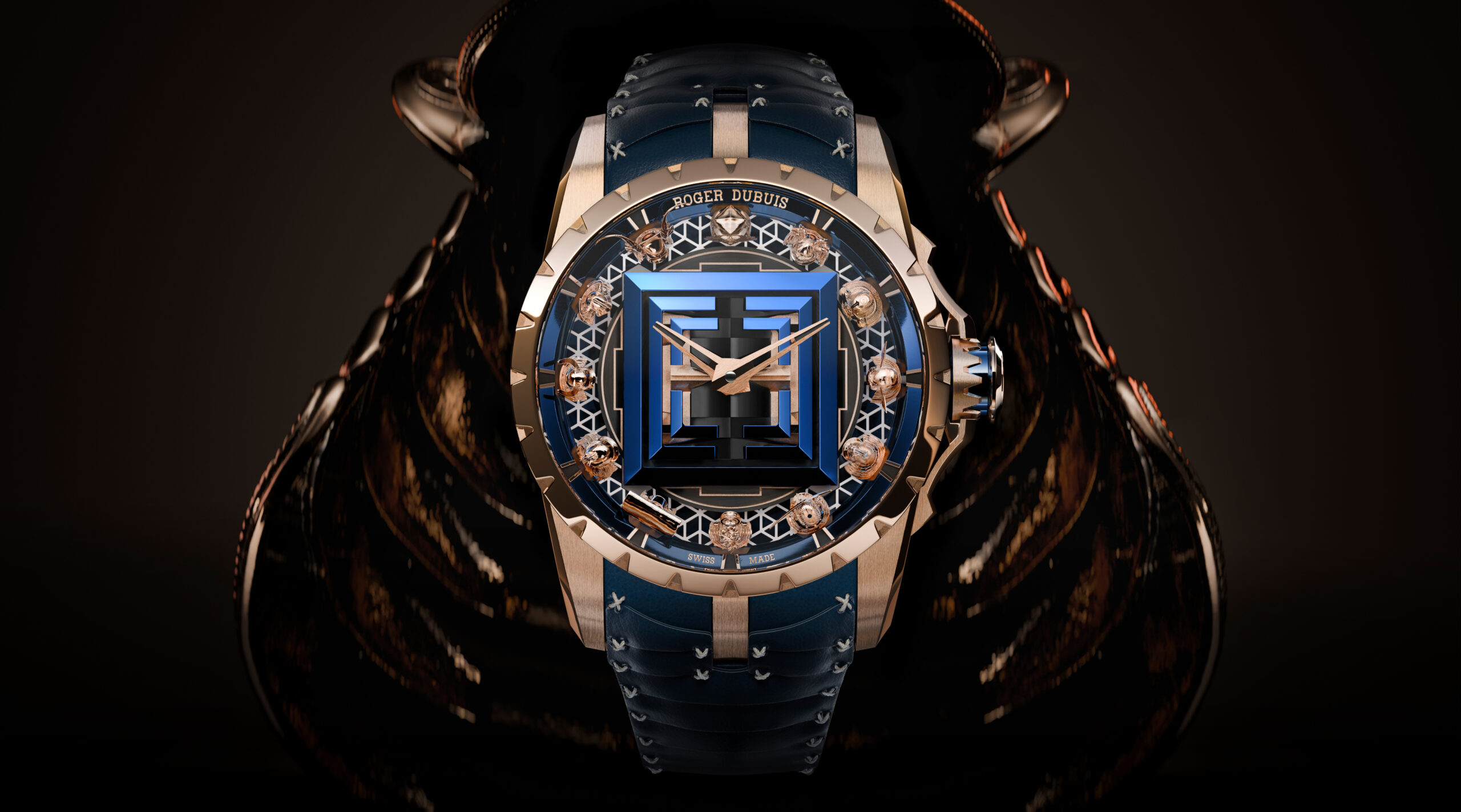
Skeletonisation, too, remained a powerful technical and aesthetic language, not merely for transparency, but for transforming movement into spectacle. The Roger Dubuis Excalibur Biretrograde Perpetual Calendar revived one of the maison’s most mechanically expressive signatures through an openworked display, while Jaeger-LeCoultre elevated the concept to new mechanical heights with the Hybris Mechanica Ultra Thin Minute Repeater Tourbillon, where acoustic mastery and visual theatre have become inseparable.
Perhaps most notably, 2026 also spotlighted a deeper pursuit of precision through structural innovation itself. TAG Heuer’s Monaco Evergraph introduced its compliant chronograph mechanism, replacing traditional levers and springs with a flexible monobloc system engineered to enhance consistency, durability, and mechanical efficiency. Developed over several years, it signals that the future of chronograph performance may lie not only in materials or aesthetics, but in fundamentally rethinking how movement components interact at their core.