
Since 1847, Cartier has consistently built its own future and forged a world few thought possible: a wondrous realm where high complications meet the artistry of luxury jewellery. Over a century into its craft, the Maison has accumulated a wealth of remarkable creations deemed as its “living heritage.” As it continues to build on its decorated shelves, Cartier presents its latest range of beguiling timepieces at Watches and Wonders 2026.
Baignoire
Following its debut in 1958, the Cartier Baignoire has become one of the most coveted ladies’ watches of all time. Distinguished by its oval silhouette, the iconic case only began gracing bangles in 2023. At Watches and Wonders 2026, Cartier introduces a new edition of the Baignoire in an intricate Clou de Paris motif. The timepiece, likened to the Baignoire Allongée, features a more pronounced and widespread motif that for once spans the entire yellow gold surface. While one variation features a Clou de Paris dial that blends seamlessly with the case and bangle, another precious variation boasts a fully diamond-pavé dial. The 100 brilliant-cut diamonds are meticulously set across the Clou de Paris case and bangle to create a dynamic play of light. The two alluring Baignoire watches are presented alongside other versatile variations. Clinging onto black leather straps, these latter variations are presented with grained silvered, diamond-pavé, and black lacquered dials.
Cartier Privé
As it enters its 10th Opus, Cartier Privé was another long-awaited presentation at Watches and Wonders 2026. The Maison’s tradition of bringing back symbolic silhouettes continues to resonate with collectors. This year, Cartier revives the Tank Normale, the Tortue Chronographe Monopoussoir and the Crash Squelette by unifying them through shared 950/1000 platinum and burgundy palettes. While the Tank Normale and Tortue Chronographe Monopoussoir display silvered opaline dials with burgundy tracks or markers, the avant-garde Crash Squelette relies on Roman numeral-shaped skeleton bridges. With only 150 timepieces available, the distorted silhouette of the watch is exaggerated, as if to reflect the fluidity and subjectivity of time itself. Barring the Tank Normale, all Cartier Privé novelties are suspended on semi-matt burgundy alligator straps. Presented in elegant yellow gold with black dial details, the Tank Normale, Cloche de Cartier, and Tank Cintrée join the former three in commemorating Cartier Privé’s 10th Opus.

Myst de Cartier
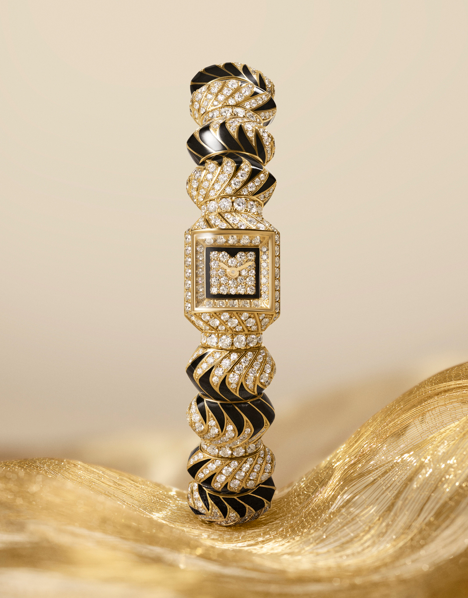
To date, the Myst de Cartier continues to live up to its name as the enigmatic and curious persona of the Maison. Rather than a watch, this Cartier masterpiece masks itself as a glamorous sculpture that tests the boundaries of geometry and form. The new Myst de Cartier emulates the artistic principles of 1930s icon, Jeanne Toussaint. The diamond-pavé yellow gold watch is suspended on a braid-like bracelet, calling to mind a trompe-l’œil design. The labyrinthine design takes 30 hours of diamond-setting, excluding the additional time required for Maison des Métiers d’Art artisans to hand-paint the alternating black lacquer. The vibrant black and gold that spirals across the watch like panther skin is juxtaposed by the purity of the Myst de Cartier variant in white gold, whose surface is entirely embellished with 1,031 enchanting brilliant-cut diamonds.
Roadster
The Roadster first appeared in Cartier’s boutiques in 2002, at a time when mechanical bodywork was rarely synonymous to Haute Horlogerie. Available in gold, gold and steel, and steel, the new Roadster amalgamates the Maison’s technical prowess with the elegant touches known to Cartier. The new Roadster is powered by the 1847 MC (for the large models) or 1899 MC (for the medium) movement, with its large or medium cases retaining the original’s curved silhouette and speedometer-like dial. For the first time, however, the white or dark blue dial is adorned with appliqué-style details and repositioned tracks. The mechanical bodywork feel is further amplified by the headlight-shaped date magnifier that sits right next to the conical crown, as well as sword-shaped hands for the steel variations.
Santos-Dumont
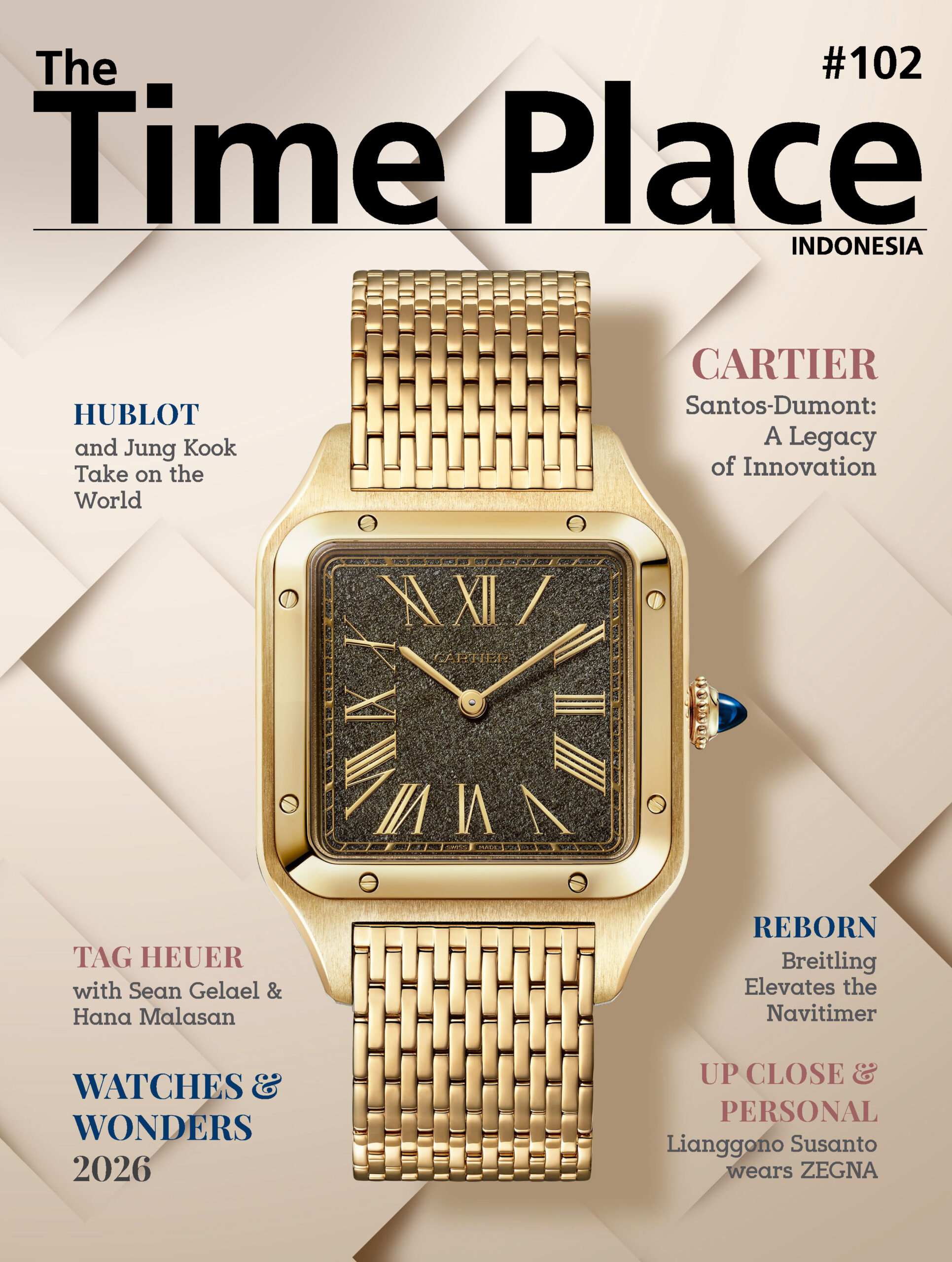
Among the refined timepieces in the market, Santos-Dumont has emerged as one of the most coveted pieces in history, starting from its aviation-inspired model in 1904. This year, the new Santos-Dumont is presented on a mesh-like metal bracelet, whose smoothness and flexibility are inspired by Cartier’s 1920s timepieces. The 43.5 mm x 31.4 mm novelty remains slim and elegant, given that it is powered by the manual-wound 430 MC. Compared to the radiant silvered satin-finished dial, one yellow gold model stands out with its unique gilded obsidian dial. Sourced from Mexico’s volcanic stone, the air bubbles trapped in the obsidian ensure that no two pieces are identical.
Tortue
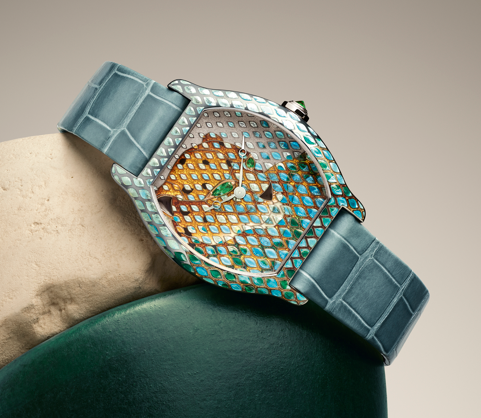
Just years after the unveiling of the Santos-Dumont, the house of Cartier unveiled the Tortue in 1912—a watch that would embody Cartier’s innovative spirit until today. The softened silhouette of the new reiteration is now paired with a dial that bears an embossed motif and modernised dotted tracks. Available in polished yellow gold, rose gold, rhodium-finish white gold, and diamond-set, the sophisticated timepiece gently hugs the wrist in small or mini sizes. While the diamond-set variations certainly showcase the Maison’s unparalleled skills in Haute Joaillerie, the extravagant Panthére Métiers d’Art Tortue in white gold and yellow gold further proves Cartier’s technical and artistic mastery. Limited to just 100 precious pieces each, the Panthére Métiers d’Art Tortue paints the Maison’s animal emblem, the panther, through exceptional enamelling and gem-setting, once again reaffirming the Maison’s unparalleled ability to transform timekeeping into an expressive art form.