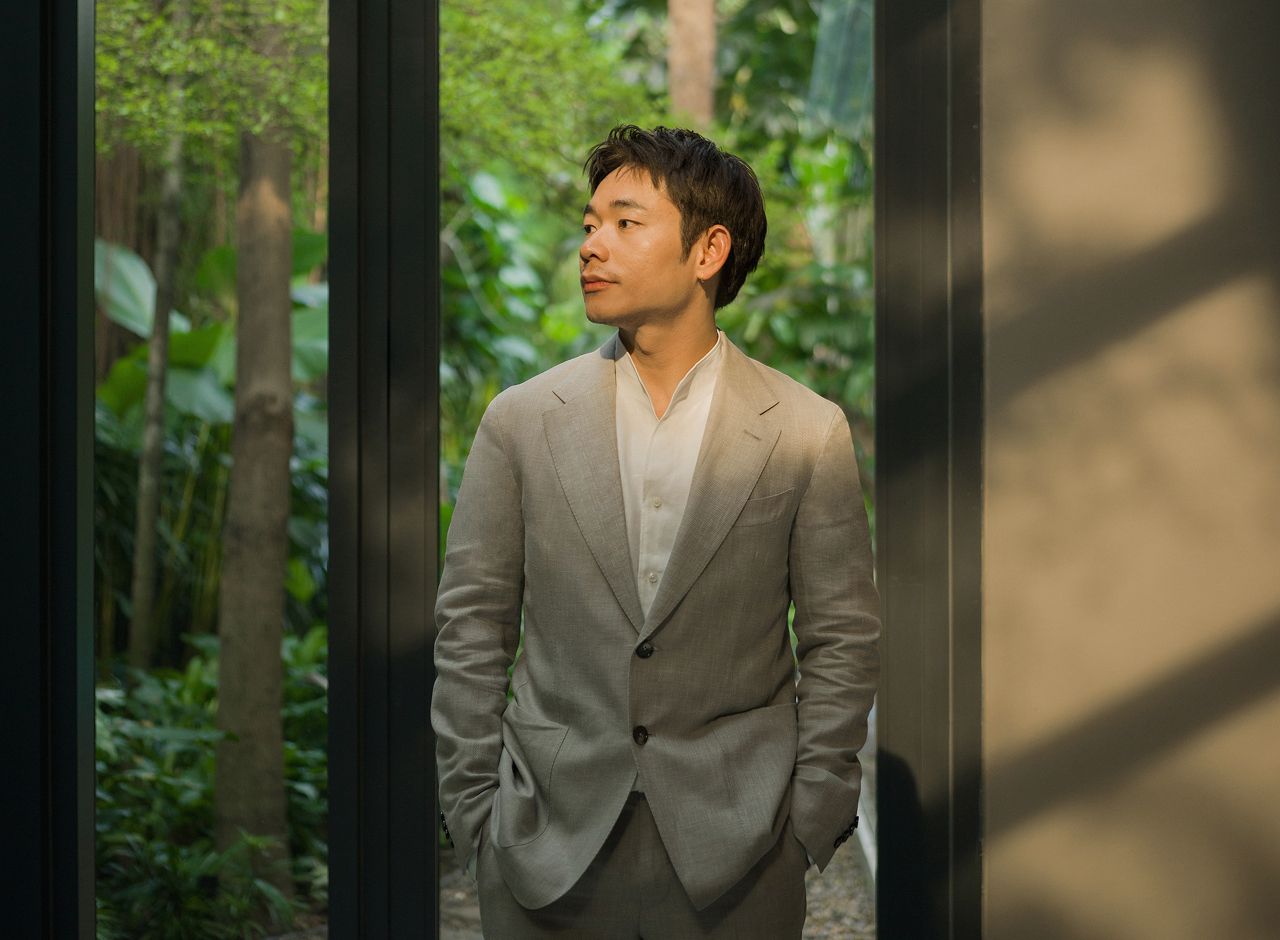

For so long, Tory Burch has been an advocate for female empowerment. Through the Tory Burch Foundation, she cultivates a new generation of women entrepreneurs and leaders. Her collections, too, draw from pioneering American women, from Claire McCardell, who revolutionised sportswear, to former US Secretary of State, Madeleine Albright. This ethos is also woven into her practice, where women make up more than 50% of her workforce.
Since Pierre-Yves Roussel, Burch’s husband and former LVMH executive, took the helm as CEO, Burch has immersed herself more deeply in the creative process, ushering in a renewed direction for the brand. Through an instinctive exploration of fabric and silhouette, the collections feel all the more covetable, captivating both loyal followers and new admirers alike.
This evolution continues with the Fall/Winter 2026 collection, where the ethos is carried forward with renewed clarity. Grounded in a timeless sensibility, Burch draws inspiration from her father’s wardrobe, particularly his favourite plush corduroy trousers. This season, she translates this into an interplay between contemporary feminism and enduring staples.
This juxtaposition is expressed through the blurred lines of proportion, texture, and fluidity, as seen in the first few looks that set the tone of the collection. Models strut the runway in Peter Pan–collared shirts layered under rugged oversized sweaters, tucked into corduroy trousers or leather pencil skirts with braided belts. Rendered in brighter hues and accented with sardine pins, these otherwise masculine silhouettes take on a jovial and ladylike ease.
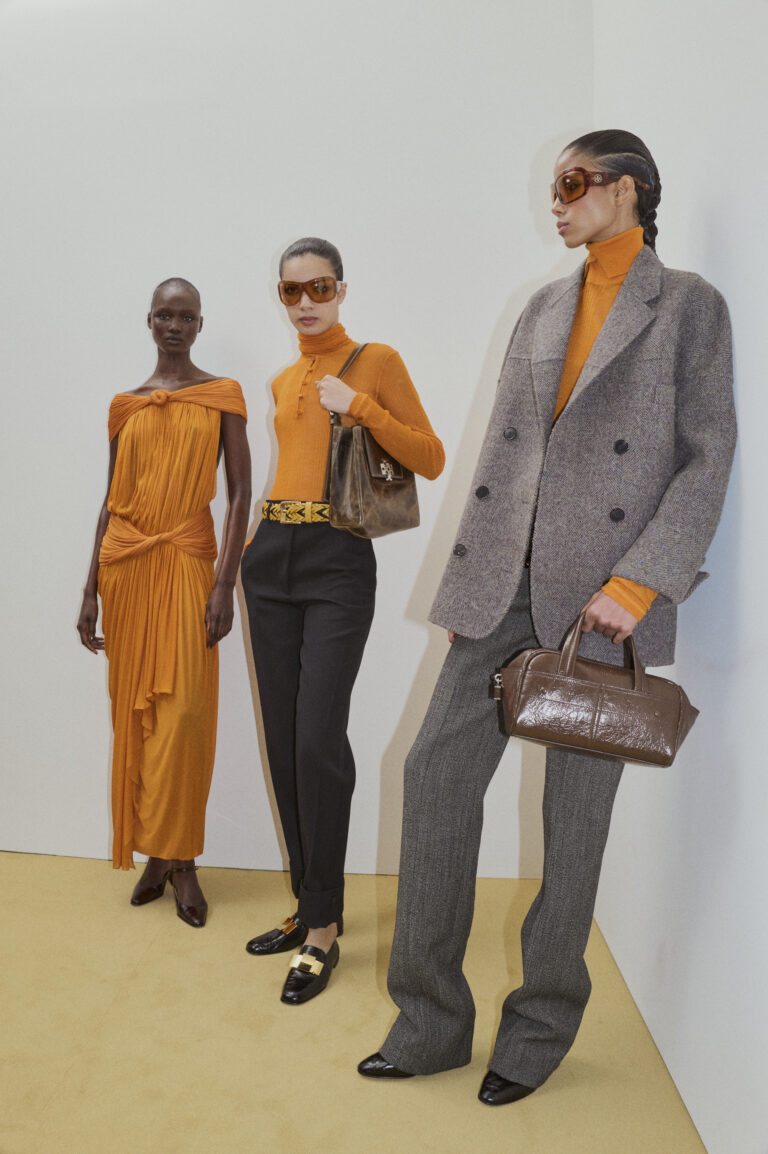
Another revelation lies in a series of outerwear pieces in subtly altered tailoring. Windbreakers and trench coats feature lowered necklines, shifting from the collarbone to the chest to reveal a more delicate V-line. A traditional naval coat comes with a slender outline, while a boxy peacoat is done with a cocooned silhouette.
On the other hand, the styling hints at a form of creative edginess. Four looks stand out, featuring braless sheer Henley tops paired with either culottes or cigarette trousers, articulating an androgynous sensibility with an emphasis on softer textures. The contrast is further sharpened by the addition of distinctly feminine shoes and accessories. Cardigans and rounded coats are realised in metallic badla embroidery, where Indian artisans work with gold and silver threads to create intricate patterns.
The crowd also revels in evening dresses of different forms and technical explorations, from washed silk dresses adorned with pleats to off-the-shoulder jersey dresses accentuated with knots, and drop-waisted shift dresses that make a comeback this season. Their lines echo the industrial Bauhaus language of the Sotheby’s at the Breuer building, lending significance to Burch’s decision to stage the show there.
Touching on Burch’s affinity for trailblazing women, she approaches this by reinterpreting archetypal runway pieces. This season, her muse is Rachel Lambert “Bunny” Mellon, an American landscape designer, horticulturist, and philanthropist, who shares Burch’s intuitive style and laissez-faire attitude.
She immortalises her influence in a “Bunny knot,” a nod to the icon’s quilted cushion from her Antigua home. In the collection, the knot comes to life in a pair of black pumps and quilted bags adorned with studs that mirror the original design, and, imperceptibly, translates the spirit of the collection.
Ultimately, “reinterpreted classics, rather than reinvented ones,” as Burch notes in the show statement, come to define the collection. The clothes unfold through a confident play on classic garments, truly built to last. There is also a subtle undoing of fixed ideas around gender, making space for something more personal. Burch really does take the notion of “dressing for the female gaze” to the next level.