
For Autumn/Winter 2026/27, Valentino presents Interferenze, a collection that, in essence, mirrors the layered grandeur of Palazzo Barberini. Here, the Roman palazzo emerges as an active force, framing a clear and deliberate dialogue between dualities that define both space and form.
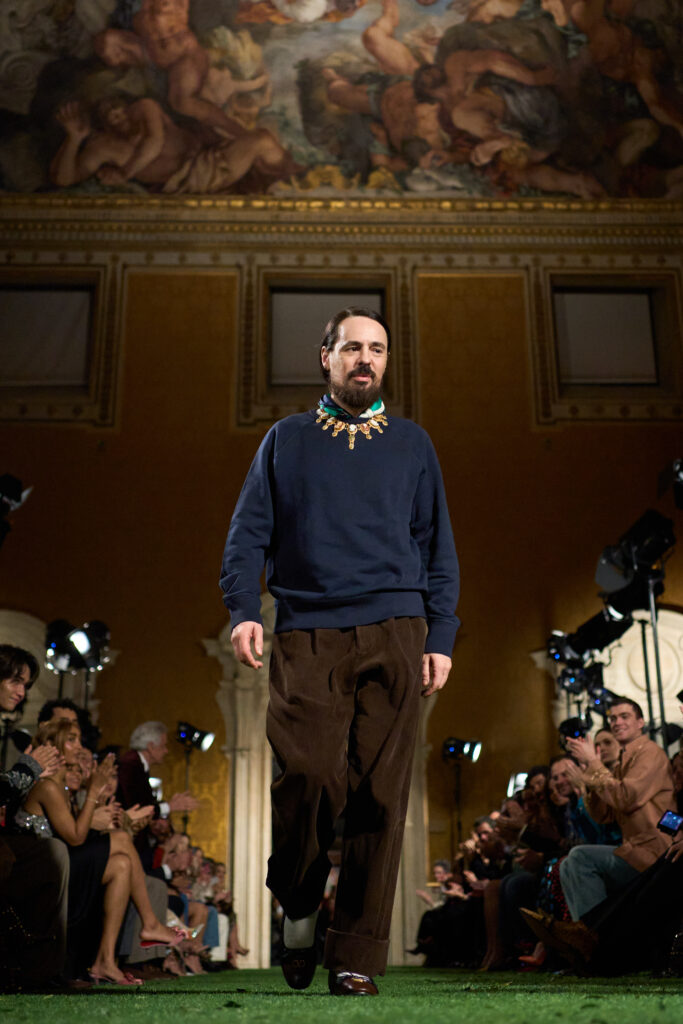
“Both fashion and architecture share the same operative logic,” as Alessandro Michele recalls, drawing from the writings of Bradley Quinn in the press release. “Both can be read as a field of opposing forces cohabiting in and on the body. The garment is never merely a decorative surface: it is an apparatus that organises the dialogue between discipline and desire, between social norm and individual gesture, between belonging and excess.”
It is precisely for this reason that Palazzo Barberini, an architecture far from being at peace, feels almost fated. The building does not hesitate to question the very notion of stability, resisting any synthesis between order and movement, and instead revealing their forced coexistence; their perpetual friction, the interferences produced as they overlap. At first glance, the palazzo embodies the order and symmetry of the Baroque era: measured, hierarchical, composed. It is only within that one begins to perceive the centrifugal forces that fracture its apparent solidity.
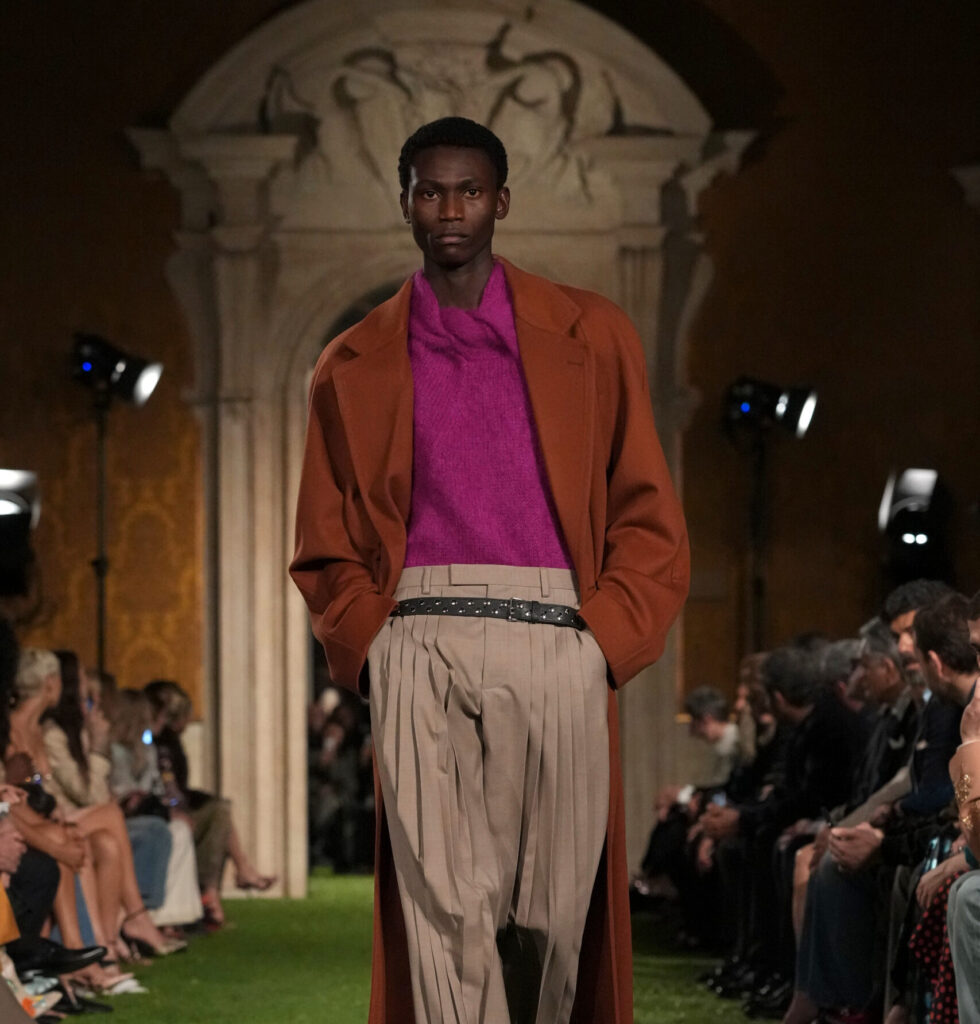
The structure reveals a persistent tension between control and release, between what is contained and what inevitably exceeds its boundaries. In the Great Hall, The Triumph of Divine Providence by Pietro da Cortona unfolds with intensity, dissolving architectural rigidity into illusion. Elsewhere, the contrasting visions of Gian Lorenzo Bernini and Francesco Borromini materialise in forms that are at once distinct and in dialogue—echoing the philosophical tension between the Apollonian and the Dionysian, and ultimately forming the conceptual backbone of Interferenze.
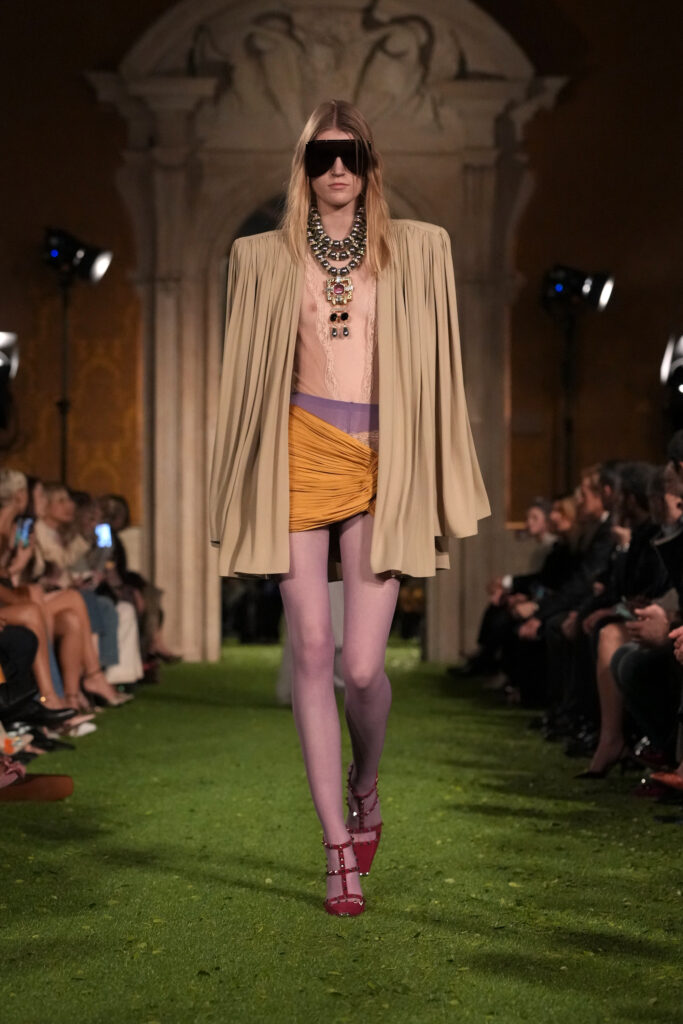
And so, this “marriage” between two organisms takes shape. On 12 March, both Interferenze and Palazzo Barberini acquire an added layer of resonance—one defined by the collision between code and deviation. With Interferenze, Valentino transforms what might conventionally be perceived as a seasonal proposition into an eloquent reminder: that true expression rarely resides in harmony, but rather in the friction between opposing forces.