
Cinema’s most enduring fantasy about a woman’s handbag arrived in 1964, when Mary Poppins reached into a modest carpet bag and produced a hat stand, a mirror, and a full floor lamp.
The joke works because the ambition is universally recognised. Every woman wants a bag that holds more than it should. Yet the industry spent a decade insisting otherwise. The micro bag years were a kind of collective performance. All pouches the size of a passport and phones tucked under the arm. The implication being that a woman with somewhere important to be tends to travel light.
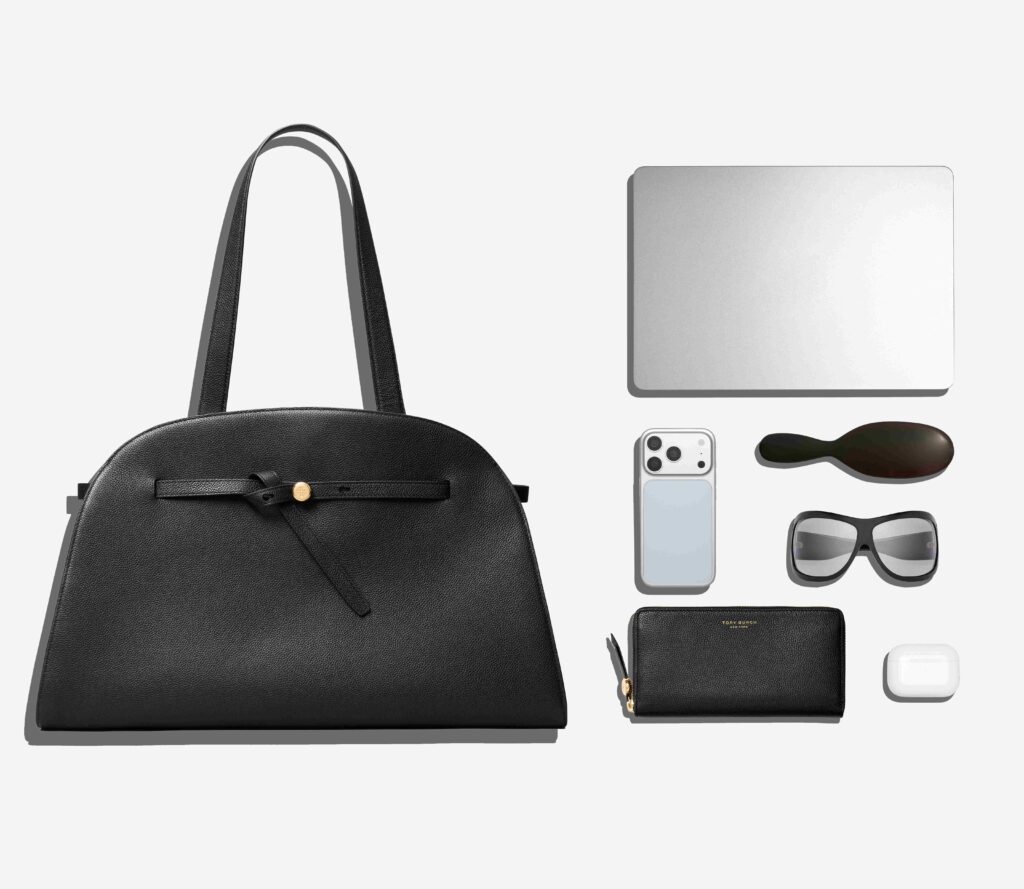
Carrie Bradshaw could sell it because a television character never has to carry a laptop charger. The rest of us were quietly running a second tote alongside the petite one. Predictably, volume returned, and the ‘what’s in my bag’ era revealed that the requirement was never size but architecture.
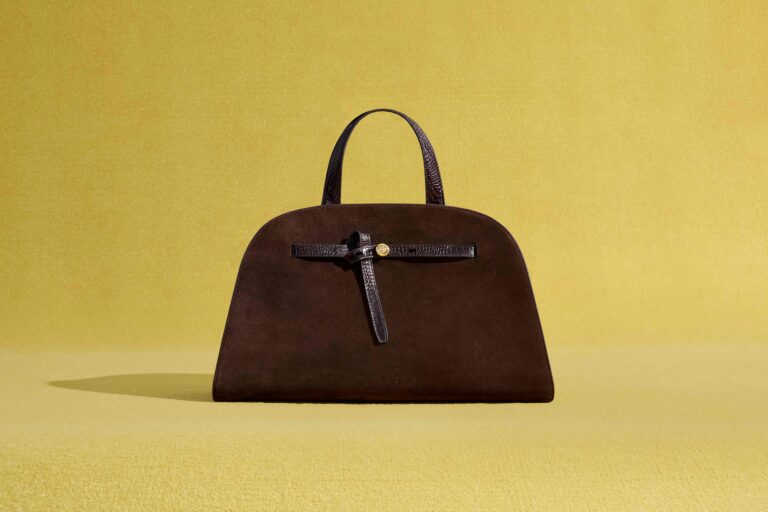
A matter of compartments and interior logic. It is a brief Tory Burch has been answering since February 2004, when its first store opened in Nolita, New York, with a proposition that read as almost nonconformist at the time.
Classic American style, cut and priced for a busy woman. For Tory Burch, practicality is the starting point, not an afterthought, which is why a bag is never treated as an ornament.
Guided by that principle, the Romy bag has long served the woman at the heart of Tory Burch, returning each season in whatever form her day requires. This autumn brings its most considered version yet, with a handle arching over the top and a new name: the Romy Bauletto.
In Italian, bauletto means small trunk or little chest, and it describes the shape exactly. Picture the softly rounded lid of an old travel case—the kind filled with a week’s worth of clothing—then imagine it scaled down to something that fits in one hand. Anything built to survive a journey should have no difficulty surviving a Tuesday.
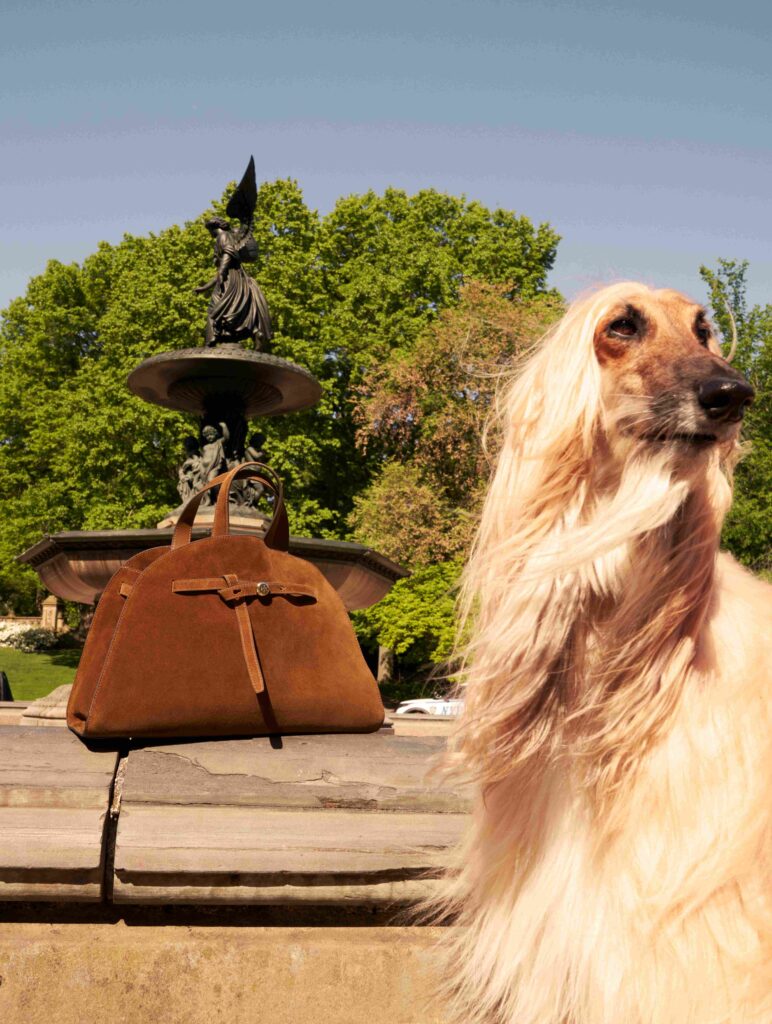
On the Bauletto, a single hardware button sits at the front, releasing the bag in one motion. It is also the only thing that identifies the bag. Everything else is minimalist to the point of silence, the leather completely devoid of monogram or logo, so the double T stamped into that button becomes the exception, the one place where the house signs its name.
The bag’s silhouette curves into a gentle dome, softened further by a belt that crosses the body and knots loosely, keeping the shape from turning formal.
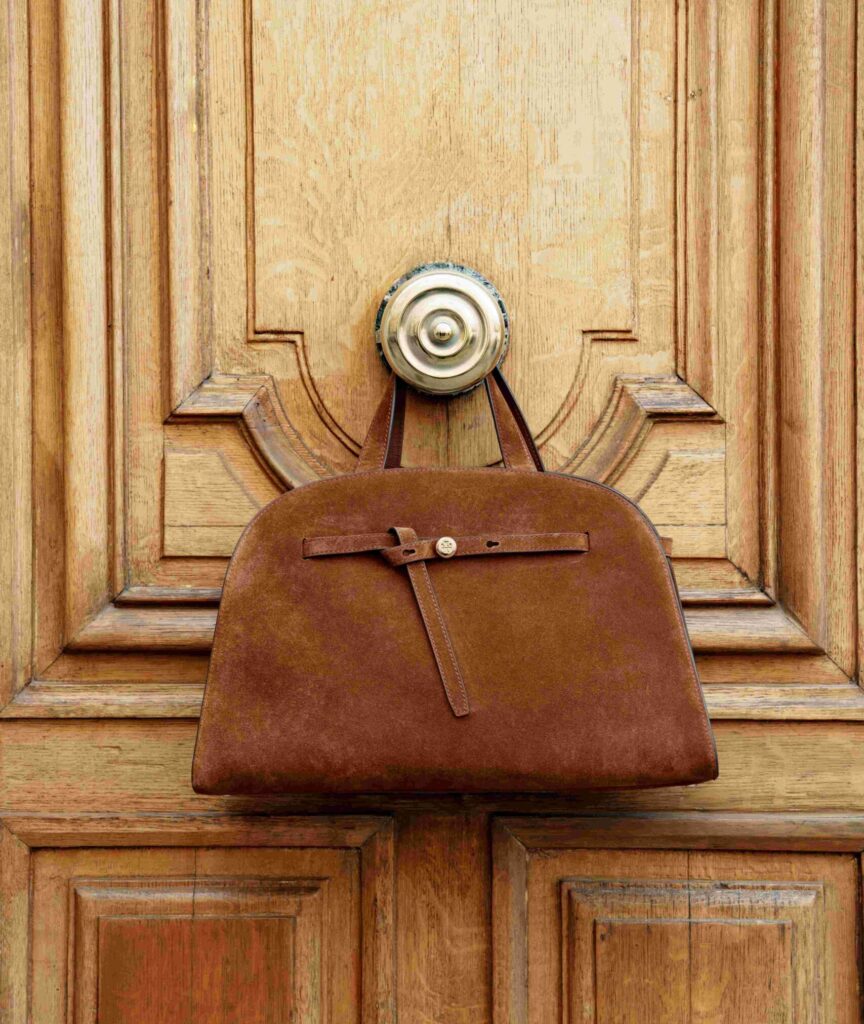
Despite its generous dimensions, the bag remains remarkably lightweight—a quality whose true value becomes clear once filled.
It comes in three sizes, small to large, though the distinction is one of scale and balance rather than utility. Even the small is able to accommodate more than its outline suggests, and the medium resolves the standing debate between a bag that looks considered and one that holds a day. Material shifts register with each iteration. Suede lends a soft, tactile ease, pebbled leather carries a businesslike polish suited to the everyday, and croc-embossed arrives with a sharper edge, ready to slip into evening.
Together they outline the spectrum in which the bag moves, from casual to formal, without ever losing its character. Inside, compartments do the unglamorous work of making a roomy bag navigable.
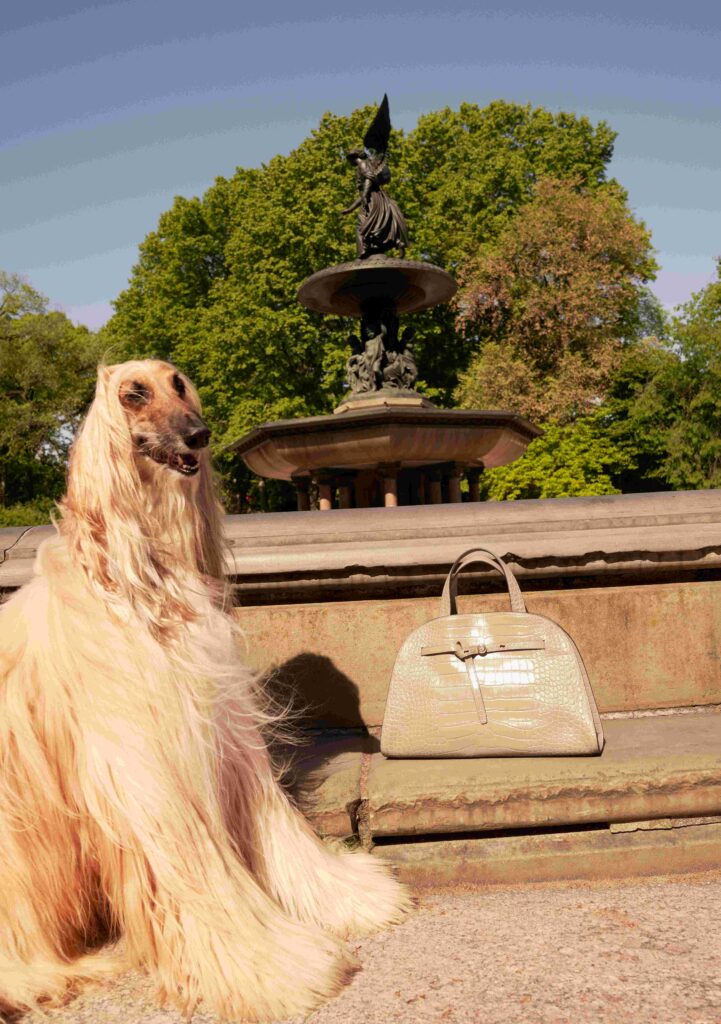
The Fall/Winter 2026 campaign was lensed by Jamie Hawkesworth, a photographer who made his name in documentary work. He followed Hejia Li, Awar Odhiang, and Alex Consani through New York City, along with a cast of dogs and a cameo from Tory herself with her poodles, Chicken and Slim.
Sixty years after a nanny made a bottomless bag look like sheer sorcery, the Romy Bauletto offers the same relief without the magic trick. It is an object that asks nothing of a woman and carries everything.