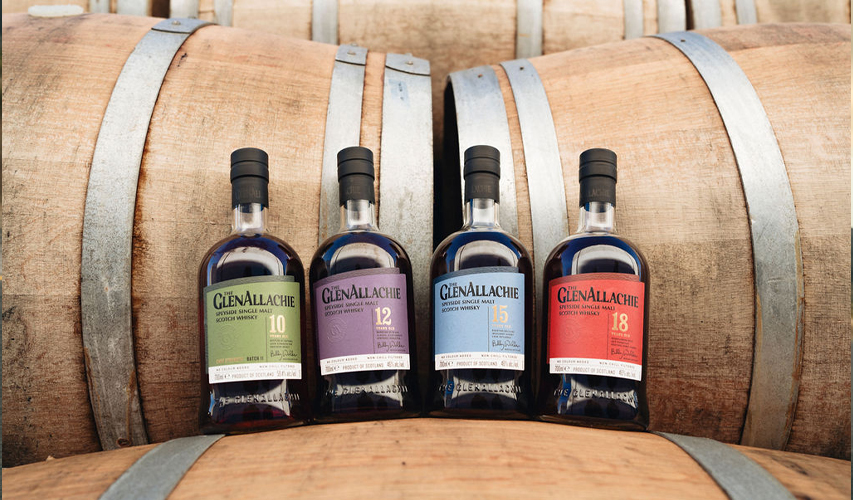

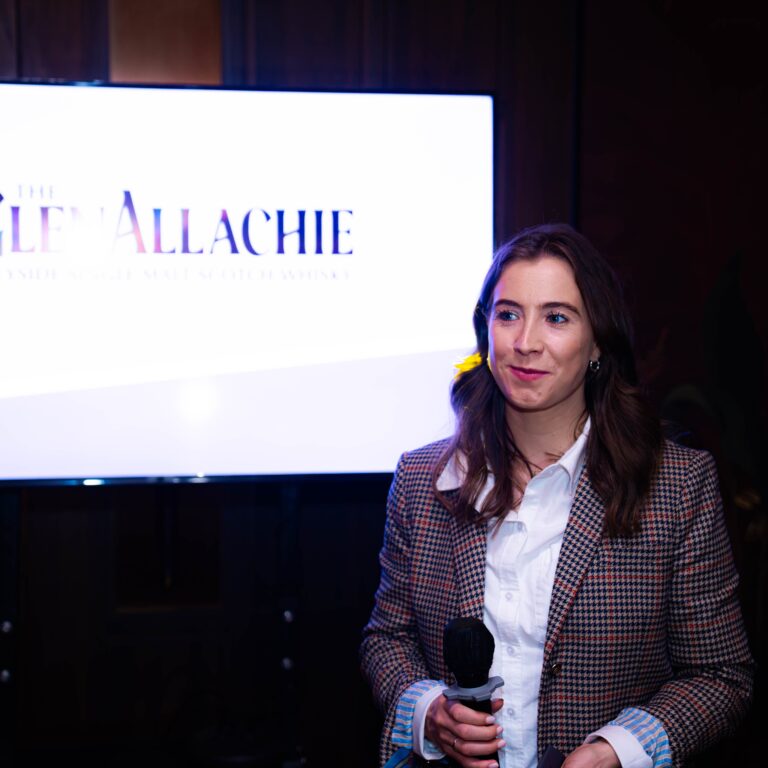
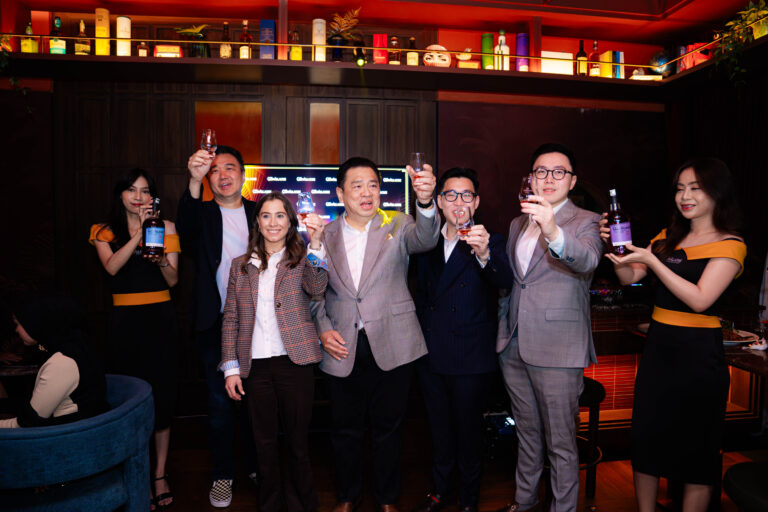
Behind every bottle of The GlenAllachie is a story about patience, independence, and the many hands that shape it long before it ever reaches a glass. As the distillery officially arrived in Indonesia, Ciara Hepburn, the brand’s International Sales Manager, sat down to unpack that philosophy. From Billy Walker’s fifty years in the industry, to the cask sourcing that spans continents, to what she hopes this new market will come to understand about the whisky behind the name.
The conversation moves between the technical and the personal: why independence matters more to the distillery than consistency, how a relatively young brand built on a much older foundation finds its place in a market still discovering single malt, and what “whisky in good hands” really means beyond the words printed on the label.
The GlenAllachie has built a remarkable reputation globally, yet Indonesia is only now becoming part of its journey. What made this the right moment to enter the market, and what excites you most about Indonesian whisky enthusiasts?
It’s a really exciting time for the brand. Next year marks our 10th anniversary under our current ownership — the distillery itself has been around since the late 1970s, but we’ve only owned it for the past nine or ten years. In that time, we’ve developed a strong understanding of who we are, our spirit profile, our character, both as a whisky and as a company. So I think now is the perfect time to showcase that in the Indonesian market.
The timing feels right. There’s growing interest in Indonesia for premium Scotch, away from the big blended Scotch and blended malt brands, and a real appetite for more premium, boutique-style products. As an independent distillery, we can focus on craft-led production, non-chill filtered, natural strength, natural colouring — and that’s resonating with the Indonesian market. We’ve also seen strong success across other Southeast Asian markets in recent years, and Indonesia is a natural next step from that early exposure. So the timing for us is perfect.
In an era where many whisky brands belong to large groups, The GlenAllachie remains proudly independent. Beyond ownership, what does independence actually allow the distillery to do differently?
It gives us, as a company, a huge amount of freedom and flexibility to be innovative. Scotch whisky is an industry that prides itself on tradition, and many of those traditions are incredibly important to how we produce. They give Scotch its authenticity. But there are also so many areas where we can be innovative, and our cask innovation is a big part of that.
We’re sourcing casks from every corner of the globe. In the past, most distilleries leaned heavily into bourbon or sherry-style maturation, sometimes port or wine. We’ve put a huge focus on sourcing casks grown in interesting climates and conditions — most recently virgin oak casks from Mongolia, the Andes in Colombia, Ukraine, and across Europe, virtually every corner of the world. Our independence is what allows us to be that innovative and experimental.
A lot of the big companies focus on consistency — they want a product that tastes the same every time. That’s not something we tend to do. Our independence allows us to strive for something better each time, rather than making sure it’s consistent each time. We’re not constrained by the traditions and ideas that others in the industry hold onto, so it allows us to be a bit more free, a bit more flexible, and definitely a bit more innovative.
The launch theme is Wood, Time & Wonder, and you’ve often described wood management as the heart of The GlenAllachie rather than merely a finishing technique. How does that philosophy shape every decision the distillery makes, from cask selection to the final character of the whisky?
A huge amount of the flavour profile and character of the whisky comes from the wood itself. The majority of our casks are matured first in ex-bourbon casks, which we think of as the building blocks of flavour. From there, we move into secondary maturation, typically across a few different types of sherry casks, notably Oloroso or Pedro Ximénez. We treat the character of our whisky as something built in layers from each cask type, so the quality of the casks we’re sourcing is incredibly important to the flavour profile.
A lot of that comes back to Billy — not just his expertise, though he’s worked in the industry for upwards of 50 years now, but also the relationships he’s built with some of the finest oak cask suppliers in the world. Take the casks we source from the south of Spain: we’re getting the best quality sherry casks we can, and that really comes down to the relationships Billy’s built with the sherry houses and bodegas. We spend upwards of four to five million pounds a year on oak casks, which, for a distillery producing under a million litres of alcohol annually, probably gives us one of the highest spirit-to-wood ratios in Scotch whisky right now. We want our consumers to know there’s been no compromise on quality, and we always want to be transparent about the oak casks we’re working with.
There’s virgin oak in many of our core range bottlings, particularly among our limited editions, and we want consumers to understand the origins of that oak — how it’s grown, how long it’s dried, the species. Ultimately, it comes down to extracting as much flavour as possible from the casks, and helping our consumers understand those building blocks of flavour for themselves.
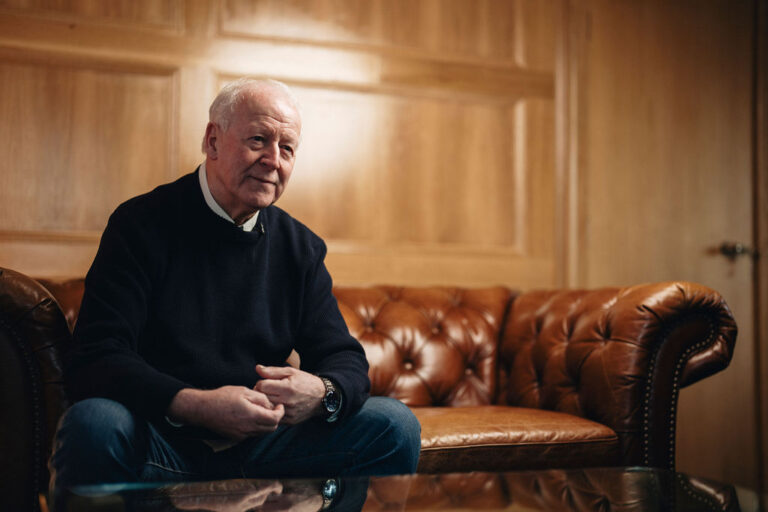
Billy Walker is regarded as one of the great names in Scotch whisky. Beyond his technical expertise, what do you think is the philosophy or mindset that has most profoundly shaped The GlenAllachie today?
Having Billy Walker at the helm of the GlenAllachie is our biggest asset as a company. He’s one of, if not the most respected master blender in Scotch whisky today, celebrated all over the world and especially across Asia. His skill set, expertise, knowledge, and his humble personality are things people really resonate with. Like I mentioned earlier, there’s almost a seal of approval with every bottling we release — consumers know it’s a mark of quality.
One of the things about Billy is that he’s incredibly humble and modest. He’d likely say the credit belongs to the team behind the GlenAllachie, especially those who’ve been there since day one, back in 2017, and who’ve fought hard to build the company into what it is now — about to enter our 10th anniversary, exporting to over 50 global markets. Our 12-year-old won World’s Best Single Malt last year, in 2025, and for us as an independent company to win that on a 12-year-old, up against 21-year-olds, 25-year-olds, and the World Whisky category as a whole, was a real accolade for our team — a reflection of all the hard work they’ve put in over the years. Having Billy Walker at the helm, along with the expertise and ethos he brings to the whole team, is incredibly important to us.
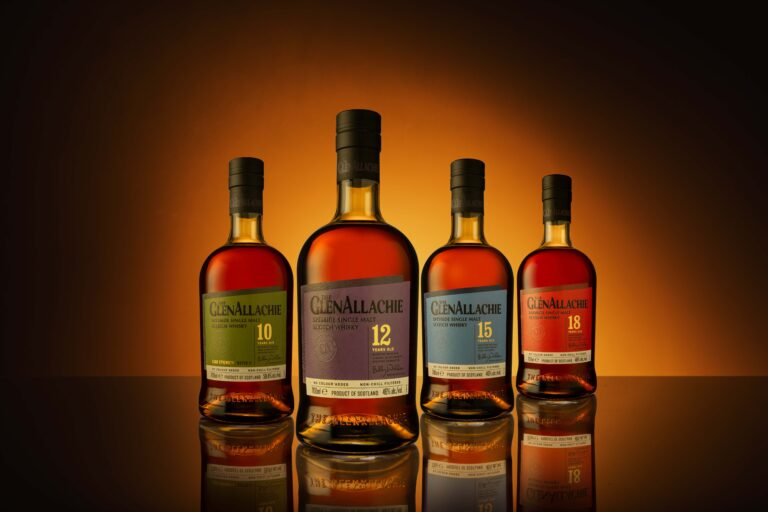
Winning World’s Best Single Malt twice is an extraordinary achievement. Has that recognition changed the way The GlenAllachie approaches innovation, or is the focus still exactly where it has always been?
What I would say is, firstly, it’s very interesting that a product like the 12-year-old won the award. The product that won the award the year before was a 25-year-old, which of course had been matured for over double the amount of time. So for us to win with our flagship product, I think it really reflects our understanding of our consumers, and shows that the flavour profile of something like the 12-year-old genuinely resonates with so many people.
I think it also ties into our modesty as a company. A 12-year-old is a very affordable product, and it carries that classic Speyside character people think of when they picture a typical Speyside whisky. I think that really highlights our understanding of the market and our appreciation for our consumers. So, our 12-year-old winning that award was a real encapsulation of our ethos as a company.
Whisky is built on patience, yet today’s consumers often expect instant gratification. How does The GlenAllachie remain faithful to long-term maturation while staying relevant to a younger generation of drinkers?
We’re a mix of tradition and innovation. The distillery itself isn’t new — we’ve been producing spirit since 1968 — but we are very much a new brand. We mix our traditions and production methods with modern cask types, innovation, and experimentation, and that’s something consumers really resonate with. I think that’s likely why we’re reaching a wider fan base as well.
But importantly, it also comes down to spending time in-market — with our consumers, with our distributors — and really understanding the market. That’s something we never want to stop doing as a company: making sure we truly understand the market and our consumers.
People often describe great whisky through tasting notes—dark chocolate, honey, dried fruits or spice. But from your perspective, what truly separates a memorable whisky from a technically excellent one?
For the GlenAllachie, the overarching flavour profile — the one thing we want people to think of when they have a GlenAllachie — is heather honey. It’s a very typical Speyside character. But of course, we lean heavily into a sherry style of whisky, so those orchard fruit characters balance out with the heather honey and enriched dark chocolate. I think that flavour profile signifies luxury, and across our whole portfolio, these are the notes that crop up in every bottling, regardless of the cask type, the maturation process, or the age of the whisky.
The GlenAllachie is committed to natural colour, non-chill filtration and higher-strength bottling, preserving the whisky with minimal intervention. At the same time, consumers expect consistency from every bottle. How do you balance authenticity with consistency?
Consistency isn’t really something we’re trying to achieve. We don’t want every batch of whisky to be the same — we want the next one to be better. So consistency isn’t really something we talk about. There’s a famous quote from Billy: ‘We’re not trying to achieve absolute consistency, we’re trying to achieve absolute perfection.’ I think that hopefully answers the question — authenticity is incredibly important to us, especially as a relatively young brand still building the GlenAllachie’s profile across the world. But consistency isn’t something we strive for as a company. It’s about making sure each bottling, each batch, is better than the last. And when we think about craftsmanship, consistency and craftsmanship don’t really go hand in hand — because a handcrafted product isn’t produced by robots.
How would you describe Indonesia’s whisky culture compared with other markets you’ve worked in, and do you see characteristics that make it uniquely promising for a brand like The GlenAllachie?
I think it’s a really promising time to be launching in Indonesia, as we mentioned earlier. The market is certainly moving away from big brands, and in particular away from blended Scotch and blended malt, which dominated not just the whisky market here but globally for so many years. Consumers now want to appreciate things like single malt more.
We’ve also mentioned craftsmanship a lot — a huge number of consumers are really resonating with the way things are produced, not just whisky, but so many household items and luxury products they buy. So there’s a real vibrancy to the market, a real sense of excitement, and definitely opportunities for growth for us. But as I mentioned before, it’s important for us as a company to spend time in-market, understand our consumers, and make sure we really resonate with them.
For someone discovering The GlenAllachie for the very first time, what would you hope they remember—not about a specific expression, but about the philosophy behind the whisky?
One of the things we want people to understand is this term, ‘whisky in good hands’ — you’ll see it dotted throughout our packaging and branding. Of course, it’s a nod to Billy Walker and the skill and expertise he brings to us as a company and to our liquid. But it’s also a nod to the many hands involved in bringing the GlenAllachie to life — our warehousemen who work in sub-zero temperatures throughout the winter to make sure we get our samples, our tour guides who are really the face of the company for the people who make the effort to visit the distillery every day, the people who work in shipping and make sure our products reach every corner of the world. They’re passionate people, and they’re so important to how the company works and to making sure our products end up in the hands of people in Indonesia or anywhere else in the world.
So we want consumers to really resonate with the many hands involved in bringing the GlenAllachie to life. And I think, for a relatively young company about to enter its 10th anniversary, we’re very dynamic, quite youthful in what we’re doing as well. I mentioned the words innovation and experimentation earlier — these are the kinds of things we want our consumers to think about when they’re enjoying.