
Few Italian exports have travelled as well as la dolce vita. Anita Ekberg spent barely three minutes wading through the Trevi Fountain in Fellini’s 1960 film, and the phrase has been selling Roman leisure to the rest of the world ever since. There is a pleasing irony, then, in the fact that the most persistent horological tribute to Italian idleness is built by the famously punctual Swiss.
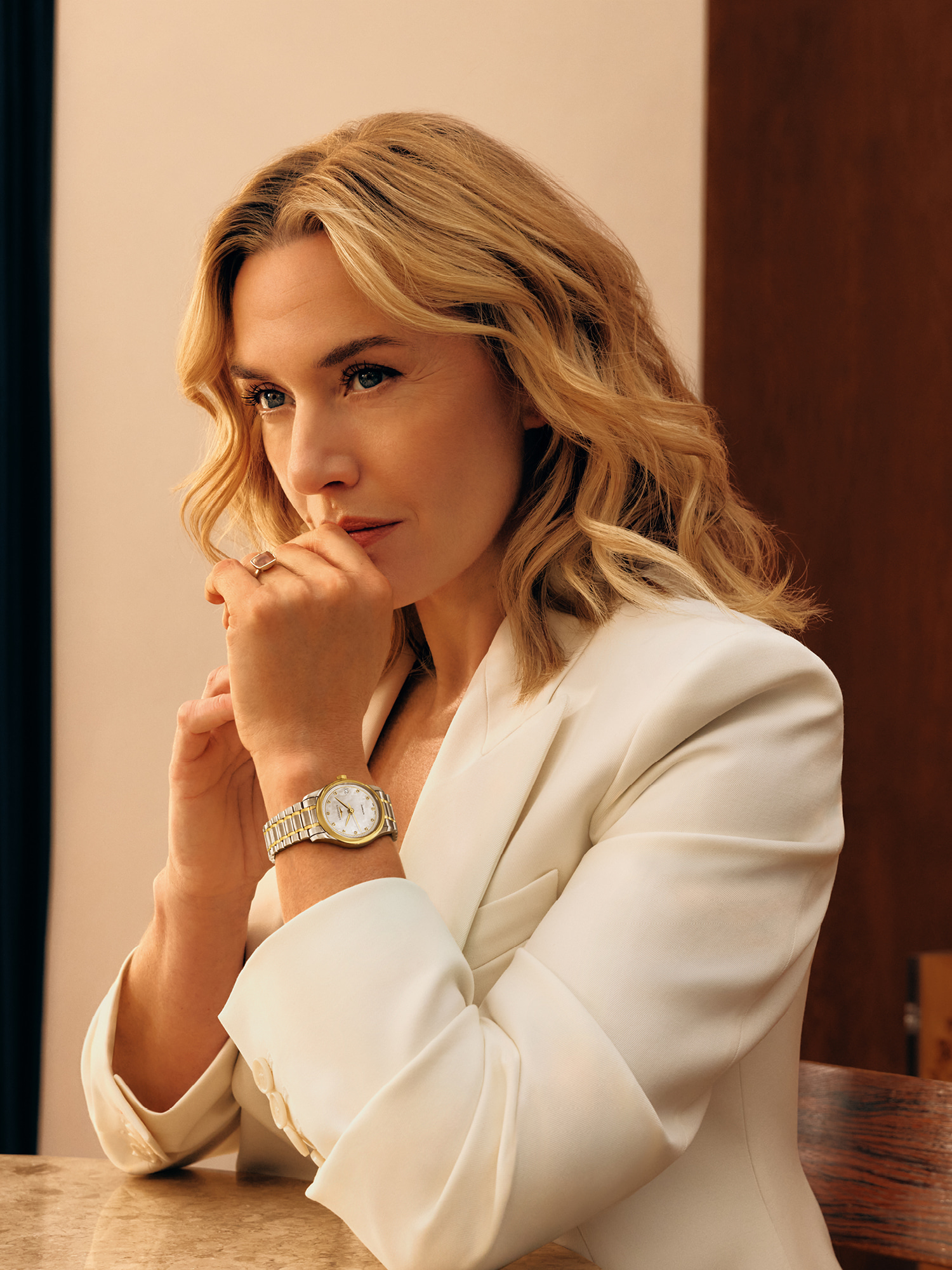
Longines has been making that argument since 1997 with the DolceVita, and it has never lacked conviction in the casting department, borrowing faces from Audrey Hepburn, whose image still anchors the brand’s elegance campaigns, to Jennifer Lawrence, the house’s Global Ambassador, who has held the role since 2022 to today. What the collection has lacked, at times, is a clear answer to what kind of watch it actually wants to be. And the 2026 lineup finally gives one.
To understand it, it helps to look back. The rectangular case traces to a Longines from 1927, when Art Deco geometry was simply how the world drew. The collection formalised around it in 1997, named for the sweet life and pitched as an ode to it, and spent its first two decades as one of the brand’s defining ladies’ lines, quartz-powered, commercially reliable and filed by most collectors under elegant rather than interesting. That was a mistake, though an understandable one. The proportions were always better than the attention they received.
Three shades of dolce far niente
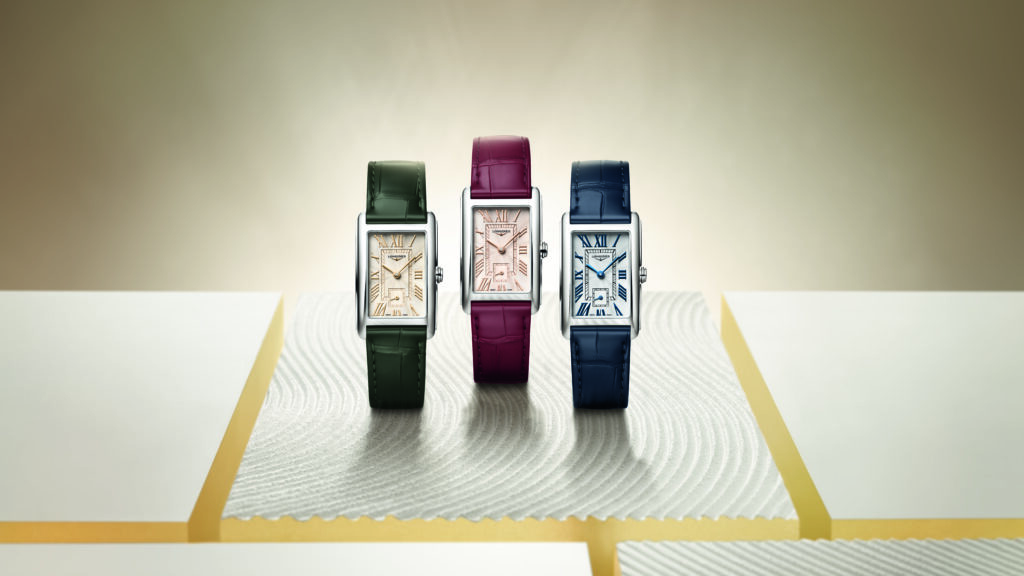
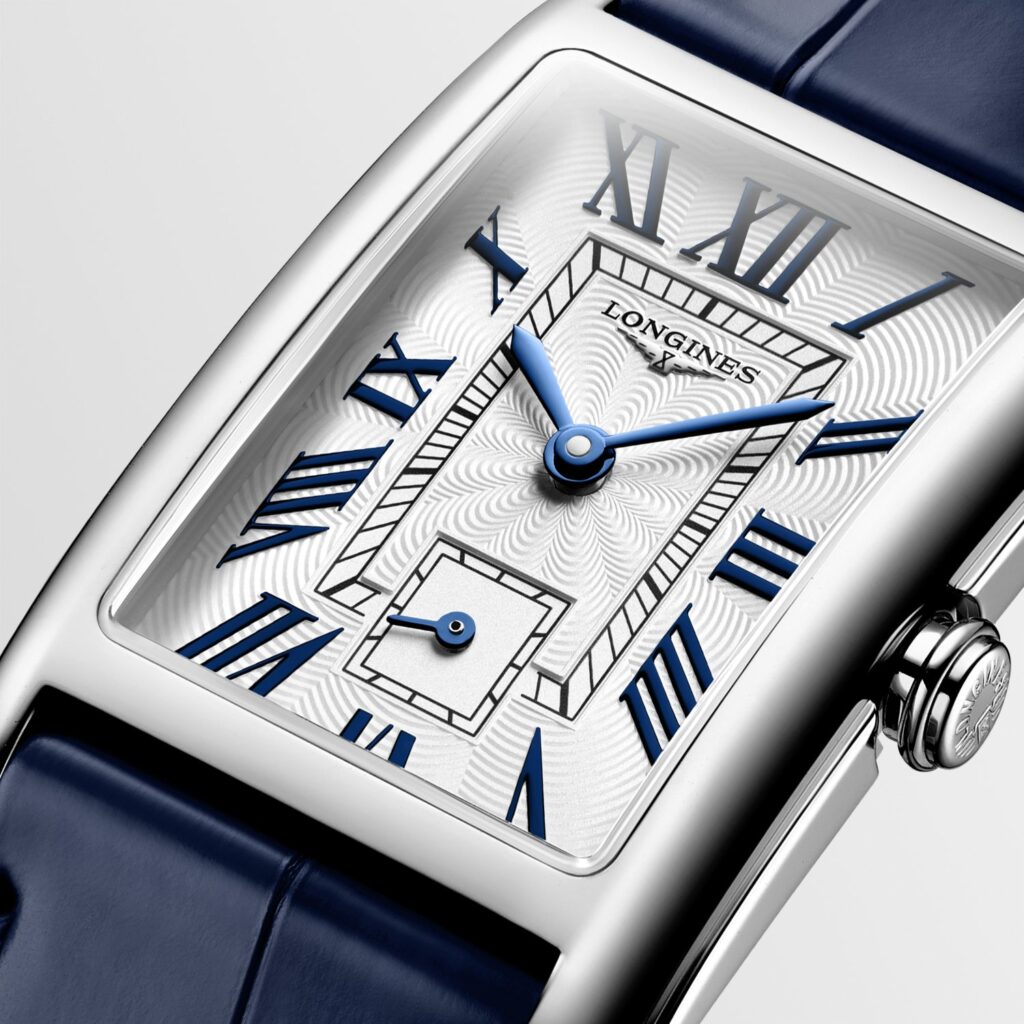
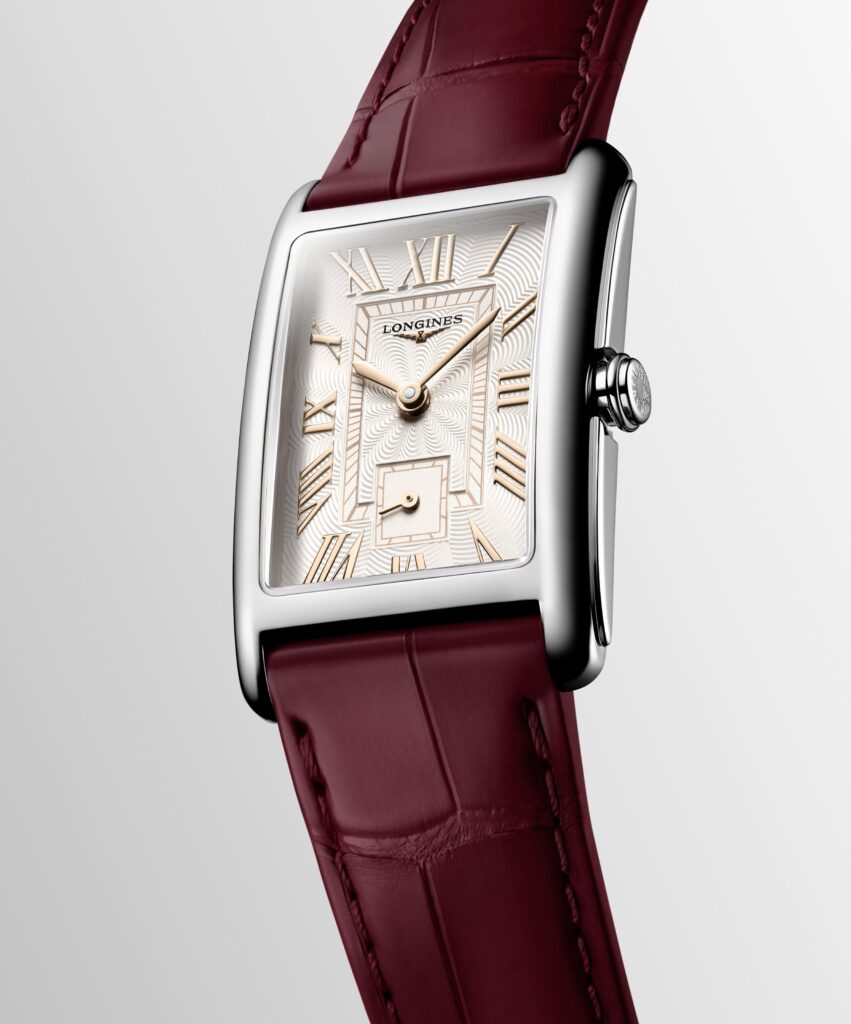
If Italy ever perfected an art form, it is dolce far niente, the sweetness of doing nothing, and the new colourways are that philosophy rendered in calfskin. Midnight blue, olive green and maple red are not fashion colours so much as landscape colours: the Tyrrhenian after sunset, the pines above the coast road, the last inch of an Aperol at golden hour. All three arrive on the same canvas, a rectangular stainless steel case offered in 20.80 by 32.00mm and 23.30 by 37.00mm, its Art Deco geometry unchanged and unbothered by fashion.
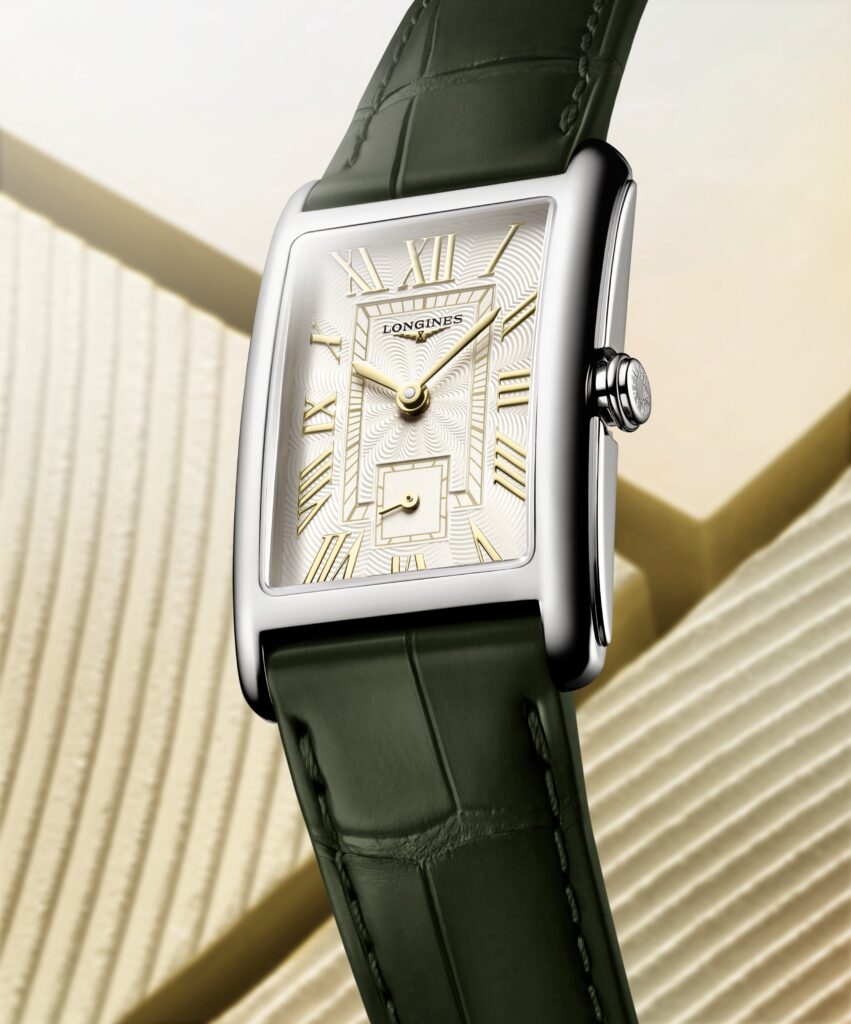
The dials are where the money went. Each wears a flinqué surface, the engine-turned craft this collection has long treated as its signature, engraved here with geometric patterns that ripple as light moves across them. The olive green strap frames the warmest execution, an ivory gilt flinqué dial with twelve 2N gilt Roman numerals and matching gilt hands.
The Joia comes in three versions that share the same proportions: a 28 mm case designed to hug the wrist seamlessly thanks to the absence of lugs, a polished bezel in either stainless steel or 4N rose gold (PVD), and a silver sunray dial. Two of the models feature Roman-style indices and hands coated in 4N gold, while the third is distinguished by a full rose gold-toned execution, with matching PVD-treated indices and hands.
Contrasting the luminous look on the face of the watch are the straps, completing the look. The stainless steel versions come with a deep blue calfskin strap or a three-piece stainless steel bracelet, while the rose gold version comes with a black calfskin strap. All the bracelets are equipped with an easy, interchangeable system without needing any tools. All these watches are powered by a Ronda 751 quartz movement with five years of autonomy and a 50 m water resistance feature.
Sweetness, structured
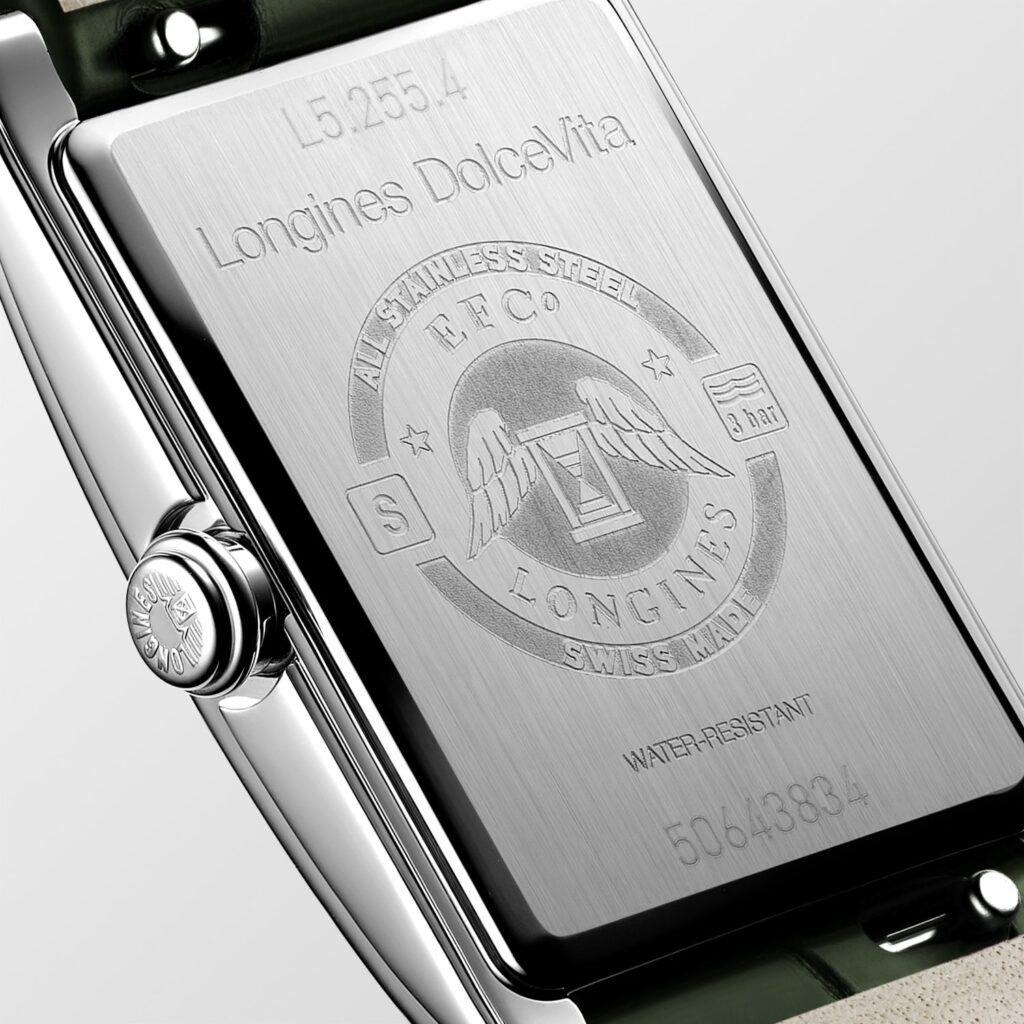
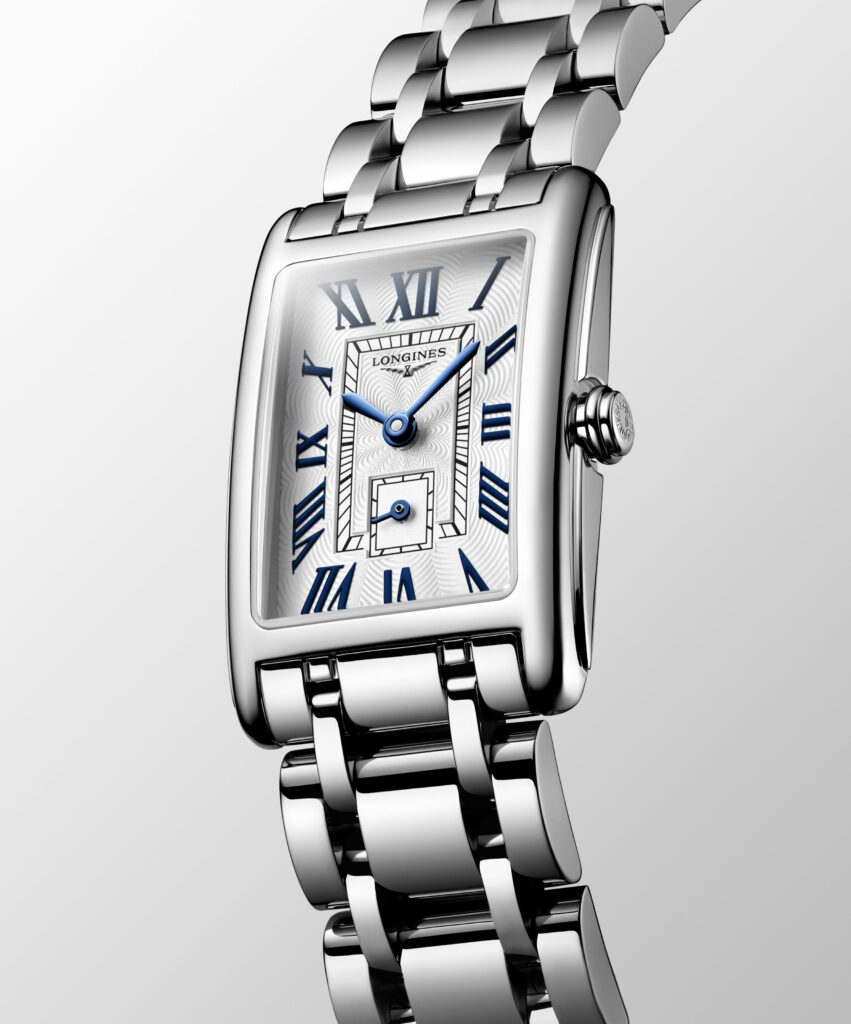
The fourth act trades leather for metal. The silver flinqué dial, blue numerals and blued steel hands return, this time on a stainless steel bracelet with a triple folding safety clasp and push-piece opening, available across both case sizes. It is the least romantic of the quartet and probably the one most people should buy, the version that shrugs off a commute as easily as a terrace lunch, with water resistance of 3 bar, seeing off rain if not swimming. If the leather models are the holiday, this is the watch that gets you to the airport on time.
Rather than shifting direction, Longines confirms one. The DolceVita is no longer the polite ladies’ watch at the back of the catalogue. It is the brand’s answer to the shaped-watch revival, and on this evidence, it knows precisely what kind of answer it wants to be.