
For more than a century, Berluti has built its idea of the elegant man from the ground up. Founded in Paris in 1895 by Italian shoemaker Alessandro Berluti, the Maison began with bespoke footwear before expanding, across four generations, into leather goods and a complete wardrobe for men.
Its signatures have always balanced exacting craft with a certain refusal of convention: an “offbeat classicism” worn over the years by figures as different as the Duke of Windsor, Jean Cocteau and Andy Warhol. Polish, in the Berluti universe, has never quite meant predictability.
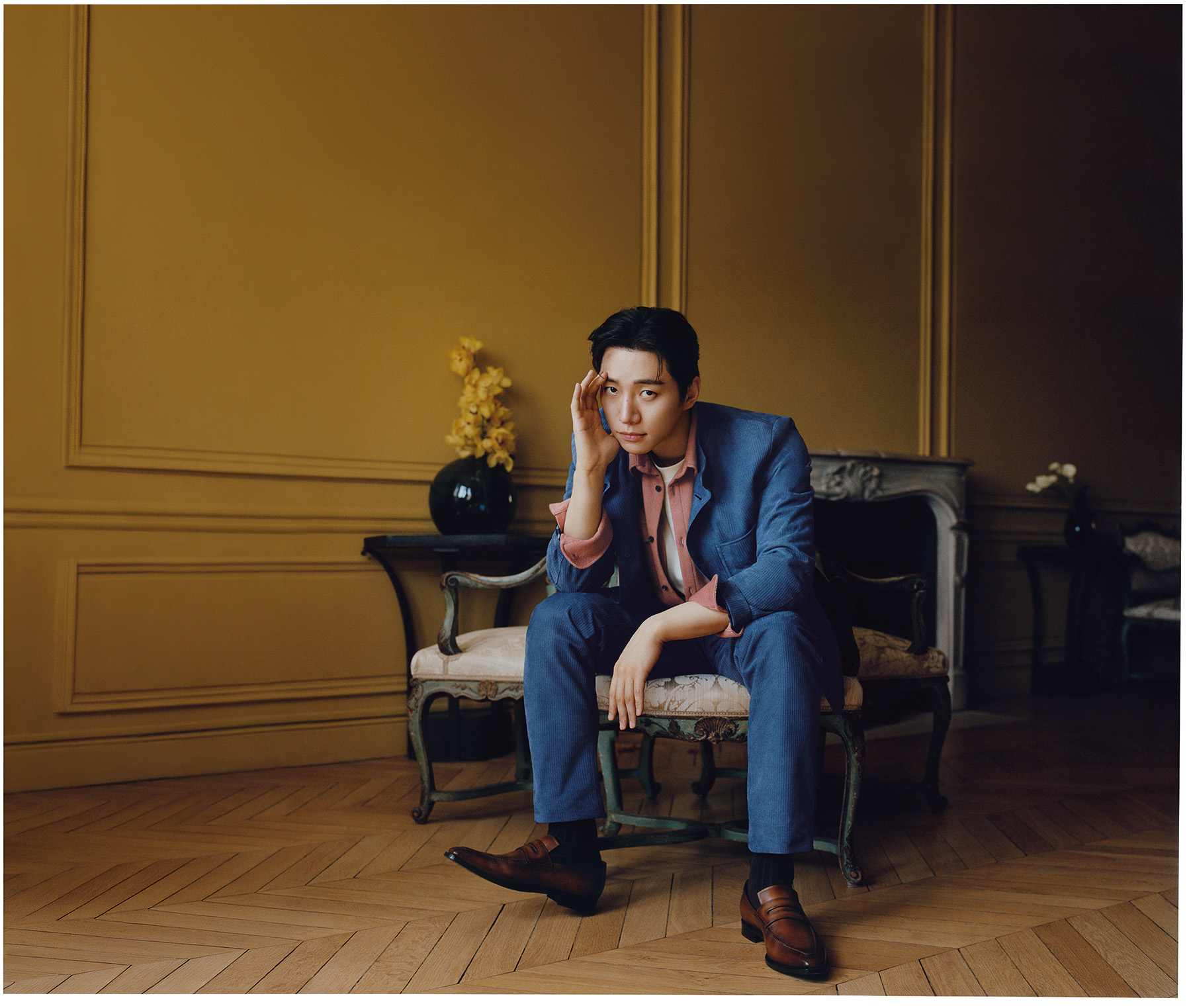
Its latest institutional campaign brings that tension to the fore. Photographed by Estelle Hanania inside a grand Haussmann-era apartment in Paris, Victor Belmondo and Lee Jun-ho drift between rooms, moods and degrees of formality. While the apartment carries the language of old-world elegance, the men are free to ignore it.
The Alessandro 1895 Oxford makes the point neatly. One of the clearest links to Berluti’s shoemaking origins, it appears on Belmondo in a mahogany-toned finish, paired with the Un Jour Blouson in patinated leather. The shoe retains all the authority of a classic Oxford, but little of the stiffness once associated with it. Belmondo leans and smiles, inhabiting the clothes rather than presenting them.
The House does not make the Oxford any less formal; it simply loosens the expectations once placed on the man wearing it.
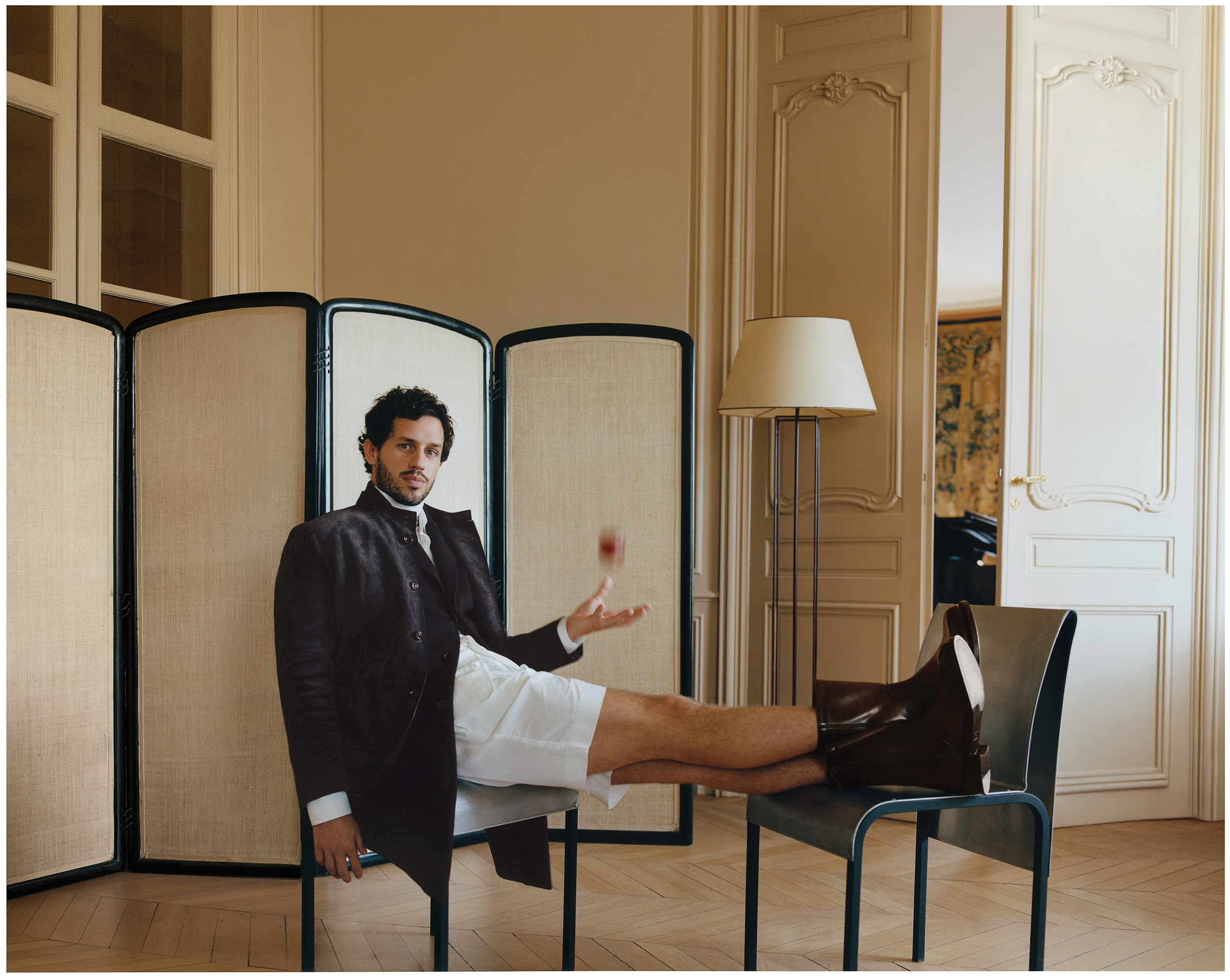
The Forestière shifts character from one image to the next. Belmondo wears the recognisable silhouette over a dark, structured top, with a pair of boxer shorts providing an unexpected contrast below. On Jun-ho, it takes on a bolder expression in vivid blue leather, layered over a dusty pink version of the same jacket. One look plays with incongruity; the other with colour. Together, they show how a house signature can be stretched, reinterpreted and made personal without losing its identity.
That freedom says as much about the men as it does about the clothes. Masculine elegance has long been bound up with composure—the right jacket, the right shoe, the right posture for the room.
Berluti keeps the codes but loosens the choreography. Belmondo tosses an apple into the air. Jun-ho settles into an armchair, his hand on his face, looking at the camera without appearing especially concerned by it. Here, ease is not simply a styling choice. And perhaps the ultimate luxury here is not having to perform one’s luxury at all.
Footwear, naturally, remains the anchor.
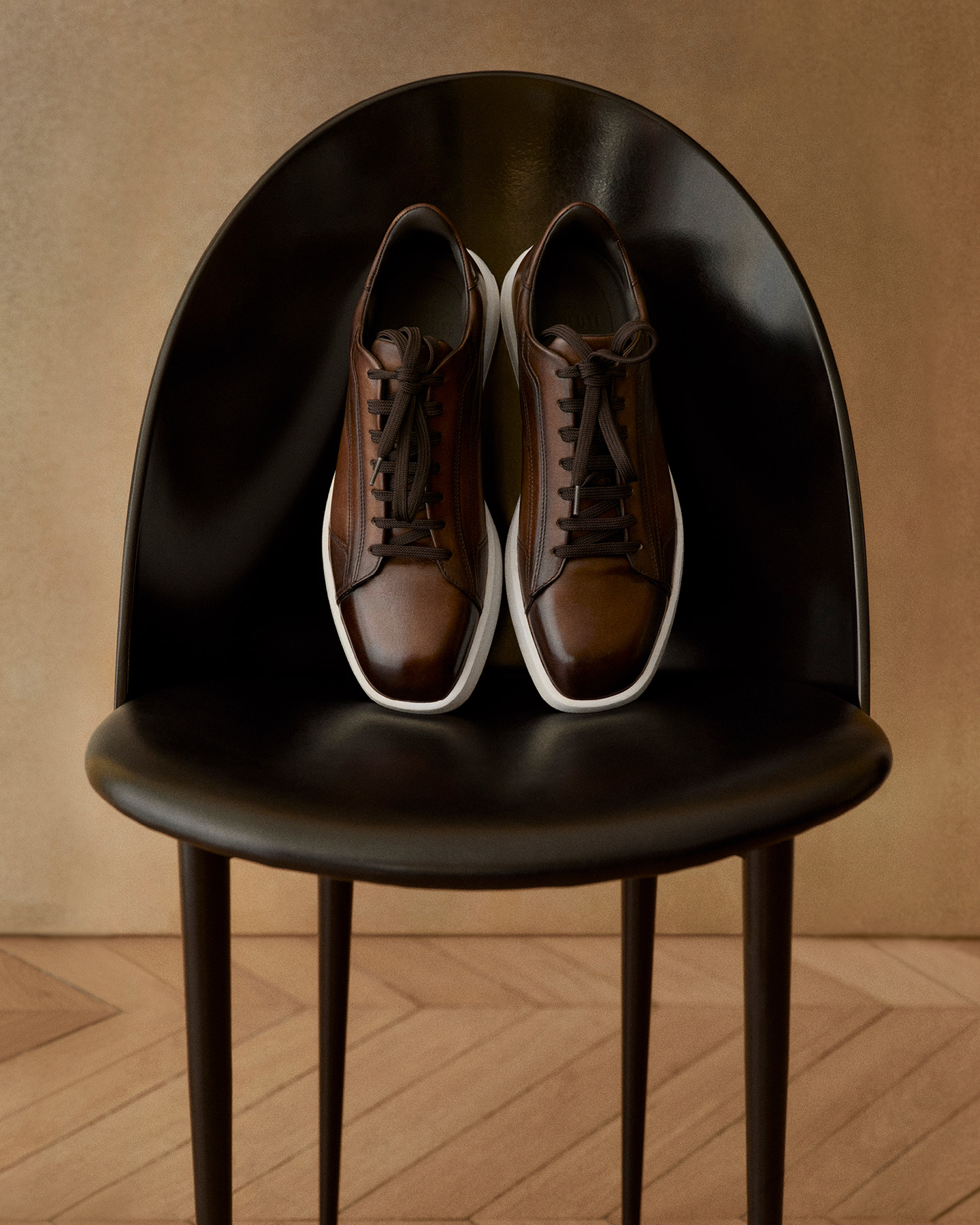
Jun-ho’s arrival is announced by a pair of Andy loafers moving across the parquet, while the Stellar sneaker in Venezia Marrone Intenso calfskin brings Berluti’s leather expertise into a more contemporary register. Oxford, loafer, sneaker: the distinctions in formality matter less than the sense that all three belong to the same life, and perhaps even the same day.
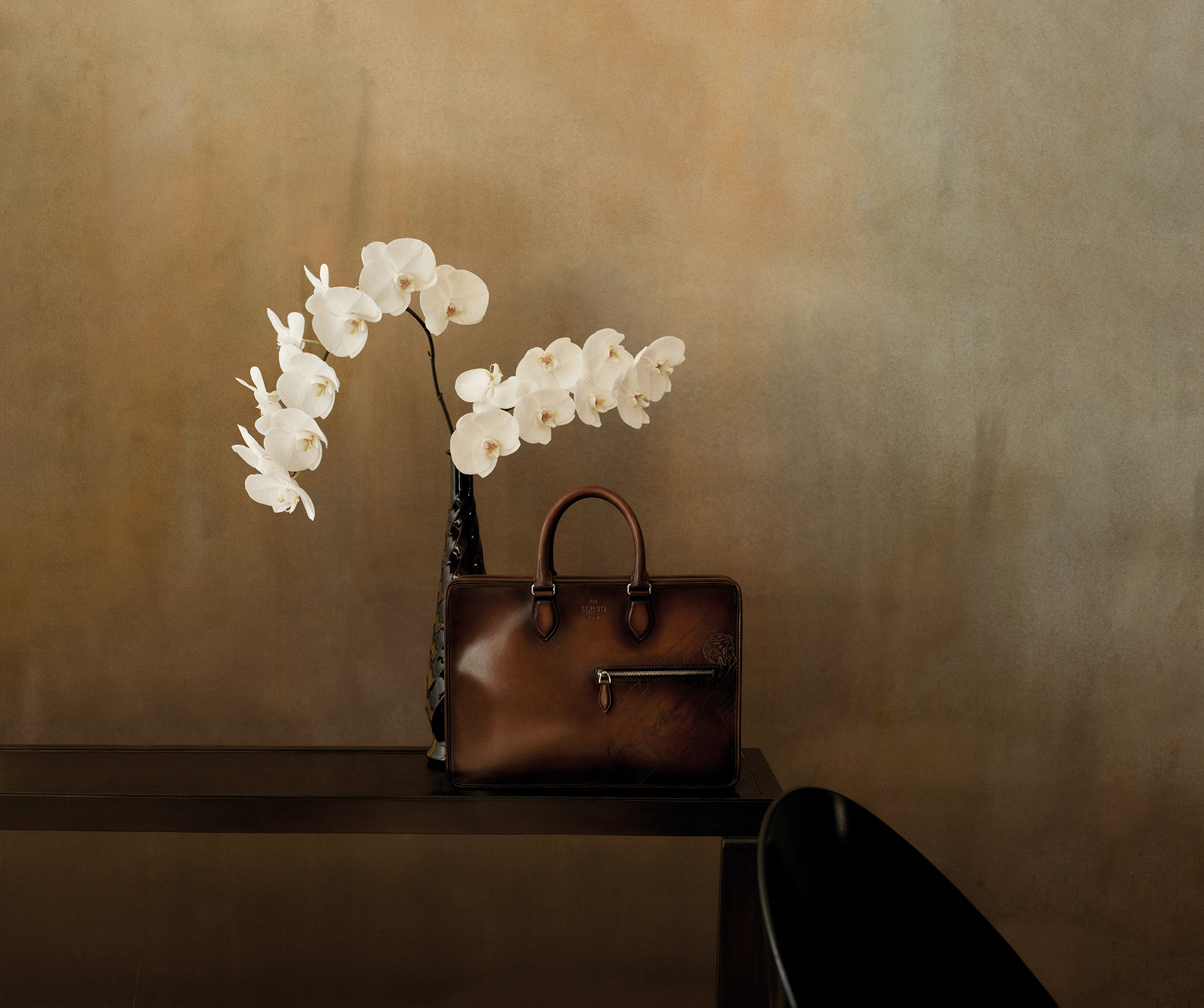
As leather goods follow suit, the Un Jour bag rests beneath a white orchid, and its contours softened by light, shadow and sfumato. The Un Jour Blouson, meanwhile, puts Berluti’s fascination with patinated leather directly on the body. In both, material does much of the talking.
Craft is present everywhere, but never made to feel dutiful.
Berluti’s enduring commitment to refinement creates room for the men within it to be reimagined. He can wear an Oxford without solemnity, leather with humour, or a familiar silhouette in a way that feels entirely his own.
If there is a new rule to masculine elegance, Berluti proposes that precision in dress can coexist with freedom in attitude.