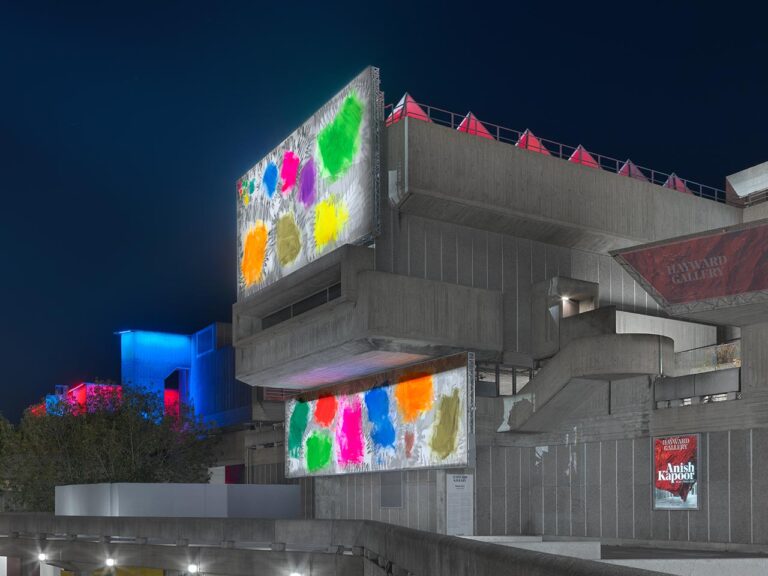
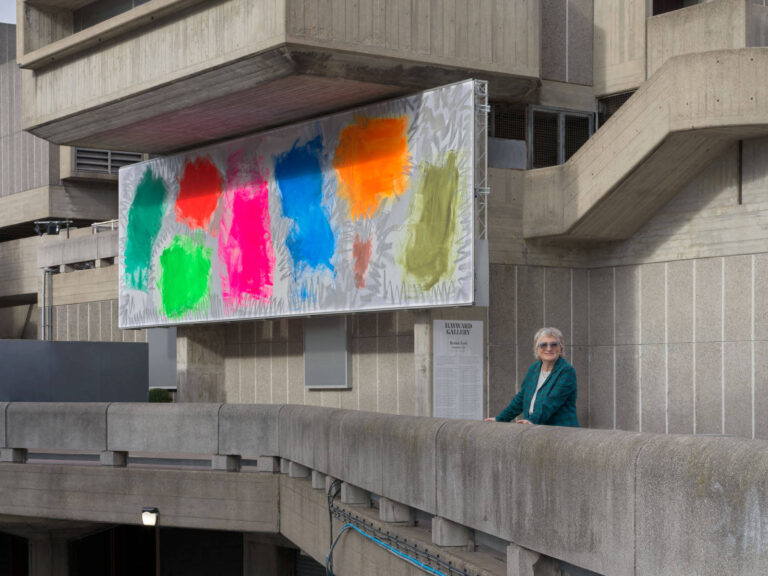
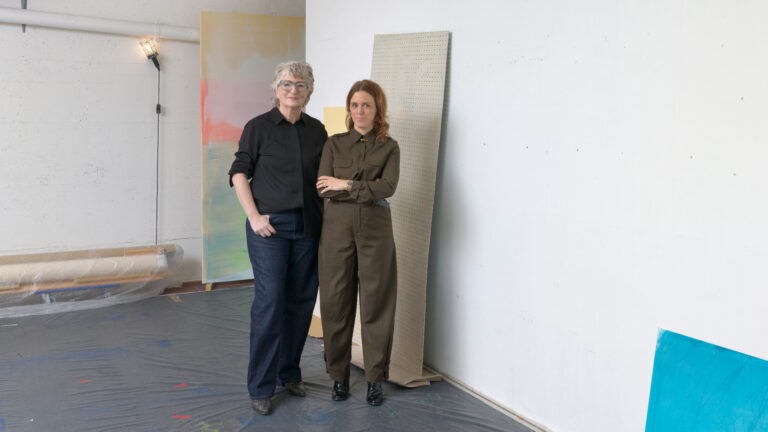
Through the autumn of 2026, one of London’s most recognisable Brutalist buildings wore a painting. Swiss artist Renée Levi’s two-panel work, co-commissioned by the Hayward Gallery and Audemars Piguet Contemporary, stretched across the gallery’s façade from 23 September to 15 November. It was Levi’s first large-scale public commission in the United Kingdom, and a quiet milestone for the watchmaker’s art programme.
That milestone is worth pausing on. Since 2012, Audemars Piguet Contemporary has commissioned more than 20 international artists, from Ryoji Ikeda’s immersive data works to Theo Jansen’s wind-powered kinetic sculptures. Levi’s façade was the first painting the programme has ever commissioned.
A Single Passage, No Return
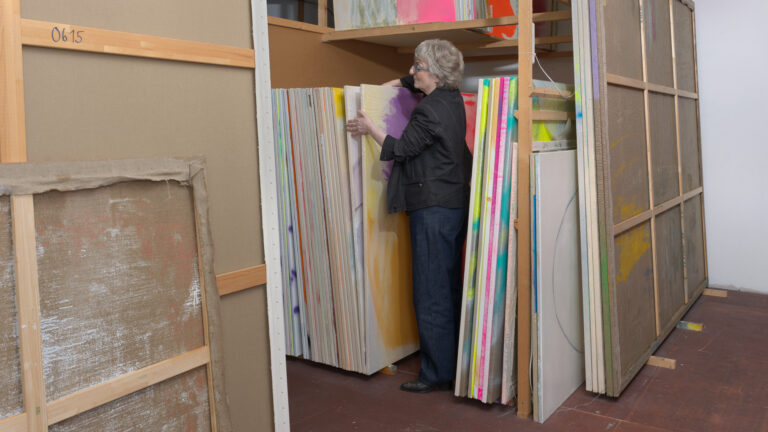
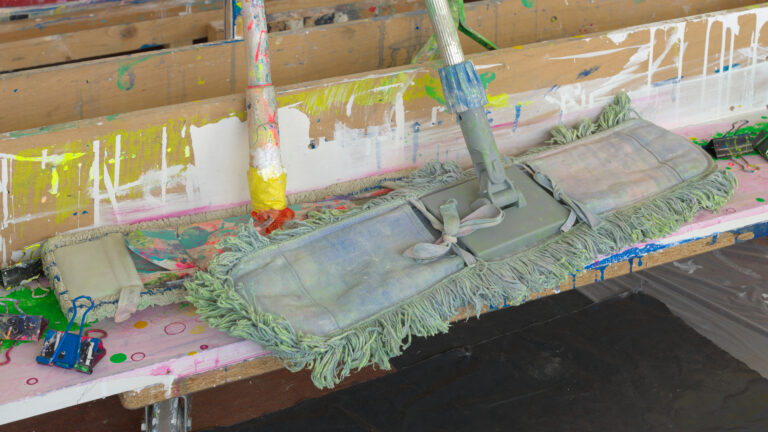
Levi’s method leaves no room for hesitation. Her rules exclude correction, overpainting and composition, and each work is made in one continuous gesture, shaped by the reach of her arm and the conditions of the site. As she puts it, “What becomes visible is time.”
The line carries particular weight alongside her co-commissioner. Based in Le Brassus since 1875, the House has built its name on the precise measurement of time. Levi offers another reading entirely: time not measured but recorded, each stroke a trace of the moment it was made.
Brutalism as a Surface
Trained in architecture at HTL Muttenz/Basel before studying at the Zurich School of Art and Design, Levi has spent more than three decades questioning where painting ends and space begins. At the Hayward, she treated the building not as a backdrop but as an active surface. Its protrusions and windows, the work of architects Dennis Crompton, Warren Chalk and Ron Herron for the gallery’s 1968 opening, became the starting points for a gesture linking the levels above and below.