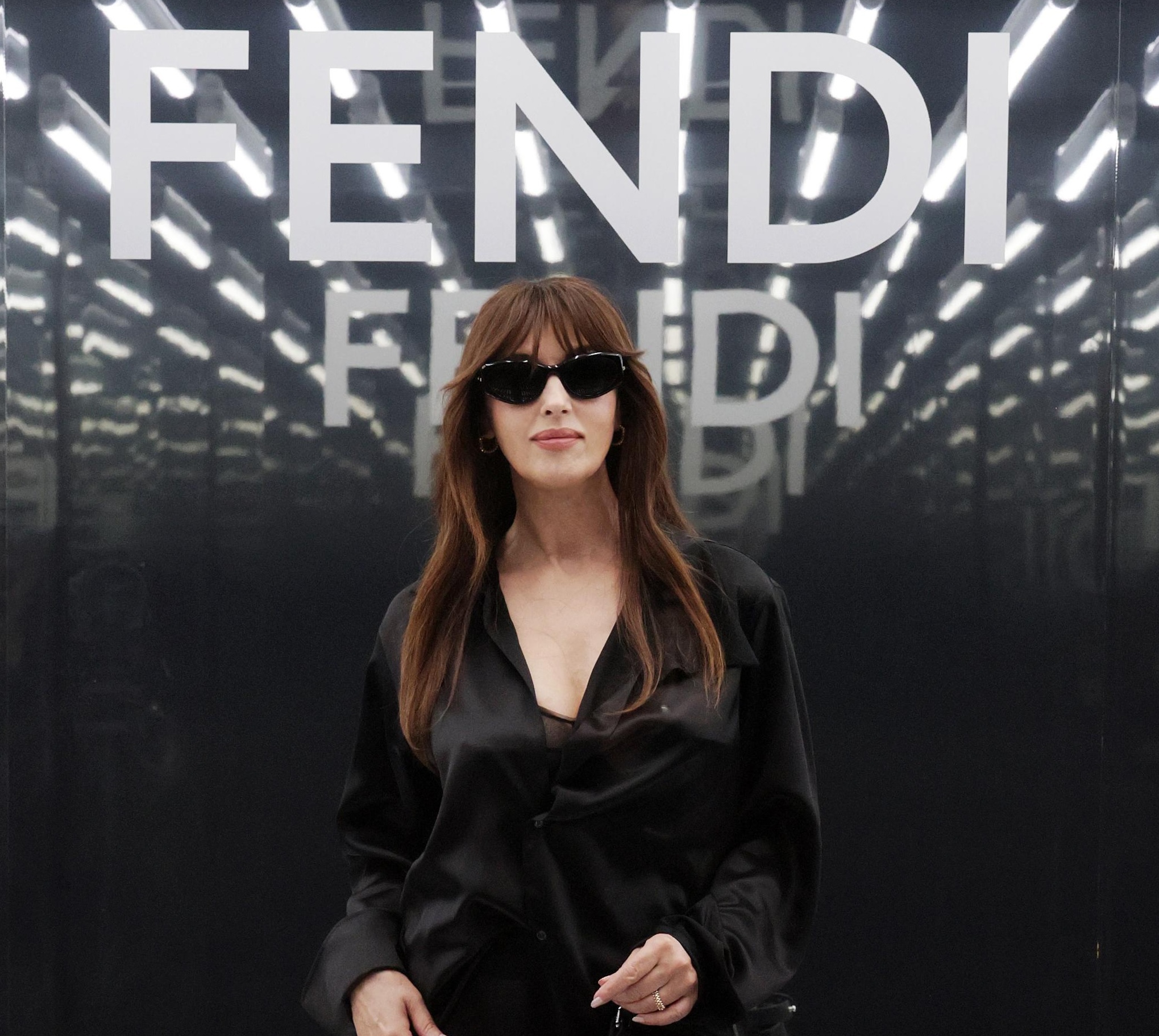

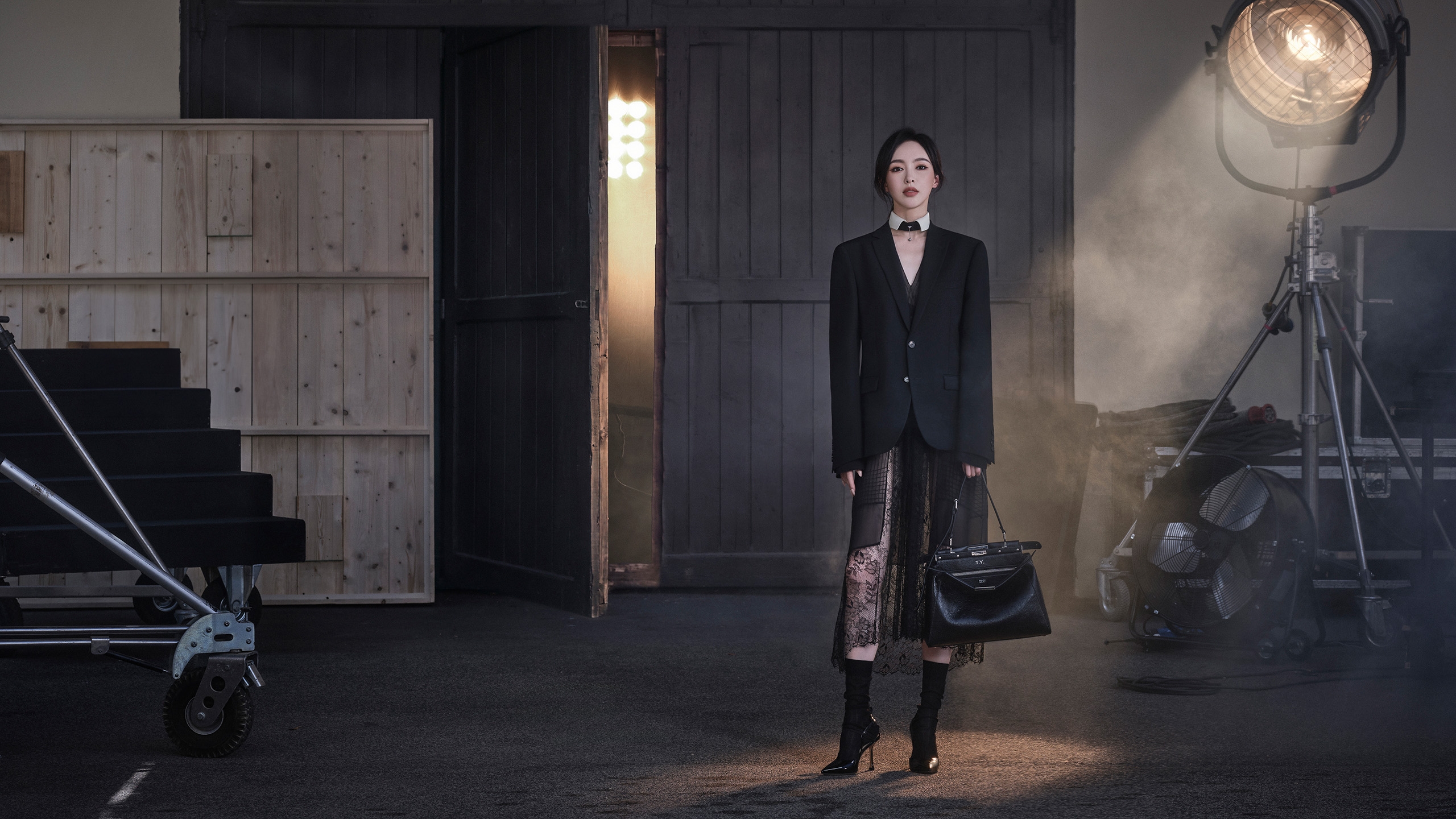
When Laura Sciacovelli is photographing you for FENDI, “between takes” is a relative concept. Monica Bellucci may be reading her script, Valeria Golino reviewing her notes, Tang Yan sitting for a final touch-up and Yara Shahidi waiting for her cue, but spontaneity here still has a call sheet. Shot at Rome’s historic Studio De Paolis, the latest My Peekaboo campaign borrows the language of backstage life: gestures loosen, attention wanders, and performance appears, momentarily, to recede.
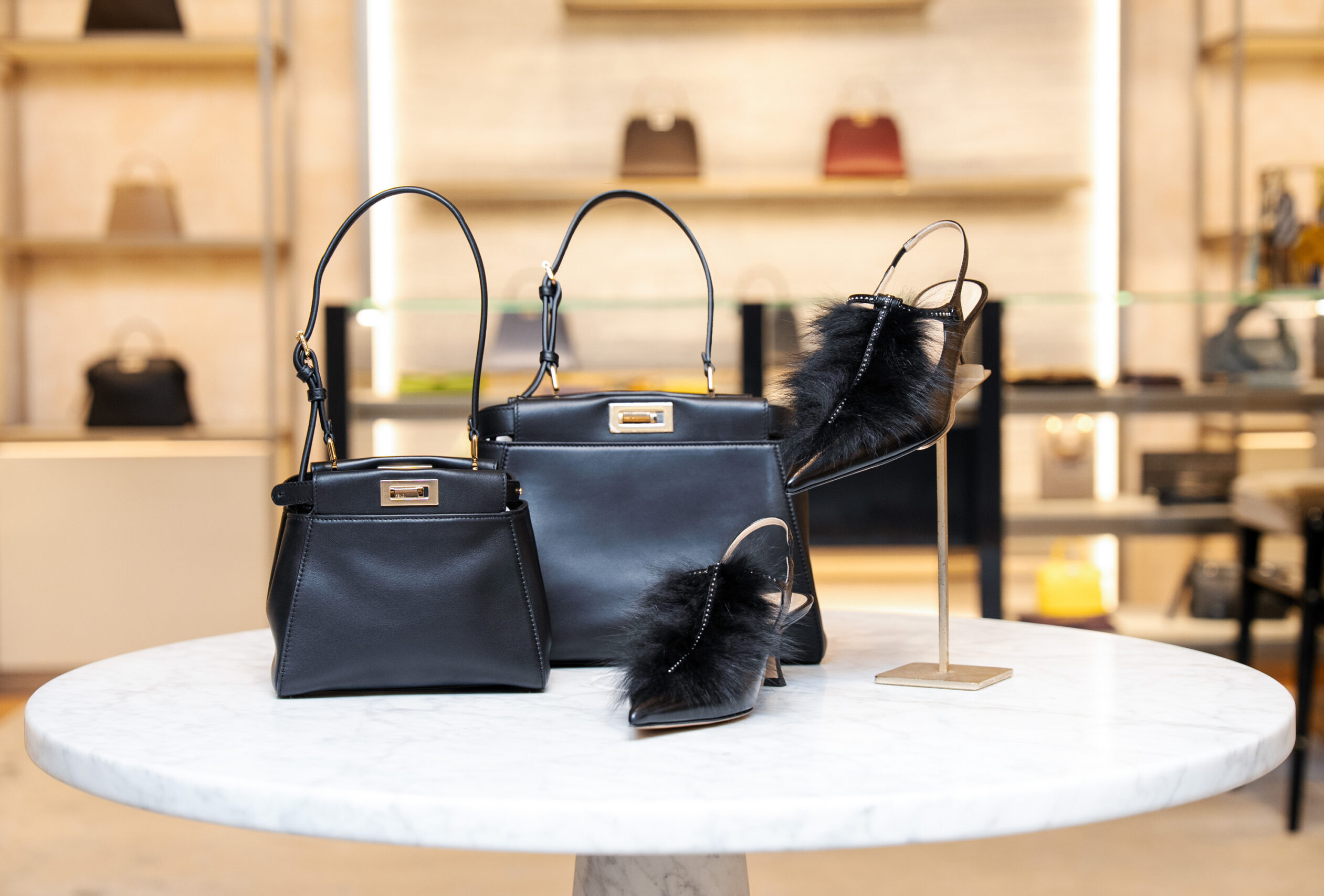
Created in 2008 and named after the children’s game “peek-a-boo, I see you,” the bag is distinguished by an equally playful construction that allows its front to fall open while preserving the overall silhouette. Lining, leatherwork, colour and texture become part of the outward impression. The inside participates in how the bag looks.
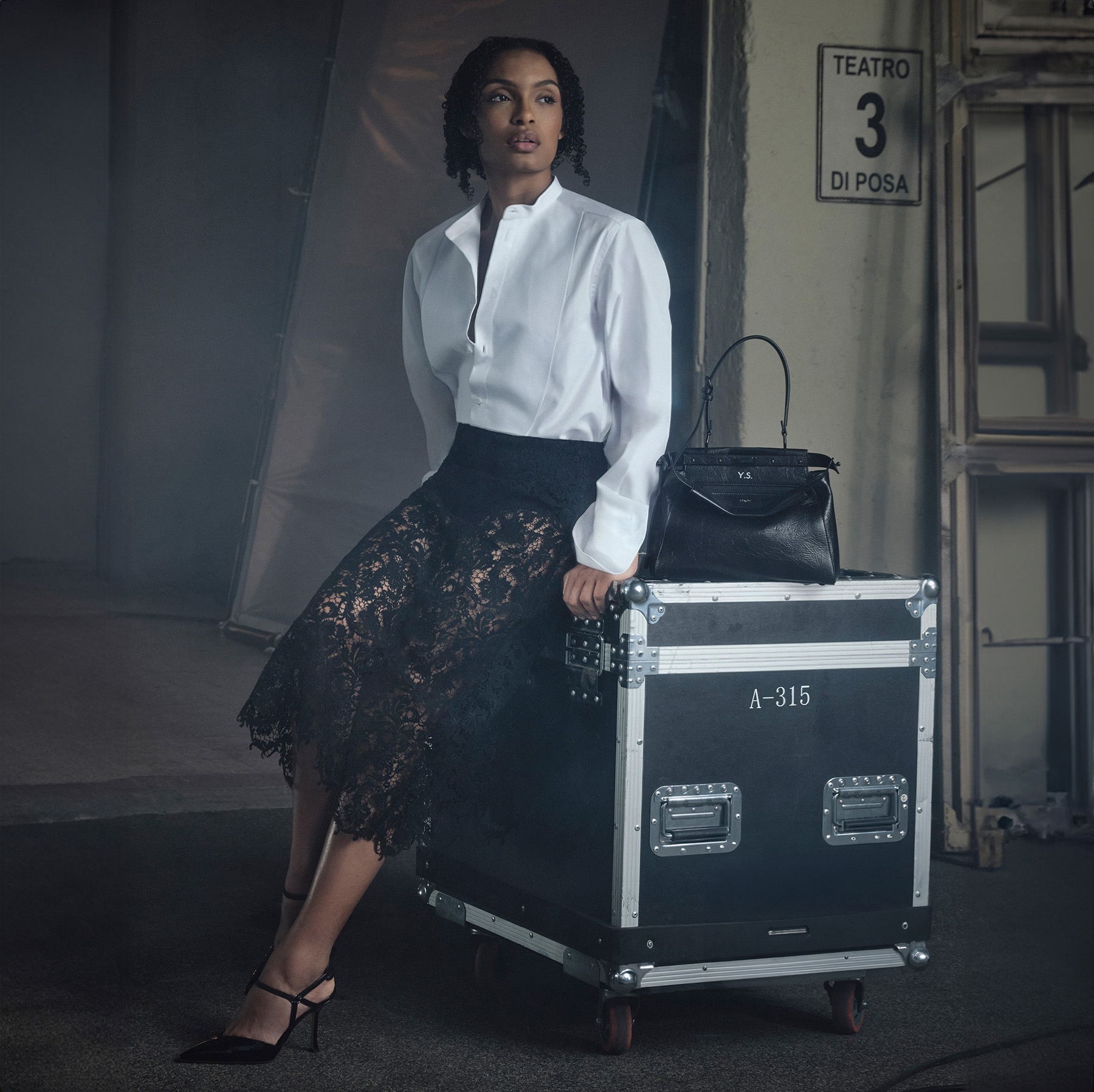
That physical detail gives the campaign’s language of performance and authenticity something tangible to work with. The Peekaboo does not divide the two neatly into public and private, performative and authentic, appearance and truth. Instead, one can shape the other. How we present ourselves may be constructed, but construction does not necessarily make it false. Something inward can remain present in what we choose to show.
The film-set setting also belongs to a much longer FENDI story. Cinema has been woven into the Roman House for decades, from collaborations with costume designers Piero Tosi and Milena Canonero, to projects connected with filmmakers including Luchino Visconti, Martin Scorsese and Giuseppe Tornatore.
FENDI has created clothes, accessories and furs for productions spanning Italian cinema and Hollywood, and has repeatedly returned to that history through projects such as “Making Dreams: FENDI and the Cinema” in 2013 and FENDI STUDIOS in 2017.
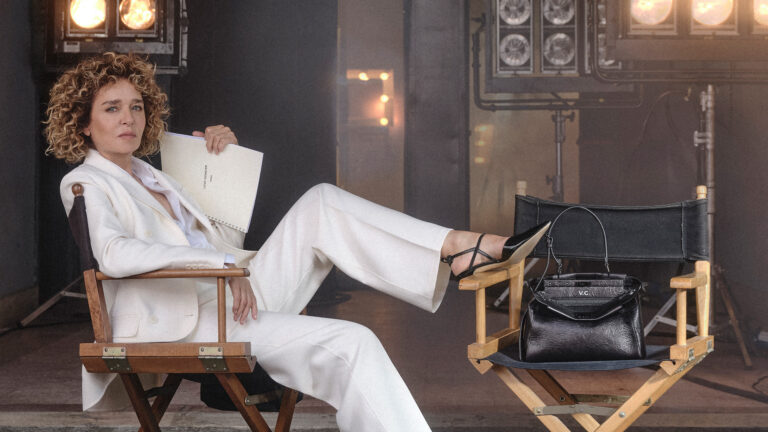
Studio De Paolis, then, is more than an atmospheric backdrop, the Peekaboo sits within a visual world the House has long inhabited. It is a beautiful relationship shaped as much by storytelling as by dressing.
For Fall/Winter 2026–27, Maria Grazia Chiuri enters that history from an unusual position. My Peekaboo appears in her first collection since returning to FENDI, the House where she began her career. Yet the bag itself is not part of the FENDI she left behind: the Peekaboo arrived years after her first tenure.
She therefore approaches it as something of an insider and outsider at once. Rather than overturning the original, Chiuri works within its vocabulary. The familiar silhouette becomes rounder and lighter, while its characteristic opening is more pronounced. It is less reinvention than interpretation—recognising what makes an icon recognisable, then deciding where there is room to move.
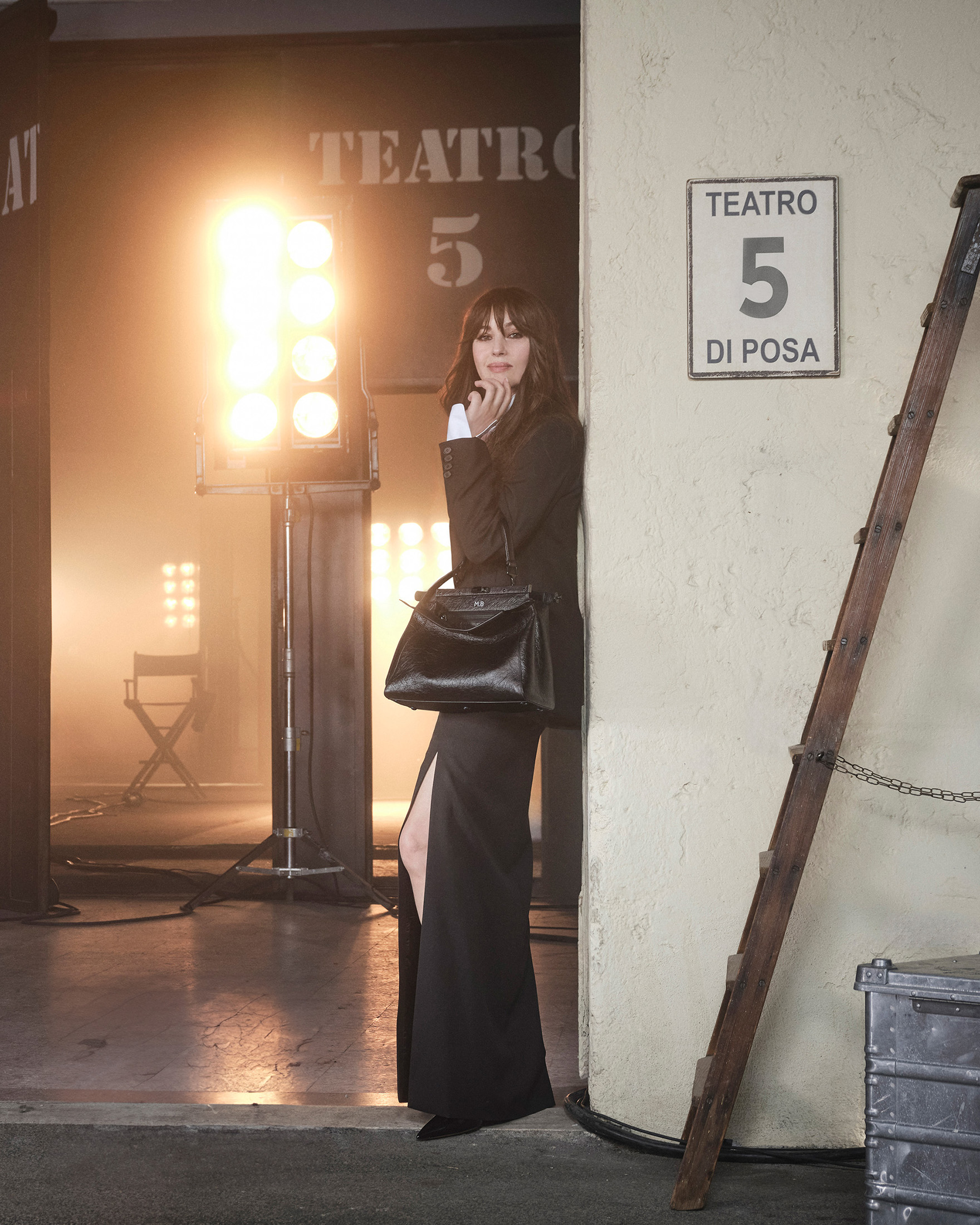
The “My” pushes that idea towards the wearer. In Sciacovelli’s portraits, each woman carries a Peekaboo personalised with her initials. Both Bellucci’s and Shahidi’s remain unmistakably FENDI. But the intervention shifts the relationship between House and owner by placing something personal within it.
Seen together, those gestures make My Peekaboo an exercise in continuity rather than transformation for its own sake. Chiuri does not need to erase the bag’s past to establish her authorship, just as personalisation does not need to obscure the FENDI identity to make the object someone’s own. Both depend on recognising what is already there, then adding enough to change how it is read.
That may be the more compelling meaning behind the campaign’s staged moments between takes. Performance never disappears, nor what lies beneath. Sometimes, all it takes is a small opening to see both.