Most of us probably have a watch tucked away somewhere that we no longer wear. Perhaps it belonged to a grandparent, marked a milestone or was given to us by someone special. It might have stopped working years ago, yet we cannot quite bring ourselves to part with it. For Vacheron Constantin, these are precisely the kinds of stories worth telling.
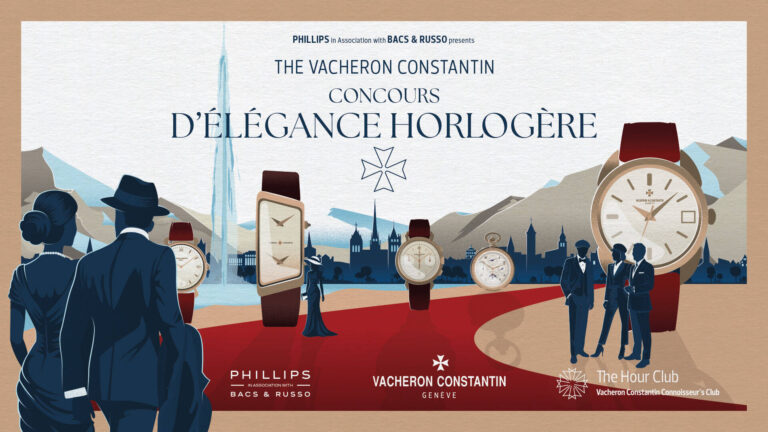
That idea sits at the heart of the Maison’s first Concours d’Élégance Horlogère, organised with Phillips in association with Bacs & Russo. More than 550 pocket watches and wristwatches, made in Vacheron Constantin’s workshops between 1755 and 1999, were submitted for consideration. Following inspections by the Maison’s master watchmakers, the field was narrowed to 95 watches before 34 finalists were selected across seven categories.
It is an ambitious undertaking, and the first competition of its kind in Haute Horlogerie. But the appeal goes beyond finding the rarest or most technically impressive timepieces. As Morgan Maillard, Vacheron Constantin’s Style and Heritage Expert, puts it, a watch is an object that “tells stories through time”.
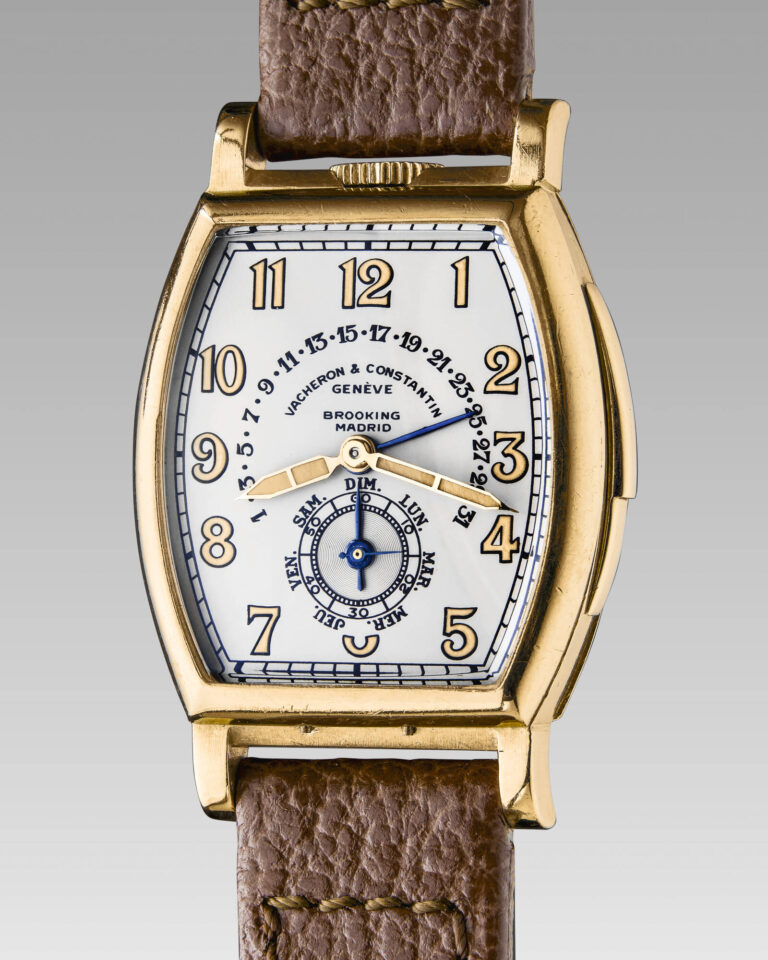
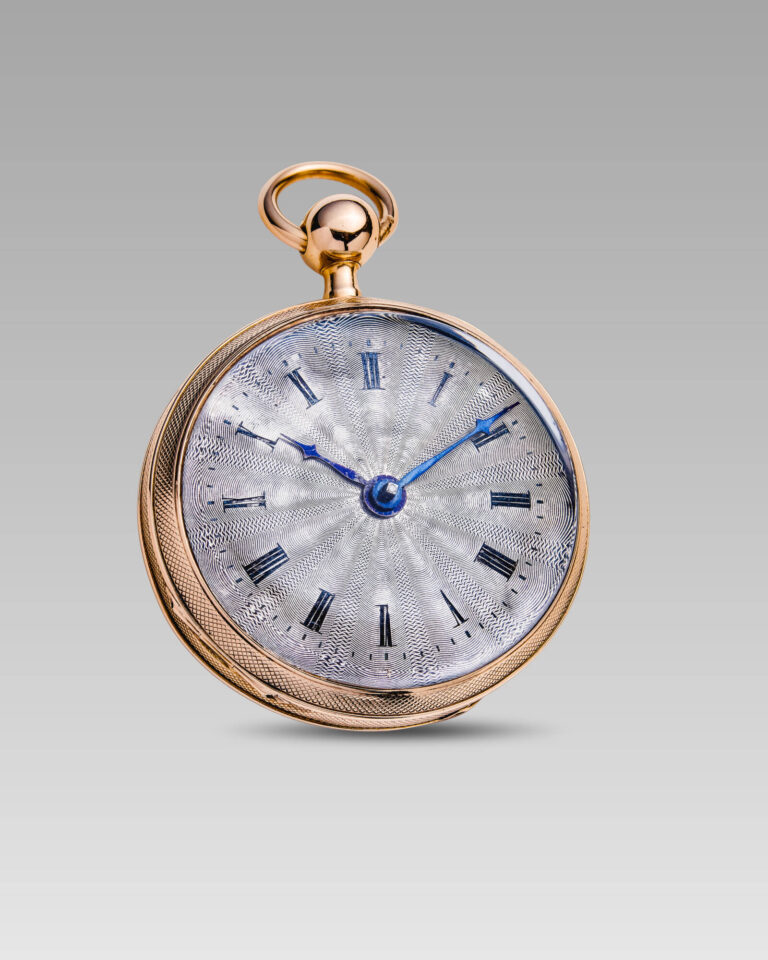
Some of the finalists make that point rather beautifully. The 1940 “Don Pancho” minute repeater, for instance, is a unique creation featuring a bespoke tonneau-shaped movement, a retrograde full date and a dial faithfully recreated from the original. Then there is an 1822/1823 pocket watch, the oldest finalist, complete with a quarter-hour repeater, a guilloché dial and a red gold case. Two centuries on, it remains a remarkable example of traditional watchmaking.
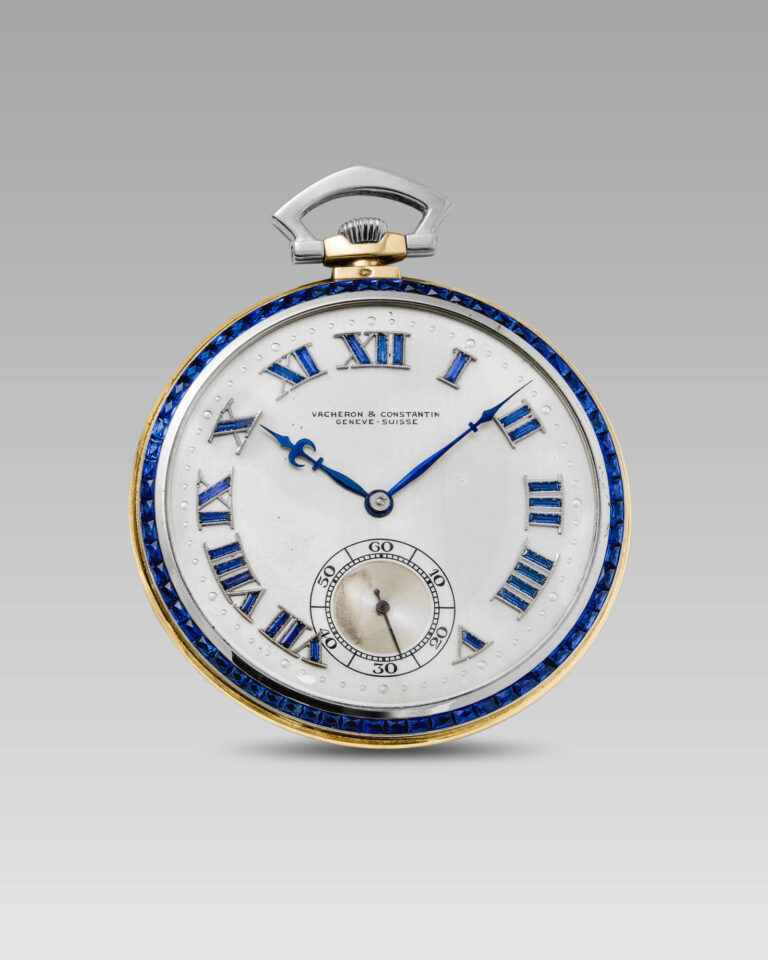
One particularly intriguing piece is a 1930 pocket watch set with sapphires around its bezel and Roman numerals. Originally sold to His Majesty Alexander I of Yugoslavia, it carries a history that extends well beyond its technical specifications. Who owned it next? Where has it travelled? The answers may never be known, but that is part of the fascination.
The jury, which includes collector Yasmine Alshathry and is co-chaired by Aurel Bacs and Christian Selmoni, considers originality, condition, provenance, elegance and emotional value alongside rarity. A watch’s significance, in other words, cannot always be measured by its complications or market value.
For a Manufacture founded in 1755 and recognised as the world’s oldest in continuous production, the competition also offers a chance to reconnect with the people who have carried its creations through generations.
The 34 finalists will be exhibited at Geneva’s Hôtel Président Wilson from 4 to 8 November 2026, with the seven category winners announced on 10 November. For collectors and enthusiasts alike, it is an opportunity to see these historic watches up close before they return to their owners — and perhaps to remember that the most interesting thing about a watch is not always what it tells us about time, but what it tells us about the people who owned it.